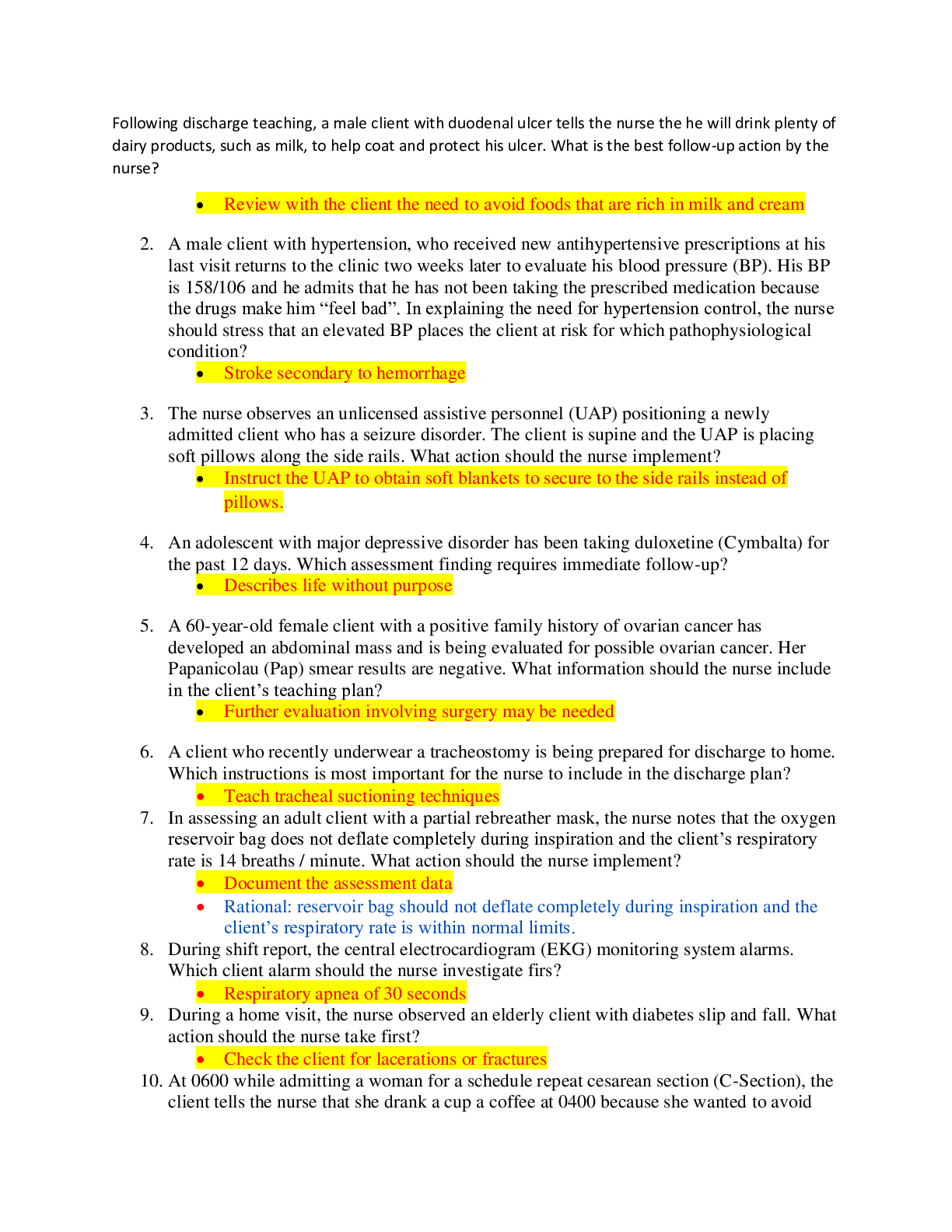
Business Management > EXAM > BUSI 520 12. Restructure in Bankruptcy (All)
BUSI 520 12. Restructure in Bankruptcy
Document Content and Description Below
Last updated: 3 years ago
Preview 1 out of 4 pages
Instant download

Buy this Document to get the Full Access Instantly
Provided by Students Who Aced it
We Verify Document Content to Gurantee Accuracy
Reviews( 0 )
Document information
Connected school, study & course
About the document
Uploaded On
Nov 26, 2020
Number of pages
4
Written in
All

Additional information
This document has been written for:
Uploaded
Nov 26, 2020
Downloads
0
Views
114
Topic Tags
Recommended For You
Get more on EXAM »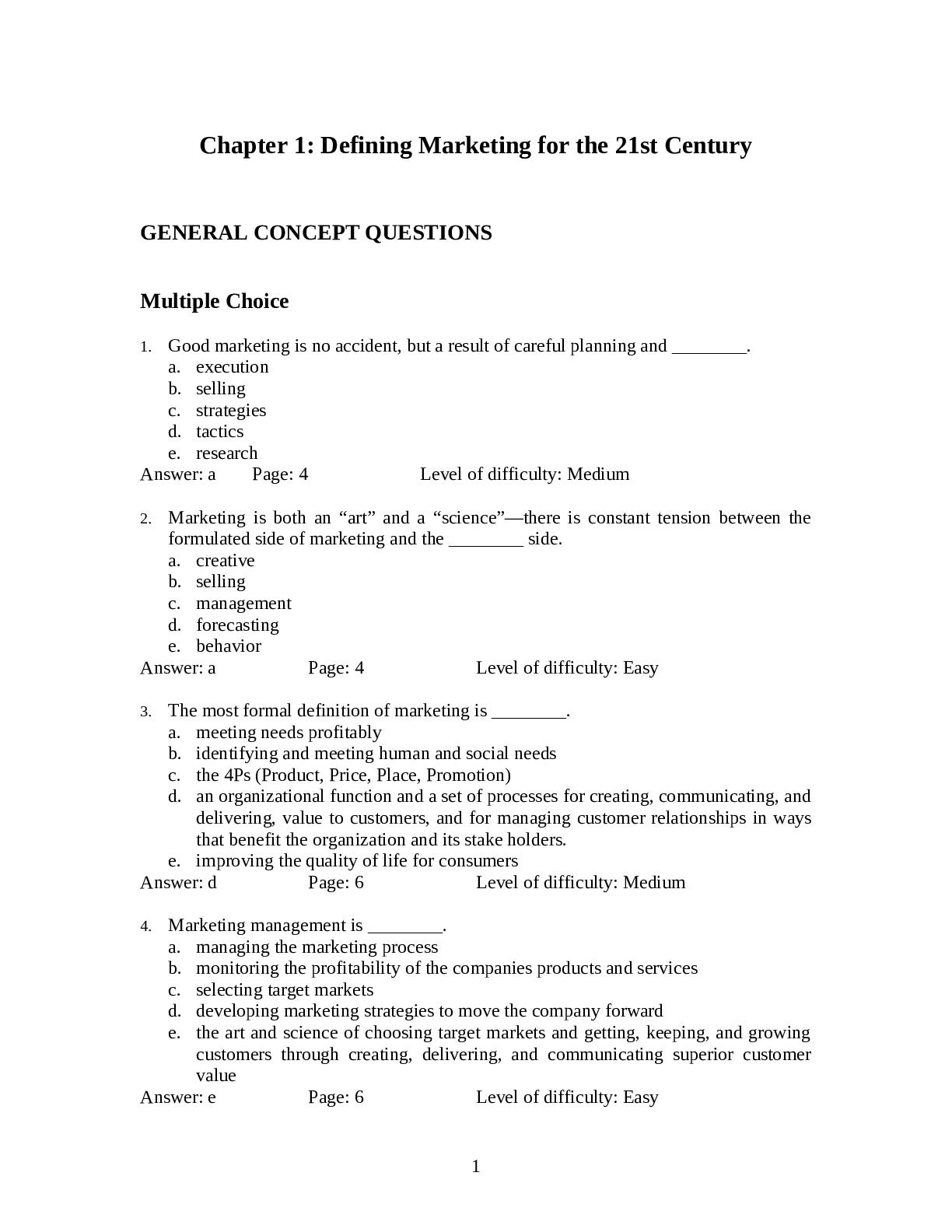
BUSI 520 Defining Marketing for the 21st Century GENERAL CONCE...
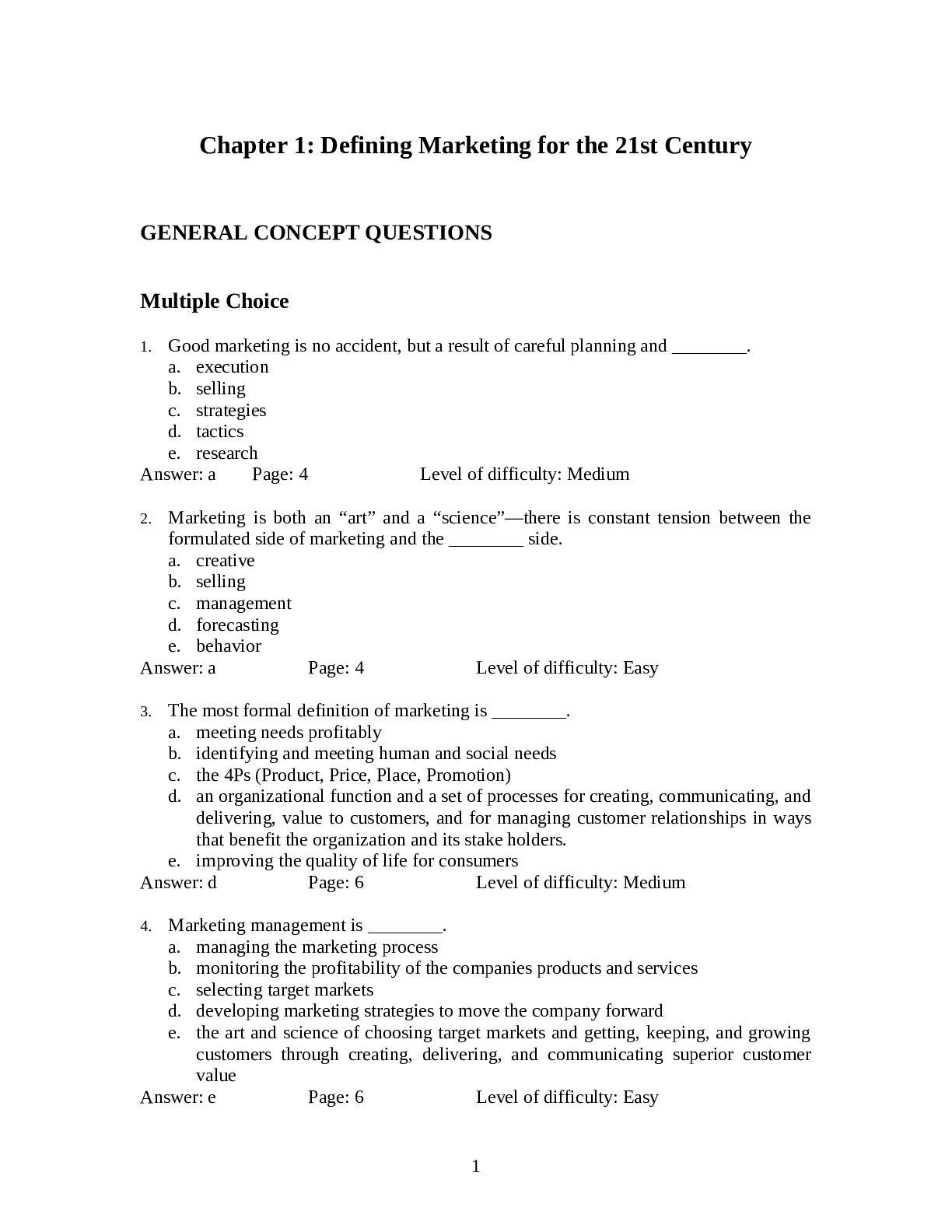
BUSI 520 Defining Marketing for the 21st Century GENERAL CONCE...
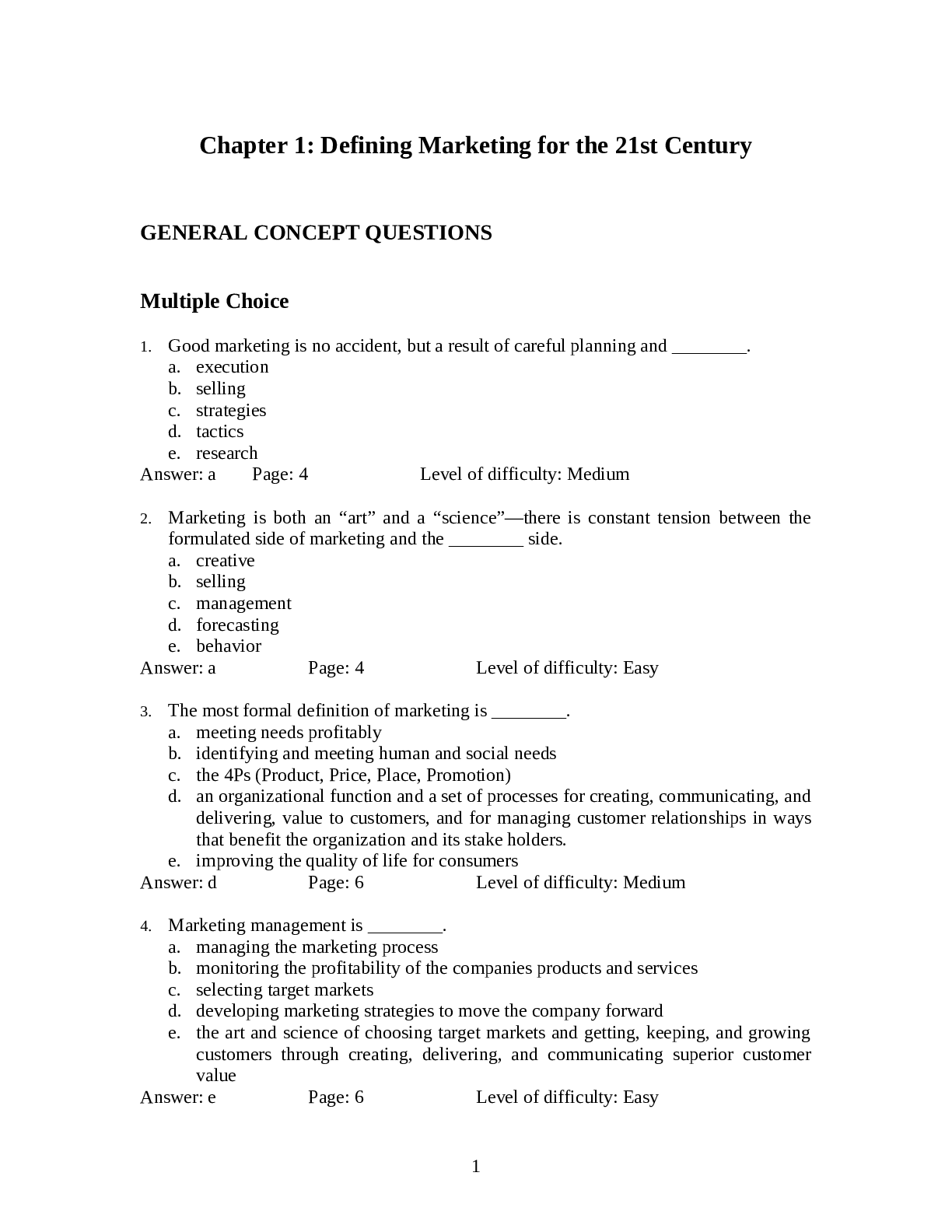
BUSI 520 Defining Marketing for the 21st Century GENERAL CONCE...
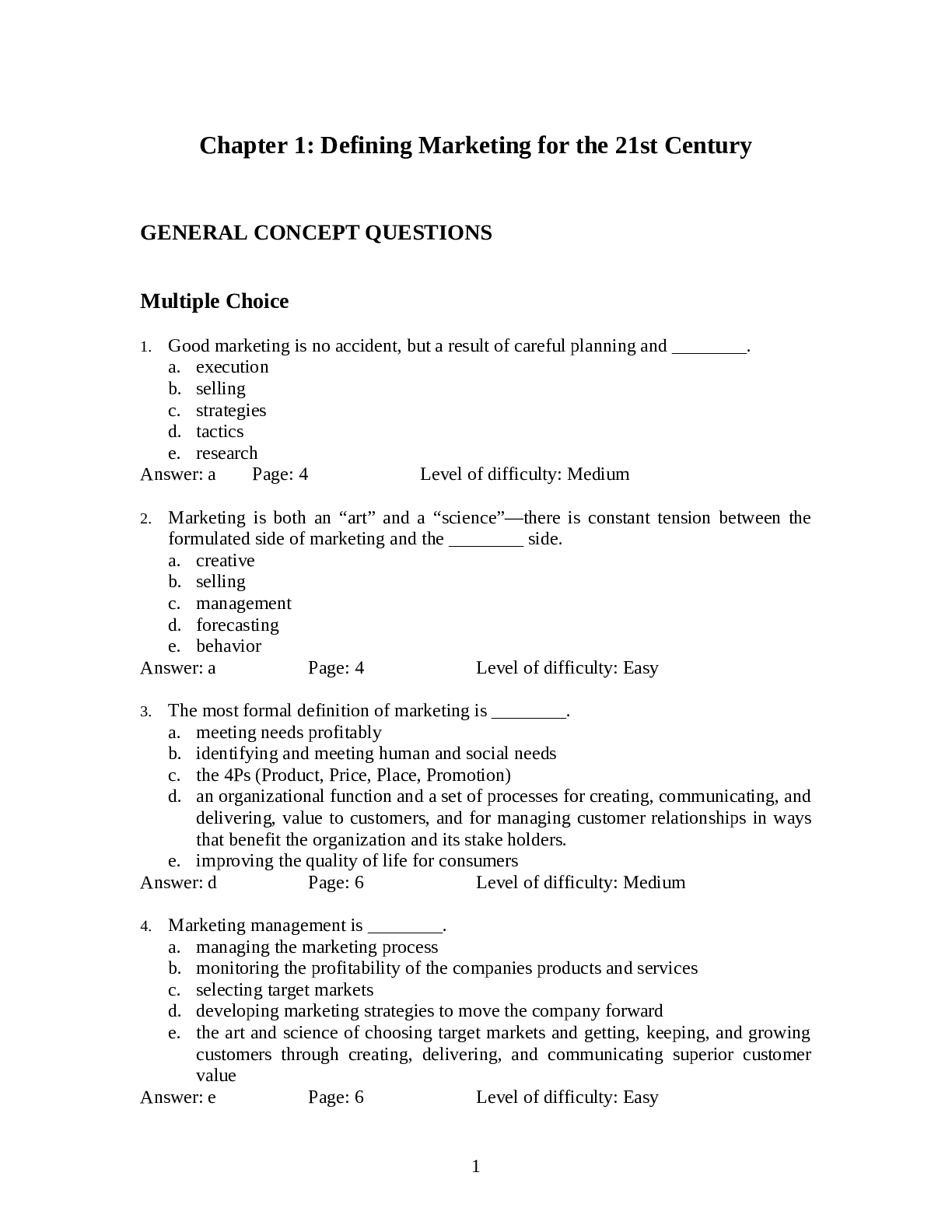
BUSI 520 Defining Marketing for the 21st Century GENERAL CONCE...
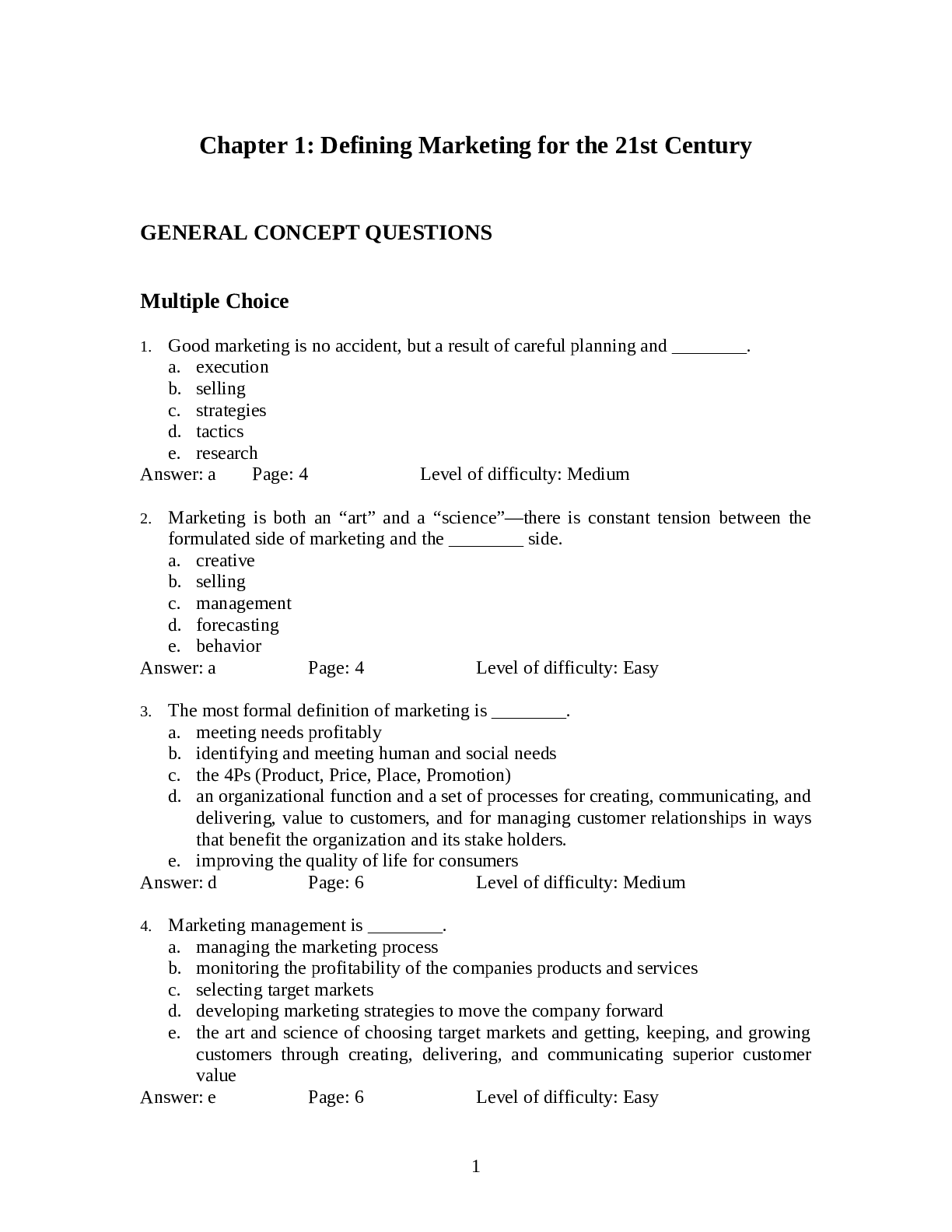
BUSI 520 Defining Marketing for the 21st Century GENERAL CONCE...
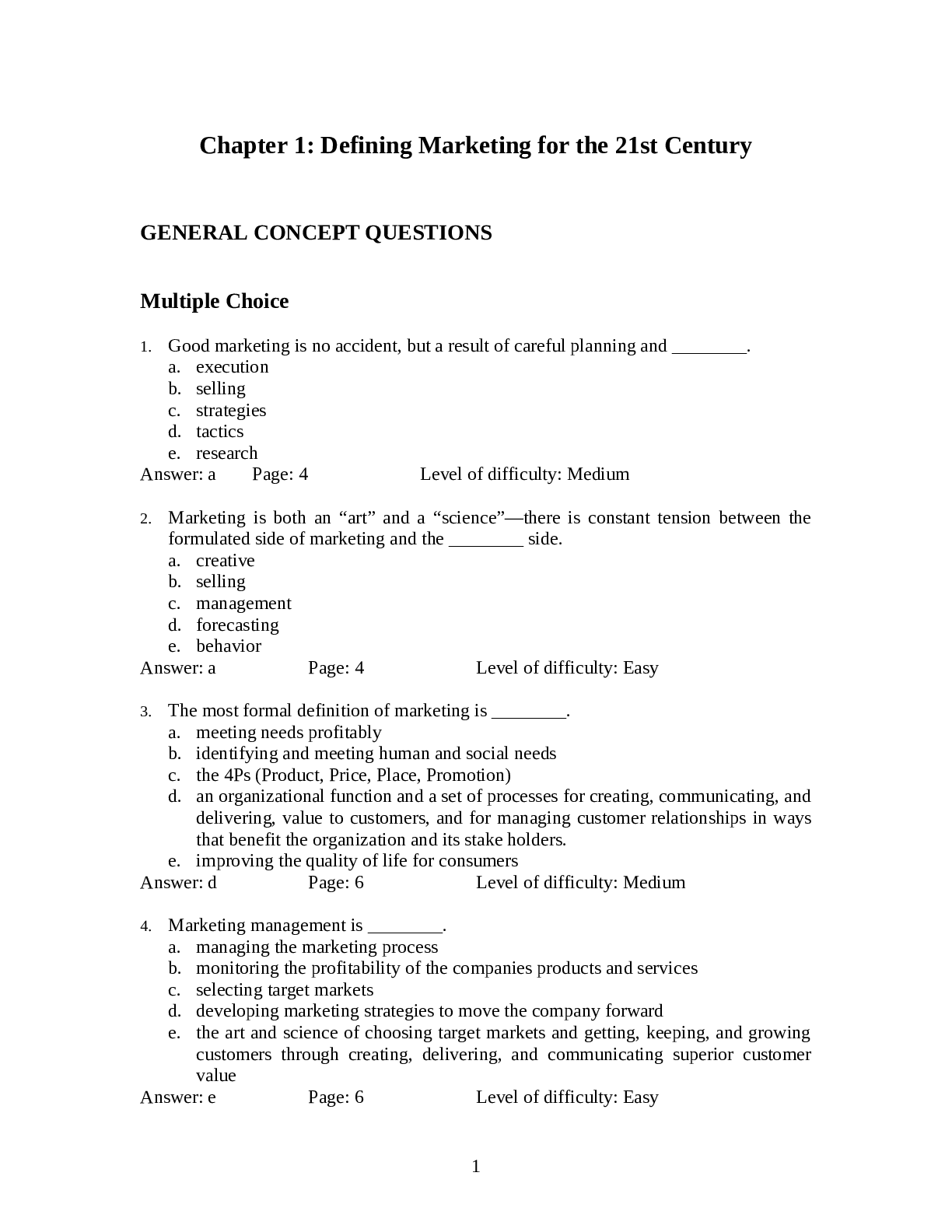
BUSI 520 Defining Marketing for the 21st Century GENERAL CONCE...
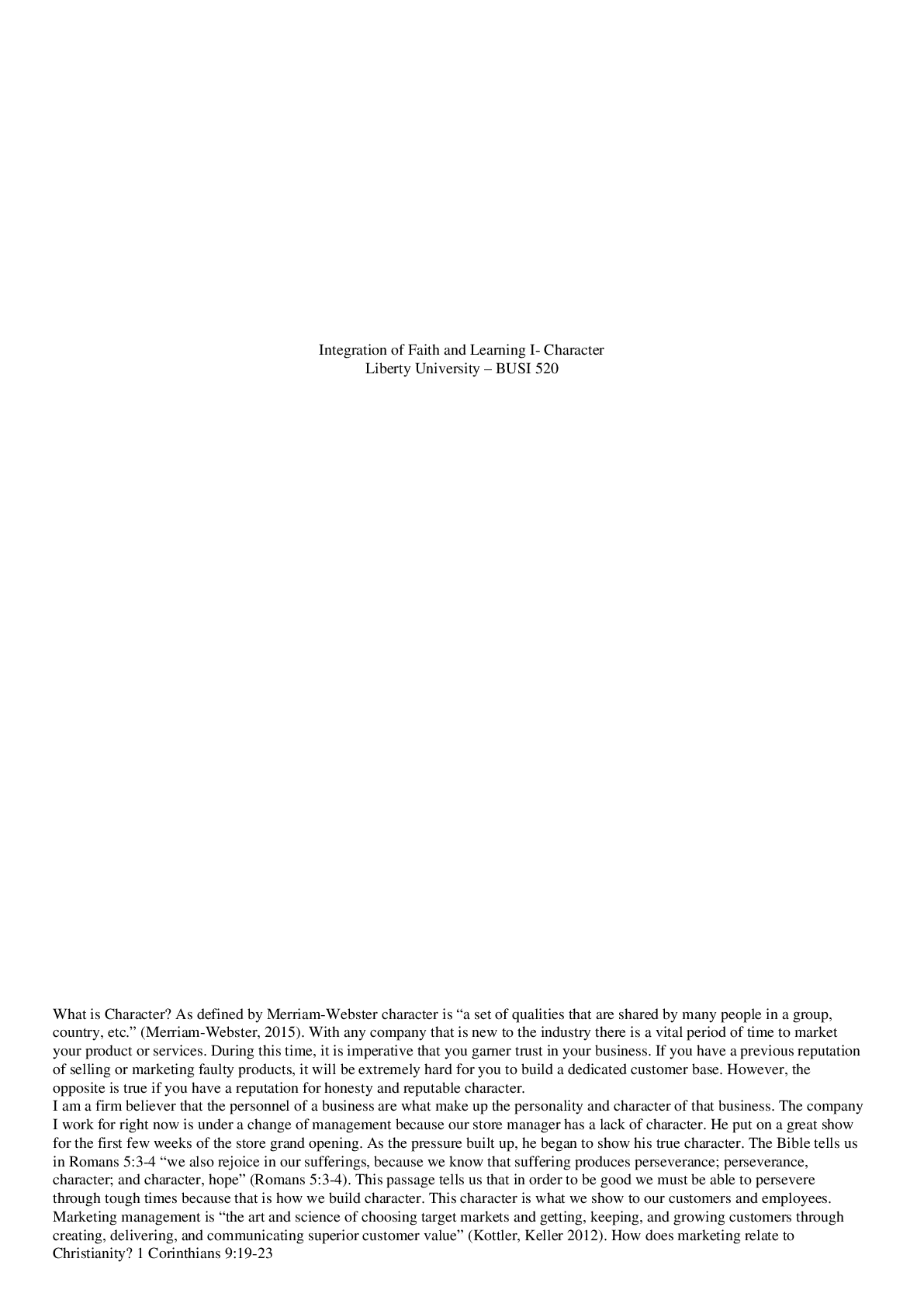
Liberty University BUSI 520 Integration of Faith and Learning...

module7.docx BUSI 520 Motorola Mobility Liberty University...

module6.docx BUSI 520 Motorola Mobility Liberty University...

module5.docx BUSI 520 Motorola Mobility Liberty University...

Marketing Management Group Project (MMGP) Liberty University B...
Test Bank For Management Leading & Collaborating in a Competit...
Solution Manual For McGraw-Hill's Taxation of Individuals 2024...

Solution Manual & Test Bank for Financial Management Theory &...

Test Bank for Human Resource Management, 16th edition By Gary...


.png)


.png)