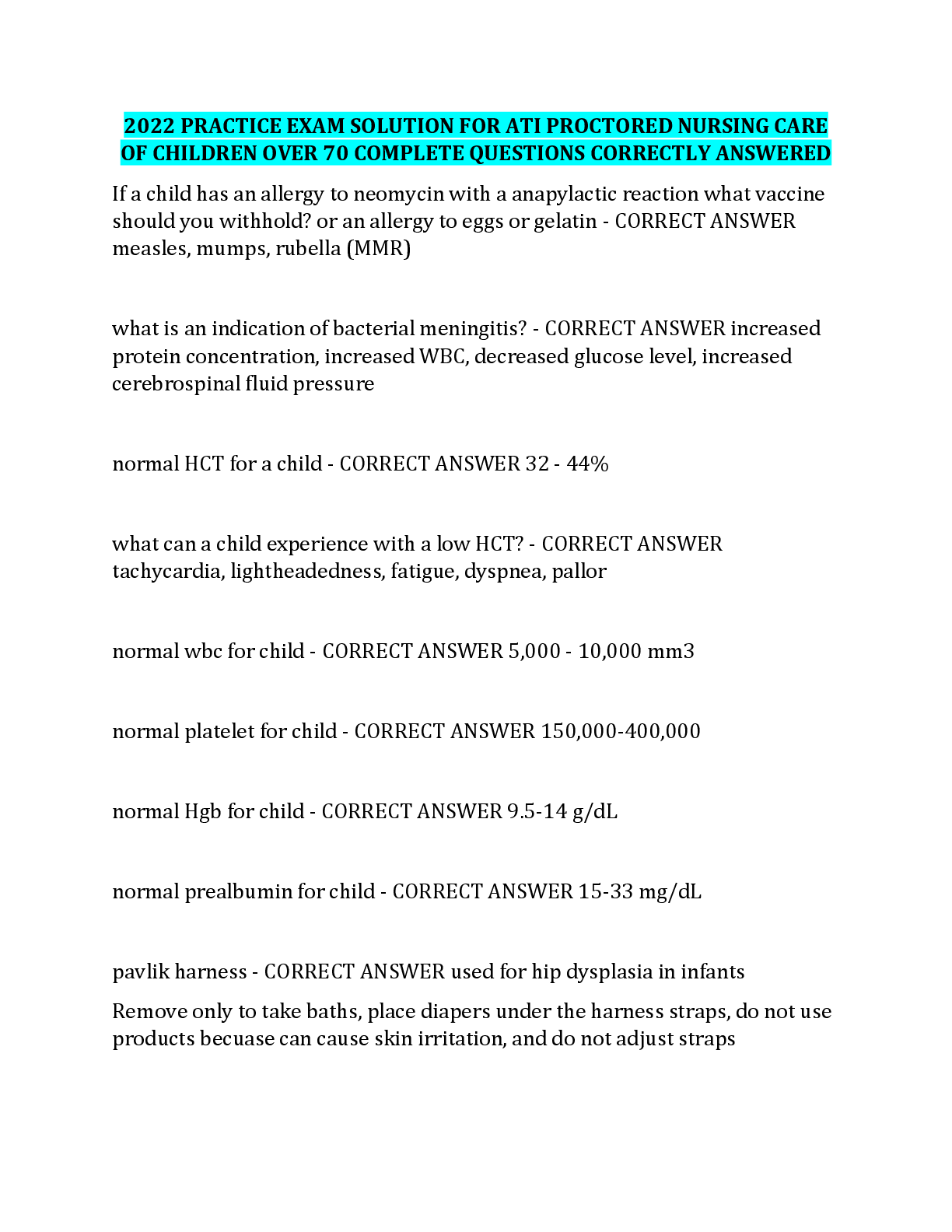
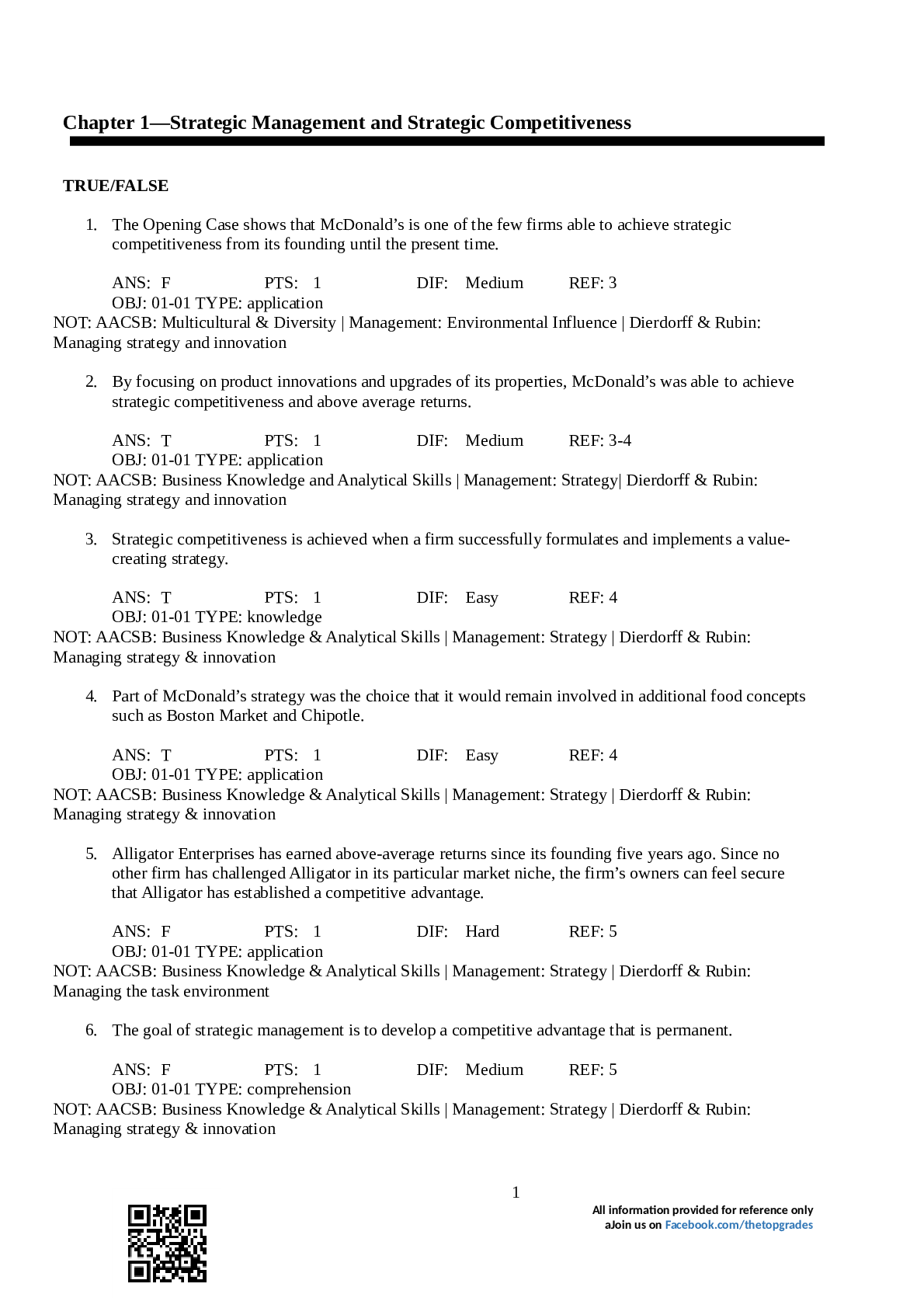
FINAL EXAM REVIEW HCA COMPLETE ACTUAL SOLUTION FOR 2022 EXAM
Document Content and Description Below
Health Promotion - Strategy of improving the populations health by providing necessary
information and tools so that individuals, groups can make informed decisions that promote
health and wellness.
Physiotherapist
...
[Show More]
Last updated: 3 years ago
Preview 1 out of 12 pages
Instant download

Buy this Document to get the Full Access Instantly
Provided by Students Who Aced it
We Verify Document Content to Gurantee Accuracy
Reviews( 0 )
Document information
Connected school, study & course
About the document
Uploaded On
Jul 04, 2022
Number of pages
12
Written in
All

Additional information
This document has been written for:
Uploaded
Jul 04, 2022
Downloads
0
Views
92
Topic Tags
Recommended For You
Get more on EXAM »
$25
85 Pages
Ethical and legal issues in Canadian Nursing, 4t Edition by Ke...
$19
104 Pages
Test Bank for Ross-Kerr and Wood's Canadian Nursing Issues & P...
$20
113 Pages
Test Bank for Stanhope and Lancaster's Community Health Nursin...
$18
121 Pages
Reading, Understanding, and Applying Nursing Research 5th Edit...
$20
297 Pages
Public Community Health and Nursing Practice Caring for Popul...
$20
165 Pages
Legal, Ethical, and Political Issues in Nursing 2nd Edition By...
$20
1146 Pages
TEST BANK for Davis Advantage for Understanding Medical-Surgic...
$20
337 Pages
Community Public Health Nursing 7th Edition By Mary Nies, Mela...
$25
530 Pages
Primary Care The Art and Science of Advanced Practice Nursing...
$16
12 Pages
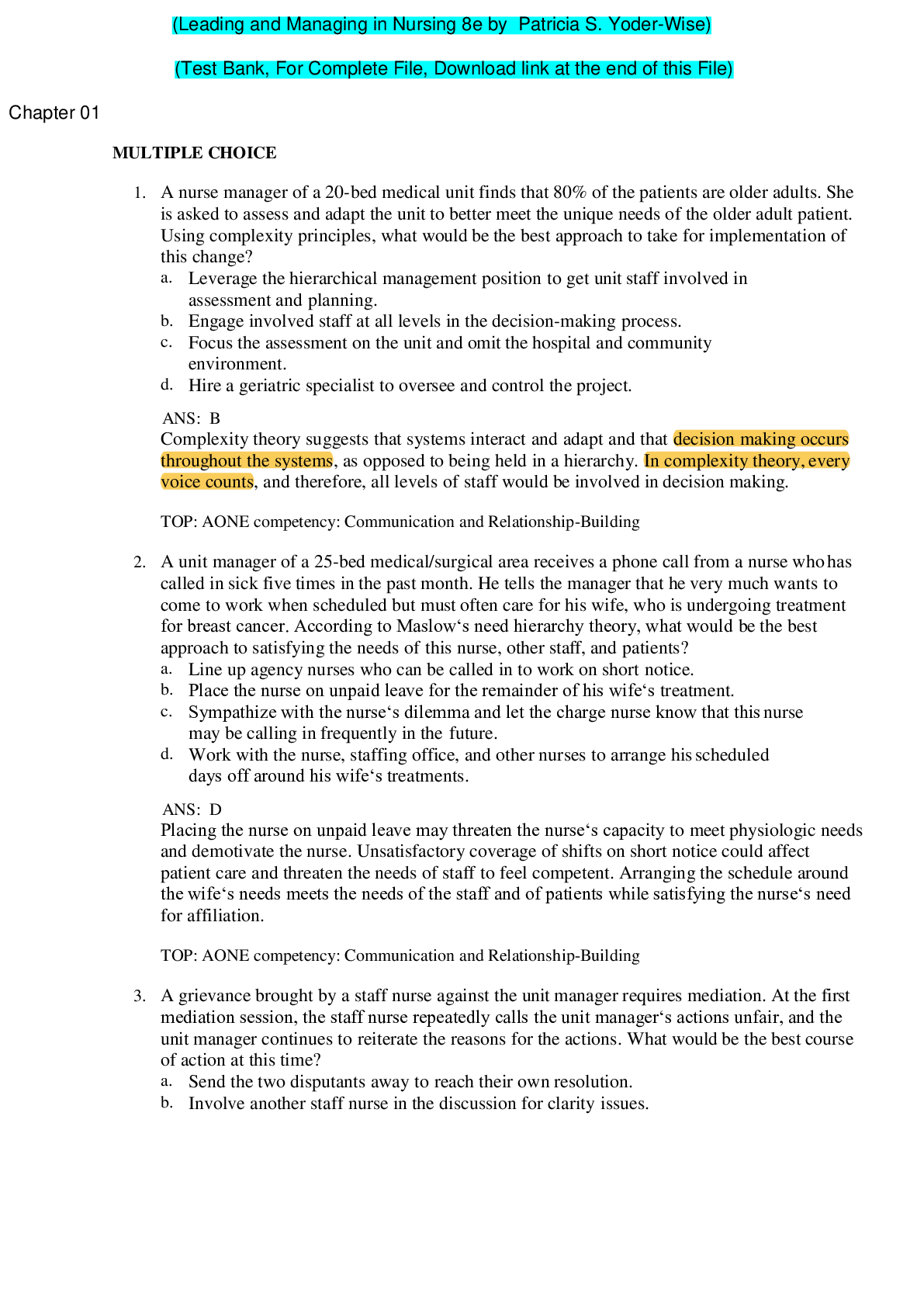
Leading and Managing in Nursing 8th Edition by Patricia S. Yo...
$20
115 Pages
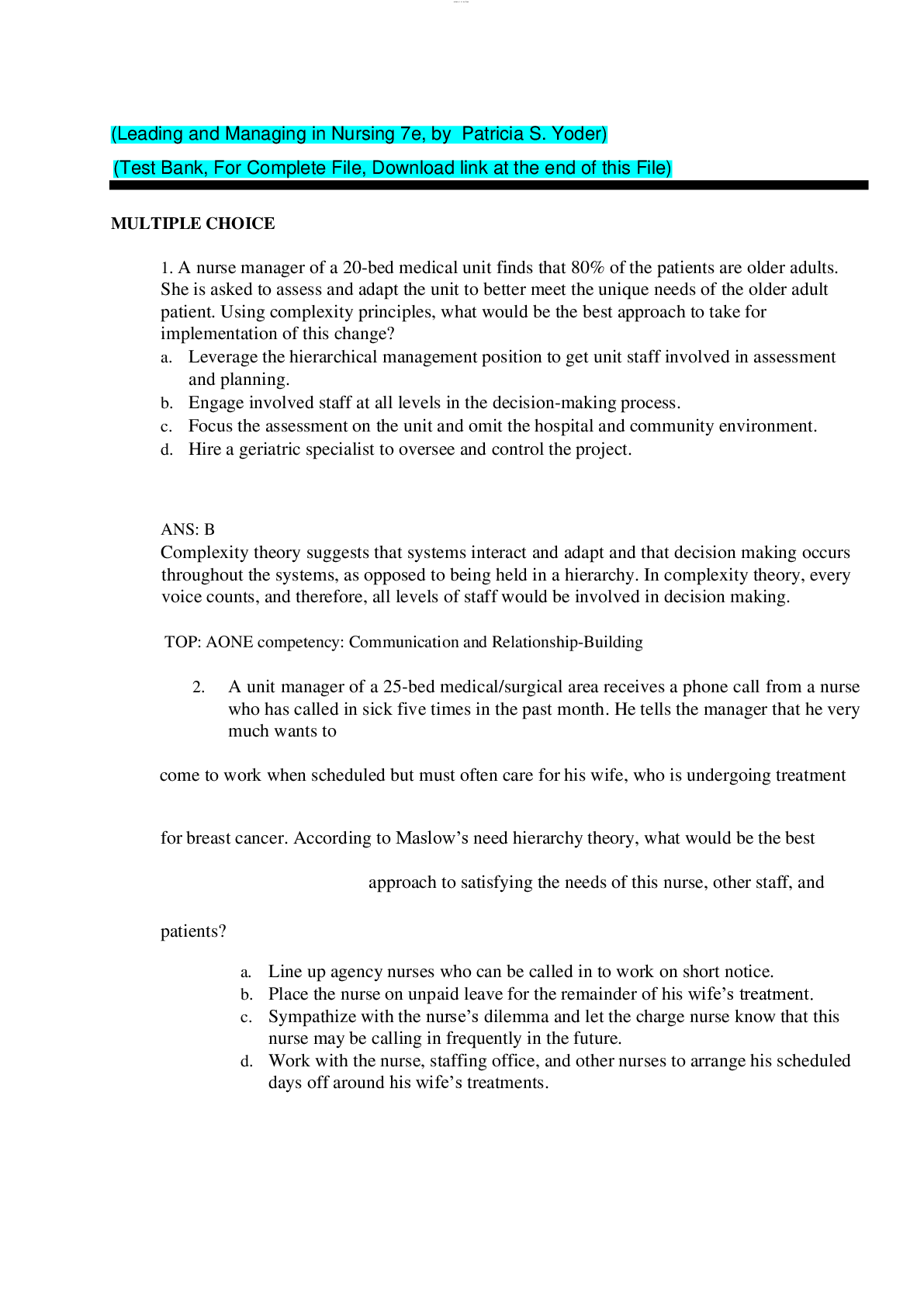
Leading and Managing in Nursing 7th Edition By Patricia S. Yod...
More related documents below