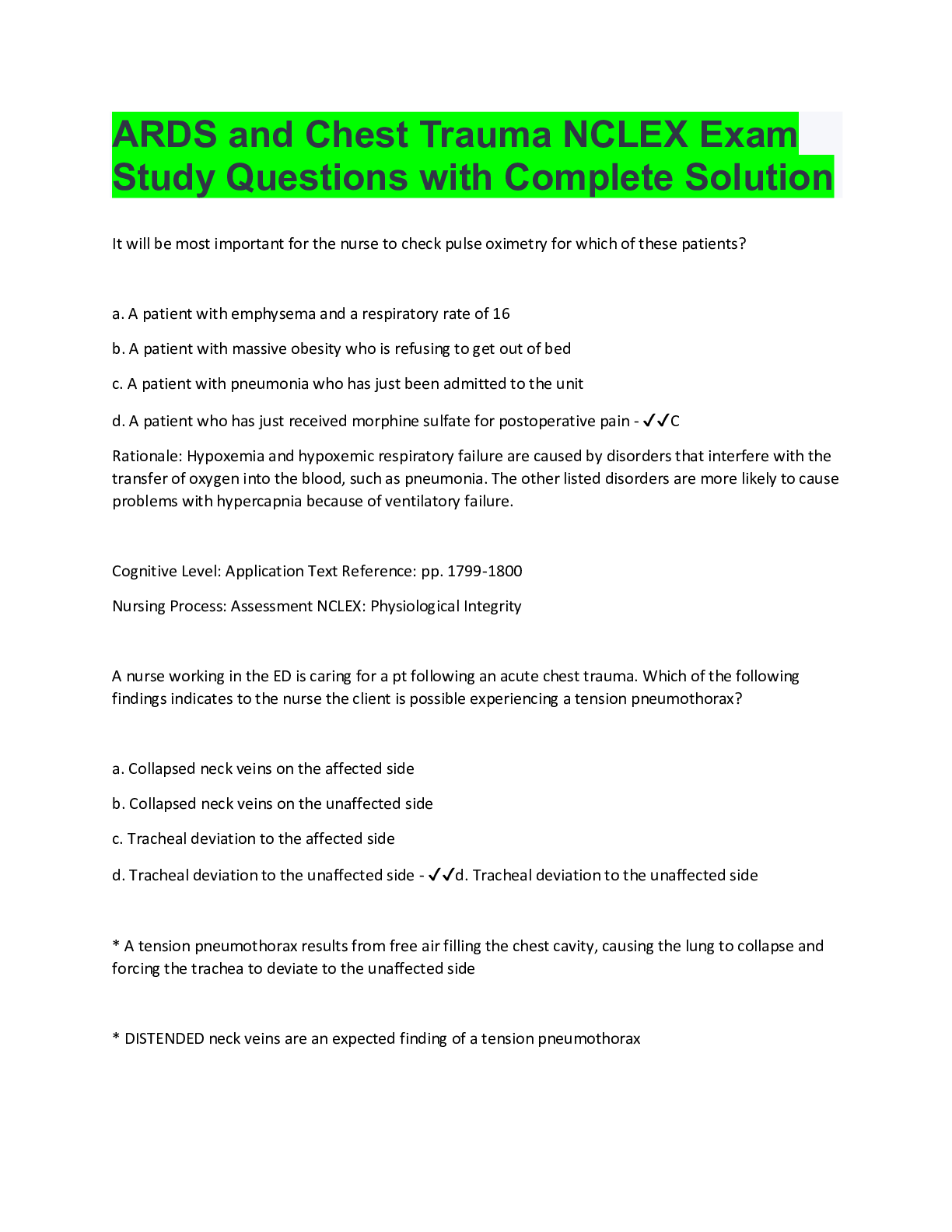
ARDS and Chest Trauma NCLEX Exam Study Questions with Complete Solution
Document Content and Description Below
ARDS and Chest Trauma NCLEX Exam
Study Questions with Complete Solution
It will be most important for the nurse to check pulse oximetry for which of these patients?
a. A patient with emphysema and a respiratory rate o
...
[Show More]
Last updated: 3 years ago
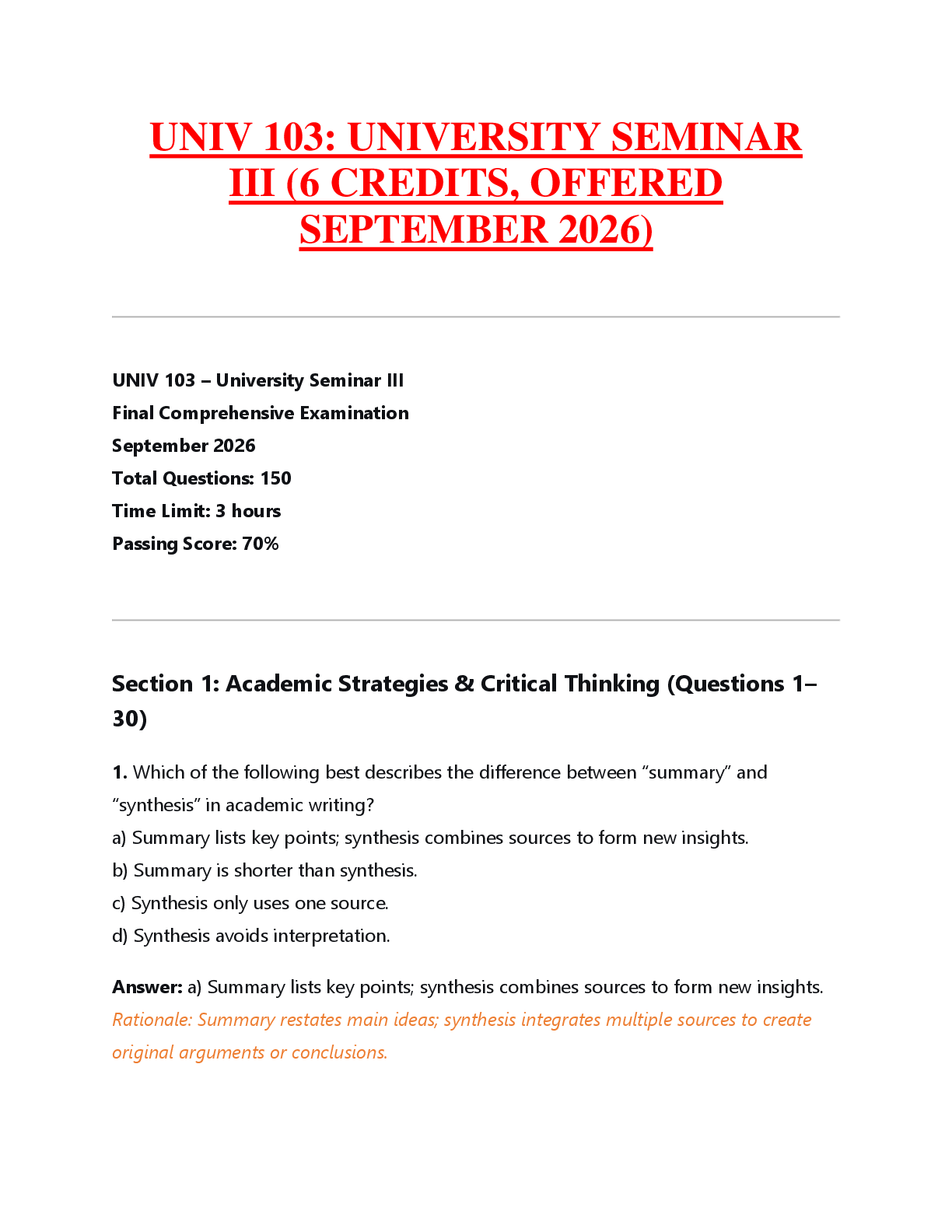
Preview 1 out of 18 pages
Instant download
Buy this Document to get the Full Access Instantly
Provided by Students Who Aced it
We Verify Document Content to Gurantee Accuracy
Reviews( 0 )
Document information
Connected school, study & course
About the document
Uploaded On
Jul 06, 2022
Number of pages
18
Written in
All

Additional information
This document has been written for:
Uploaded
Jul 06, 2022
Downloads
0
Views
255
Topic Tags
Recommended For You
Get more on NCLEX »
$9
18 Pages
ARDS and Chest Trauma NCLEX Exam Study Questions with Complete...
$10
18 Pages
ARDS and Chest Trauma NCLEX Exam Study Questions with Complete...
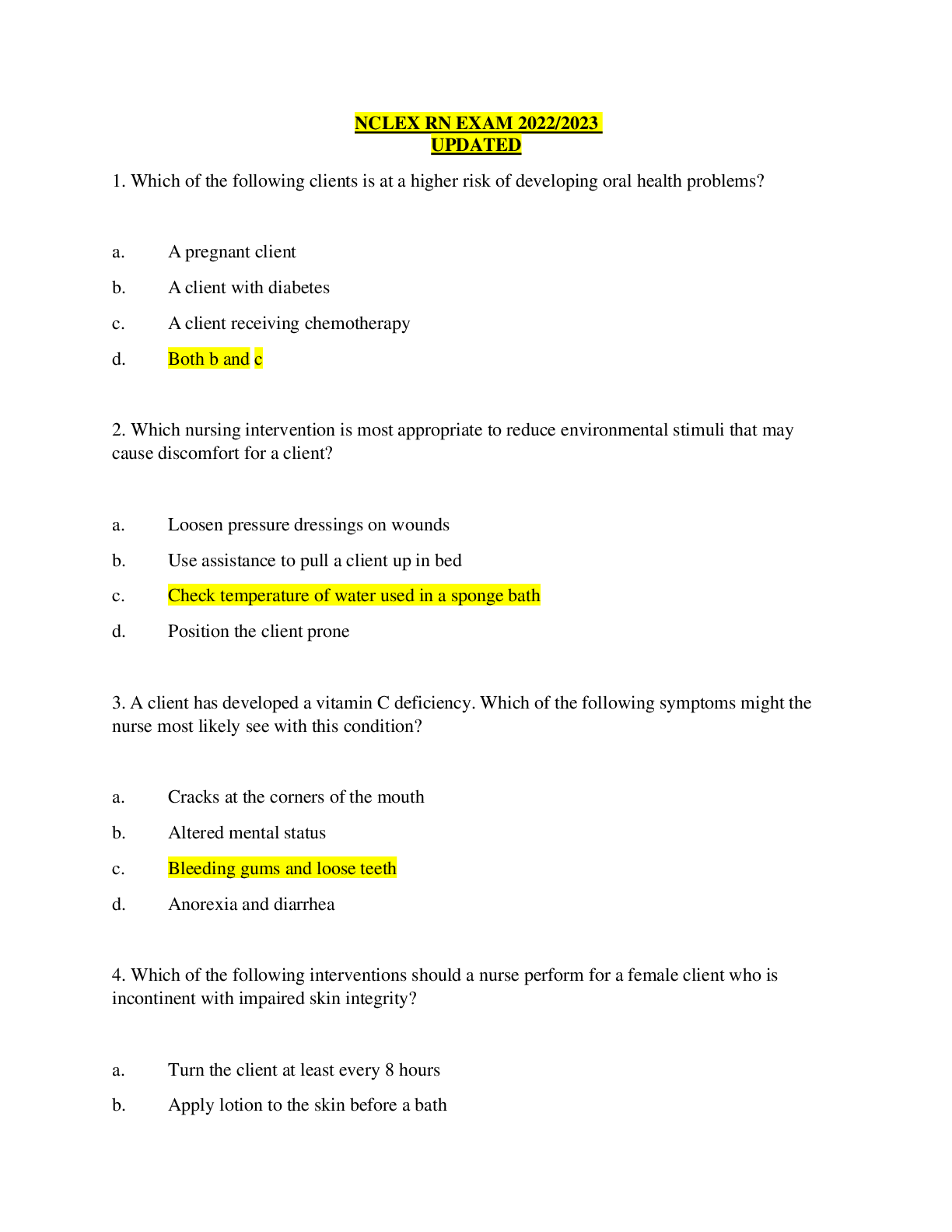

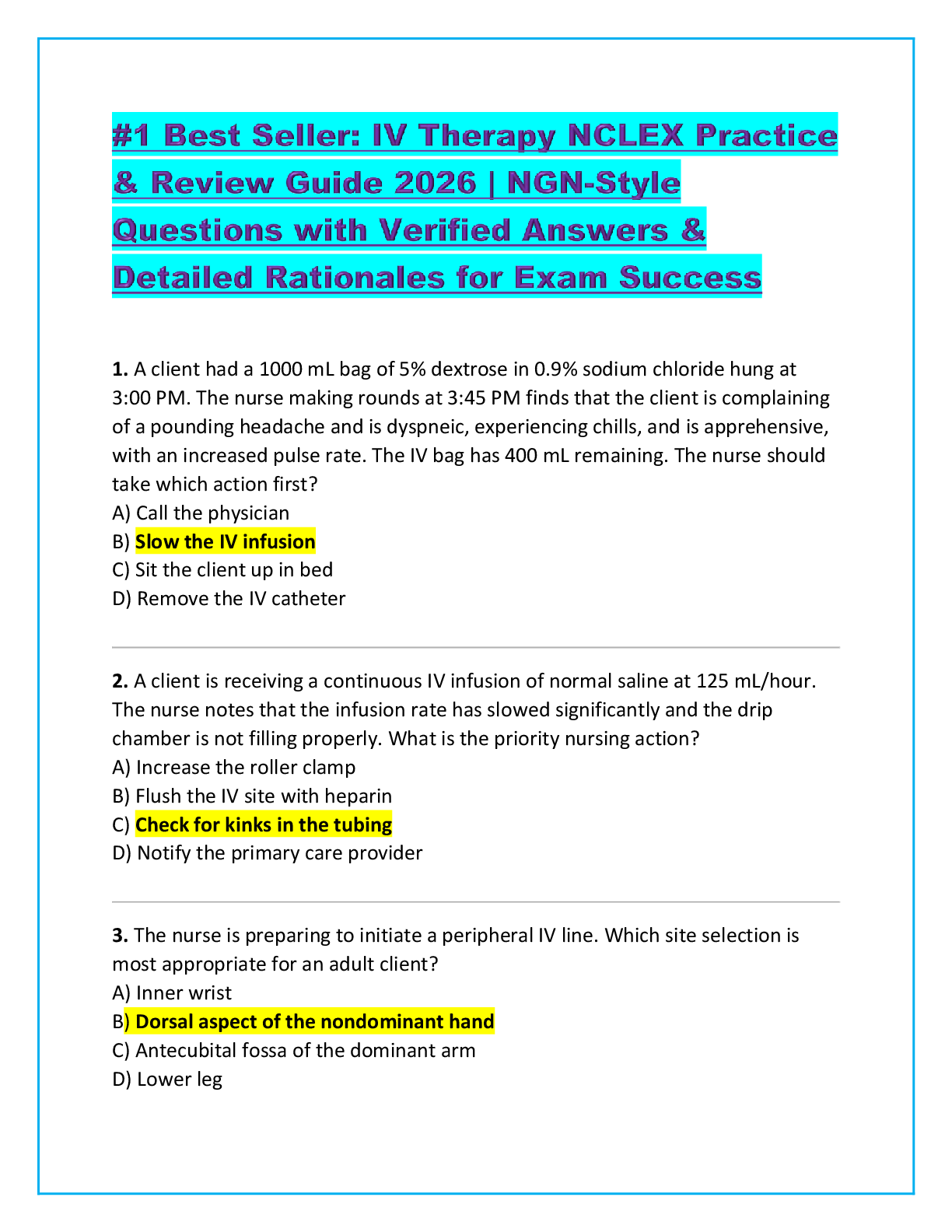

$22.5
307 Pages
TEST BANK for Davis Advantage for Psychiatric Mental Health Nu...
$17
588 Pages
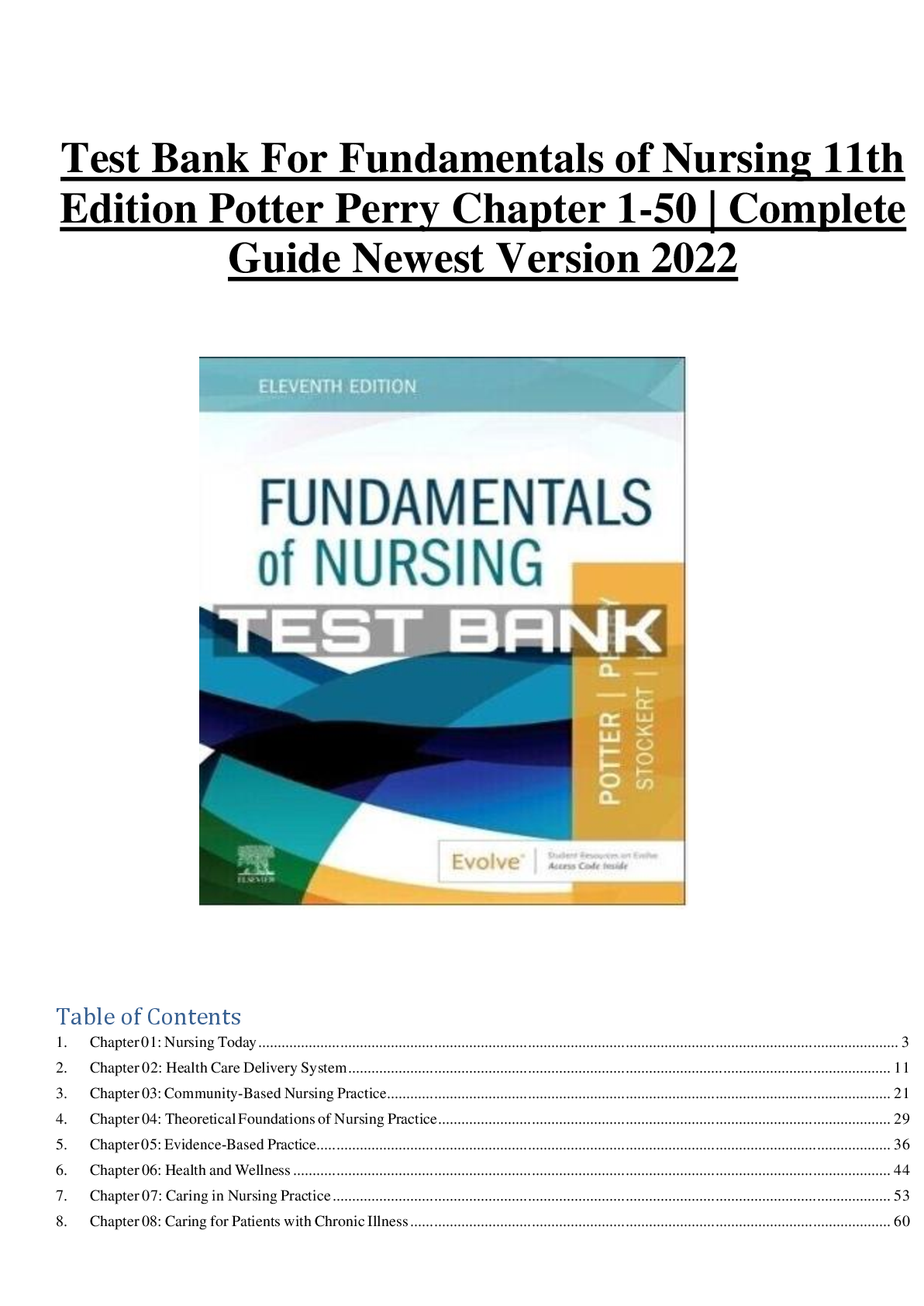
Test Bank For Fundamentals of Nursing 11th Edition Potter Perr...
$16
496 Pages
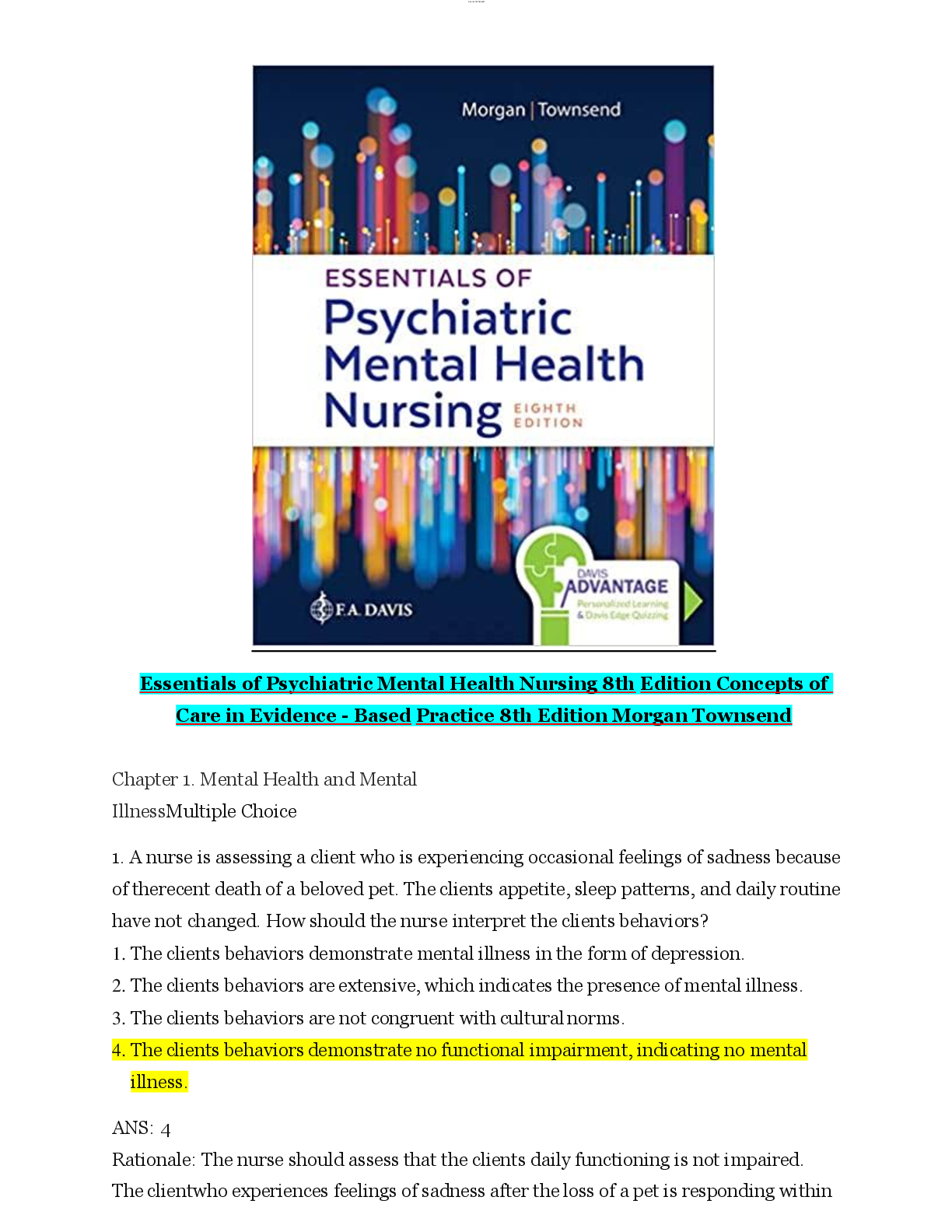
TEST BANK for Essentials of Psychiatric Mental Health Nursing:...
$19
553 Pages
Essentials of Psychiatric Nursing 2nd Edition Boyd TEST BANK

$16
554 Pages
TEST BANK for Essentials of Psychiatric Nursing 2nd Edition by...
$15
554 Pages
Test Bank for Essentials of Psychiatric Nursing 2nd Edition by...

$16
276 Pages
Eat Right Prep Exam 2026/2027 Latest Update | Complete Study...
More related documents below