Surgery risk classes
(ANS-
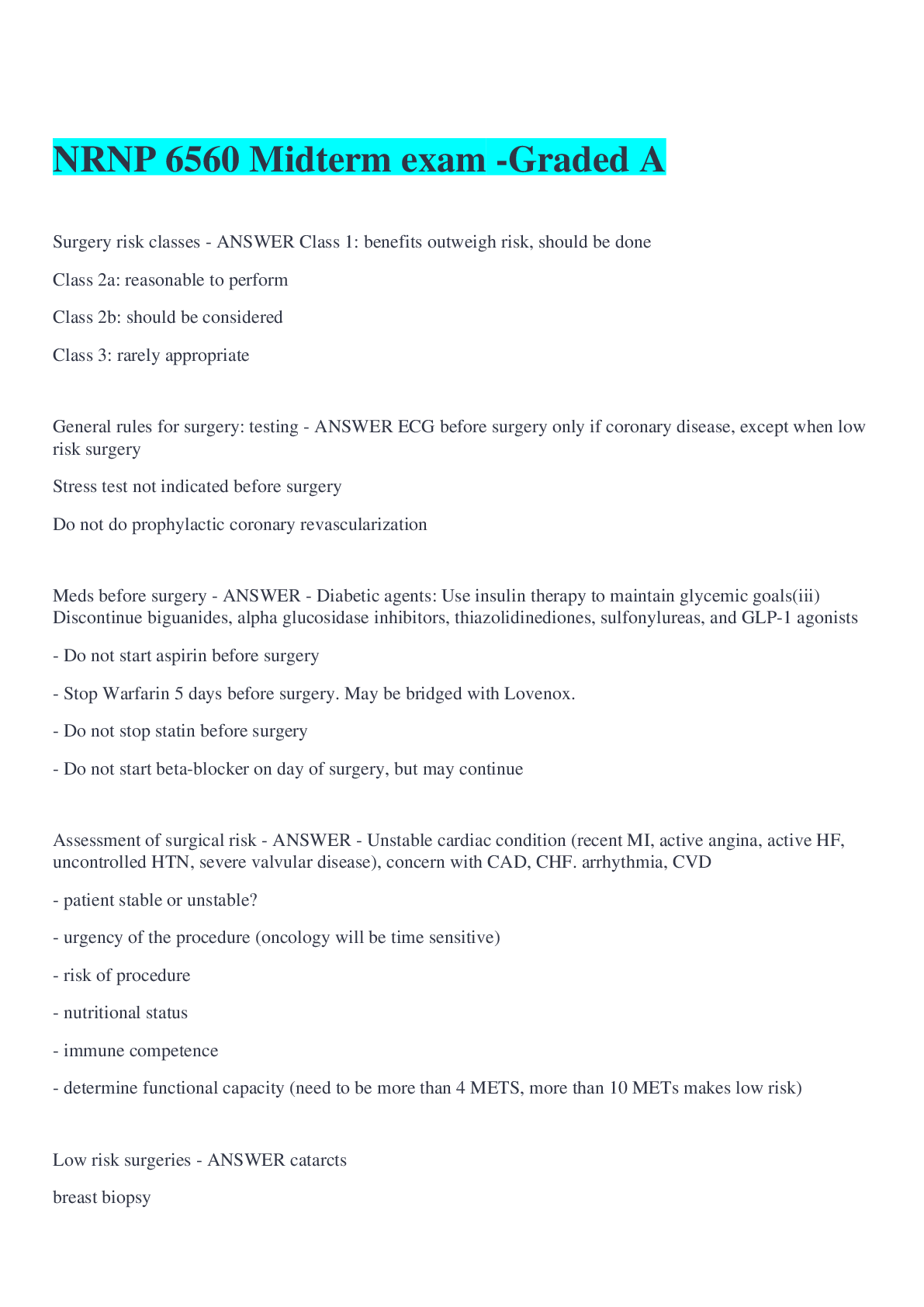
Class 1: benefits outweigh risk, should be done
Class 2a: reasonable to perform
Class 2b: should be considered
Class 3: rarely appropriate
General rules for surgery: testing
(ANS-
...
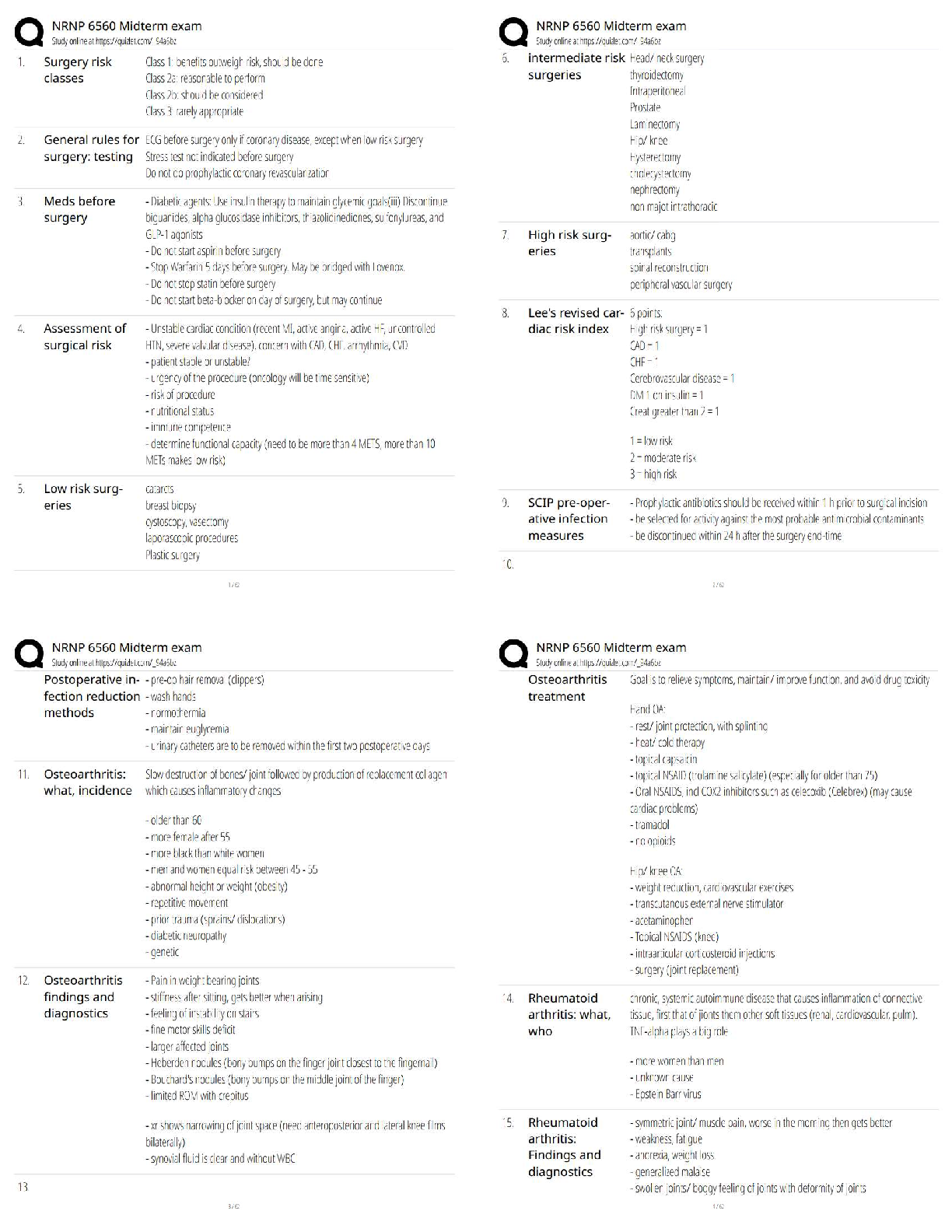
Surgery risk classes
(ANS-
Class 1: benefits outweigh risk, should be done
Class 2a: reasonable to perform
Class 2b: should be considered
Class 3: rarely appropriate
General rules for surgery: testing
(ANS-
ECG before surgery only if coronary disease, except when low risk surgery
Stress test not indicated before surgery
Do not do prophylactic coronary revascularization
Meds before surgery
(ANS-
- Diabetic agents: Use insulin therapy to maintain glycemic goals(iii) Discontinue biguanides, alpha glucosidase inhibitors, thiazolidinediones, sulfonylureas, and GLP-1 agonists
- Do not start aspirin before surgery
- Stop Warfarin 5 days before surgery. May be bridged with Lovenox.
- Do not stop statin before surgery
- Do not start beta-blocker on day of surgery, but may continue
Assessment of surgical risk
(ANS-
- Unstable cardiac condition (recent MI, active angina, active HF, uncontrolled HTN, severe valvular disease), concern with CAD, CHF. arrhythmia, CVD
- patient stable or unstable?
- urgency of the procedure (oncology will be time sensitive)
- risk of procedure
- nutritional status
- immune competence
- determine functional capacity (need to be more than 4 METS, more than 10 METs makes low risk)
Low risk surgeries
(ANS-
catarcts
breast biopsy
cystoscopy, vasectomy
laporascopic procedures
Plastic surgery
intermediate risk surgeries
(ANS-
Head/ neck surgery
thyroidectomy
Intraperitoneal
Prostate
Laminectomy
Hip/ knee
Hysterectomy
cholecystectomy
nephrectomy
non majot intrathoracic
High risk surgeries
(ANS-
aortic/ cabg
transplants
spinal reconstruction
peripheral vascular surgery
Lee's revised cardiac risk index
(ANS-
6 points:
High risk surgery = 1
CAD = 1
CHF = 1
Cerebrovascular disease = 1
DM 1 on insulin = 1
Creat greater than 2 = 1
1 = low risk
2 = moderate risk
3 = high risk
SCIP pre-operative infection measures
(ANS-
- Prophylactic antibiotics should be received within 1 h prior to surgical incision
- be selected for activity against the most probable antimicrobial contaminants
- be discontinued within 24 h after the surgery end-time
Postoperative infection reduction methods
(ANS-
- pre-op hair removal (clippers)
- wash hands
- normothermia
- maintain euglycemia
- urinary catheters are to be removed within the first two postoperative days
Osteoarthritis: what, incidence
(ANS-
Slow destruction of bones/ joint followed by production of replacement collagen which causes inflammatory changes
- older than 60
- more female after 55
- more black than white women
- men and women equal risk between 45 - 55
- abnormal height or weight (obesity)
- repetitive movement
- prior trauma (sprains/ dislocations)
- diabetic neuropathy
- genetic
Osteoarthritis findings and diagnostics
(ANS-
- Pain in weight bearing joints
- stiffness after sitting, gets better when arising
- feeling of instability on stairs
- fine motor skills deficit
- larger affected joints
- Heberden nodules (bony bumps on the finger joint closest to the fingernail)
- Bouchard's nodules (bony bumps on the middle joint of the finger)
- limited ROM with crepitus
- xr shows narrowing of joint space (need anteroposterior and lateral knee films bilaterally)
- synovial fluid is clear and without WBC
Osteoarthritis treatment
(ANS- Goal is to relieve symptoms, maintain/ improve function, and avoid drug toxicity
Hand OA:
- rest/ joint protection, with splinting
- heat/ cold therapy
- topical capsaicin
- topical NSAID (trolamine salicylate) (especially for older than 75)
- Oral NSAIDS, incl COX2 inhibitors such as celecoxib (Celebrex) (may cause cardiac problems)
- tramadol
- no opioids
Hip/ knee OA:
- weight reduction, cardiovascular exercises
- transcutanous external nerve stimulator
- acetaminophen
- Topical NSAIDS (knee)
- intraarticular corticosteroid injections
- surgery (joint replacement)
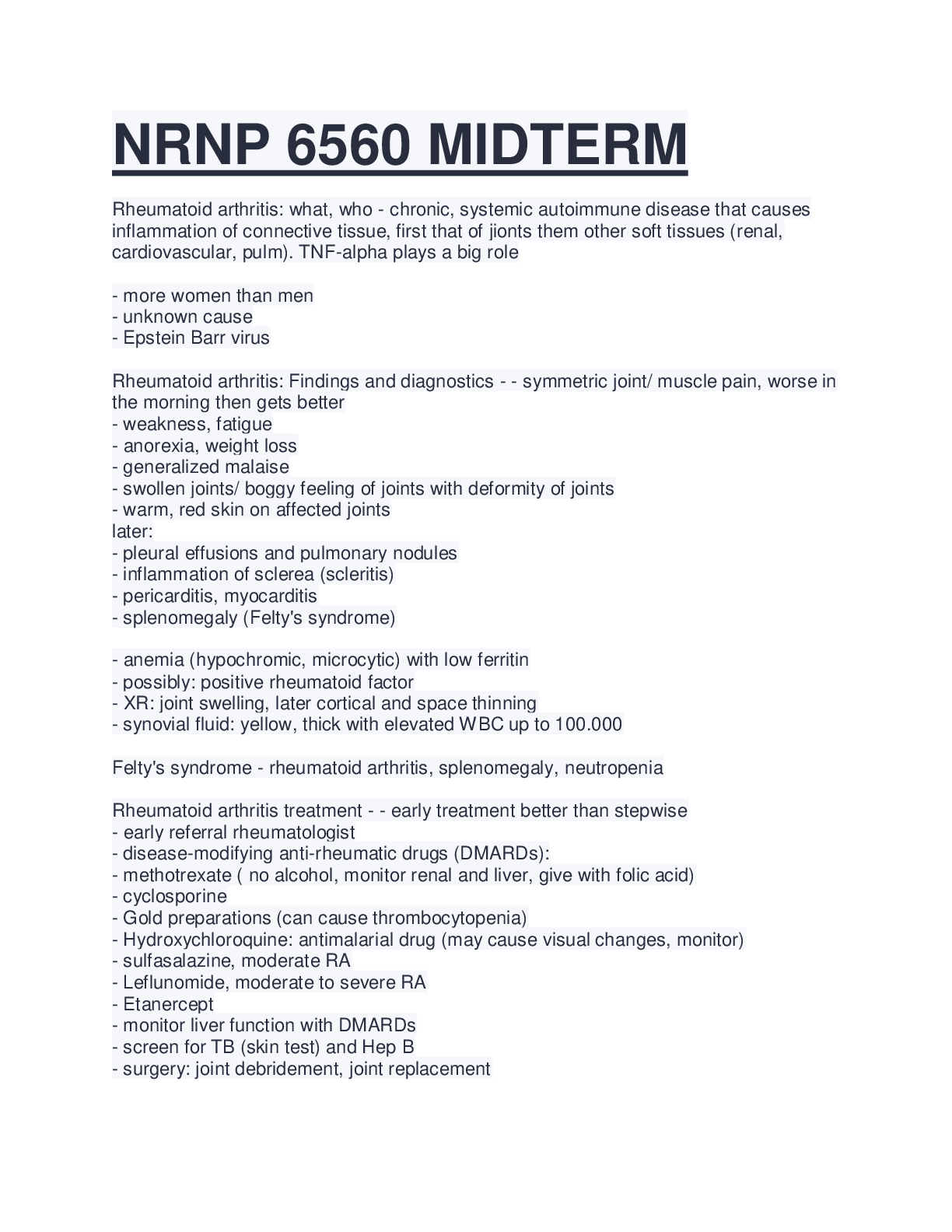
Rheumatoid arthritis: what, who
(ANS-
chronic, systemic autoimmune disease that causes inflammation of connective tissue, first that of jionts them other soft tissues (renal, cardiovascular, pulm). TNF-alpha plays a big role
- more women than men
- unknown cause
- Epstein Barr virus
Rheumatoid arthritis: Findings and diagnostics
(ANS-
- symmetric joint/ muscle pain, worse in the morning then gets better
- weakness, fatigue
- anorexia, weight loss
- generalized malaise
- swollen joints/ boggy feeling of joints with deformity of joints
- warm, red skin on affected joints
later:
- pleural effusions and pulmonary nodules
- inflammation of sclerea (scleritis)
- pericarditis, myocarditis
- splenomegaly (Felty's syndrome)
- anemia (hypochromic, microcytic) with low ferritin
- possibly: positive rheumatoid factor
- XR: joint swelling, later cortical and space thinning
- synovial fluid: yellow, thick with elevated WBC up to 100.000
[Show More]