CEN Pretest by PDB Nurse Education, LLC
1. Pulse pressure is the difference between systolic blood pressure and diastolic blood pressure, and is widened in
which of the following disorders?
a. Early hypovolemic shock.
...
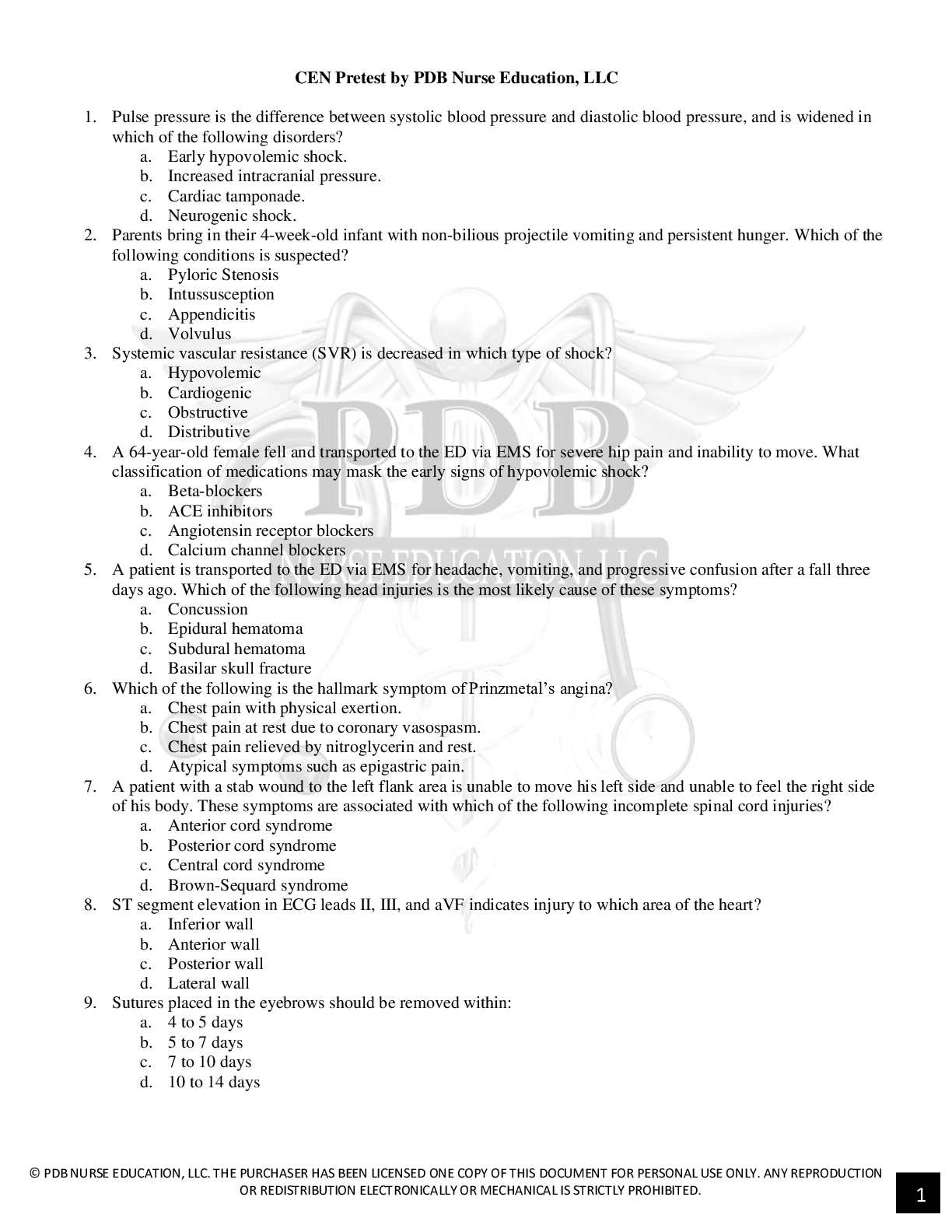
CEN Pretest by PDB Nurse Education, LLC
1. Pulse pressure is the difference between systolic blood pressure and diastolic blood pressure, and is widened in
which of the following disorders?
a. Early hypovolemic shock.
b. Increased intracranial pressure.
c. Cardiac tamponade.
d. Neurogenic shock.
2. Parents bring in their 4-week-old infant with non-bilious projectile vomiting and persistent hunger. Which of the
following conditions is suspected?
a. Pyloric Stenosis
b. Intussusception
c. Appendicitis
d. Volvulus
3. Systemic vascular resistance (SVR) is decreased in which type of shock?
a. Hypovolemic
b. Cardiogenic
c. Obstructive
d. Distributive
4. A 64-year-old female fell and transported to the ED via EMS for severe hip pain and inability to move. What
classification of medications may mask the early signs of hypovolemic shock?
a. Beta-blockers
b. ACE inhibitors
c. Angiotensin receptor blockers
d. Calcium channel blockers
5. A patient is transported to the ED via EMS for headache, vomiting, and progressive confusion after a fall three
days ago. Which of the following head injuries is the most likely cause of these symptoms?
a. Concussion
b. Epidural hematoma
c. Subdural hematoma
d. Basilar skull fracture
6. Which of the following is the hallmark symptom of Prinzmetal’s angina?
a. Chest pain with physical exertion.
b. Chest pain at rest due to coronary vasospasm.
c. Chest pain relieved by nitroglycerin and rest.
d. Atypical symptoms such as epigastric pain.
7. A patient with a stab wound to the left flank area is unable to move his left side and unable to feel the right side
of his body. These symptoms are associated with which of the following incomplete spinal cord injuries?
a. Anterior cord syndrome
b. Posterior cord syndrome
c. Central cord syndrome
d. Brown-Sequard syndrome
8. ST segment elevation in ECG leads II, III, and aVF indicates injury to which area of the heart?
a. Inferior wall
b. Anterior wall
c. Posterior wall
d. Lateral wall
9. Sutures placed in the eyebrows should be removed within:
a. 4 to 5 days
b. 5 to 7 days
c. 7 to 10 days
d. 10 to 14 days
CEN Post Test Part 2 Answers
1. C - CPR and defibrillation are the priorities in VF, along with finding the cause of the arrest and epinephrine. (PALS
pgs. 89-92)
2. C – Evidence should be placed in paper, not plastic bags. The other options are correct. (Sheehy pgs. 596-98)
3. B – EMTALA is a component of COBRA which states that a qualified provider must perform a medical screening
exam and treatment to stabilize emergency medical conditions on all patients who present requesting emergency
care (Sheehy pgs. 9-11)
4. B – The difference between START and JumpSTART triage criteria is that 5 rescue breaths are to be provided to a
pediatric patient who is not breathing but has a palpable pulse, and breathing is to be reassessed prior to categorizing
the patient as dead/dying. If this patient begins breathing on her own after 5 rescue breaths, she would be
categorized as immediate. (ENPC pg. 349)
5. D – The KB serum test detects fetal red cells in the maternal circulation, used to predict abruptio placentae. It is
important in determining the need to administer Rh immune globulin when the mother is Rh negative, and the fetus
is Rh positive. (TNCC pg. 299)
6. C – The person who approaches the family about donation must be a trained requester or local organ procurement
representative. Early notification gives the OPO representative adequate time to prepare the family for the request to
donate a loved one’s organs or tissue. (Sheehy pg. 142, 146 and TNCC pg. 334)
[Show More]