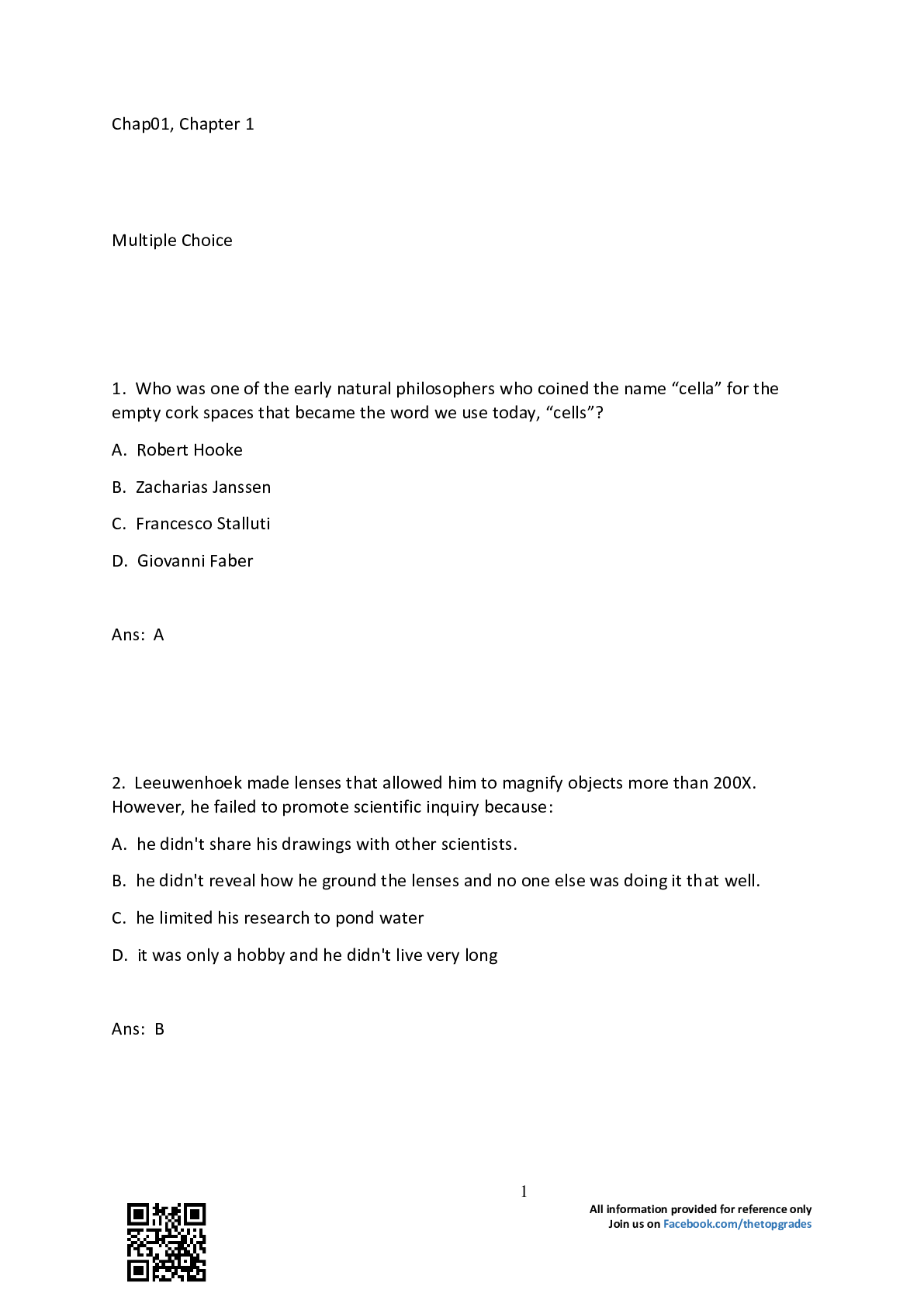
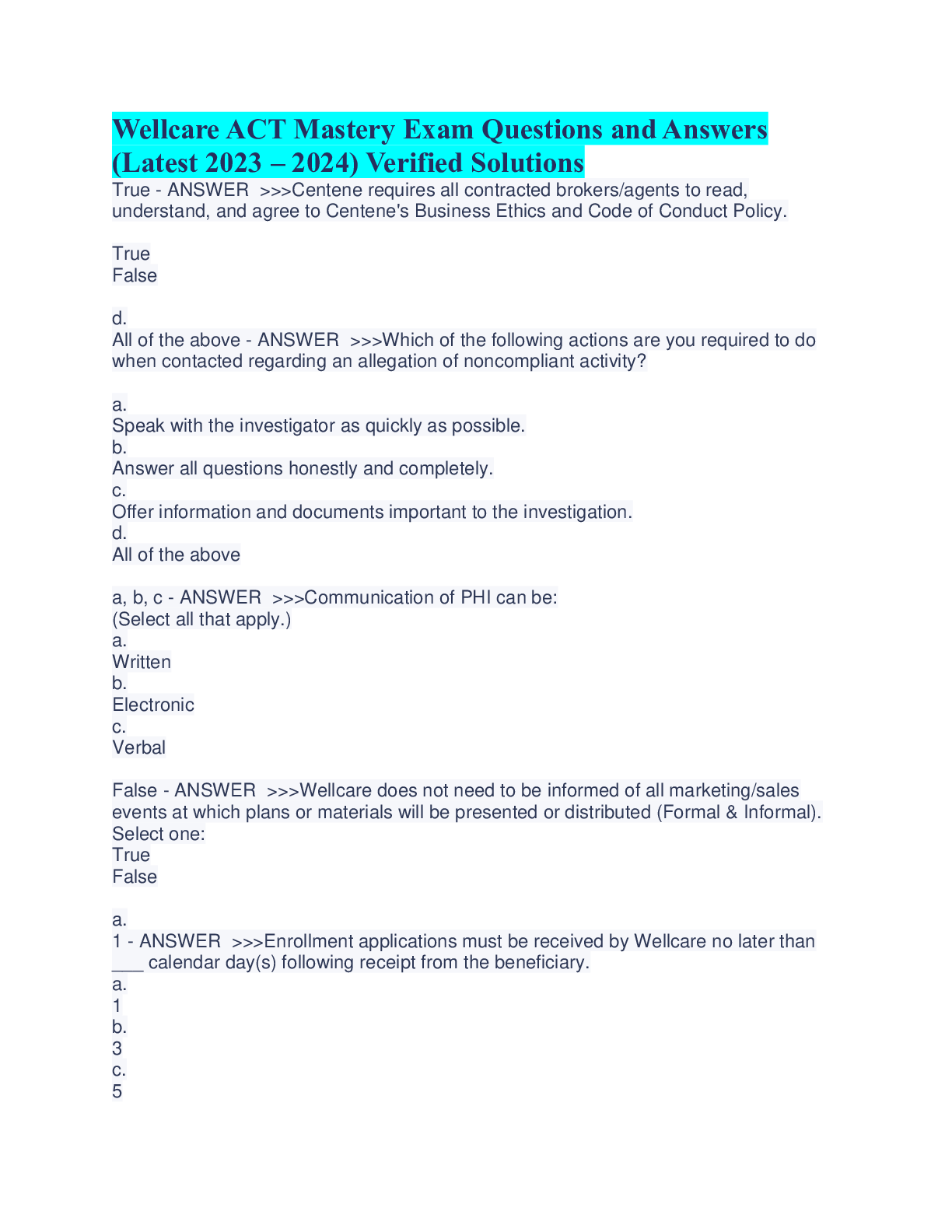
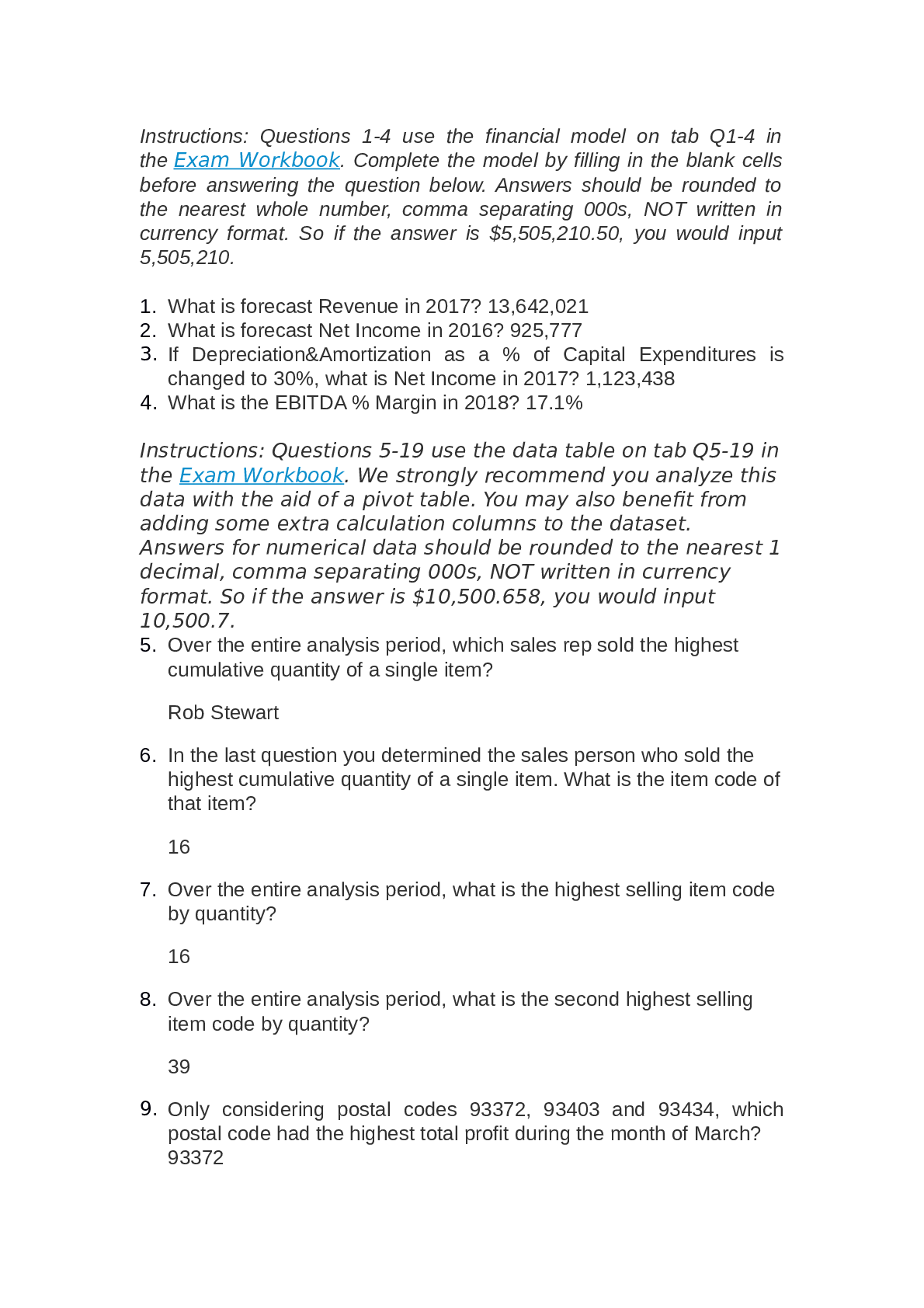
Micro Biology > EXAM > MICROBIOLOGY EXAM 1 REVIEW pdf (All)
MICROBIOLOGY EXAM 1 REVIEW pdf
Document Content and Description Below
Last updated: 3 years ago
Preview 1 out of 7 pages
Instant download

Buy this Document to get the Full Access Instantly
Provided by Students Who Aced it
We Verify Document Content to Gurantee Accuracy
Reviews( 0 )
Document information
Connected school, study & course
About the document
Uploaded On
Jul 14, 2022
Number of pages
7
Written in
All

Additional information
This document has been written for:
Uploaded
Jul 14, 2022
Downloads
0
Views
164
Topic Tags
Recommended For You
Get more on EXAM »
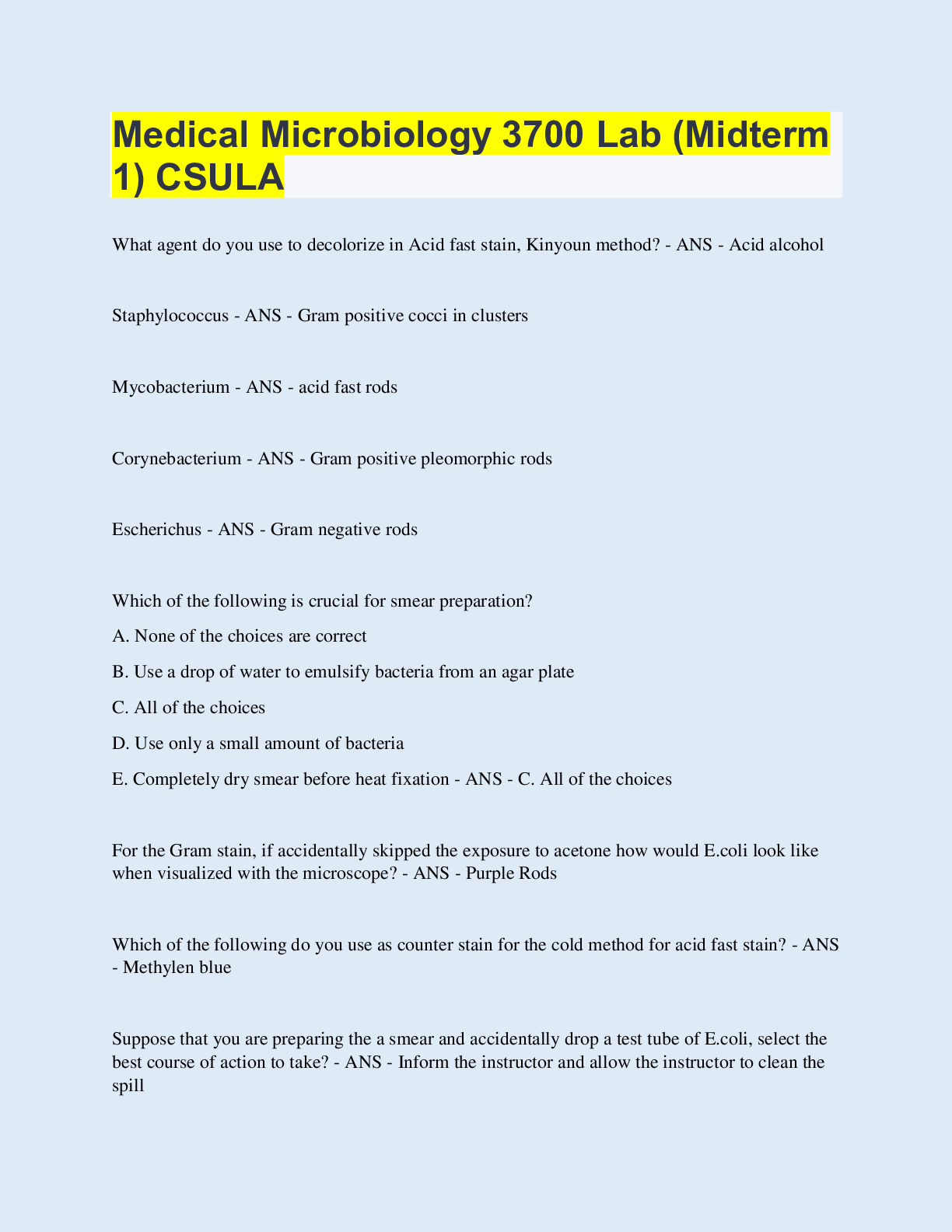
Medical Microbiology 3700 Lab (Midterm 1) CSULA | 70 Questions...

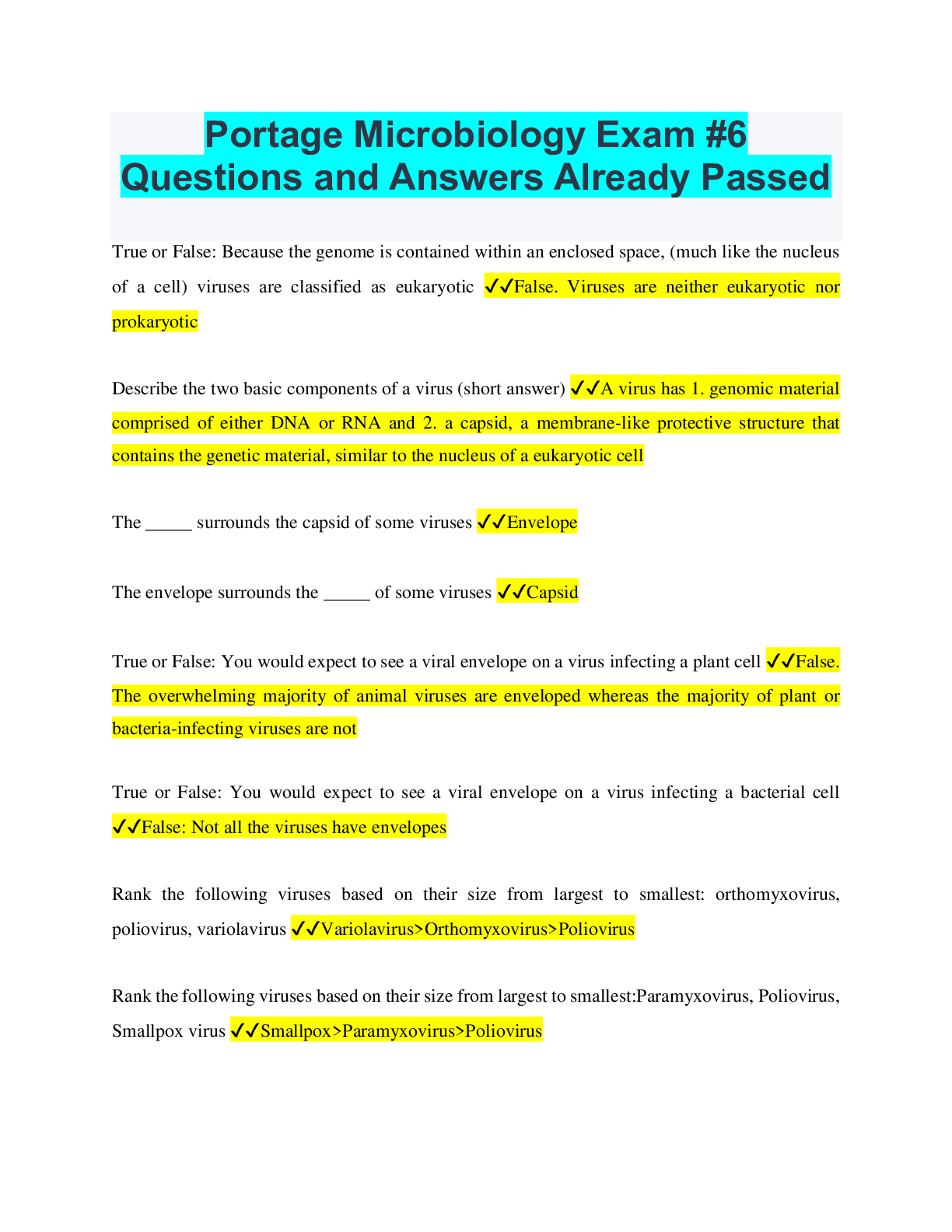
Portage Microbiology Exam 6 | Questions and Answers | Already...

Prescott's Microbiology, 12th Edition by Willey, Sandman, Wood...

TEST BANK for Talaro’s Foundations in Microbiology, 10th Editi...
TEST BANK for Microbiology: AN EVOLVING SCIENCE 2nd Edition By...
TEST BANK for Microbiology An Evolving Science 3rd Edition By...

Talaro's Foundations in Microbiology, 11th Edition by Chess an...

Nester's Microbiology: A Human Perspective, 10th Edition by An...
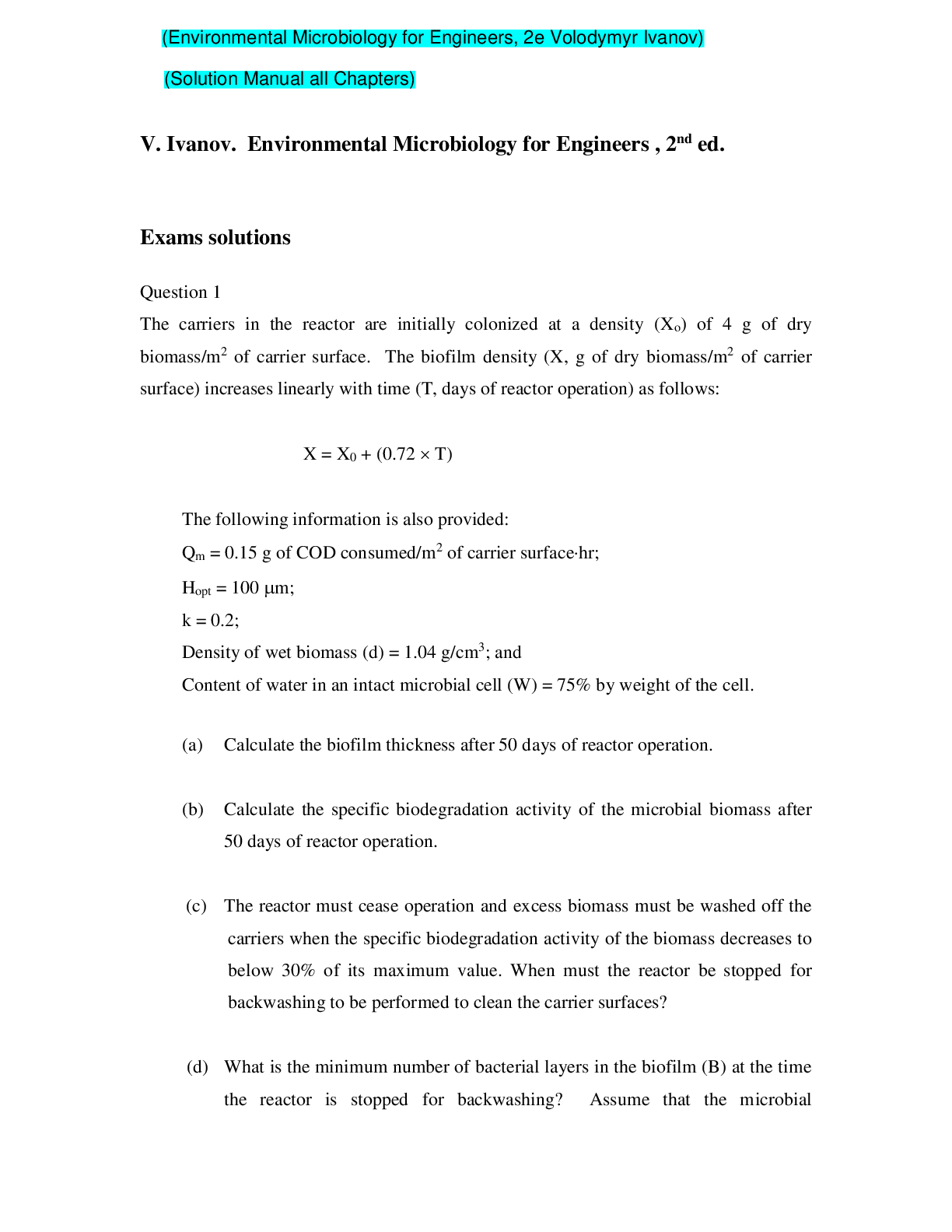
Environmental Microbiology for Engineers, 2e Volodymyr Ivanov...

STRAIGHTERLINE-Microbiology-BIO-250L-Lab-8| Identifying an Unk...
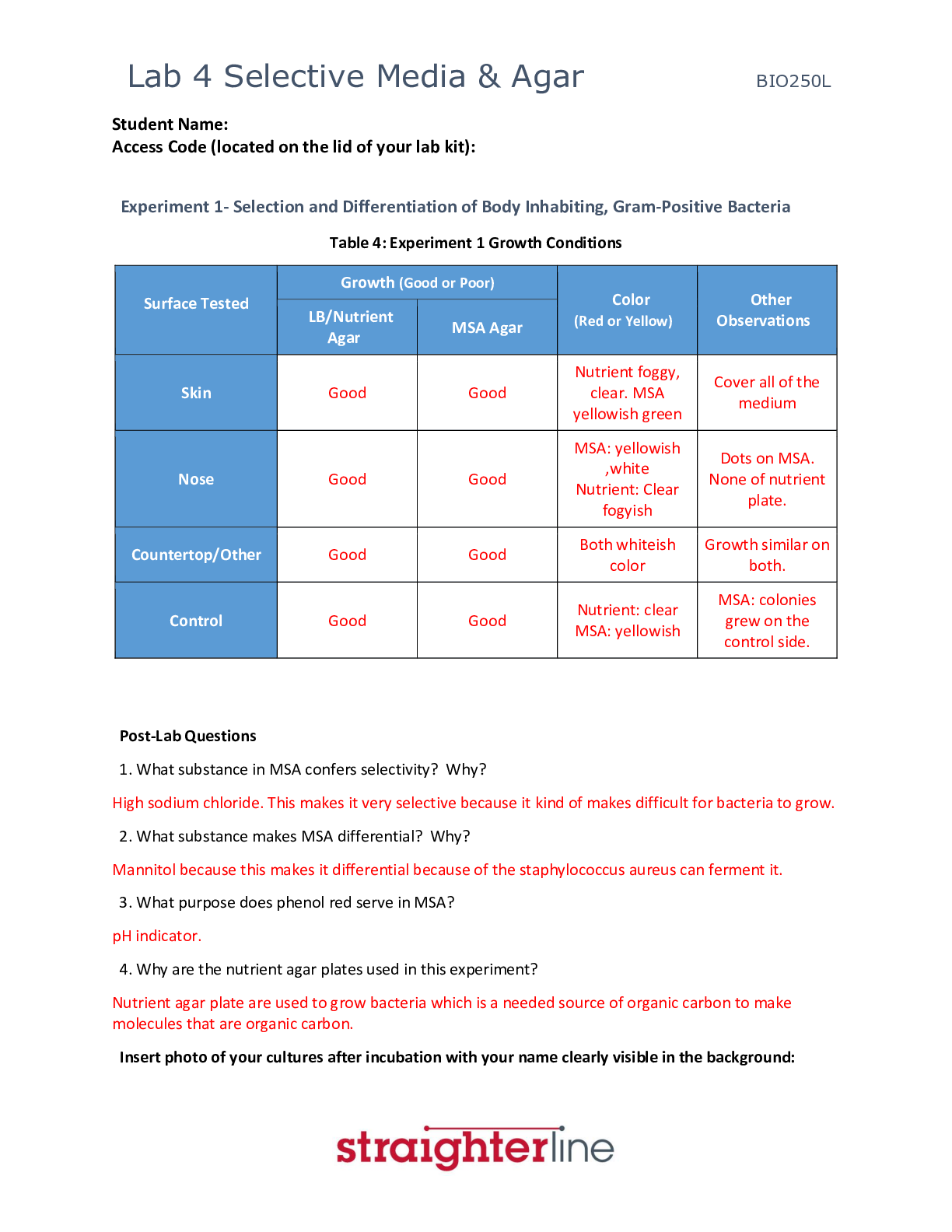
STRAIGHTERLINE-Microbiology-BIO-250L-Lab-3| Quantification-of-...
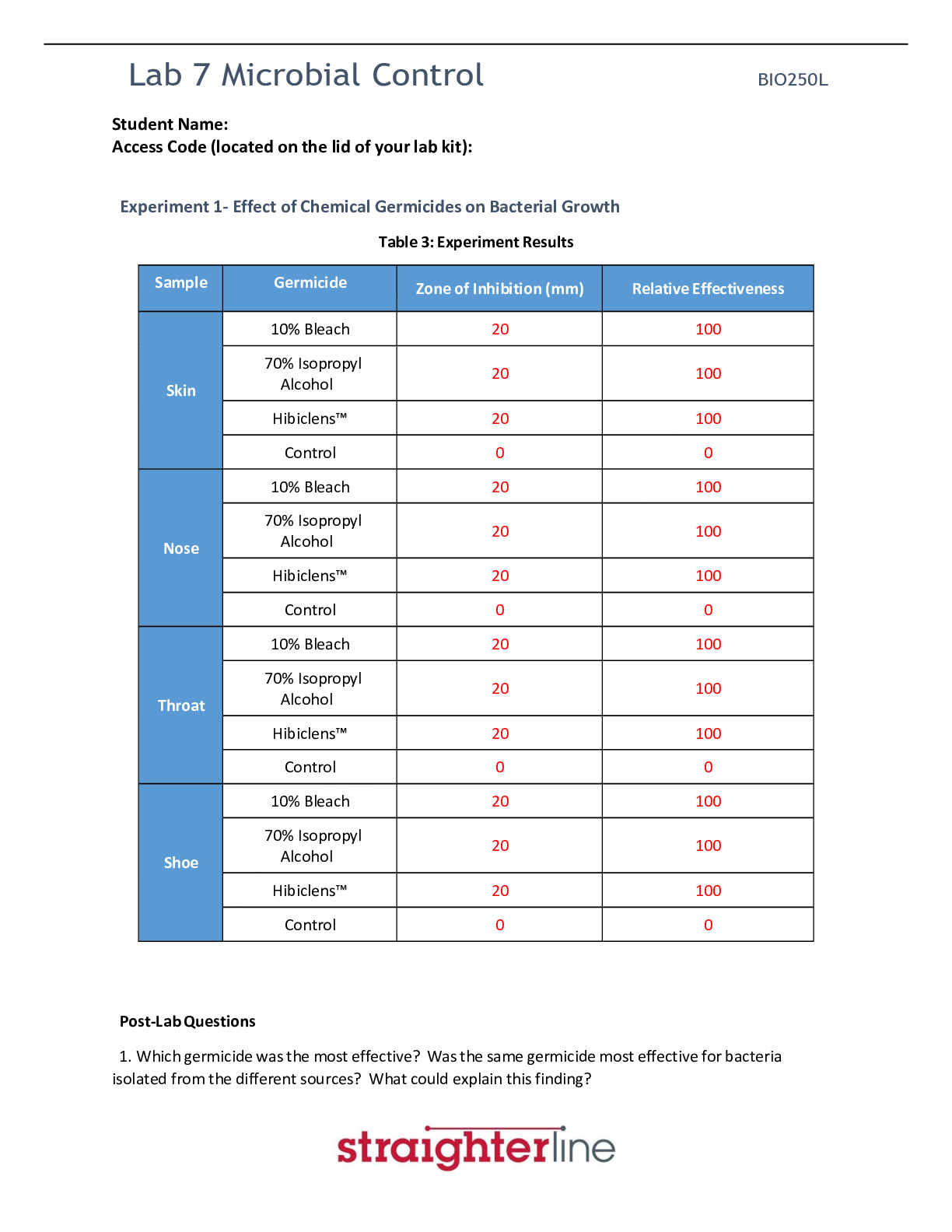
STRAIGHTERLINE-Microbiology-BIO-250L-Lab-7-Microbial-Control....
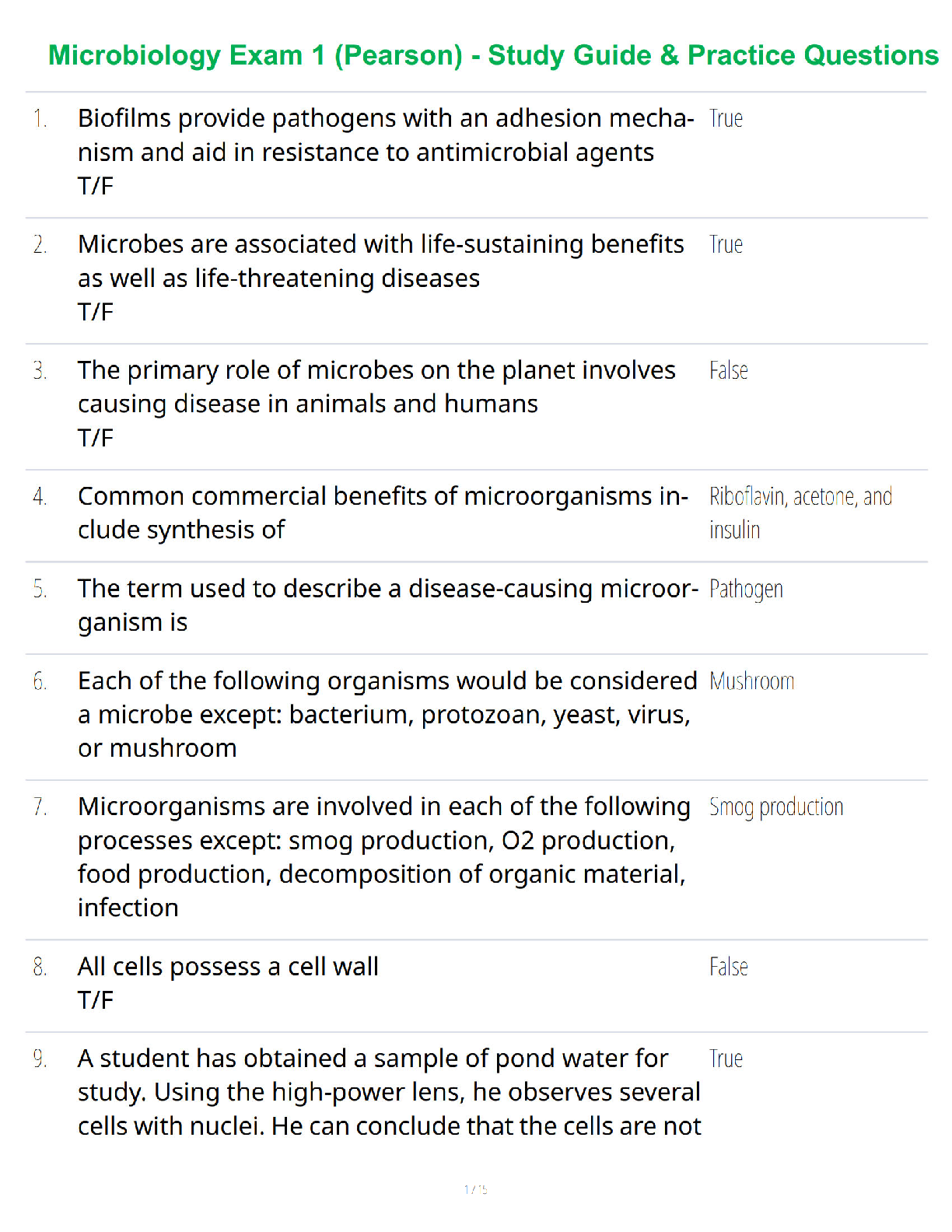
Microbiology Exam 1 (Pearson) - Study Guide & Practice Questio...
University of Alberta - MICRB 265microbio lab 8 report. Using...
Bioremediation of Emerging Contaminants from Soils Soil Health...