ihuman Foundational Neuroscience
Document Content and Description Below
Foundational Neuroscience
Explain the agonist-to-antagonist spectrum of action of psychopharmacologic agents,
including how partial and inverse agonist functionality may impact the efficacy of
psychopharmacologic trea
...
[Show More]
Last updated: 3 years ago
Preview 1 out of 3 pages
Instant download

Buy this Document to get the Full Access Instantly
Provided by Students Who Aced it
We Verify Document Content to Gurantee Accuracy
Reviews( 0 )
Document information
Connected school, study & course
About the document
Uploaded On
Jul 15, 2022
Number of pages
3
Written in
All

Additional information
This document has been written for:
Uploaded
Jul 15, 2022
Downloads
0
Views
43
Topic Tags
Recommended For You
Get more on EXAM »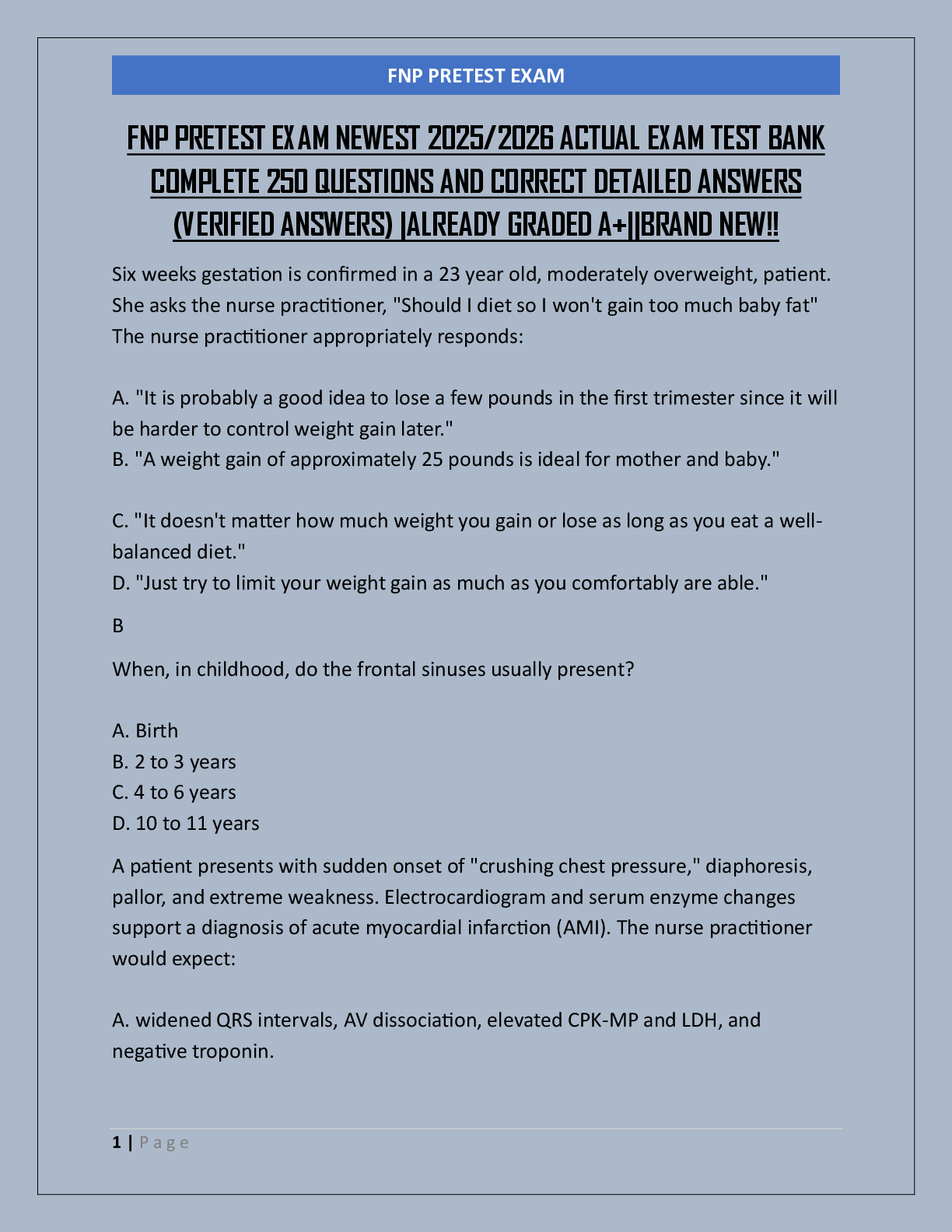
$15.5
95 Pages
FNP PRETEST EXAM NEWEST 2025/2026 ACTUAL EXAM TEST BANK COMPL...

$23
202 Pages
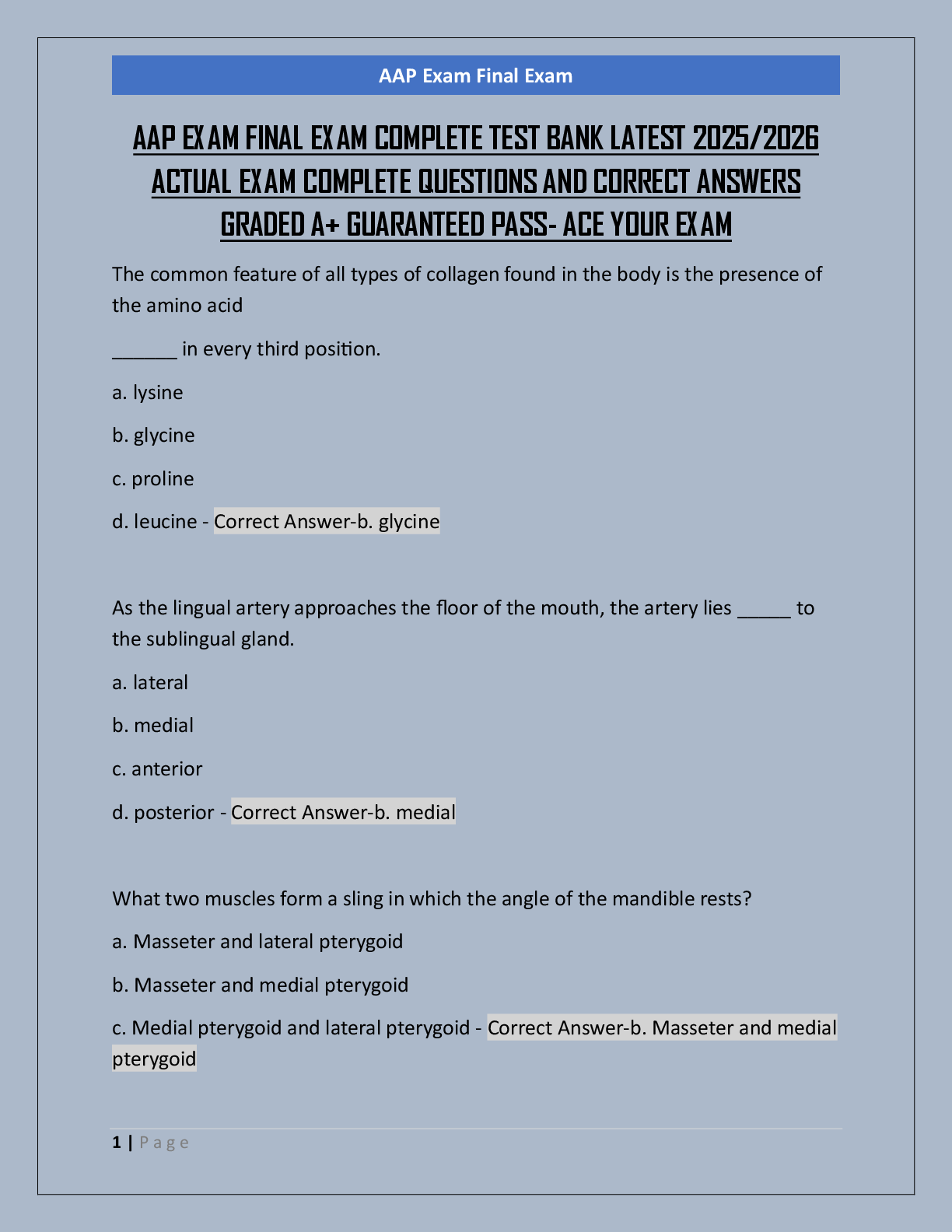
Solutions Manual for Fluid Mechanics Fundamentals and Applicat...
.png)
$19
185 Pages
Test Bank for Drugs, Behavior and Society 3rd Canadian Edition...
$8.5
3 Pages
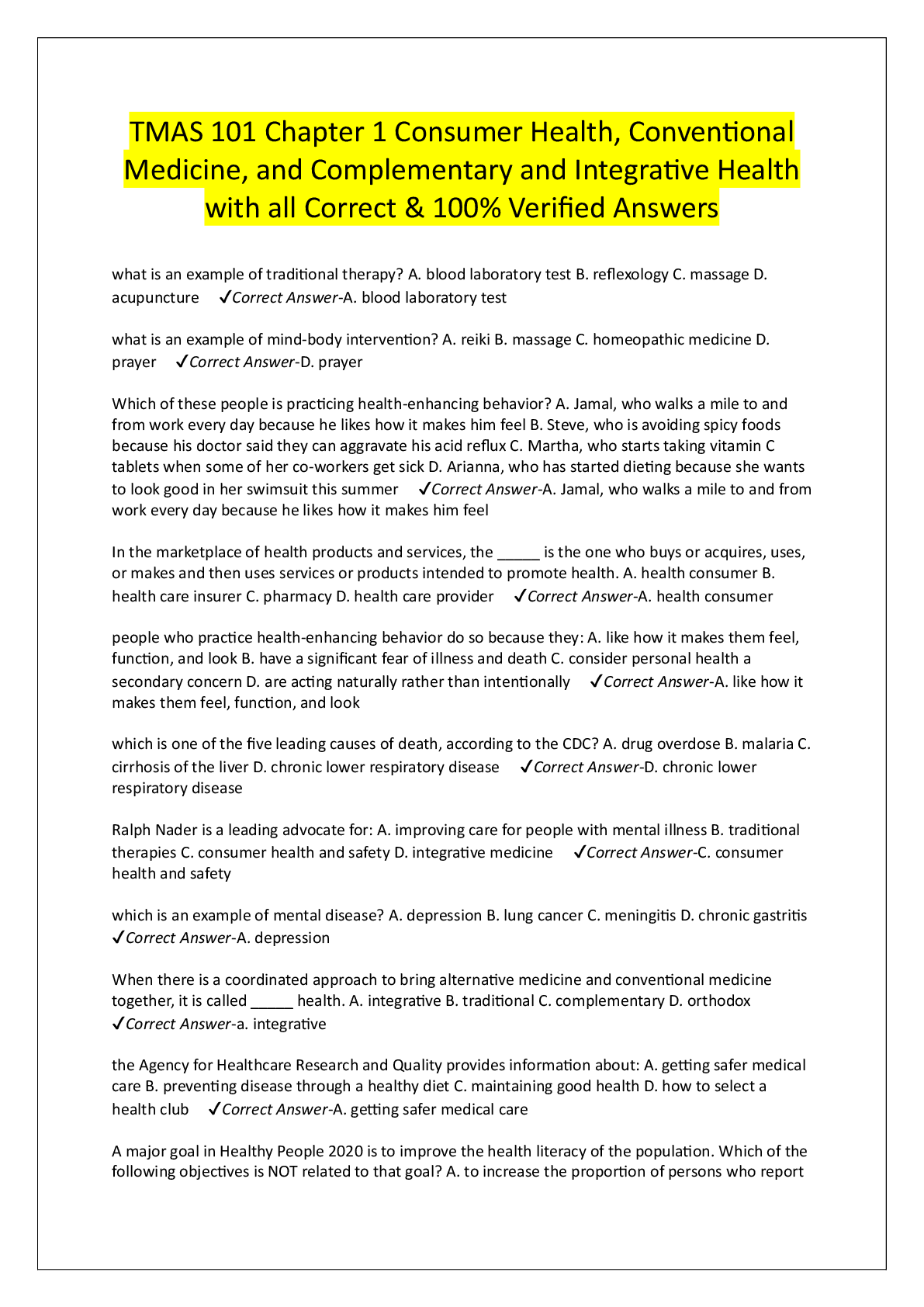
TMAS 101 Chapter 1 Consumer Health, Conventional Medicine, and...
$8.5
3 Pages
TMAS 101 Chapter 1 Consumer Health, Conventional Medicine, and...
More related documents below