Information Technology > EXAM > C841-Legal Issues in Information Security-Task 1-complete (All)
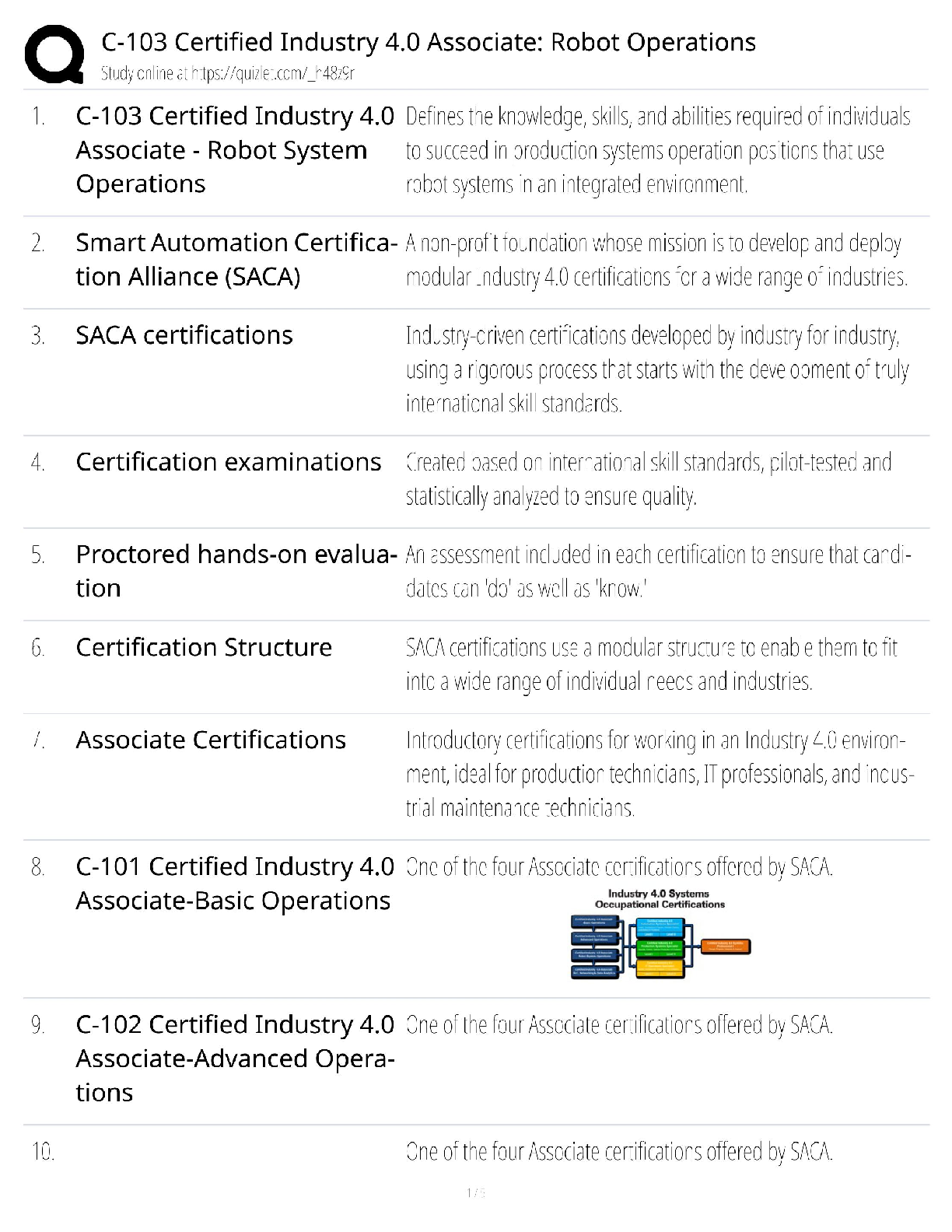
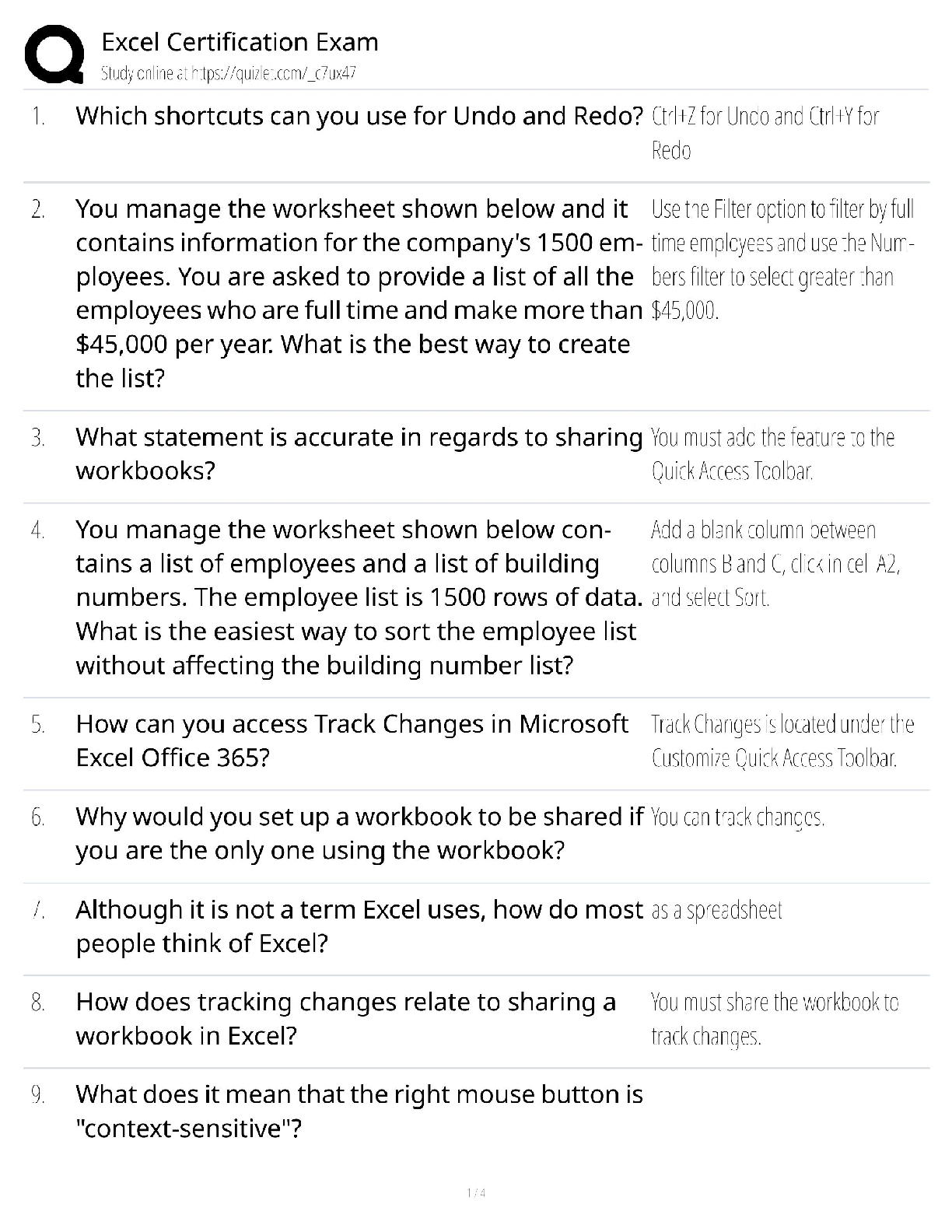
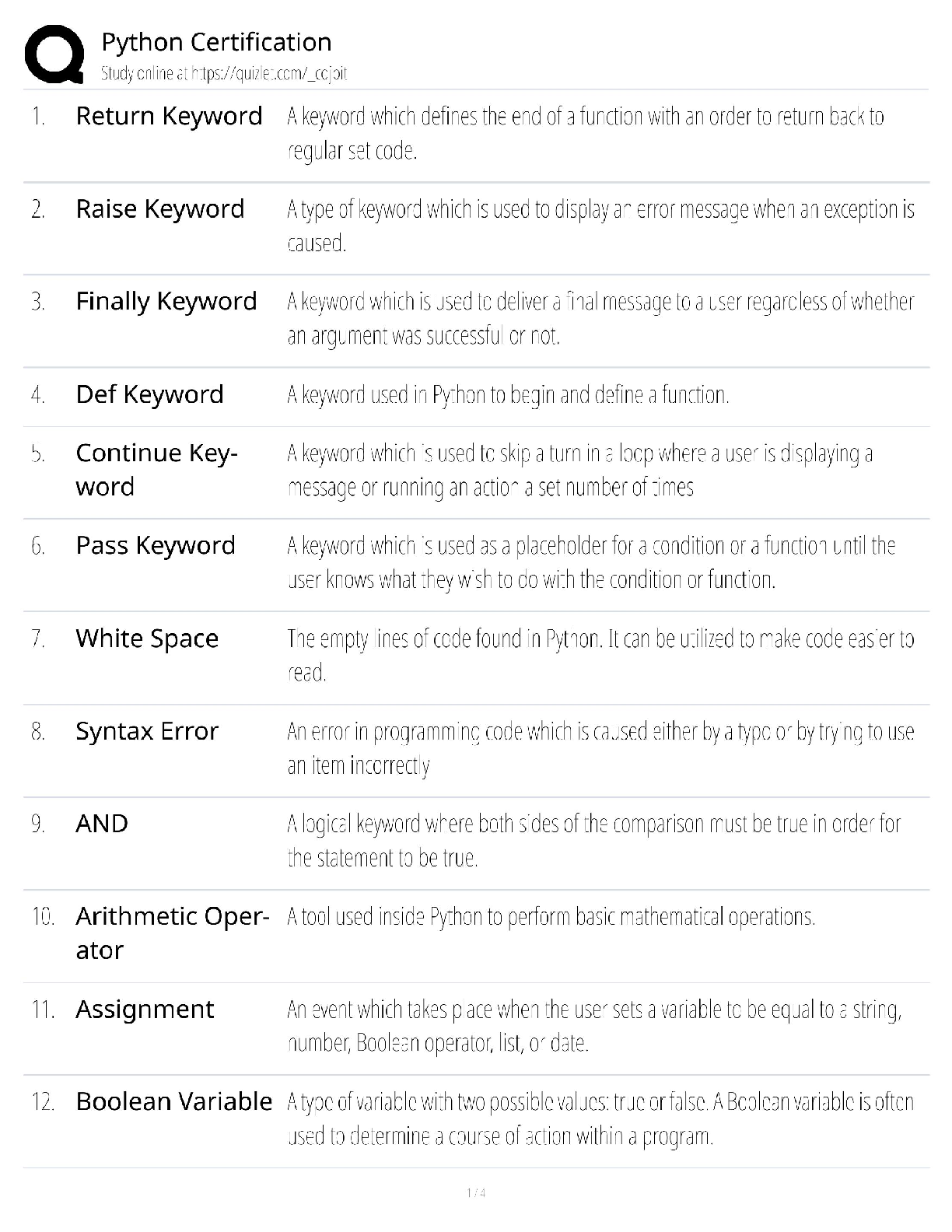
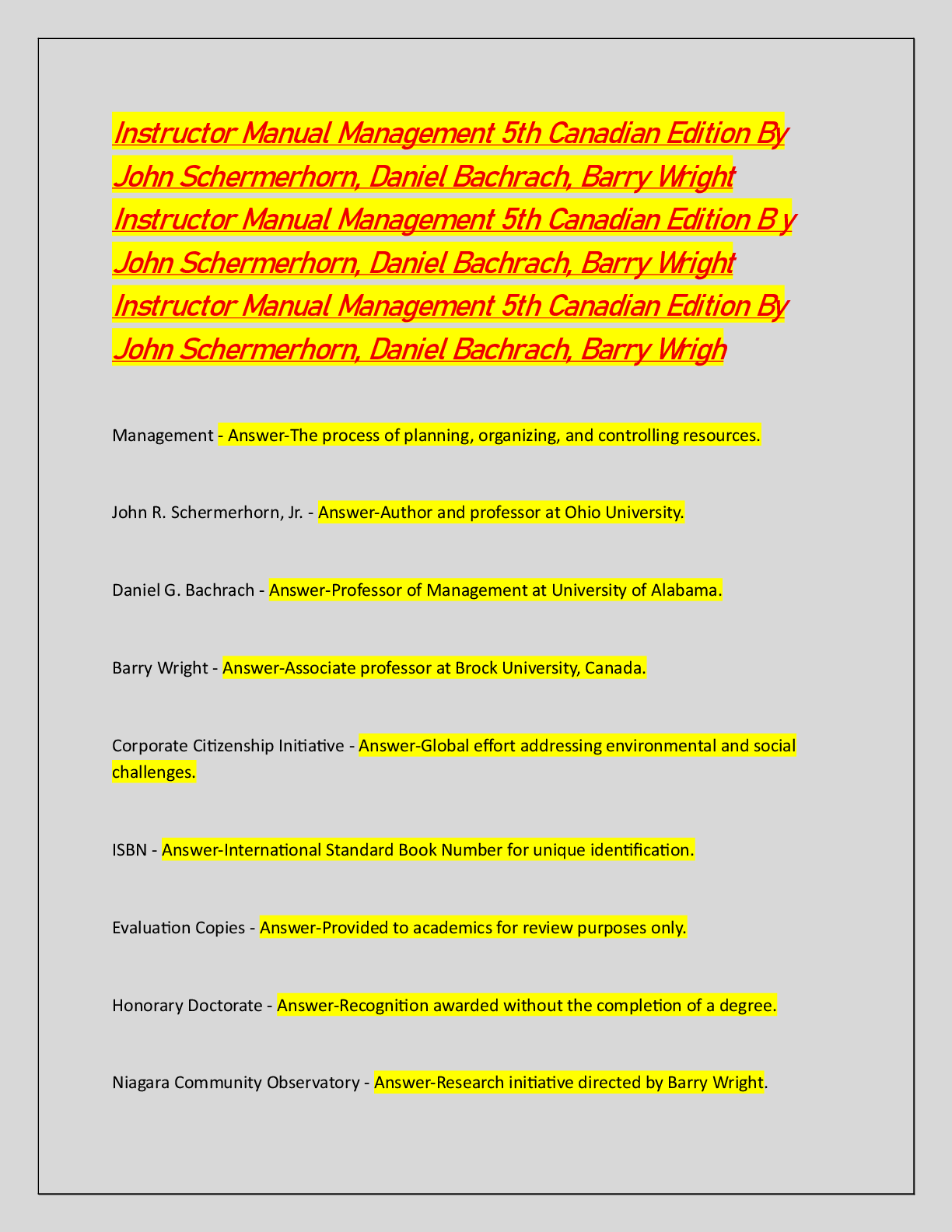
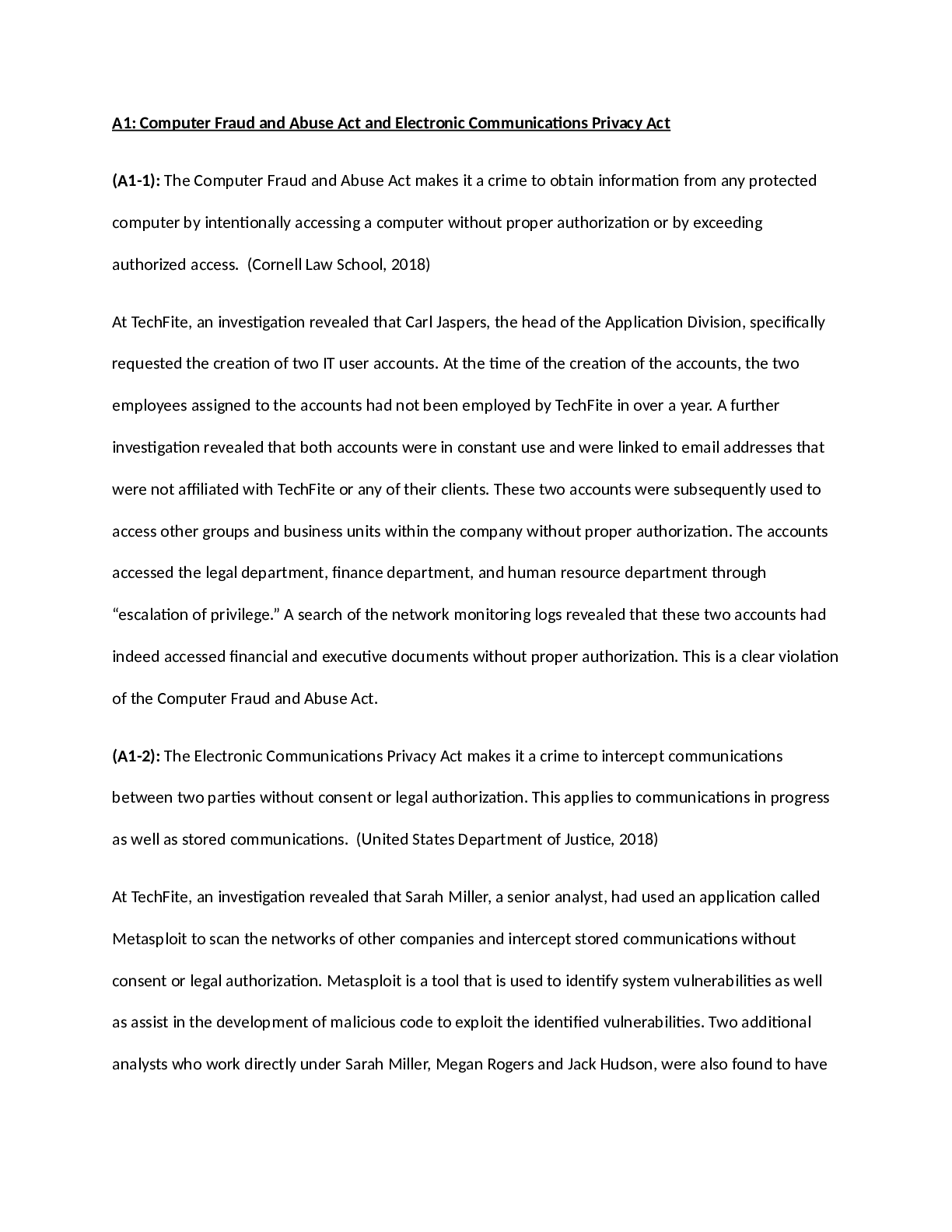
C841-Legal Issues in Information Security-Task 1-complete
Document Content and Description Below
Last updated: 3 years ago
Preview 1 out of 7 pages
Instant download
Buy this Document to get the Full Access Instantly
Provided by Students Who Aced it
We Verify Document Content to Gurantee Accuracy
Reviews( 0 )
Document information
Connected school, study & course
About the document
Uploaded On
Jul 15, 2022
Number of pages
7
Written in
All

Additional information
This document has been written for:
Uploaded
Jul 15, 2022
Downloads
0
Views
114
Topic Tags
Related Subjects & Courses
Explore similar study resources and related concepts.
Recommended For You
Get more on EXAM »
WGU C841 Legal Issues in Information Security | Questions wit...
C841 Legal Issues in Information Security - Task 1-complete-20...

WGU COURSE C841 - LEGAL ISSUES IN INFORMATION SECURITY|QUESTIO...

C841 Legal Issues in Information Security - Western Governors...

C841 Legal Issues in Information Security - Western Governors...
C841 Legal Issues in Information Security Performance Assessme...
Information Systems What Every Business Student Needs to Know,...
.png)
Introduction to Information Systems, 7e Kelly Rainer, Brad Pri...
.png)