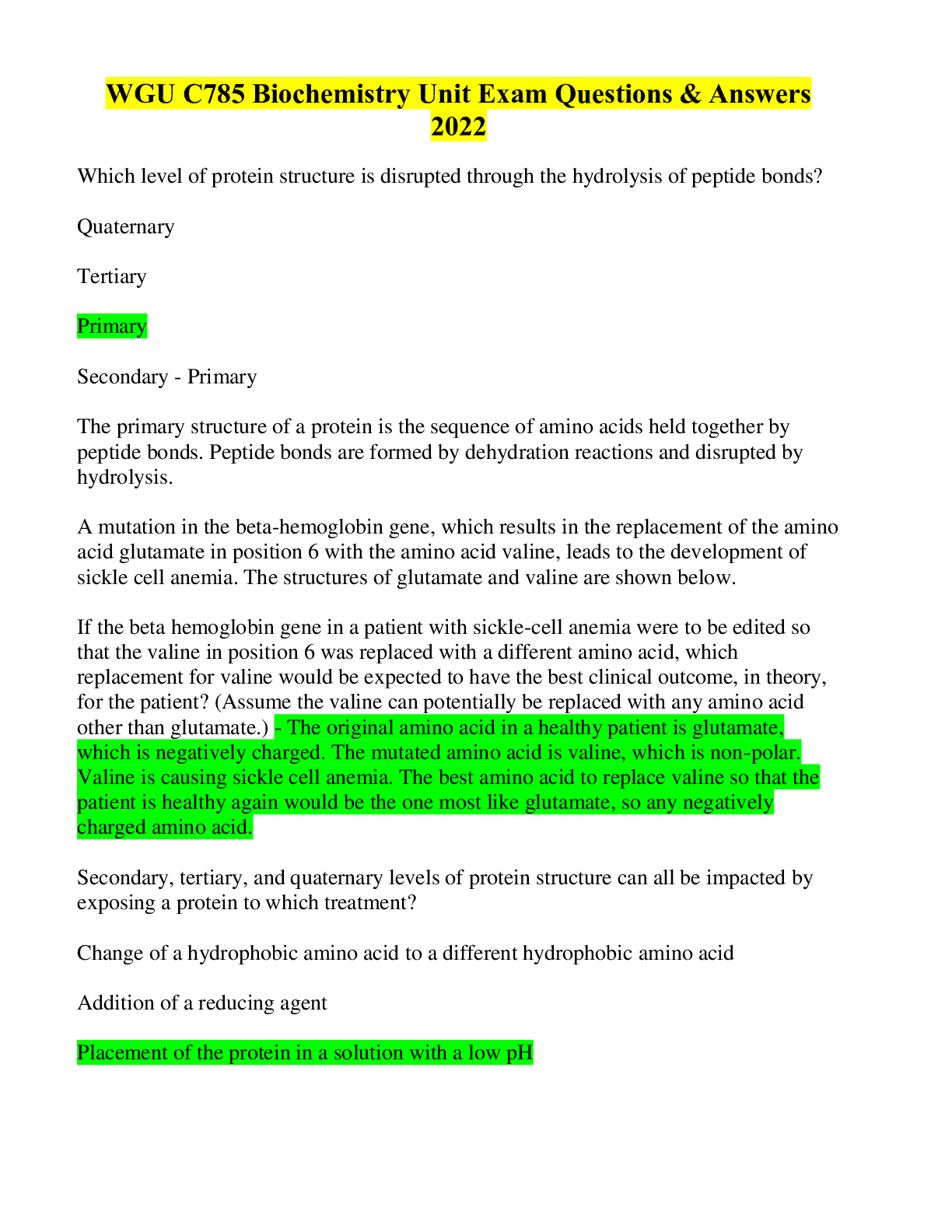
BioChemistry > QUESTIONS & ANSWERS > WGU Biochemistry OA Study Guide A+ Solution Updated 2022 (All)
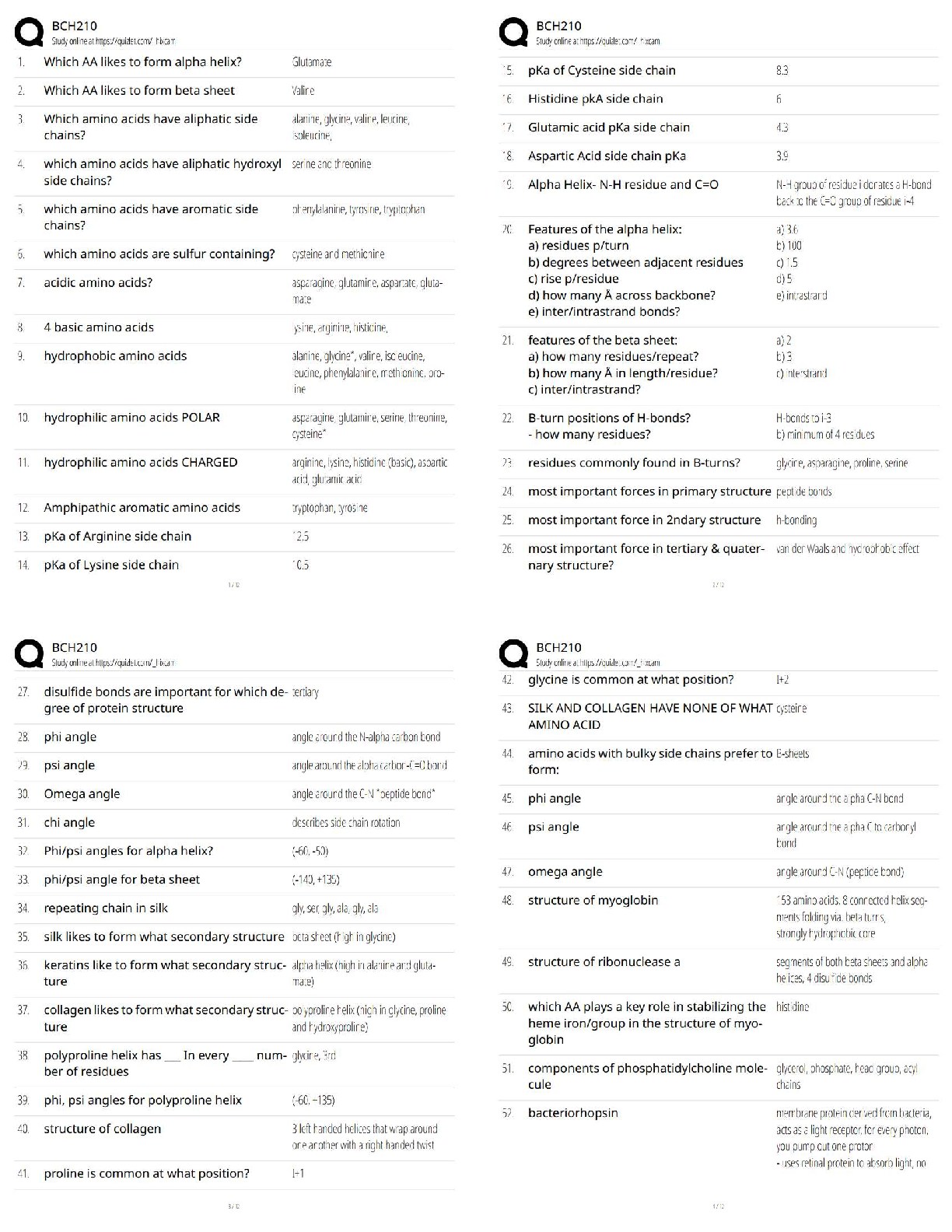
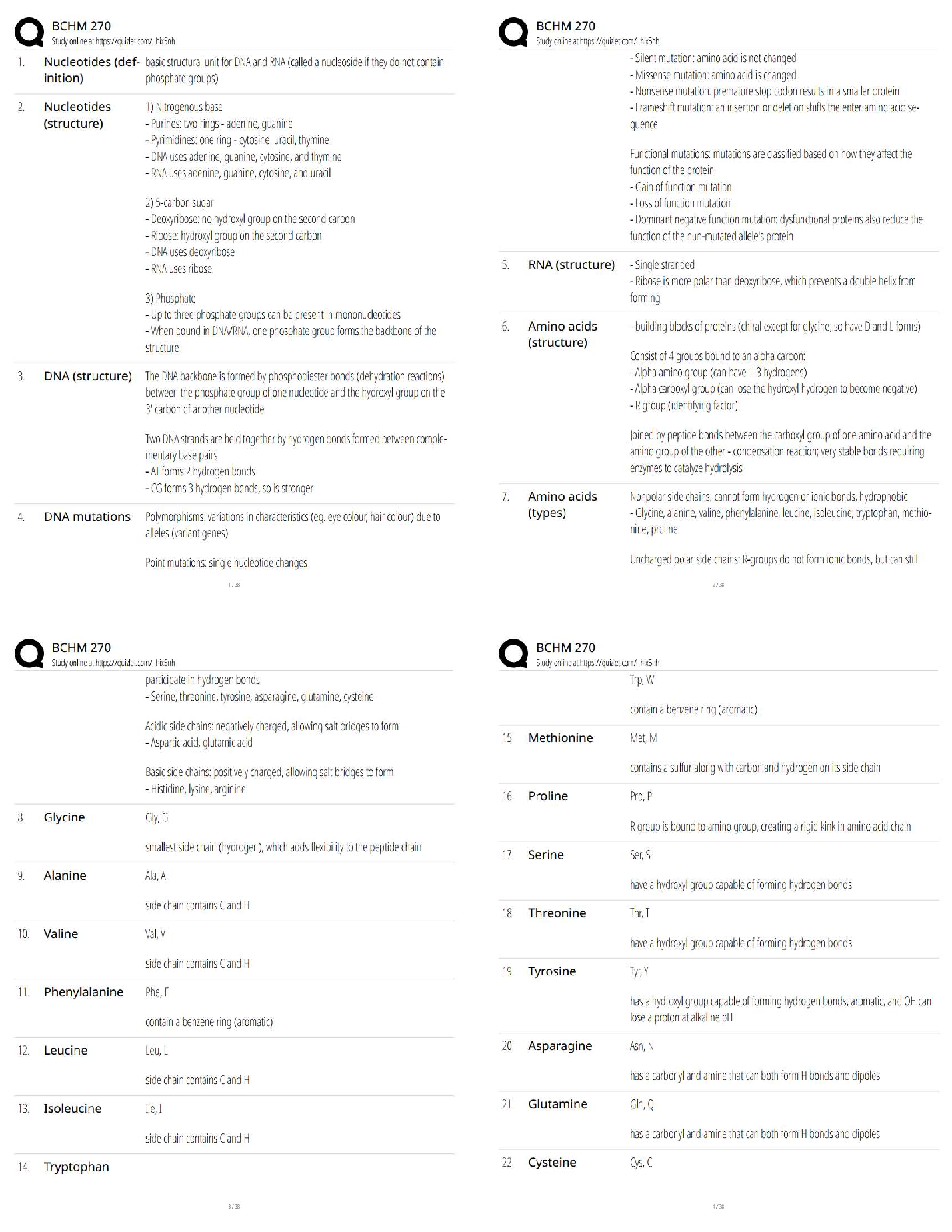
WGU Biochemistry OA Study Guide A+ Solution Updated 2022
Document Content and Description Below
Last updated: 4 years ago
Preview 1 out of 29 pages
Instant download

Buy this Document to get the Full Access Instantly
Provided by Students Who Aced it
We Verify Document Content to Gurantee Accuracy
Reviews( 0 )
Document information
Connected school, study & course
About the document
Uploaded On
Jul 16, 2022
Number of pages
29
Written in
All

Additional information
This document has been written for:
Uploaded
Jul 16, 2022
Downloads
0
Views
140
Topic Tags
Recommended For You
Get more on QUESTIONS & ANSWERS »
(AAMA)® Certification Exam 2022 | CMA (AAMA) Medical Assistant...


ASM 275 / ASM275 EXAM 3 LATEST UPDATED 2022 ALL ANSWERS 100% C...

- Test Bank.png)
TESTBANK FOR HESI Extra Credit Modules 1, 2, 3, 4, 5, 6, 7, 8,...
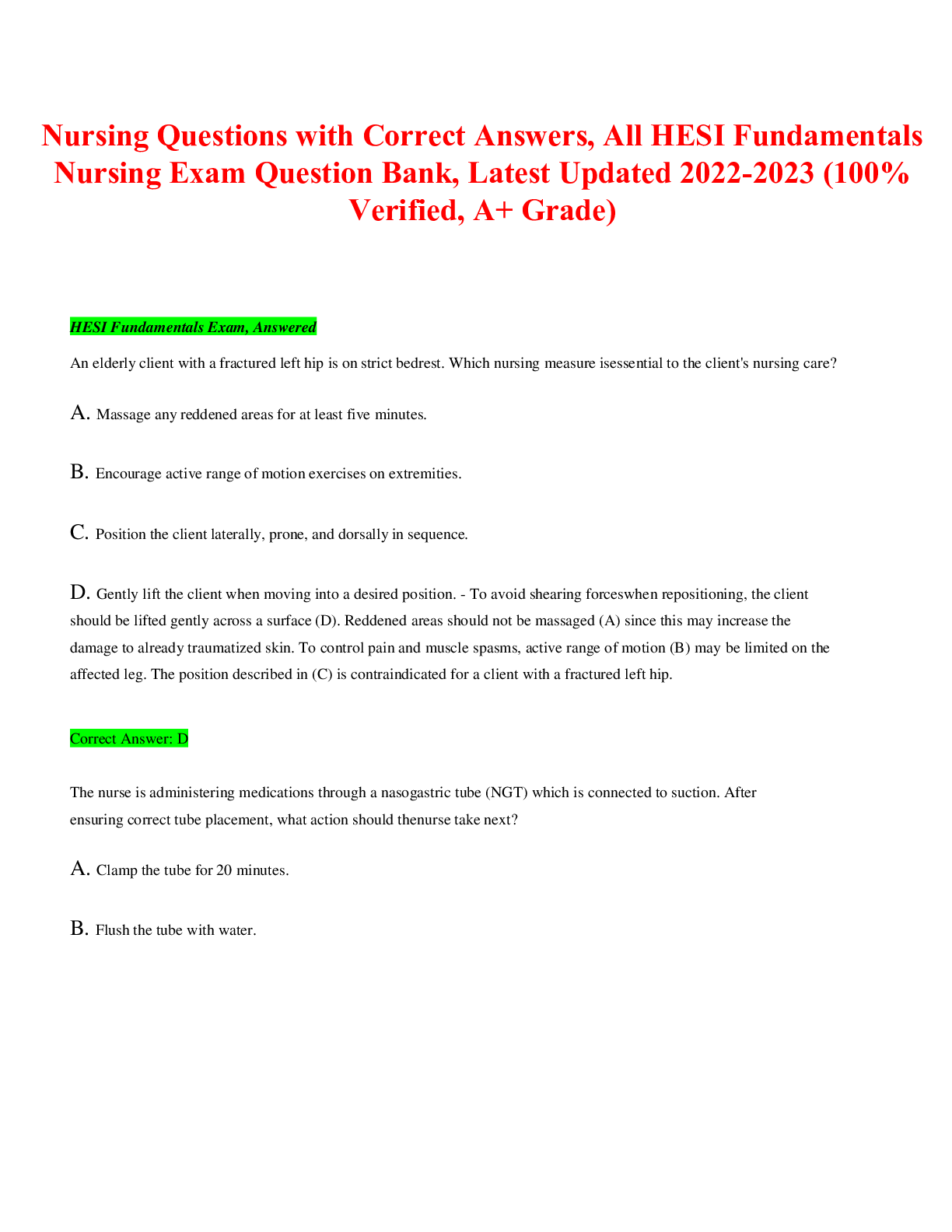
Nursing Questions with Correct Answers, All HESI Fundamentals...
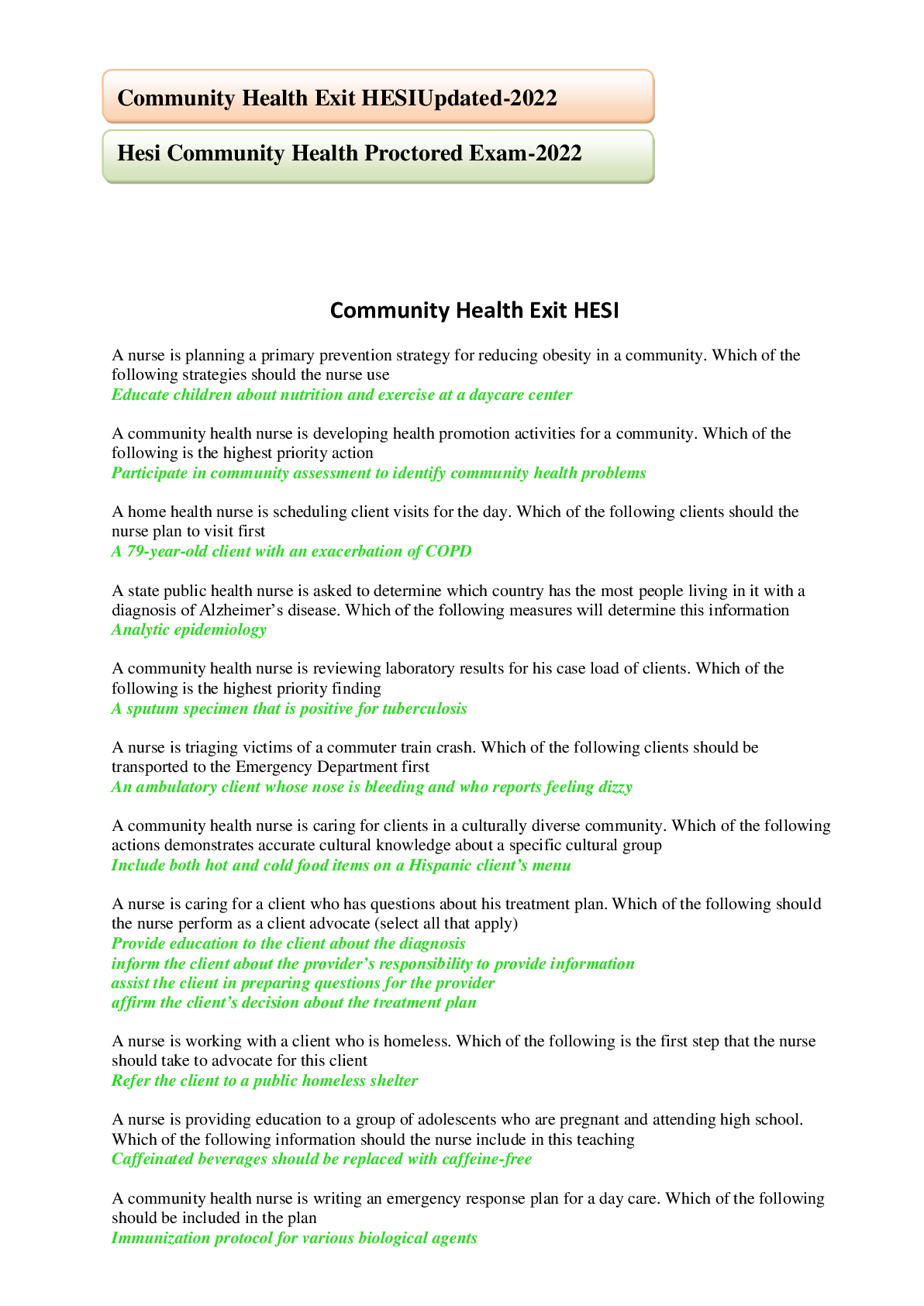
community health exit hesi updated 2022 & Proctored Exam


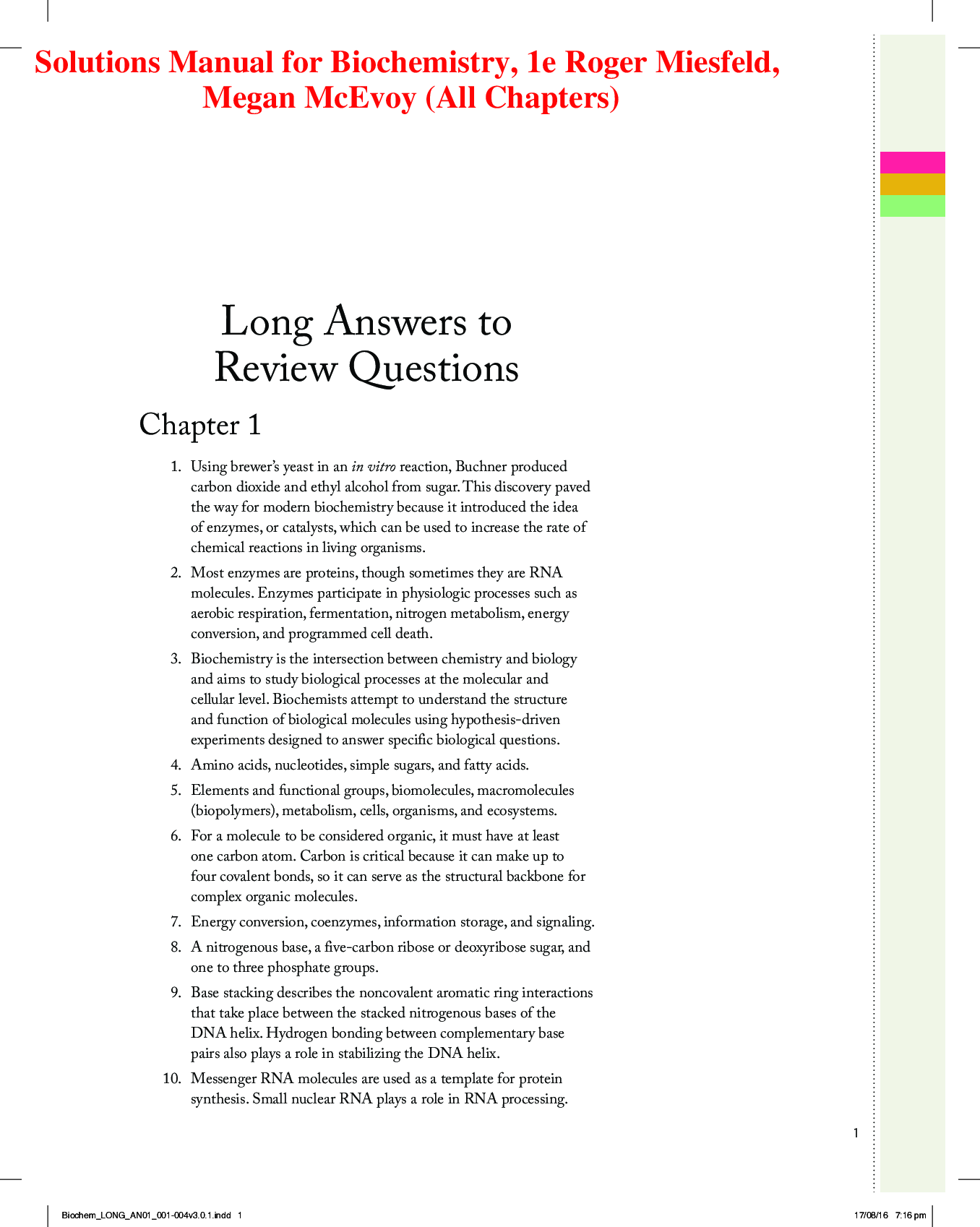
Biochemistry, 1e Roger Miesfeld, Megan McEvoy (Solutions Manua...
SOLUTIONS MANUAL for Biochemistry 1st Edition by Roger Miesfel...