6531 Final Multiple tests (use alphabetical reference page)
In which of the following is further testing not warranted? Bilateral gynecomastia in a pre-pubertal boy
Question 2 1 out of 1 point. Central obesity, “moon
...
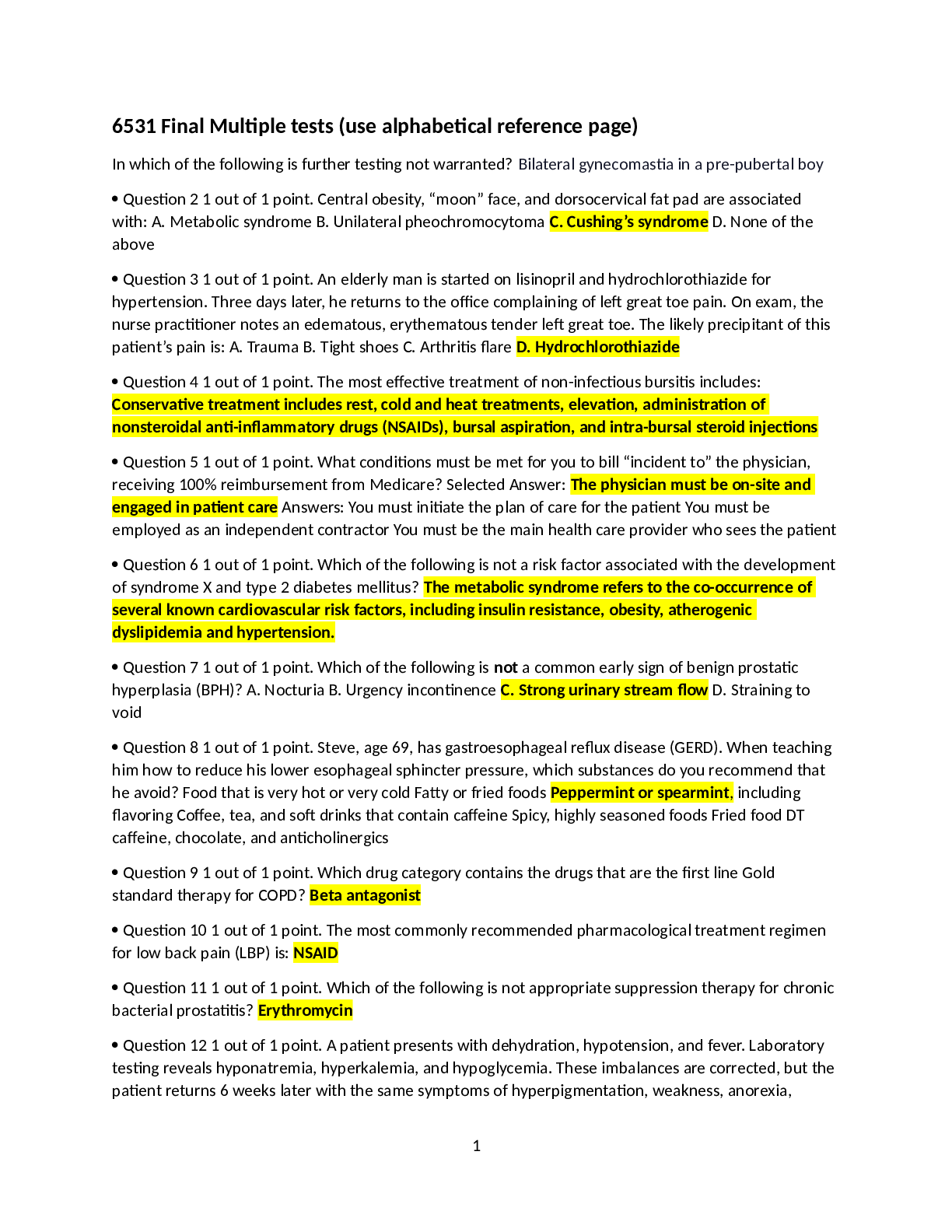
6531 Final Multiple tests (use alphabetical reference page)
In which of the following is further testing not warranted? Bilateral gynecomastia in a pre-pubertal boy
Question 2 1 out of 1 point. Central obesity, “moon” face, and dorsocervical fat pad are associated
with: A. Metabolic syndrome B. Unilateral pheochromocytoma C. Cushing’s syndrome D. None of the
above
Question 3 1 out of 1 point. An elderly man is started on lisinopril and hydrochlorothiazide for
hypertension. Three days later, he returns to the office complaining of left great toe pain. On exam, the
nurse practitioner notes an edematous, erythematous tender left great toe. The likely precipitant of this
patient’s pain is: A. Trauma B. Tight shoes C. Arthritis flare D. Hydrochlorothiazide
Question 4 1 out of 1 point. The most effective treatment of non-infectious bursitis includes:
Conservative treatment includes rest, cold and heat treatments, elevation, administration of
nonsteroidal anti-inflammatory drugs (NSAIDs), bursal aspiration, and intra-bursal steroid injections
Question 5 1 out of 1 point. What conditions must be met for you to bill “incident to” the physician,
receiving 100% reimbursement from Medicare? Selected Answer: The physician must be on-site and
engaged in patient care Answers: You must initiate the plan of care for the patient You must be
employed as an independent contractor You must be the main health care provider who sees the patient
Question 6 1 out of 1 point. Which of the following is not a risk factor associated with the development
of syndrome X and type 2 diabetes mellitus? The metabolic syndrome refers to the co-occurrence of
several known cardiovascular risk factors, including insulin resistance, obesity, atherogenic
dyslipidemia and hypertension.
Question 7 1 out of 1 point. Which of the following is not a common early sign of benign prostatic
hyperplasia (BPH)? A. Nocturia B. Urgency incontinence C. Strong urinary stream flow D. Straining to
void
Question 8 1 out of 1 point. Steve, age 69, has gastroesophageal reflux disease (GERD). When teaching
him how to reduce his lower esophageal sphincter pressure, which substances do you recommend that
he avoid? Food that is very hot or very cold Fatty or fried foods Peppermint or spearmint, including
flavoring Coffee, tea, and soft drinks that contain caffeine Spicy, highly seasoned foods Fried food DT
caffeine, chocolate, and anticholinergics
Question 9 1 out of 1 point. Which drug category contains the drugs that are the first line Gold
standard therapy for COPD? Beta antagonist
Question 10 1 out of 1 point. The most commonly recommended pharmacological treatment regimen
for low back pain (LBP) is: NSAID
Question 11 1 out of 1 point. Which of the following is not appropriate suppression therapy for chronic
bacterial prostatitis? Erythromycin
Question 12 1 out of 1 point. A patient presents with dehydration, hypotension, and fever. Laboratory
testing reveals hyponatremia, hyperkalemia, and hypoglycemia. These imbalances are corrected, but the
patient returns 6 weeks later with the same symptoms of hyperpigmentation, weakness, anorexia,
[Show More]

.png)