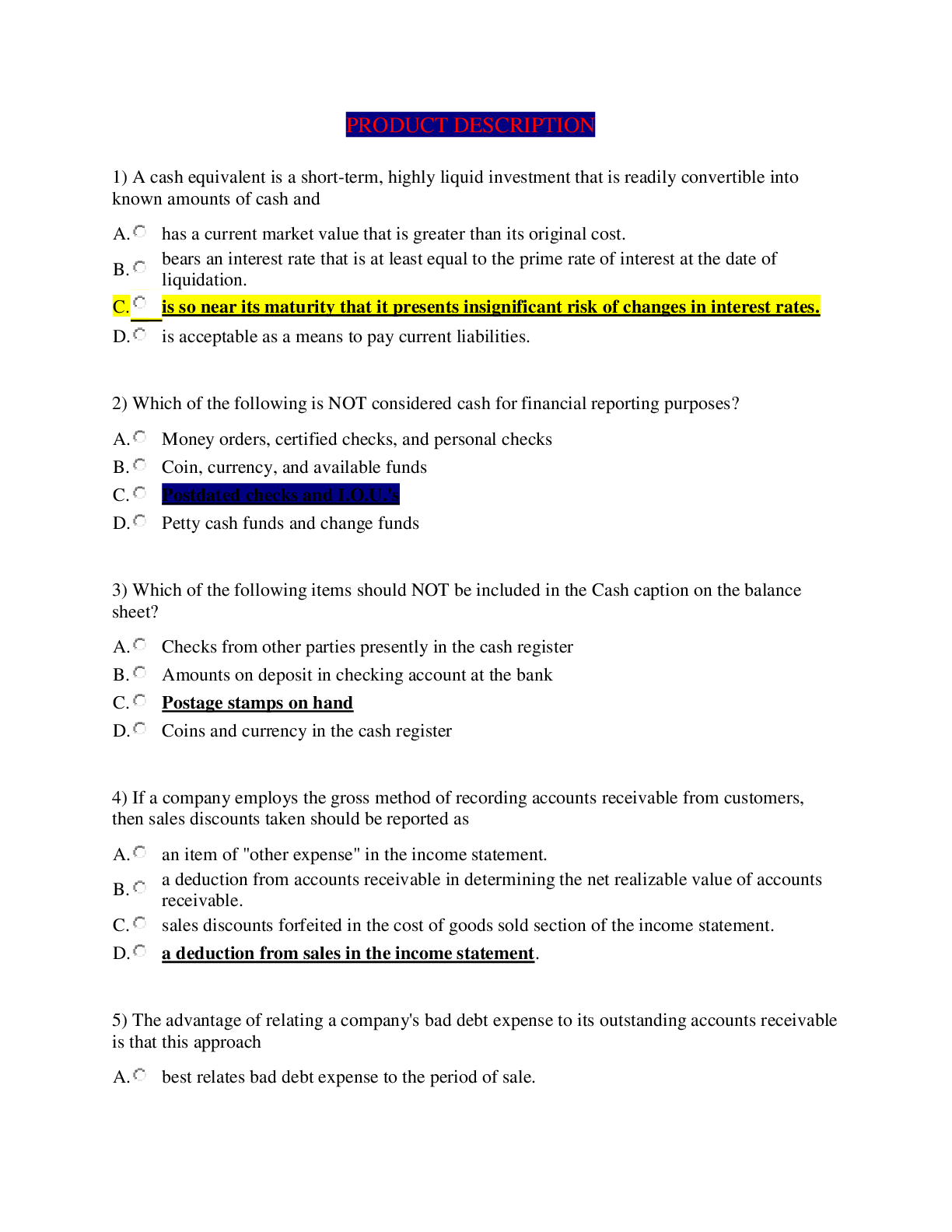
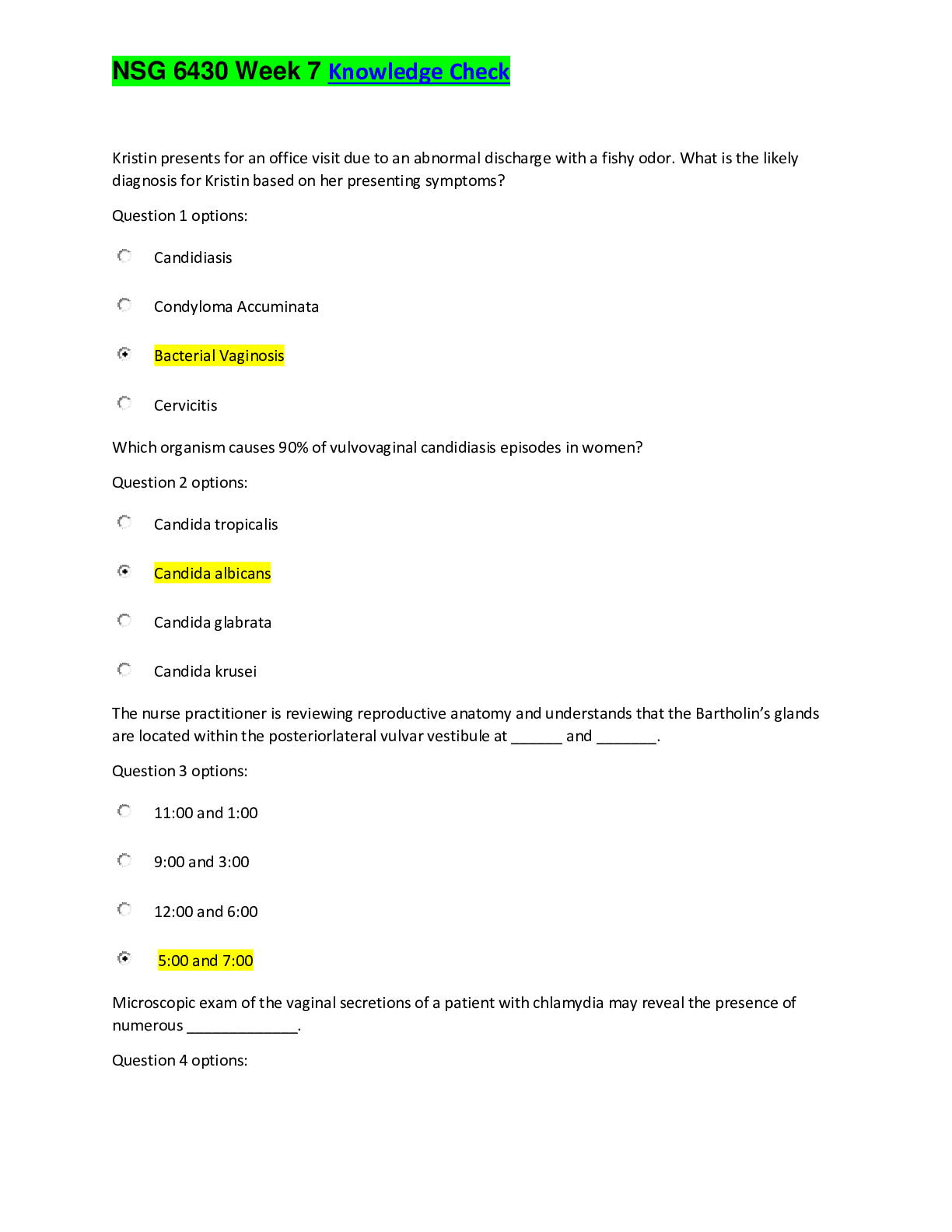
Psychology > QUESTIONS & ANSWERS > Answers Week 2 Assignment Week 2 Assignment: The Muscular System (Lab) (All)
Answers Week 2 Assignment Week 2 Assignment: The Muscular System (Lab)
Document Content and Description Below
Last updated: 3 years ago
Preview 1 out of 4 pages
Instant download

Buy this Document to get the Full Access Instantly
Provided by Students Who Aced it
We Verify Document Content to Gurantee Accuracy
Reviews( 0 )
Document information
Connected school, study & course
About the document
Uploaded On
Jan 01, 2020
Number of pages
4
Written in
All

Additional information
This document has been written for:
Uploaded
Jan 01, 2020
Downloads
1
Views
415
Topic Tags
Related Subjects & Courses
Explore similar study resources and related concepts.
Recommended For You
Get more on QUESTIONS & ANSWERS »
Test Bank for The Principles of Learning and Behavior, 7th Edi...

Test Bank for Engineering Psychology and Human Performance, 5t...
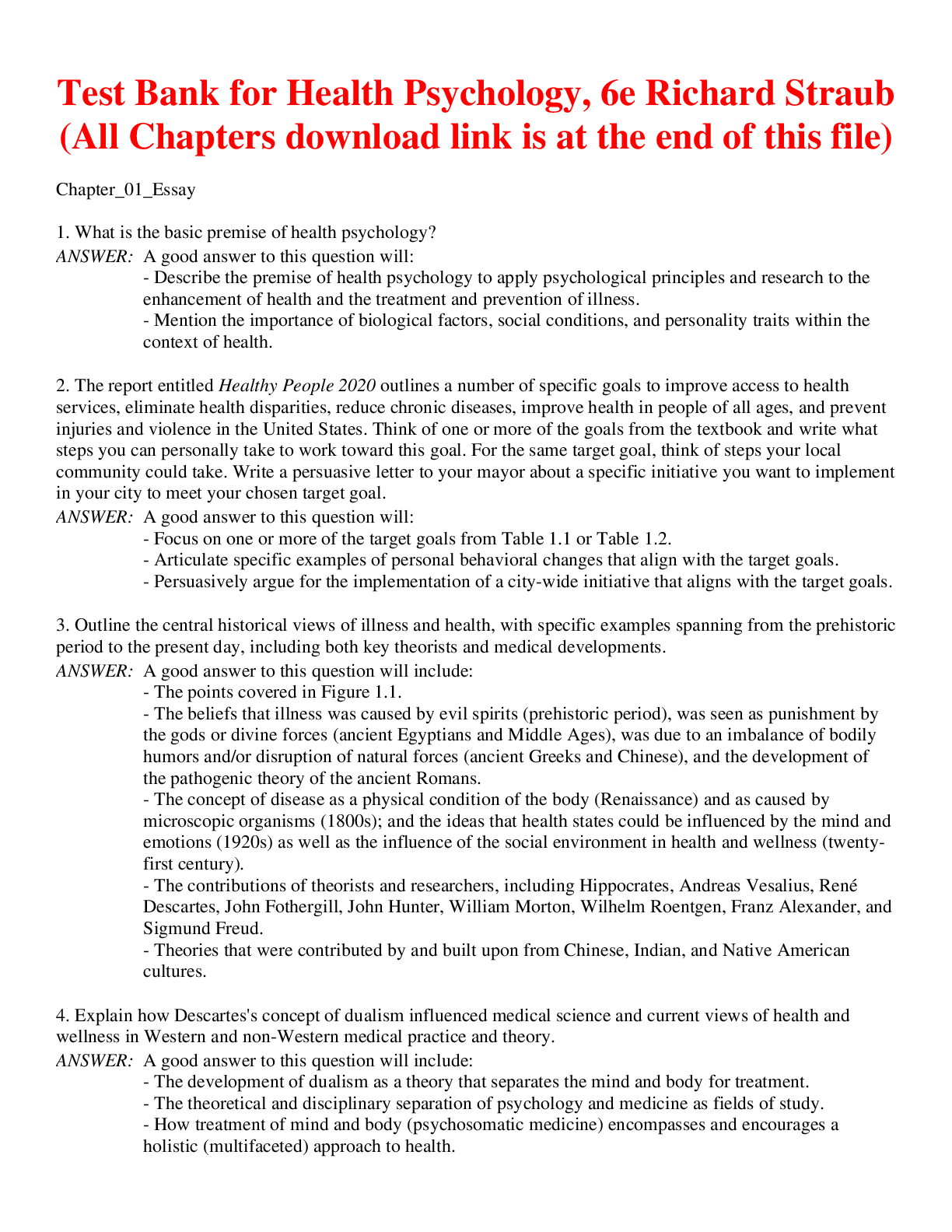
Health Psychology: A Biopsychosocial Approach 6th Edition by R...
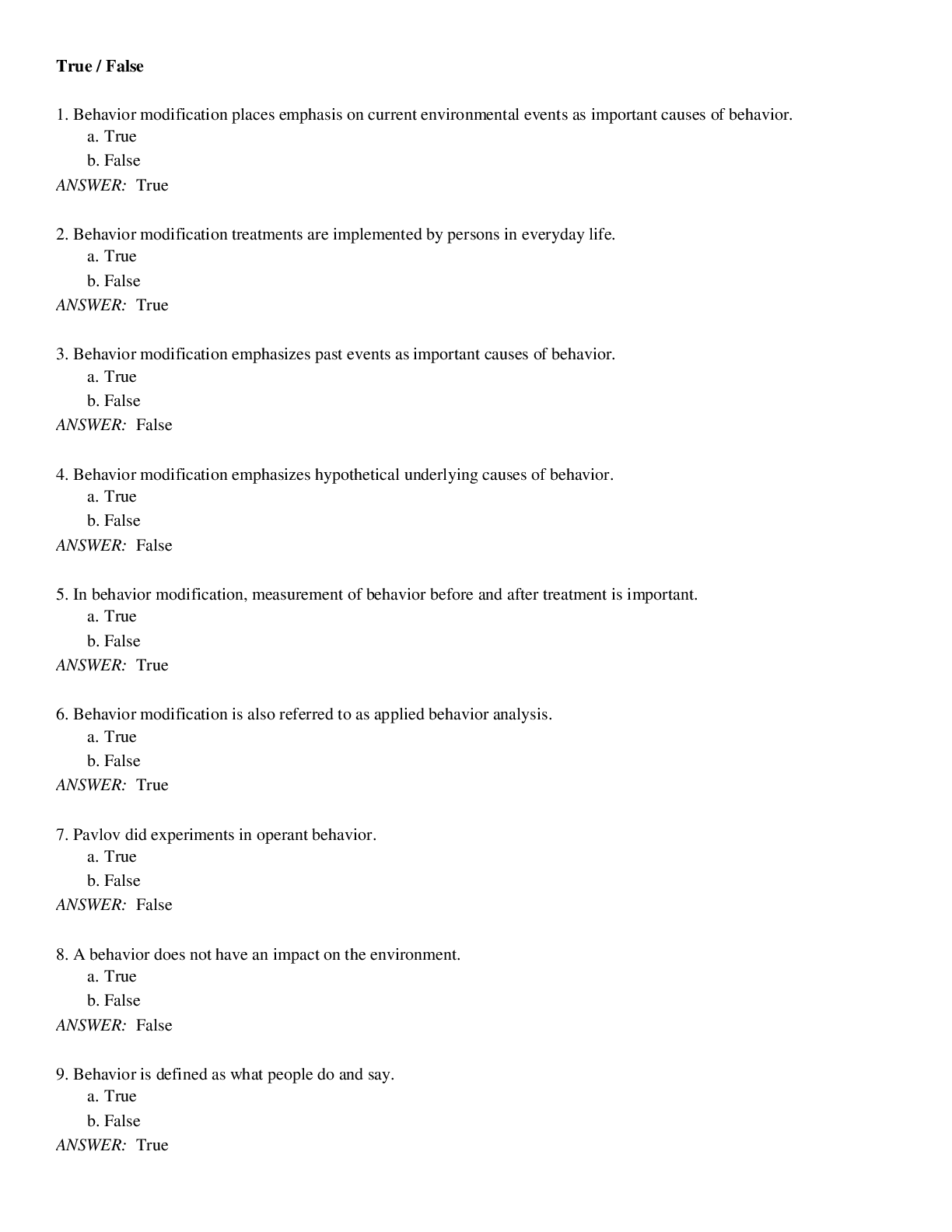
Behavior Modification Principles and Procedures 6th Edition Mi...


![Preview of eBook [PDF] Clinical psychology a modern health profession 2nd Eition By Paul Louis Hewitt](https://browseimages.nyc3.digitaloceanspaces.com/paper-images/2026/04/02/thLougL92026-04-02-11-2069cecfa419d6b.png)
![Preview of eBook [PDF] A Companion to Introductory Psychology Engaging Essays for Students By Frank M](https://browseimages.nyc3.digitaloceanspaces.com/paper-images/2026/04/02/tF3rJVpv2026-04-02-08-2269cea5c6e6b7d.png)