Health Care > EXAM > NR 505 Week 5 and Week 6 Graded Discussions: Data Collection Complete (All)
NR 505 Week 5 and Week 6 Graded Discussions: Data Collection Complete
Document Content and Description Below
Last updated: 3 years ago
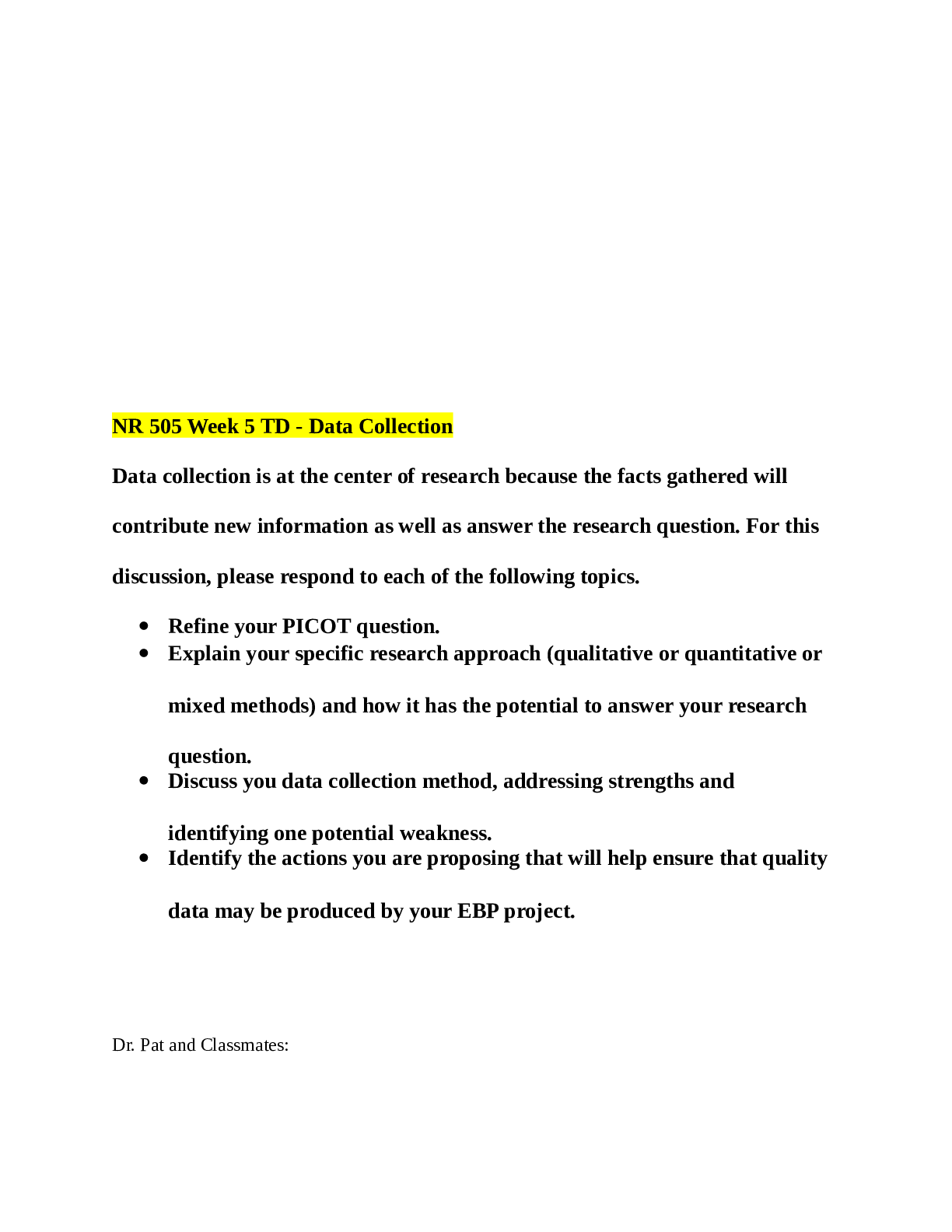
Preview 1 out of 10 pages
Instant download
Buy this Document to get the Full Access Instantly
Provided by Students Who Aced it
We Verify Document Content to Gurantee Accuracy
Reviews( 0 )
Document information
Connected school, study & course
About the document
Uploaded On
Jul 20, 2022
Number of pages
10
Written in
All

Additional information
This document has been written for:
Uploaded
Jul 20, 2022
Downloads
0
Views
93
Topic Tags
Recommended For You
Get more on EXAM »
NR 505 Week 3 Quiz, NIH Training Questions/Quiz answers. Lates...

NR 505 Week 3 Assignment: Research Summary Table: Reducing Sur...

Week 5: Research Literature, Design, Sampling and Implementati...
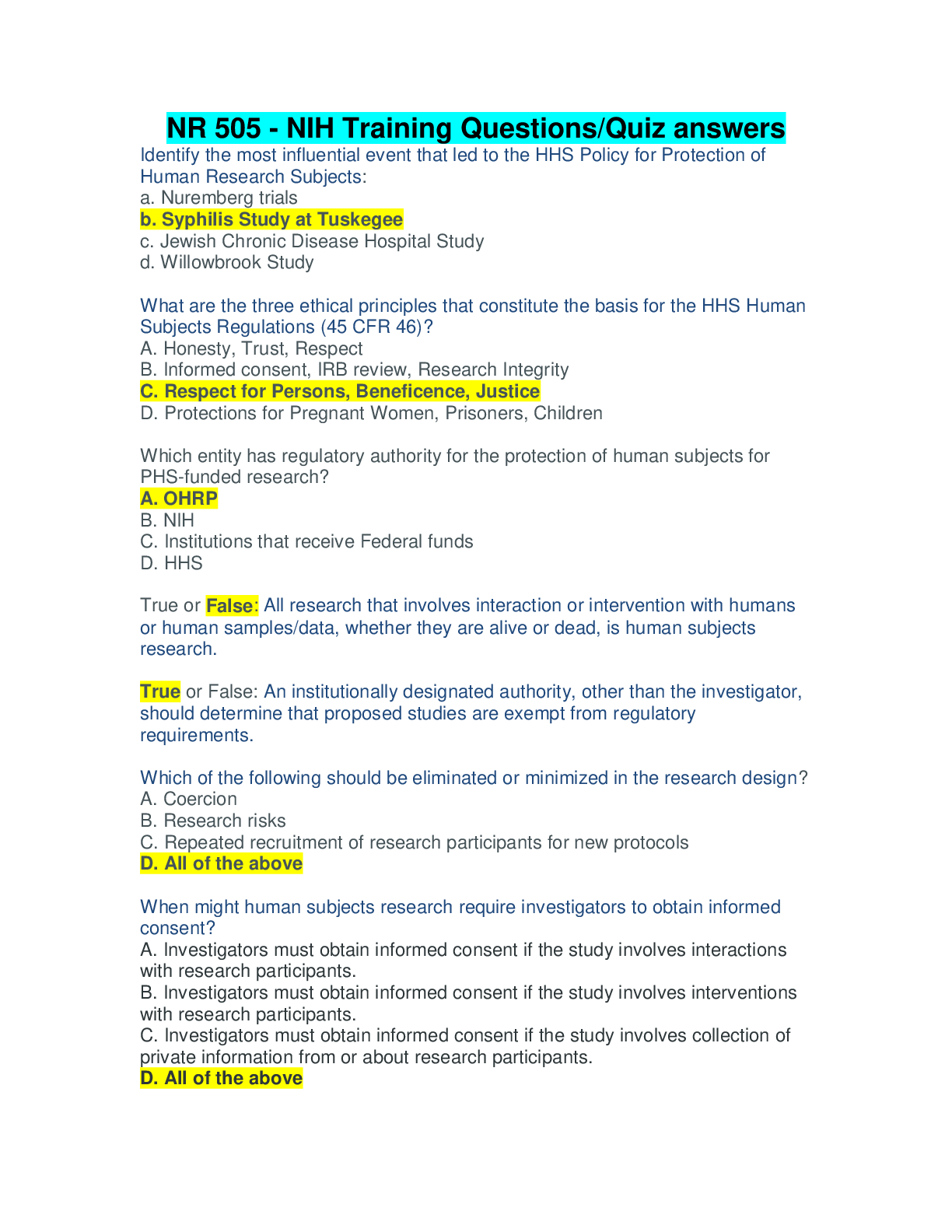
NR 505 NIH Training Questions and Answers, Complete solution,...
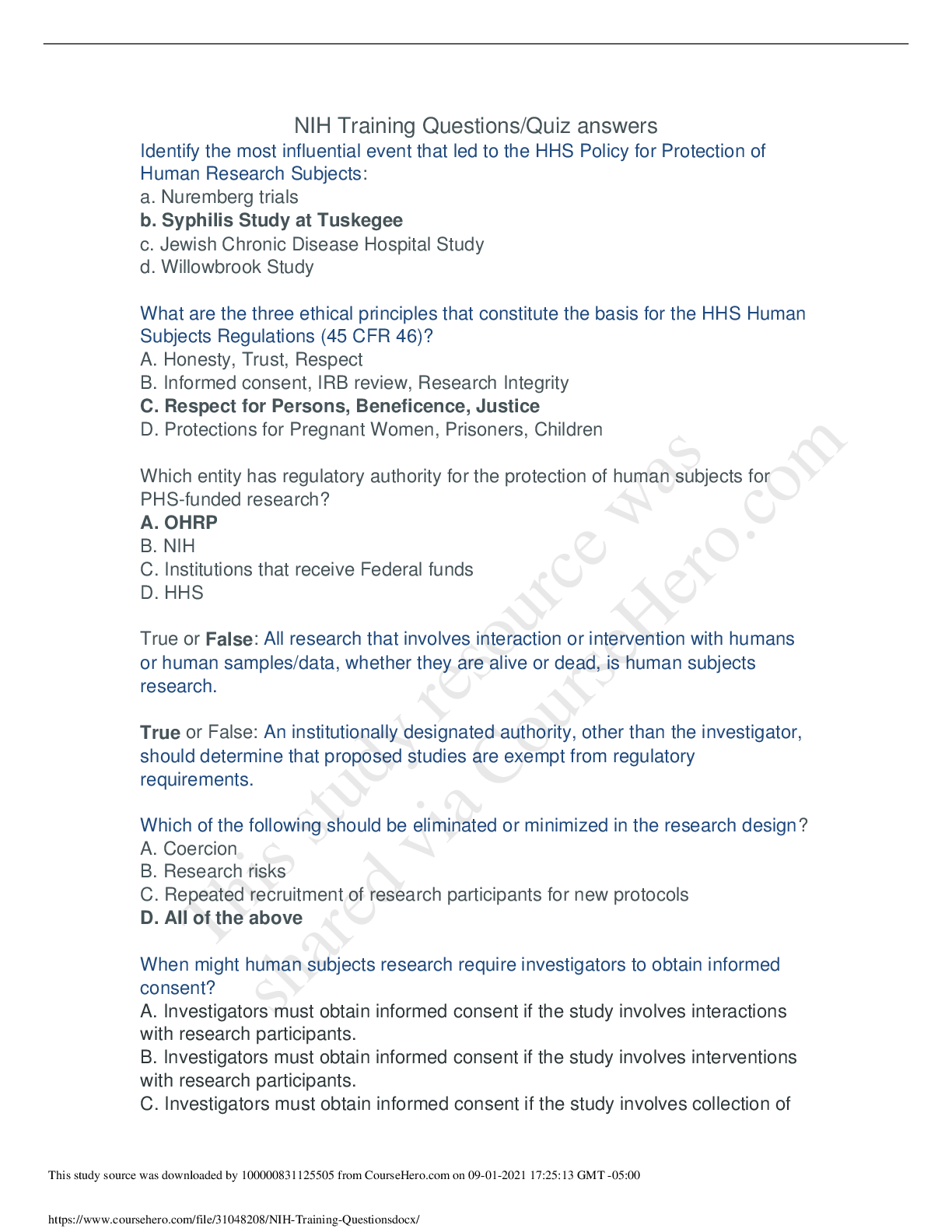
NR 505OCR NIH Training Questions.and answers 100% verified dow...
Chamberlain College of Nursing [NR 505 Week 3 Quiz with Discus...

NR 505 Week 3 Quiz / NR505 Week 3 Quiz : Chamberlain College...

NR 505 Week 5 Assignment: Research Summary Table Worksheet (GR...

NR 505 Week 2 PICOT Worksheet Assignment | (100%CORRECT) | Cha...

NR505 Week 7 Ass. Paper-Evidence_Based_Practice_Change_PowerPo...

NR505 / NR 505 / NR505NP Advanced Research Methods Study Guide...





.png)

.png)