ATI PN FUNDAMENTALS PROCTORED EXAM
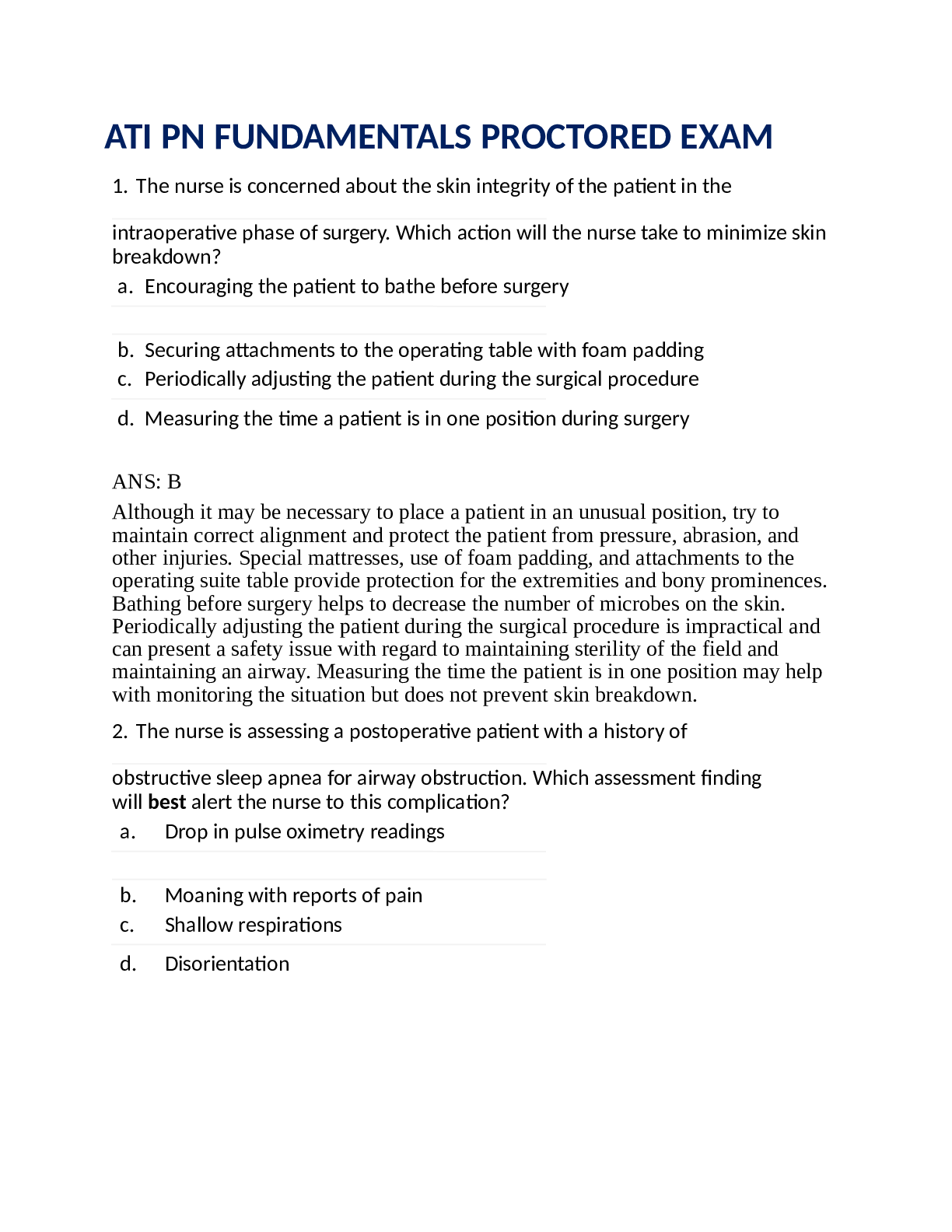
1. The nurse is concerned about the skin integrity of the patient in the
intraoperative phase of surgery. Which action will the nurse take to minimize skin
breakdown?
a. Encouraging
...
ATI PN FUNDAMENTALS PROCTORED EXAM
1. The nurse is concerned about the skin integrity of the patient in the
intraoperative phase of surgery. Which action will the nurse take to minimize skin
breakdown?
a. Encouraging the patient to bathe before surgery
b. Securing attachments to the operating table with foam padding
c. Periodically adjusting the patient during the surgical procedure
d. Measuring the time a patient is in one position during surgery
ANS: B
Although it may be necessary to place a patient in an unusual position, try to
maintain correct alignment and protect the patient from pressure, abrasion, and
other injuries. Special mattresses, use of foam padding, and attachments to the
operating suite table provide protection for the extremities and bony prominences.
Bathing before surgery helps to decrease the number of microbes on the skin.
Periodically adjusting the patient during the surgical procedure is impractical and
can present a safety issue with regard to maintaining sterility of the field and
maintaining an airway. Measuring the time the patient is in one position may help
with monitoring the situation but does not prevent skin breakdown.
2. The nurse is assessing a postoperative patient with a history of
obstructive sleep apnea for airway obstruction. Which assessment finding
will best alert the nurse to this complication?
a. Drop in pulse oximetry readings
b. Moaning with reports of pain
c. Shallow respirations
d. Disorientation
ANS: A
One of the greatest concerns after general anesthesia is airway obstruction,
especially in patients with obstructive sleep apnea. A drop in oxygen
saturation by pulse oximetry is a sign of airway obstruction in patients with
obstructive sleep apnea. Weak pharyngeal/laryngeal muscle tone from
anesthetics; secretions in the pharynx, bronchial tree, or trachea; and laryngeal
or subglottic edema also contribute to airway obstruction. In the
postanesthetic patient, the tongue is a major cause of airway obstruction.
Shallow respirations are indicative of respiratory depression. Moaning and
reports of pain are common in all surgical patients and are an expected event.
Disorientation is common when first awakening from anesthesia but can be a
sign of hypoxia.
3. The nurse is caring for a patient in the operating suite who is
experiencing hypercarbia, tachypnea, tachycardia, premature ventricular
contractions, and muscle rigidity. Which condition does the nurse suspect
the patient is experiencing?
a. Malignant hyperthermia
b. Fluid imbalance
c. Hemorrhage
d. Hypoxia
ANS: A
A life-threatening, rare complication of anesthesia is malignant hyperthermia.
Malignant hyperthermia causes hypercarbia, tachycardia, tachypnea,
premature ventricular contractions, unstable blood pressure, cyanosis, skin
mottling, and muscular rigidity. It often occurs during anesthesia induction.
Hypoxia would manifest with decreased oxygen saturation as one of its signs
and symptoms. Fluid imbalance would be assessed with intake and output and
can manifest with tachycardia and blood pressure fluctuations but does not
have muscle rigidity. Hemorrhage can manifest with tachycardia and
decreased blood pressure, along with a thready pulse. Usually some sign or
symptom of blood loss is noted (e.g., drains, incision, orifice, and abdomen).
4. The nurse is caring for a postoperative patient who has had a minimally
invasive carpel tunnel repair. The patient has a temperature of 97° F and is
shivering. Which reason will the nurse most likely consider as the primary
cause when planning care?
a. Anesthesia lowers metabolism.
A&E I Comprehensive Testbank
2
b. Surgical suites have air currents.
c. The patient is dressed only in a gown.
d. The large open body cavity contributed to heat loss.
ANS: A
The operating suite and recovery room environments are extremely cool. The
patient’s anesthetically depressed level of body function results in lowering of
metabolism and a fall in body temperature. Although the patient is dressed in
a gown and there are air currents in the operating room, these are not the
primary reasons for the low temperature. Also, the patient in this type of case
does not have a large open body cavity to contribute to heat loss.
5. The nurse is monitoring a patient in the postanesthesia care unit
(PACU) for postoperative fluid and electrolyte imbalance. Which action
will be most appropriate for the nurse to take?
a. Encourage copious amounts of water.
b. Start an additional intravenous (IV) line.
c. Measure and record all intake and output.
d. Weigh the patient and compare with preoperative weight.
ANS: C
Accurate recording of intake and output assesses renal and circulatory
function. Measure and record all sources of intake and output. Encouraging
copious amounts of water in a postoperative patient might encourage nausea
and vomiting. In the PACU, it is impractical to weigh the patient while waking
from surgery, but in the days afterward, it is a good assessment parameter for
fluid imbalance. Starting an additional IV is not necessary and is not important
at this juncture.
6. The nurse is caring for a patient in the postanesthesia care unit. The
patient asks for a bedpan and states to the nurse, “I feel like I need to go to
the bathroom, but I can’t.” Which nursing intervention will
be most appropriate initially?
a. Assess the patient for bladder distention.
b. Encourage the patient to wait a minute and try again.
A&E I Comprehensive Testbank
3
c. Inform the patient that everyone feels this way after surgery.
d. Call the health care provider to obtain an order for catheterization.
ANS: A
Depending on the surgery, some patients do not regain voluntary control over
urinary function for 6 to 8 hours after anesthesia. Palpate the lower abdomen
just above the symphysis pubis for bladder distention. Another option is to use
a bladder scan or
[Show More]