Houston PHIL2306 EXAM 1 Latest 2022 With Verified Answers
Document Content and Description Below
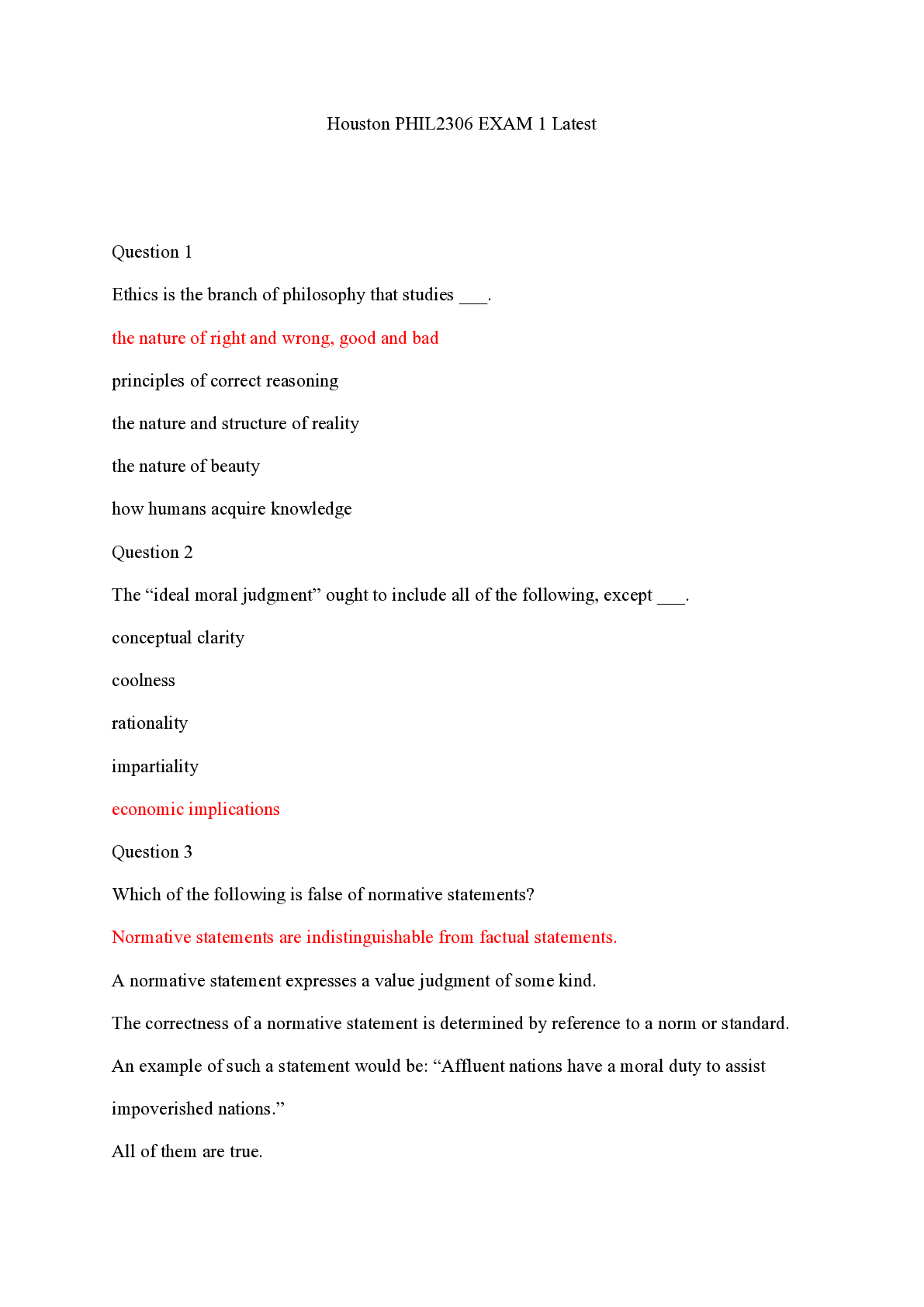
Question 1
Ethics is the branch of philosophy that studies ___.
the nature of right and wrong, good and bad
principles of correct reasoning
the nature and structure of reality
the nature of beauty
how humans acquir
...
[Show More]
Last updated: 4 years ago
Preview 1 out of 17 pages
Instant download
Buy this Document to get the Full Access Instantly
Provided by Students Who Aced it
We Verify Document Content to Gurantee Accuracy
Reviews( 0 )
Document information
Connected school, study & course
About the document
Uploaded On
Jul 23, 2022
Number of pages
17
Written in
All

Additional information
This document has been written for:
Uploaded
Jul 23, 2022
Downloads
0
Views
183
Topic Tags
Recommended For You
Get more on EXAM »
$16
30 Pages
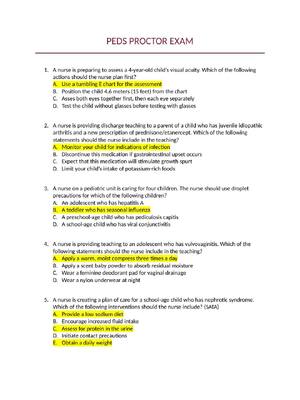
ATI PEDS PROCTORED EXAM | A nurse is preparing to assess a 4-...


$30
478 Pages
ATI-RN-FUNDAMENTALS-PROCTORED-EXAM-22-VERSIONS-LATEST-2022/202...

$14
23 Pages
NR 511 / NR511 MIDTERM EXAM STUDY GUIDE LATEST 2022 ALREADY PA...

$13
30 Pages
NR 511 / NR511 FINAL EXAM 1 STUDY GUIDE LATEST 2022 GRADED A

$24
271 Pages
A Speaker's Guidebook, Text, and Reference, 8th Edition by Dan...

$25
656 Pages
Developing Person Through Childhood and Adolescence, 11e by Ka...
$29
400 Pages
Solutions Manual for Non Linear Dynamics and Chaos With Applic...
More related documents below
 Nutritional Principles in Nursing - Rasmussen College.png)


