ATI Community Health Nursing
Proctored Focus. Rated A
Care of specific populations: Migrants
Migrant workers health problems include:
- 1. Dental disease
2. TB
3. Chronic conditions
4. Stress, anxiety, & other men
...
ATI Community Health Nursing
Proctored Focus. Rated A
Care of specific populations: Migrants
Migrant workers health problems include:
- 1. Dental disease
2. TB
3. Chronic conditions
4. Stress, anxiety, & other mental health conditions
5. Leukemia
6. Iron deficiency anemia
7. Stomach, uterine, & cervical cancers
8. Lack of prenatal care
9. Higher infant mortality rates
Primary Prevention for Rural or Migrant Health care: - -educate on measures to reduce exposure to
pesticides
-teach on accident prevention
-prenatal care
-mobilize preventative services (dental, immunizations)
Secondary Prevention measures for Rural/Migrant Health care: - SCREENING! screen for:
-pesticide exposure
-skin cancer
-chronic preventable diseases
-communicable diseases
Tertiary Prevention measures for Rural/Migrant Health care: - -treat for symptoms of pesticide exposure
-mobilize primary care and emergency servicesClient's rights include... - -right to info disclosure
-privacy
-informed consent
-info confidentiality
-participation in treatment decisions
Autonomy - respecting a client's right to choose (i.e. refusing chemo)
Nonmaleficence - doing no harm
Beneficence - maximize benefits and minimize possible harms
Justice situation: - determining eligibility for health care services based on income and fiscal resources
HIPAA rules about information security: - -only staff assigned to the patient may view/read client's
health record (no other nurses or doctors)
-client's have the right to read or obtain a copy of their health record
-nurses may not photocopy any part of med record except for authorized exchange of docs between
facilities & providers
-staff must keep records/names of client in secured place
-electronic records are password protected
-no sharing info to family members w/out code in person, email, or phone call
-talking about a client must be in a private setting so no one can overhear
HIPAA info security protocols include: -
-log off computer before leaving workstation
-never share ID or password
-never leave med records where ppl can see it-shred any printed info about client after use
-don't use or view social media in clinical settings
-no posting about clinical stuff
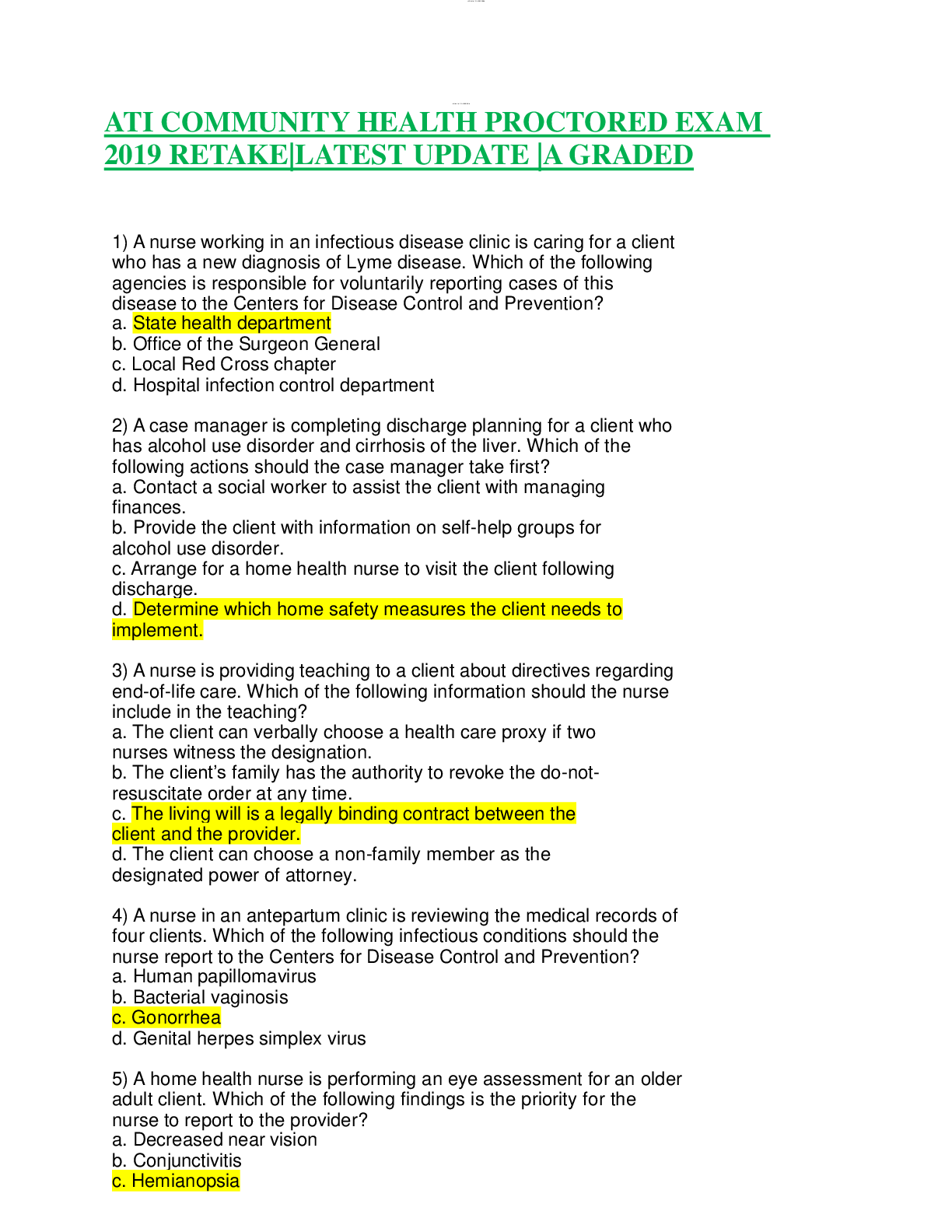
Caring for a client with gonorrhea: - -nationally notifiable disease
-women are frequently asymptomatic
-CDC recommends yearly screening for all sexually active women 25 yrs or older or w/risk factors
-at risk pregnant women must be screened at first prenatal visit
-identify & treat all partners
-admin erythromycin to all infants following delivery
-ceftriaxone IM or azithromycin PO
-it is the responsibility of the provider to report gonorrhea to local health dept
-state notification to CDC is voluntary
-if left untreated in women it can lead to PID which can cause infertility
Referrals: Client barriers include: -
-lack of motivation
-inadequate info about community resources
-inadequate understanding of the need for referral
-accessibility needs
-priorites
-finances
-cultural factors
Referrals: Resource barriers include: -
-attitudes of health care personnel
-costs of services
-physical accessibility of resources
-time limitations-limited expertise working w/culturally diverse populations
Just because someone is exposed to asbestos once doesn't mean they will develop health problems... -
long term exposure can lead to mesothelioma and lung conditions. Risk factors include workers (office
buildings with it when they work there everyday).
Priority action(s) in developing a disaster plan: -
-set up communication alternatives
-highlight possible evac routes
-identify local & distant meeting places
-create disaster kit
AS A NURSE:
-identify at risk populations in community
-identify community disaster warning system & how to access
-identify 1st responders
-make list of agencies for all levels of disaster
-triage
-gather equipment, check often
Hyperthyroidism: Radioactive iodine therapy home safety:
- Client is radioactive!
-no pregnant people
-no breastfeeding
-keep distance from others, limit visits to 30 min at a 6 ft distance
-drink lots of fluid
-maintain good hygiene to prevent infection
Teaching safe disposal of insulin syringes: -
-put in strong plastic container i.e. old detergent container (no soda bottles)-DO NOT recycle old needles, throw container in trash
-seal the container when 3/4 full with duct tape
-facilities throw it in sharps red container
Teaching about use of crutches: - -don't alter crutches after fitting
-follow prescribed crutch gait
-support body weight at the hand grips w/elbows flexed at 30 degrees
-position crutches on unaffected side when sitting or rising from a chair
Demographics of homeless population: - -families w/children are the fastest growing segment
-people with mental illness (large segment)
-veterans
-substance abuse disorders
-youth and runaways
-intimate partner abuse victims
-people with HIV or AIDS
-older adults
Planning Primary Prevention Activities - -determine solutions
-establish goals
-give responsibilities to individuals
-determine resources
-screening and education
-determine funding, develop budget
-plan for evaluation
Parish nursing: - promotes health and wellness within populations of faith communities
-work with: pastoral care staff, professional health care members, and volunteers to provide holistic
approach to healingFunctions:
-personal health counseling
-health education
-liaison between faith & community & local resources
-facilitate support groups
-spiritual support
Windshield survey: - -nurse and other driver drive through community assessing components
-time consuming
-provides descriptive overview of community
-results limited because it is only based on visualization & doesn't include community member input
nurse looks for:
-pets and animals
-evidence of drug abuse/substance abuse
-origin/race/ethnicity of population
-general appearance
-natural/man made boundaries
-housing details
-social systems: clinics, hospitals, dentists, parks & rec, worship places, stores, public protection &
transport
Positive Mantoux skin test for TB includes: - an induration-palpable, raised, hardened area of 10 mm or
greater in diameter
Positive Mantoux test indicates that... - the client has developed an immune response to TB it does not
confirm active TB
Mantoux test: an induration of 5 mm may be considered - positive mantoux test in
immunocompromised clients
[Show More]
.png)
.png)







.png)
.png)
.png)
.png)
.png)
.png)
.png)
.png)
.png)
.png)
.png)

