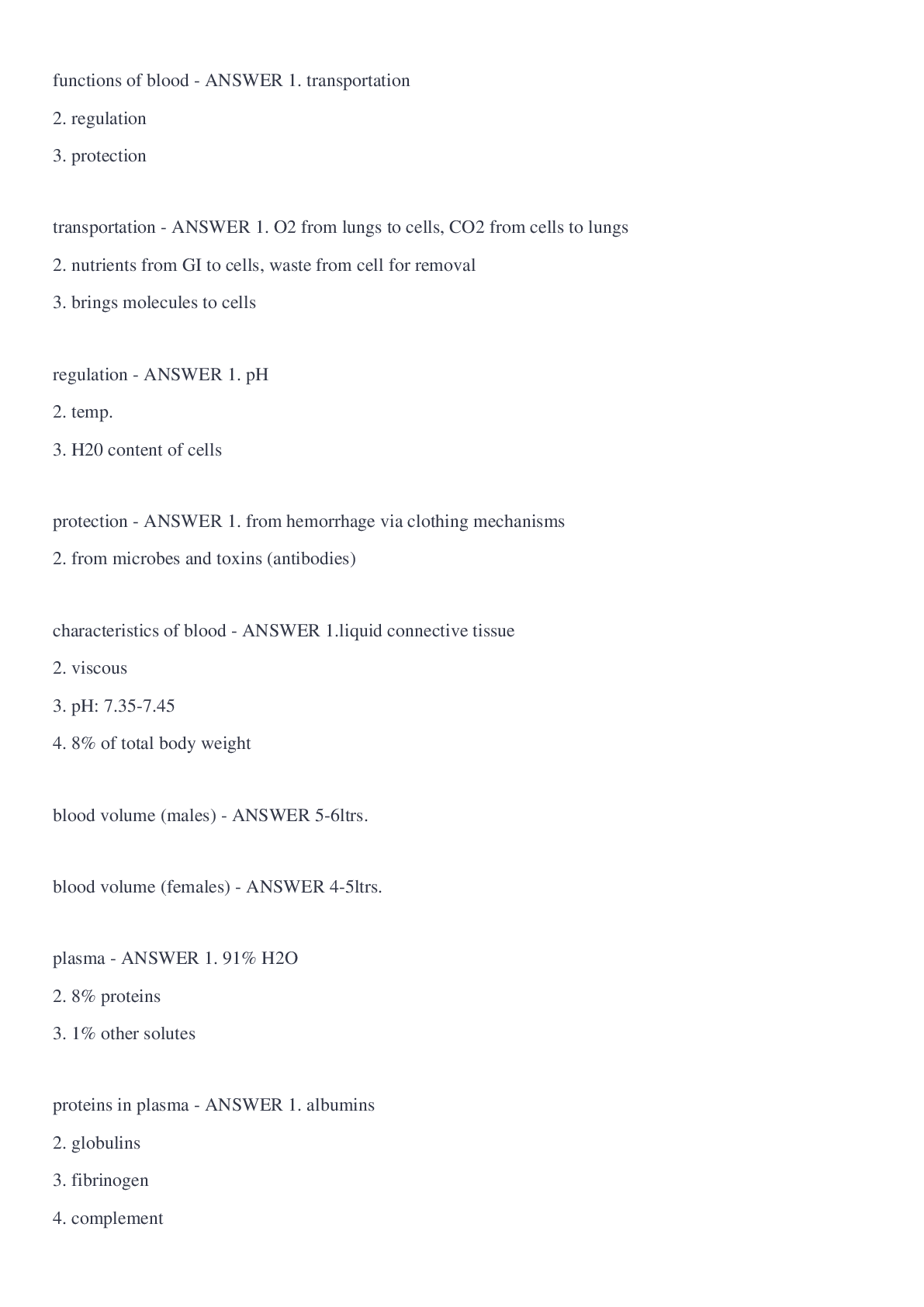
functions of blood - ANSWER 1. transportation
2. regulation
3. protection
transportation - ANSWER 1. O2 from lungs to cells, CO2 from cells to lungs
2. nutrients from GI to cells, waste from cell for removal
3.
...
functions of blood - ANSWER 1. transportation
2. regulation
3. protection
transportation - ANSWER 1. O2 from lungs to cells, CO2 from cells to lungs
2. nutrients from GI to cells, waste from cell for removal
3. brings molecules to cells
regulation - ANSWER 1. pH
2. temp.
3. H20 content of cells
protection - ANSWER 1. from hemorrhage via clothing mechanisms
2. from microbes and toxins (antibodies)
characteristics of blood - ANSWER 1.liquid connective tissue
2. viscous
3. pH: 7.35-7.45
4. 8% of total body weight
blood volume (males) - ANSWER 5-6ltrs.
blood volume (females) - ANSWER 4-5ltrs.
plasma - ANSWER 1. 91% H2O
2. 8% proteins
3. 1% other solutes
proteins in plasma - ANSWER 1. albumins
2. globulins
3. fibrinogen
4. complement
solutes in plasma - ANSWER 1. regulatory substances (enzymes, hormones)
2. nutrients
4. respiratory gasses
5. electrolytes
formed elements - ANSWER 1. platelets
2. leukocytes
3. erythrocytes
erythrocytes (RBCs) - ANSWER thin, non-nucleated biconcave discs
biconcave discs - ANSWER 1. increase surface area for O2 diffusion
2. thin membrane increases diffusion of respiratory gasses
reverse deformability - ANSWER 1. flexible membrane allows to squeeze through capillaries
lifespan of erythrocytes - ANSWER ~120 days
average amount of RBCs - ANSWER men: 5.4mil./mm3
women: 4.8mil/mm3
erythropoiesis - ANSWER hemocytoblast >reticulocyte >erythrocyte
nutrients needed for erythropoiesis - ANSWER 1. proteins
2. iron
3. vitamins: C, E, niacin, riboflavin, folic acid, B12, B6
RBC during gestation - ANSWER 1. 1st several weeks, RBCs are formed in yolk sac
2. 2nd trimester, fetal RBCs are made in liver/spleen, bone marrow happens later
3. after birth, bone marrow takes over
hypoxemia - ANSWER low O2 in blood
hypoxia - ANSWER low O2 at tissue level
life cycle of RBC - ANSWER 1. erythrocytes form in red bone marrow
2. circulate in bloodstream for 120 days
3. old RBCs are broken down in liver/spleen
4. heme is recycled
5. heme is converted to biliverdin >bilirubin, secreted in bile from liver
6. iron is transported by transferring and stored by ferritin in the liver
7. membranes proteins are broken into AA and used to make new erythrocytes
hemoglobin to RBC - ANSWER 1 RBC=280 hemoglobin molecules
composition of hemoglobin molecule - ANSWER 1. 4 hemoglobin complexes (iron containing pigment)
2. 2 pairs
hemoglobin - ANSWER 1. 1 molecule carries 4 molecules of O2 on heme ring
2. all 4 molecules are bound to O2
Hemoglobin (Hgb) measures - ANSWER measures Hgb content of blood
men: 14-18 g/dl
women: 12-16 g/dl
hematocrit (Hct) - ANSWER % of red cell mass in 100 ml
men: 42-52%
women: 37-47%
MCV - ANSWER mean corpuscular volume
MCHC - ANSWER means corpuscular hemoglobin
MCV - ANSWER SLIDE 16
MCHC - ANSWER
polycythemia vera - ANSWER associated with neoplastic transformation of bone marrow stem cells (myeloproliferative disorder)
secondary polycythemia - ANSWER due to chronic hypoxemia, with a resultant increase in erythropoietin production
relative polycythemia - ANSWER due to dehydration, which causes a spurious increase in the RBC count
anemia - ANSWER -abnormally low Hgb, number of circulating RBCs, or both
-a decrease in O2 carrying capacity of blood
etiology of anemia - ANSWER 1. excessive blood loss
2. increase hemolysis (destruction)
3. decrease RBC production (nutritional, bone marrow failure, renal failure)
4. disorders of hemoglobin synthesis
5. dilutional (relative)
compensatory mechanisms for anemia - ANSWER -selective tissue perfusion
-increase o2 delivery
-increase HR/CO/RR
-increase erythropoiesis
clinical representation of anemia - ANSWER decrease Hgb, decrease o2 carrying, hypoxemia, hypoxia
general: fatigue, weakness, H/A, dizziness, visual disturbances, irritability, confusion
respiratory: dyspnea on exertion
cardiac: angina, tachycardia, palpitations, LV hypertrophy, orthostatic hypotension
skin & mucous membranes: pallor/jaundice of skin; brittle finger nails, angular cheilitis, brittle hair; smooth tongue
iron deficiency anemia - ANSWER 1. dietary deficiency of iron
2. loss of iron from blood loss
3. increase demand (pregnancy)
clinical manifestations of iron deficiency anemia - ANSWER decreased H&H
decreased RBCs
decreased MCV
decreased MCHC
[Show More]