MGMT 918 Wharton Coursera Busines Foundations Social Human Capital.
Document Content and Description Below
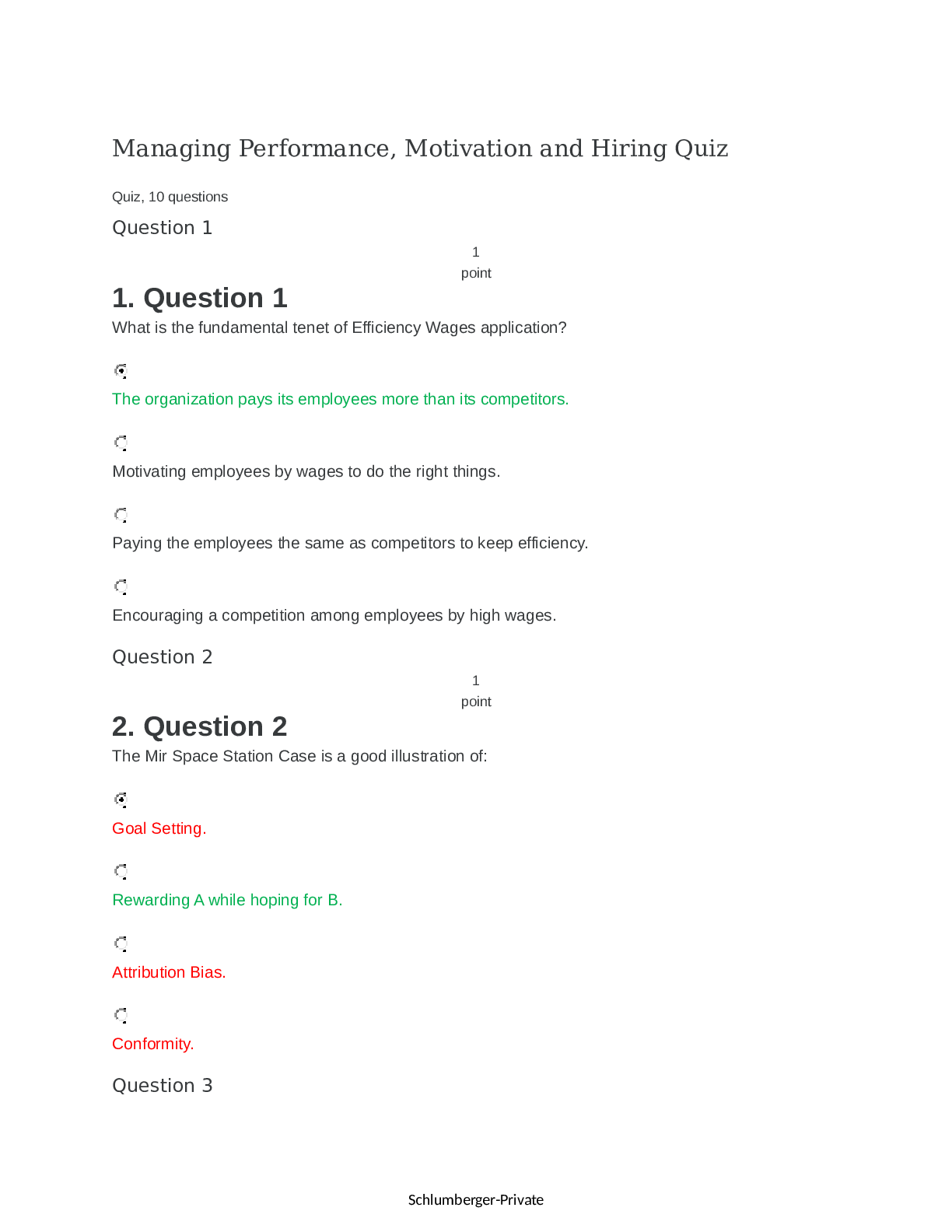
Managing Performance, Motivation and Hiring Quiz
Quiz, 10 questions
Question 1
1
point
1. Question 1
What is the fundamental tenet of Efficiency Wages application?
The organization pays its employees more than its
...
[Show More]
Last updated: 3 years ago
Preview 1 out of 20 pages
Instant download
Buy this Document to get the Full Access Instantly
Provided by Students Who Aced it
We Verify Document Content to Gurantee Accuracy
Reviews( 0 )
Document information
Connected school, study & course
About the document
Uploaded On
Jul 28, 2022
Number of pages
20
Written in
All

Additional information
This document has been written for:
Uploaded
Jul 28, 2022
Downloads
0
Views
158
Topic Tags
Recommended For You
Get more on EXAM »
$19
48 Pages
MGMT 918Wharton Coursera Business Financial Modeling Quiz.

$13
67 Pages
MGMT 918 Wharton Business Analytics Coursera Exam Modules
$16
48 Pages
MGMT 918Wharton Coursera Business Financial Modeling Quiz.
$14
49 Pages
MGMT 918-Wharton Coursera Business Financial Modeling Quiz-com...

$16
89 Pages
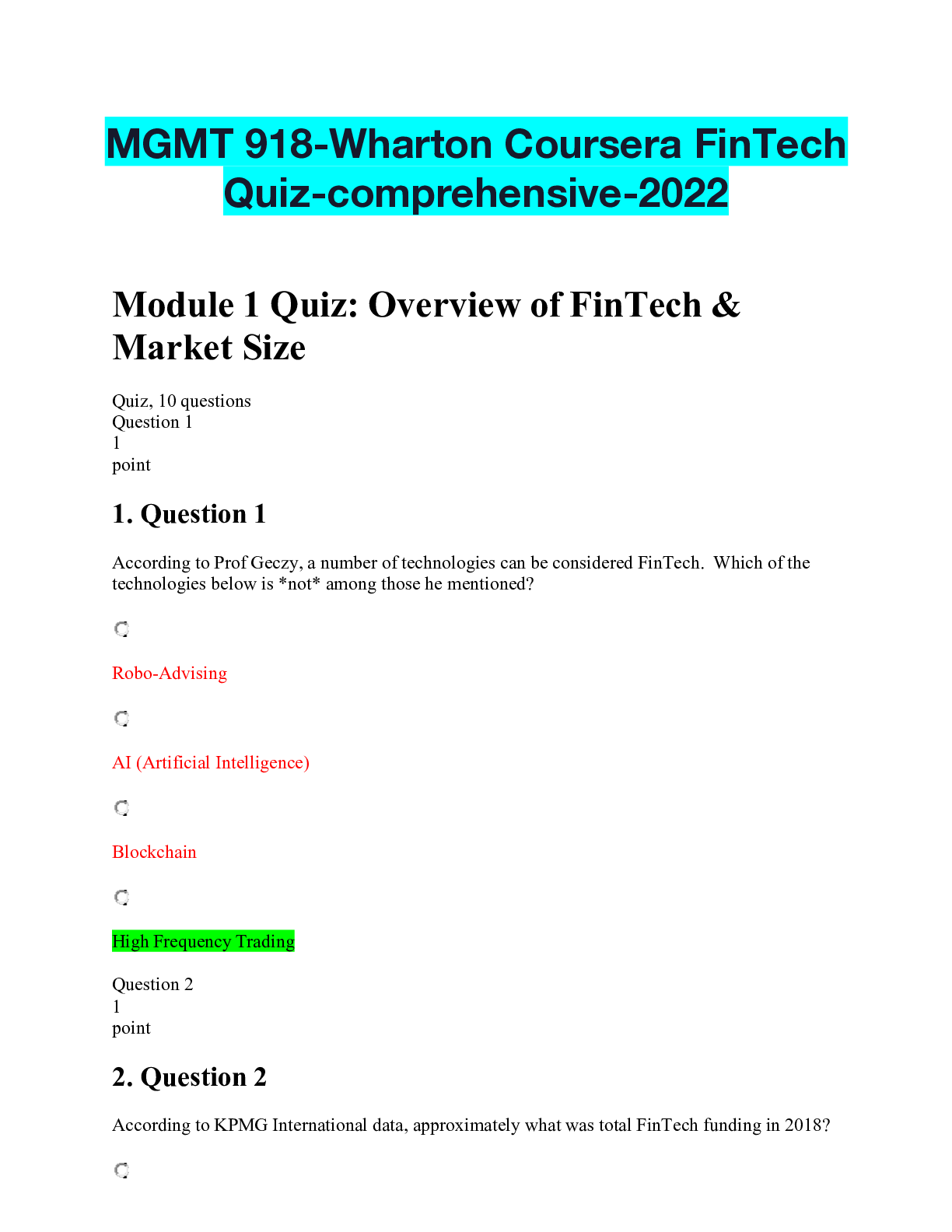
MGMT 918-Wharton Coursera FinTech Quiz-comprehensive-2022
$14
49 Pages
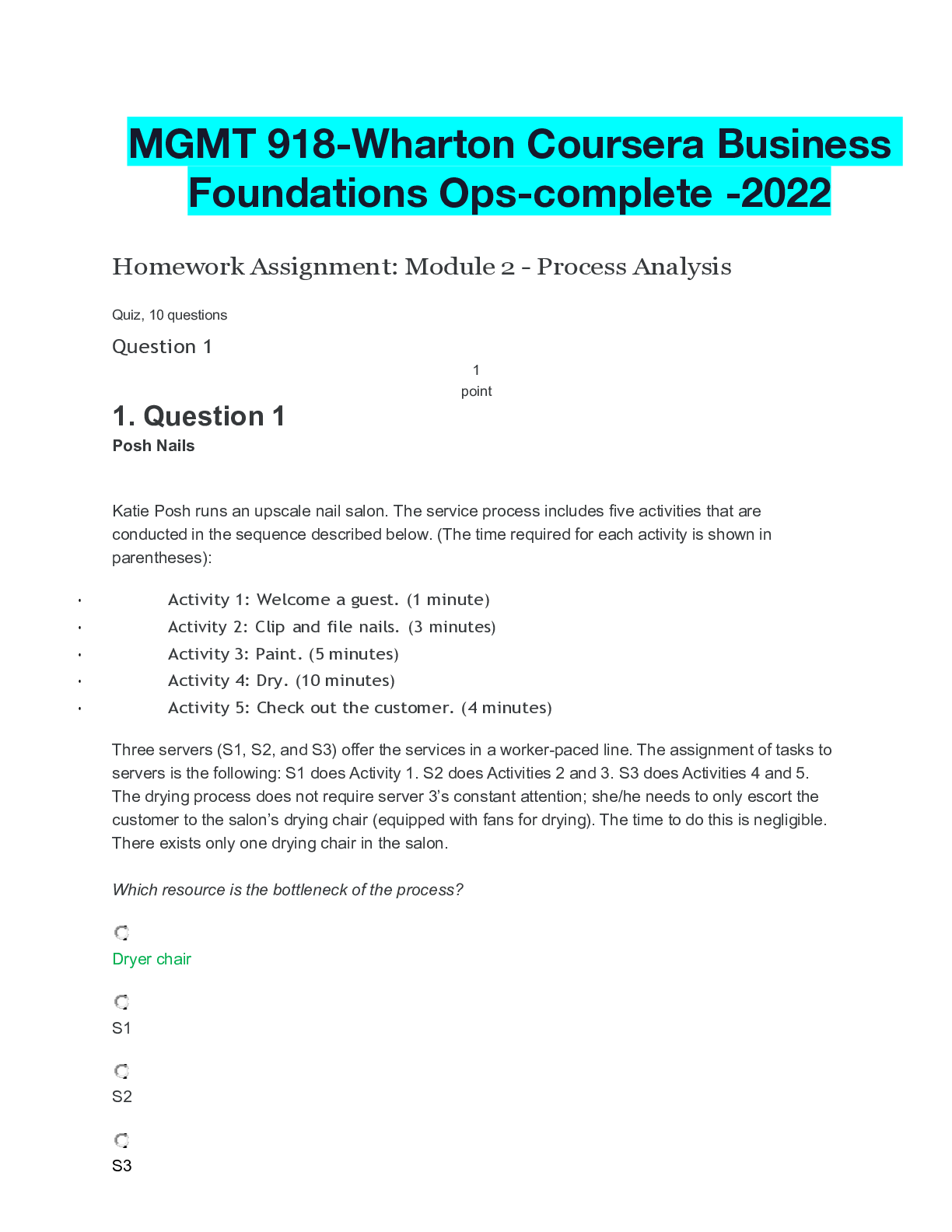
MGMT 918-Wharton Coursera Business Foundations Ops-complete -2...

$15
117 Pages
MGMT 918 Wharton Business Analytics Coursera Modules Test Bank...
$12
48 Pages
University of PennsylvaniaBUSINESS NAWharton Coursera Business...



More related documents below



.png)
.png)