NURSING > MED-SURG EXAM > NUR 380Medical Surgical Final Exam Blueprint (All)
NUR 380Medical Surgical Final Exam Blueprint
Document Content and Description Below
Last updated: 3 years ago
Preview 1 out of 104 pages
Instant download
 (1).png)
Buy this Document to get the Full Access Instantly
Provided by Students Who Aced it
We Verify Document Content to Gurantee Accuracy
Reviews( 0 )
Document information
Connected school, study & course
About the document
Uploaded On
Jul 29, 2022
Number of pages
104
Written in
All

Additional information
This document has been written for:
Uploaded
Jul 29, 2022
Downloads
0
Views
140
Topic Tags
Recommended For You
Get more on MED-SURG EXAM »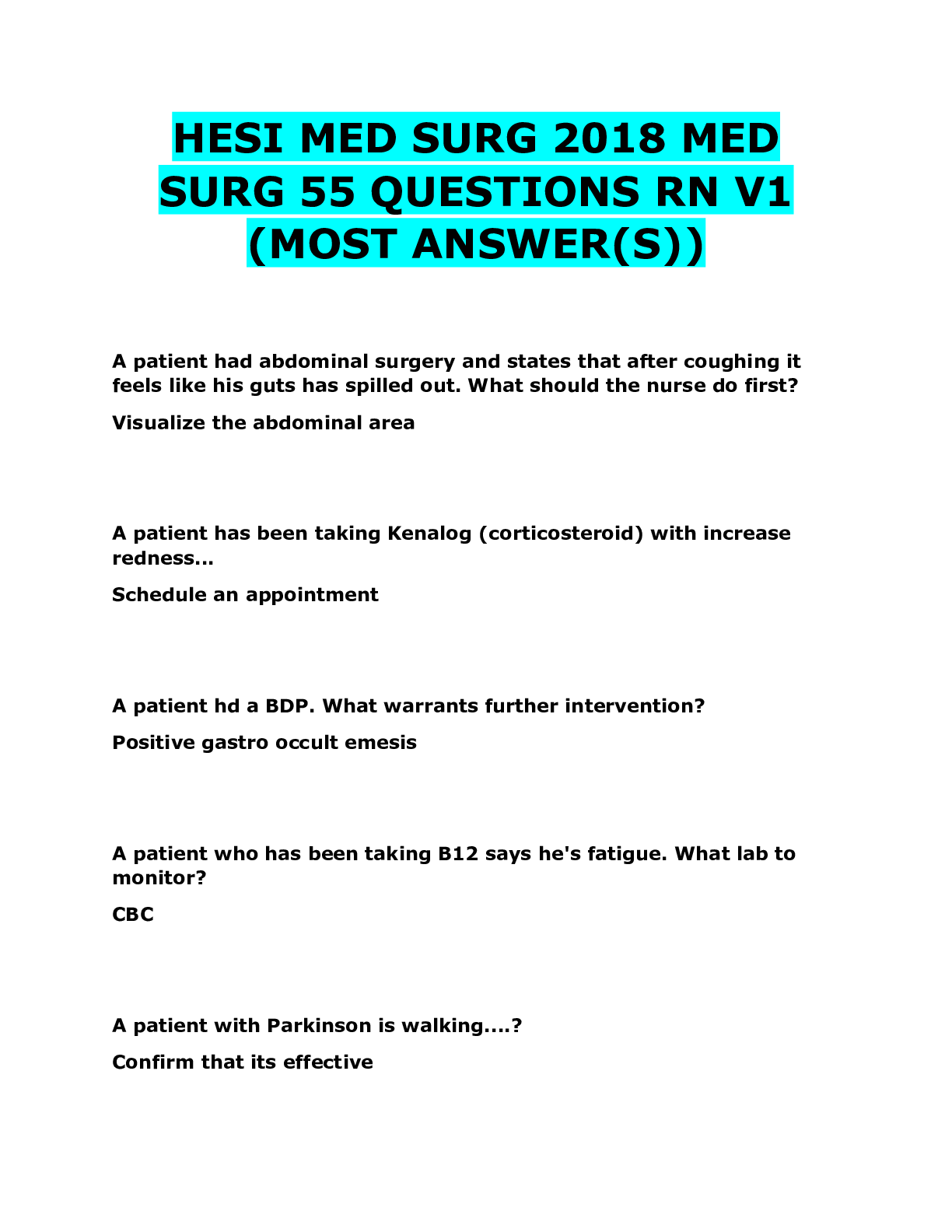
HESI MED SURG 2019 MED SURG 55 QUESTIONS RN V1 With All Answer...
Medical Surgical Nursing Questions And Correct Answers || Ver...

ATI Med-SURG Proctored Exam [2021 / 2022] - Chamberlain Colleg...
MED SURG RN EXIT EXAM || THE NEWEST 2025 VERSION 2 ACTUAL EXAM...
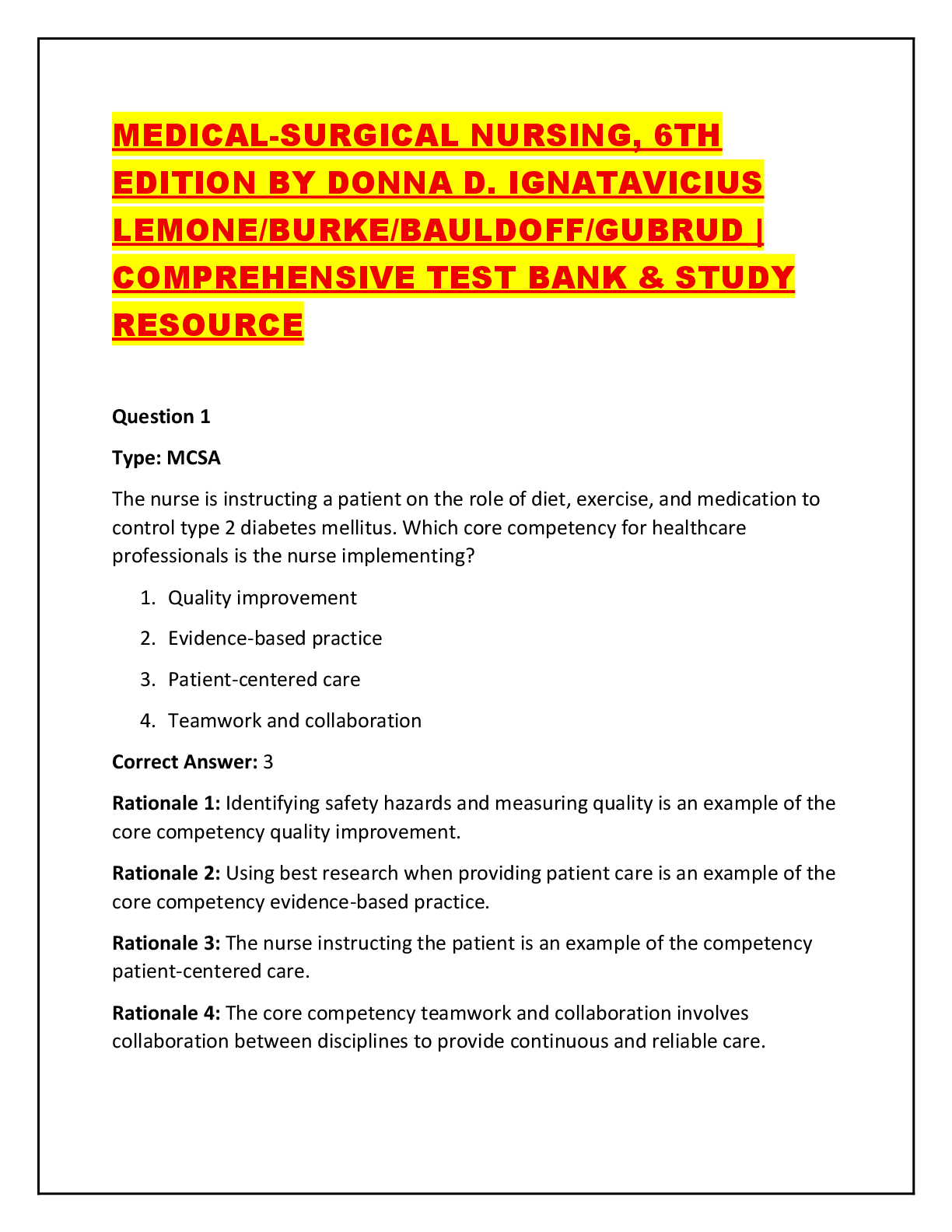
MED-SURG: CARDIOVASCULAR EXAM NEWEST 2025/2026 ACTUAL EXAM TE...

West Coast University - Med Surg 1 Final Exam Study Guide (Lat...

TEST BANK for Davis Advantage for Psychiatric Mental Health Nu...
Test Bank For Fundamentals of Nursing 11th Edition Potter Perr...
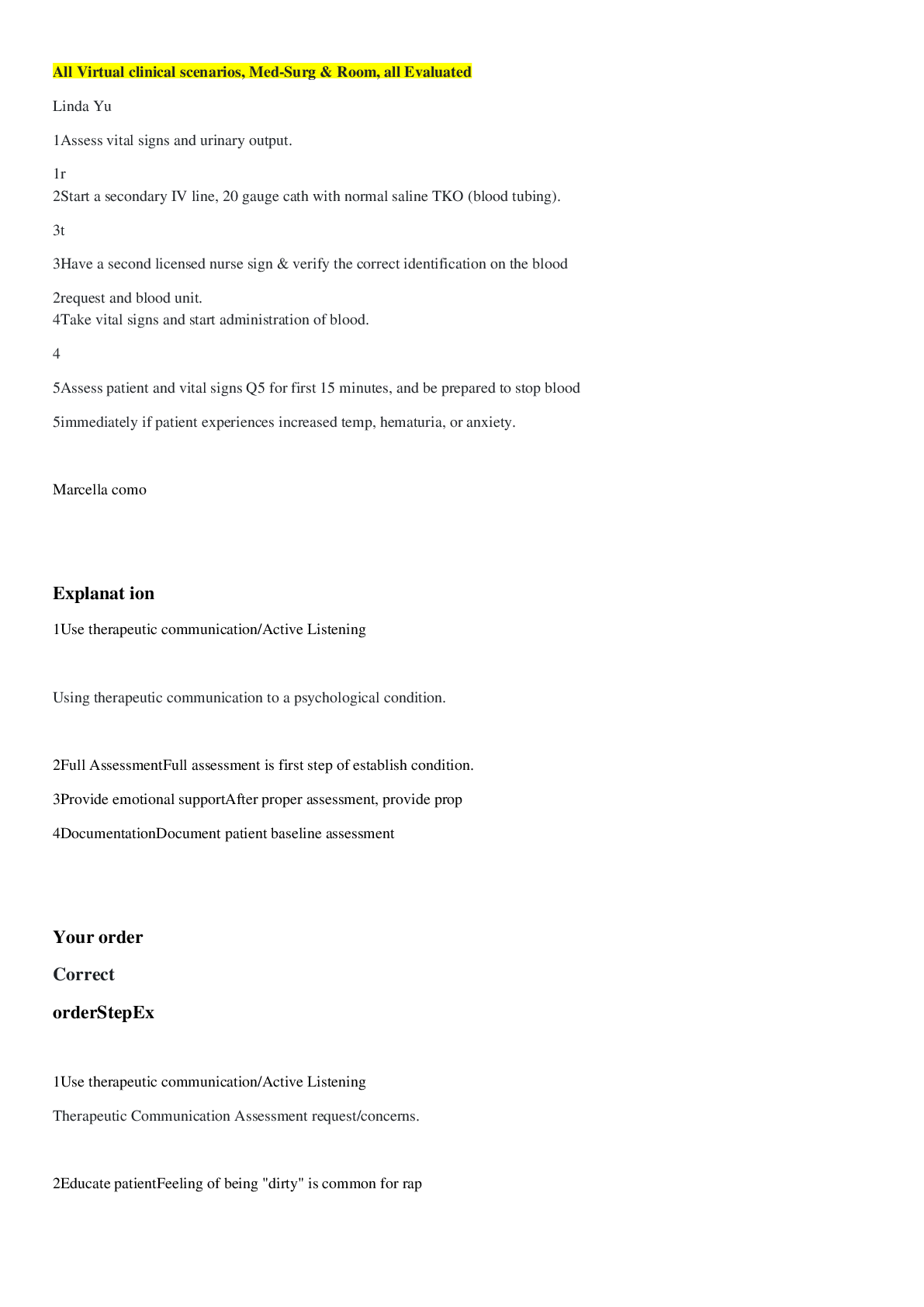
All Virtual clinical scenarios, Med-Surg & Room, all Evaluated...


