Acute Kidney Injury NCLEX Questions exam 4 2022
Document Content and Description Below
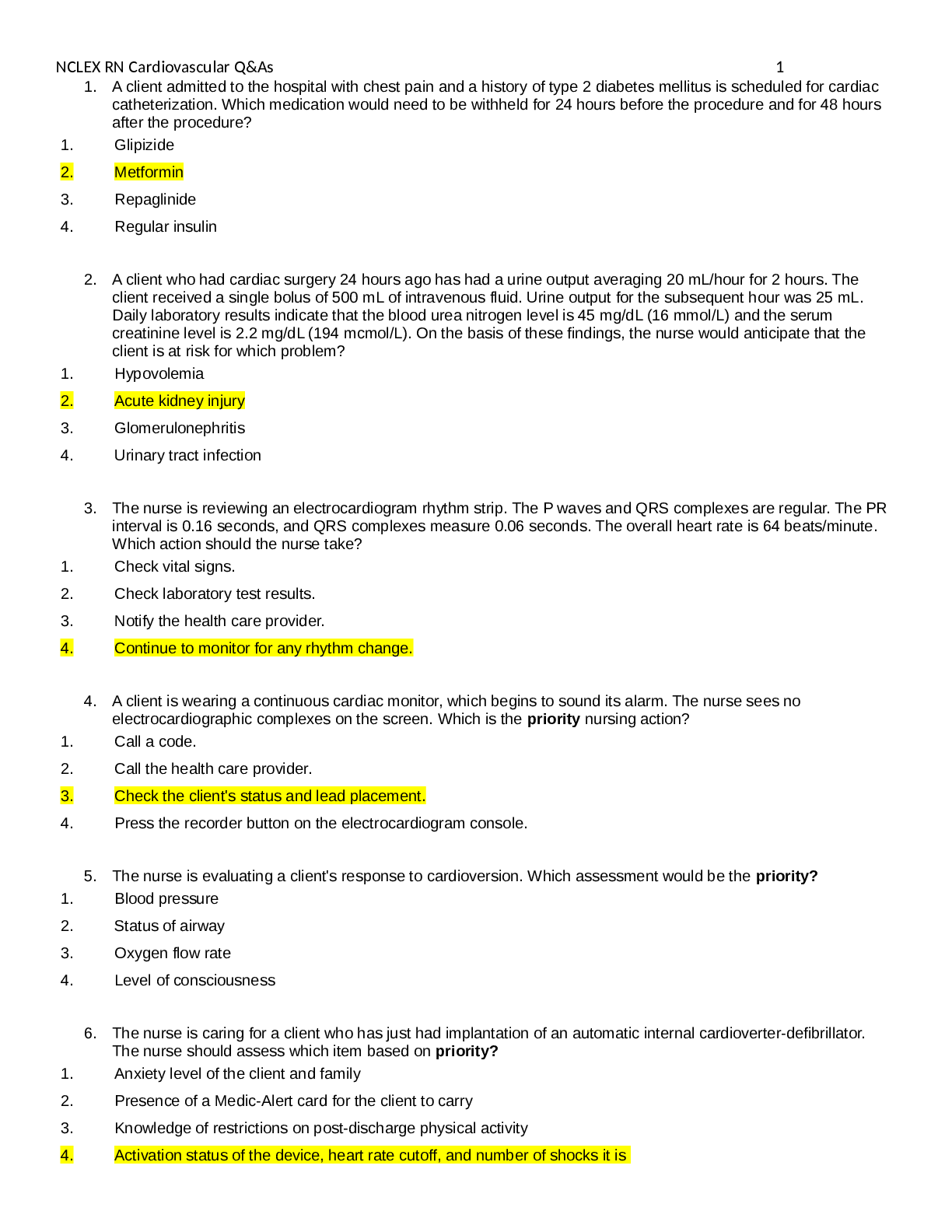
Which descriptions characterize AKI? Select all that apply
a. primary cause of death is infection
b. it almost always affects older people
c. disease course is potentially reversible
d. most common cause is diabetic
...
[Show More]
Last updated: 4 years ago
Preview 1 out of 10 pages
Instant download

Buy this Document to get the Full Access Instantly
Provided by Students Who Aced it
We Verify Document Content to Gurantee Accuracy
Reviews( 0 )
Document information
Connected school, study & course
About the document
Uploaded On
Jul 29, 2022
Number of pages
10
Written in
All

Additional information
This document has been written for:
Uploaded
Jul 29, 2022
Downloads
0
Views
282
Topic Tags
Recommended For You
Get more on NCLEX »
$23
202 Pages
Solutions Manual for Fluid Mechanics Fundamentals and Applicat...
.png)
$19
185 Pages
Test Bank for Drugs, Behavior and Society 3rd Canadian Edition...
$15.5
95 Pages
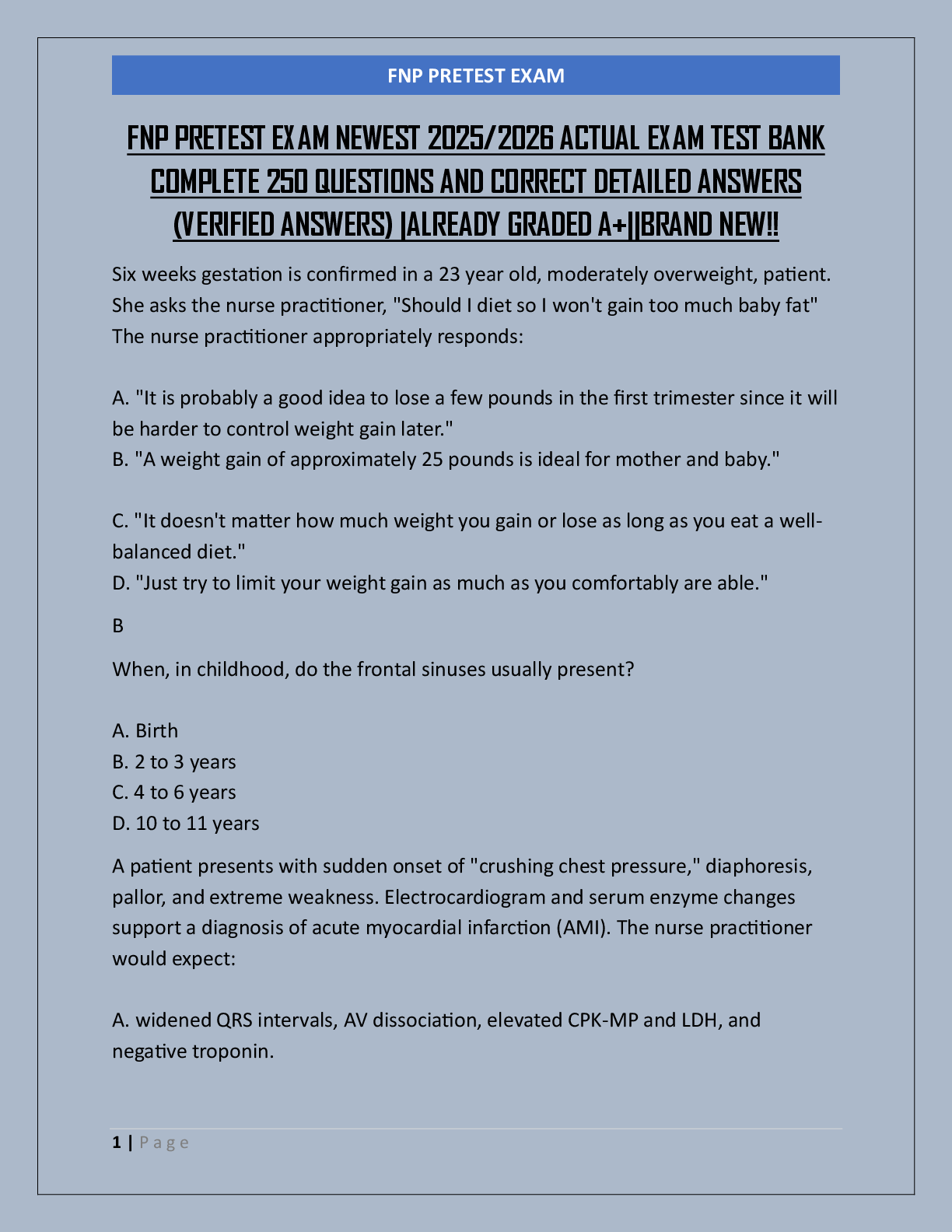
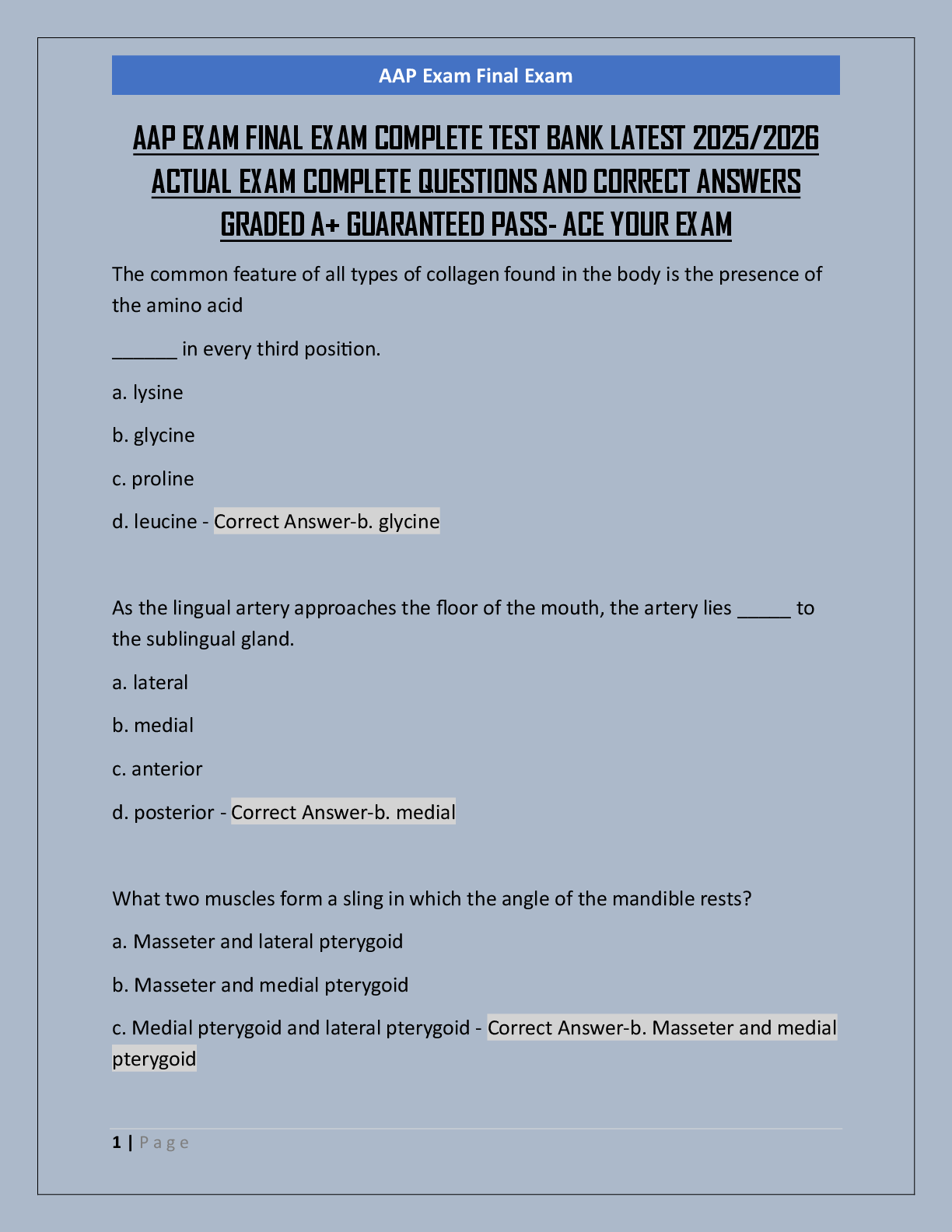
FNP PRETEST EXAM NEWEST 2025/2026 ACTUAL EXAM TEST BANK COMPL...
$24
235 Pages
Henke's Med-Math Dosage Calculation, Preparation, & Administra...

$15
9 Pages
Pennsylvania State University :NURSING Acute Kidney Injury NCL...
$15.5
127 Pages
APEA PREPREDICTOR EXAM NEWEST 2025/2026 ACTUAL EXAM STUDY GUI...
$8.5
3 Pages
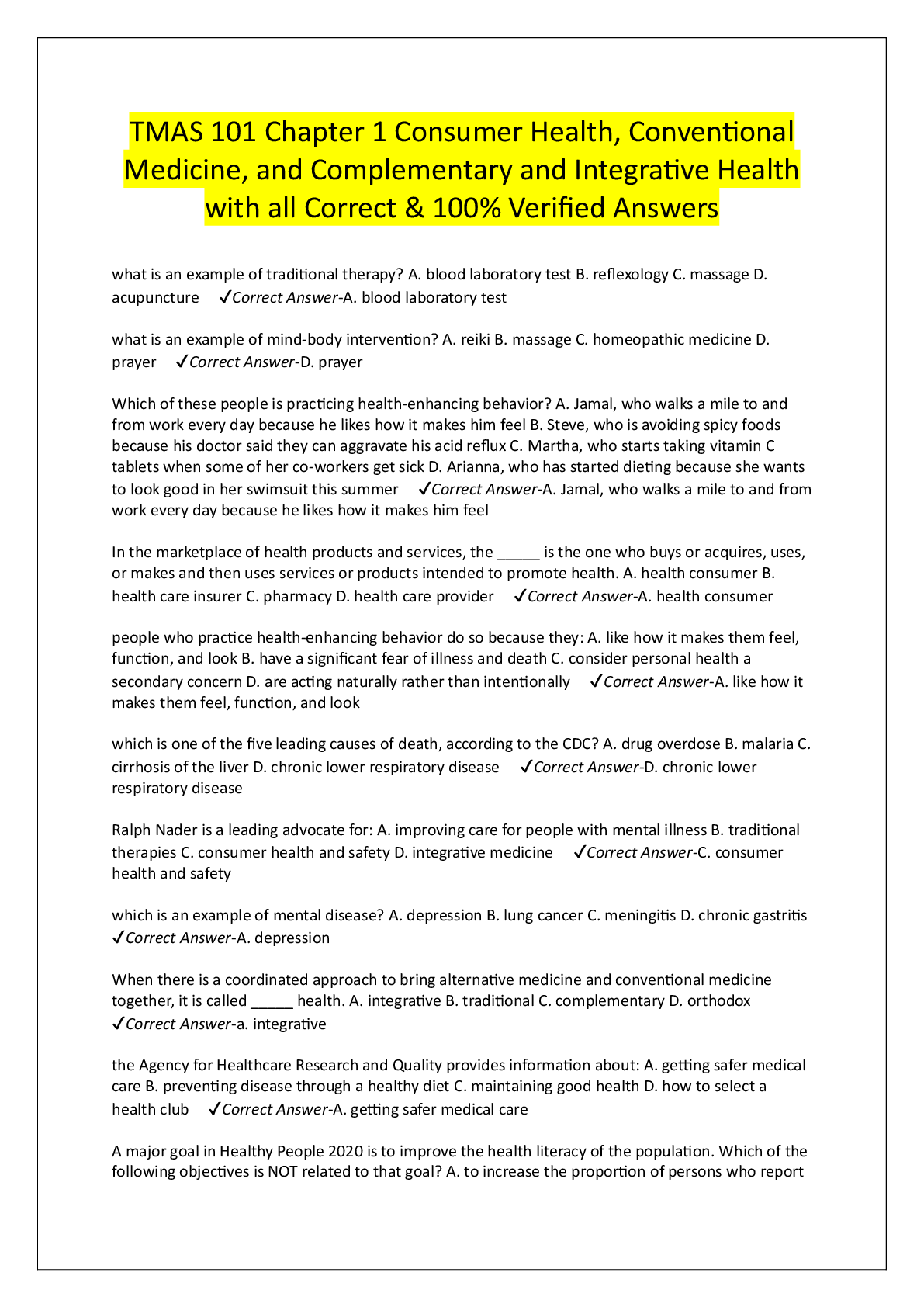
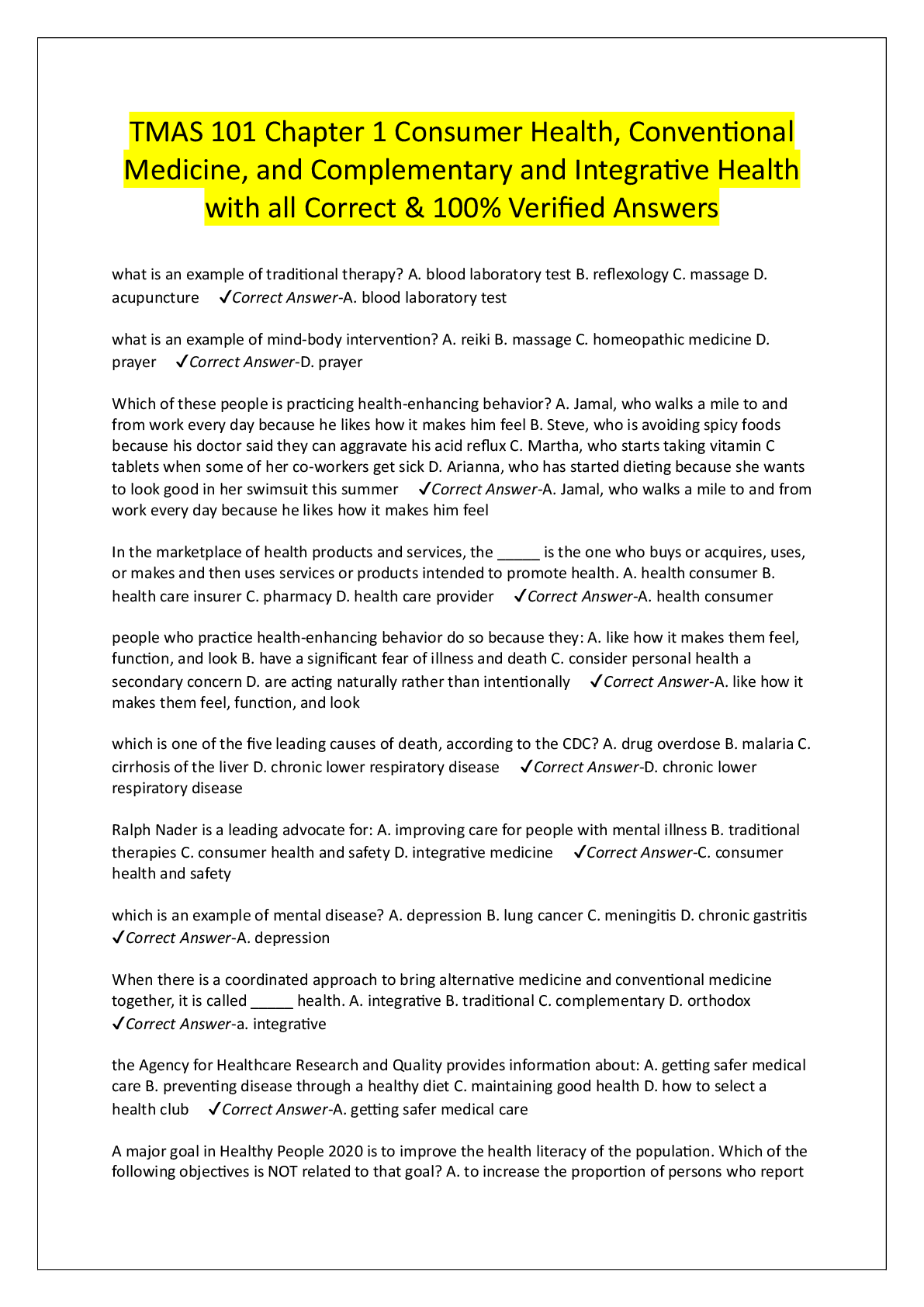
TMAS 101 Chapter 1 Consumer Health, Conventional Medicine, and...
$8.5
3 Pages
TMAS 101 Chapter 1 Consumer Health, Conventional Medicine, and...
More related documents below