NUTRITION (C787) STUDY GUIDE
Unit 7: Nutrition and Global Health Environments (Cohort 4 Video)
Reading: Chapter 17: "Leveraging Nutrition Education Through the Public Health Team"
Reading: Questions to Ask Before Taki
...
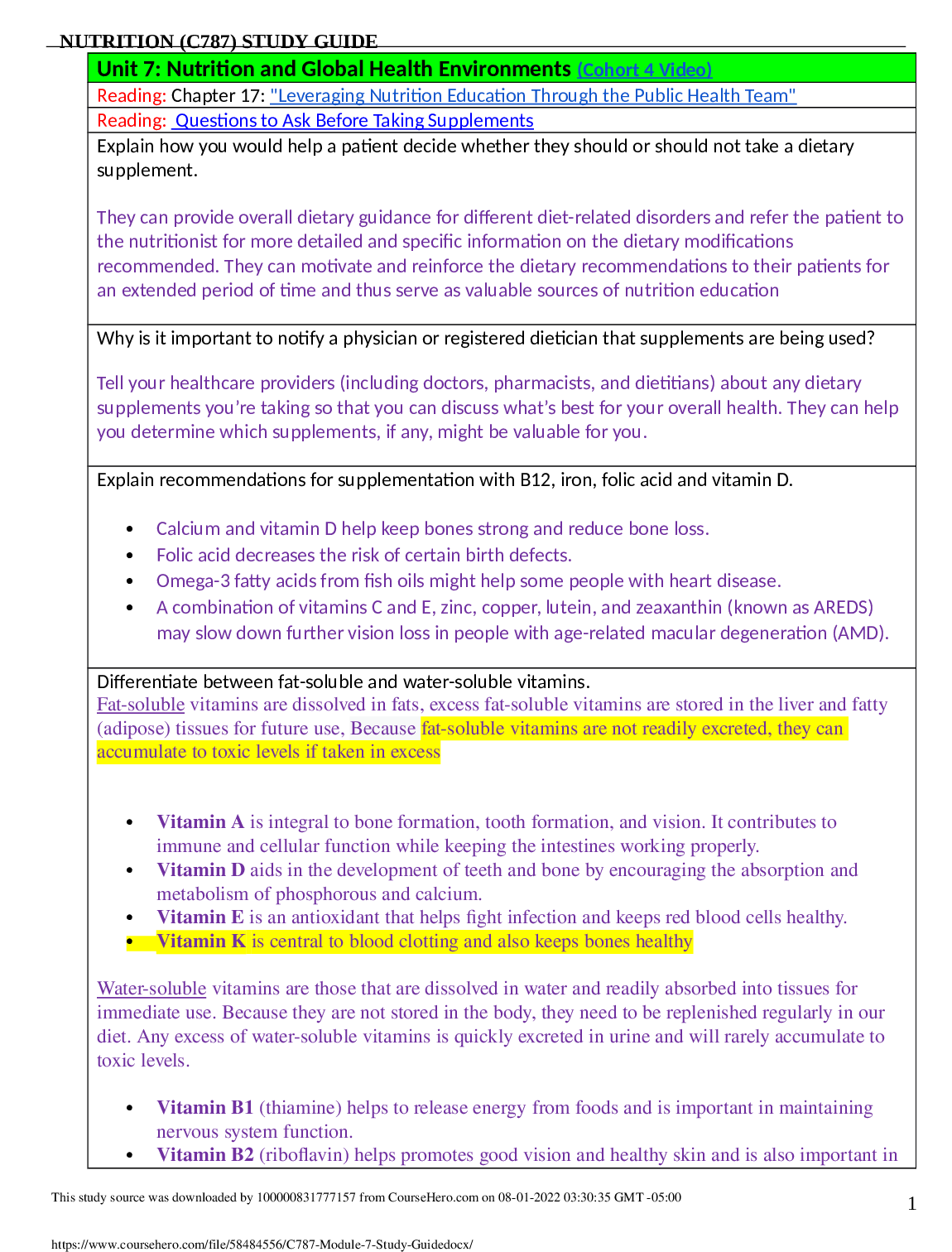
NUTRITION (C787) STUDY GUIDE
Unit 7: Nutrition and Global Health Environments (Cohort 4 Video)
Reading: Chapter 17: "Leveraging Nutrition Education Through the Public Health Team"
Reading: Questions to Ask Before Taking Supplements
Explain how you would help a patient decide whether they should or should not take a dietary
supplement.
They can provide overall dietary guidance for different diet-related disorders and refer the patient to
the nutritionist for more detailed and specific information on the dietary modifications
recommended. They can motivate and reinforce the dietary recommendations to their patients for
an extended period of time and thus serve as valuable sources of nutrition education
Why is it important to notify a physician or registered dietician that supplements are being used?
Tell your healthcare providers (including doctors, pharmacists, and dietitians) about any dietary
supplements you’re taking so that you can discuss what’s best for your overall health. They can help
you determine which supplements, if any, might be valuable for you.
Explain recommendations for supplementation with B12, iron, folic acid and vitamin D.
Calcium and vitamin D help keep bones strong and reduce bone loss.
Folic acid decreases the risk of certain birth defects.
Omega-3 fatty acids from fish oils might help some people with heart disease.
A combination of vitamins C and E, zinc, copper, lutein, and zeaxanthin (known as AREDS)
may slow down further vision loss in people with age-related macular degeneration (AMD).
Differentiate between fat-soluble and water-soluble vitamins.
Fat-soluble vitamins are dissolved in fats, excess fat-soluble vitamins are stored in the liver and fatty
(adipose) tissues for future use, Because fat-soluble vitamins are not readily excreted, they can
accumulate to toxic levels if taken in excess
Vitamin A is integral to bone formation, tooth formation, and vision. It contributes to
immune and cellular function while keeping the intestines working properly.
Vitamin D aids in the development of teeth and bone by encouraging the absorption and
metabolism of phosphorous and calcium.
Vitamin E is an antioxidant that helps fight infection and keeps red blood cells healthy.
Vitamin K is central to blood clotting and also keeps bones healthy
Water-soluble vitamins are those that are dissolved in water and readily absorbed into tissues for
immediate use. Because they are not stored in the body, they need to be replenished regularly in our
diet. Any excess of water-soluble vitamins is quickly excreted in urine and will rarely accumulate to
toxic levels.
Vitamin B1 (thiamine) helps to release energy from foods and is important in maintaining
nervous system function.
Vitamin B2 (riboflavin) helps promotes good vision and healthy skin and is also important in
1
This study source was downloaded by 100000831777157 from CourseHero.com on 08-01-2022 03:30:35 GMT -05:00
https://www.coursehero.com/file/58484556/C787-Module-7-Study-Guidedocx/
NUTRITION (C787) STUDY GUIDE
converting the amino acid tryptophan into niacin.
Vitamin B3 (niacin) aids in digestion, metabolism, and normal enzyme function as well as
promoting healthy skin and nerves.
Vitamin B6 (pyridoxine) aids in protein metabolism and the production of red blood cell,
insulin, and hemoglobin.
Folate (folic acid) also aids in protein metabolism and red blood cell formation and may
reduce the risk of neural tube birth defects.
Vitamin B12 (cobalamin) aids in the production of normal red blood cells as well as the
maintenance of the nervous system.
Biotin helps release energy from carbohydrates and aids in the metabolism of fats, proteins,
and carbohydrates from food.
Pantothenic acid aids in metabolism and the formation of hormones.
Vitamin C (ascorbic acid) is central to iron absorption and collagen synthesis. It aids in
wound healing and bone formation while improving overall immune function.
Why do vegetarians require a bioavailable form of calcium supplementation?
Plant foods contain many vitamins and minerals that are important for a balanced diet and can be a
source of calcium. However, generally speaking, plant foods contain a considerable amount of
inhibitory substances, such as oxalates and phytates. These bind to calcium and form insoluble salt
complexes, thus decreasing calcium absorption.
Reading: WINHealth Topics from National Institute of Diabetes and Digestive and Kidney Diseases.
Reading: Chapter 12: "Providing Nutrition Services in Public Health Primary Care"
What is a Federally Qualified Health Center?
Community health centers (Technically known as Federally Qualified Health Centers (FQHCs))
are nonprofit healthcare providers that serve the communities in which they are located;
Community health centers offer “one-stop shopping” where primary and preventive healthcare
visits, lab services, dental and mental health services, and case management are conveniently
located, coordinated, and tailored to meet the patient’s needs. Ideally, community health center
staff and providers are as diverse as the patien
[Show More]