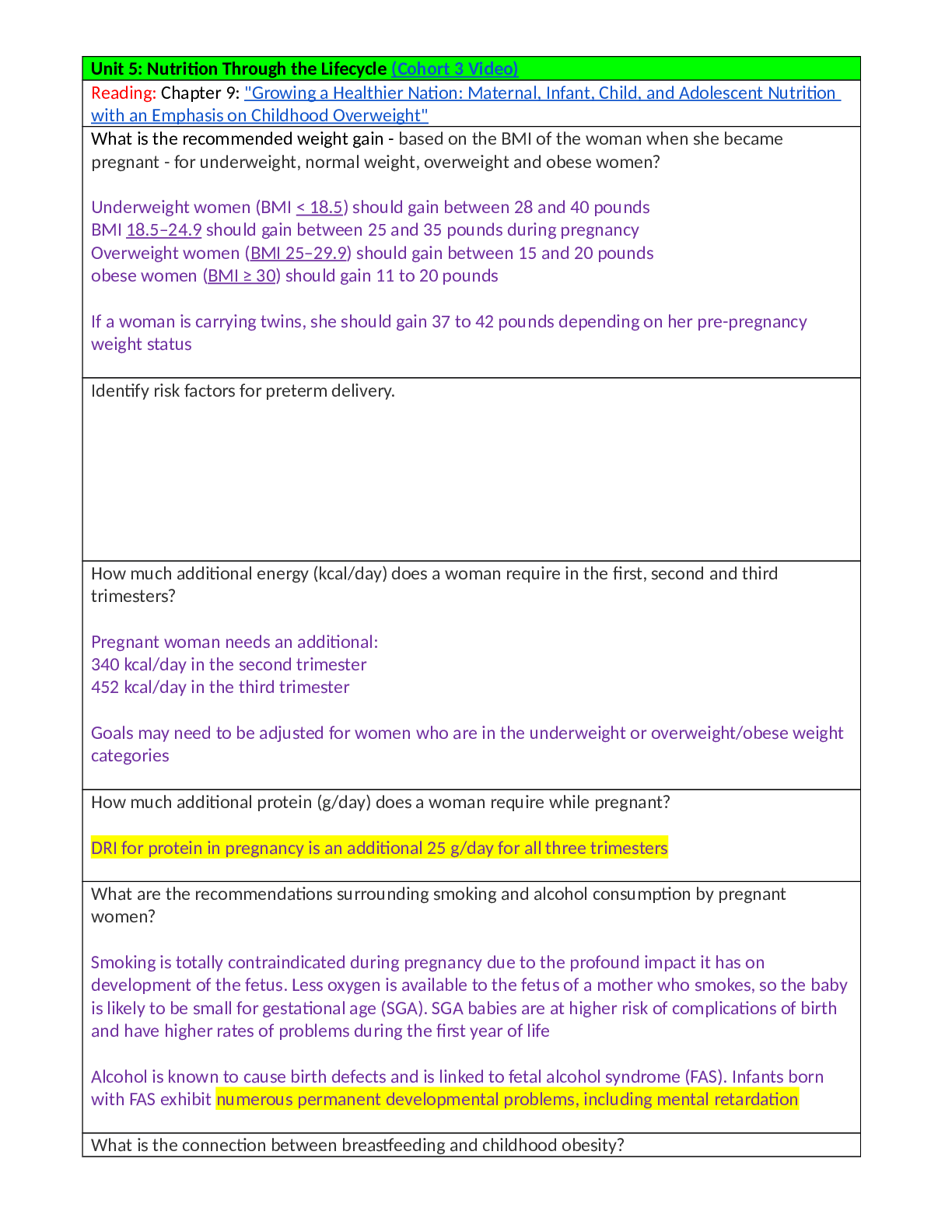
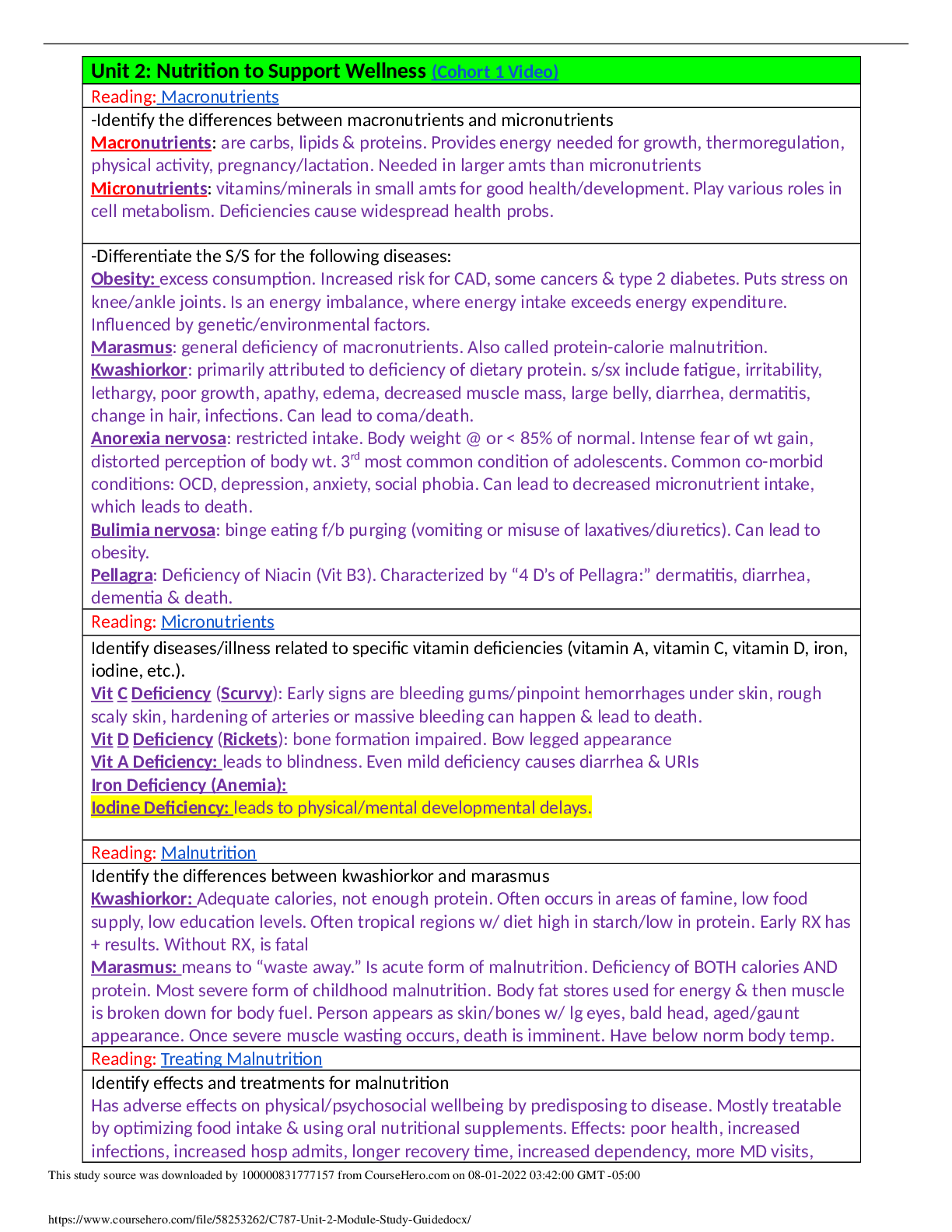
Unit 5: Nutrition Through the Lifecycle (Cohort 3 Video) Reading: Chapter 9: "Growing a Healthier Nation: Maternal, Infant, Child, and Adolescent Nutrition with an Emphasis on Childhood Overweight" ... What is the recommended weight gain - based on the BMI of the woman when she became pregnant - for underweight, normal weight, overweight and obese women? Underweight women (BMI < 18.5) should gain between 28 and 40 pounds BMI 18.5–24.9 should gain between 25 and 35 pounds during pregnancy Overweight women (BMI 25–29.9) should gain between 15 and 20 pounds obese women (BMI ≥ 30) should gain 11 to 20 pounds If a woman is carrying twins, she should gain 37 to 42 pounds depending on her pre-pregnancy weight status Identify risk factors for preterm delivery. How much additional energy (kcal/day) does a woman require in the first, second and third trimesters? Pregnant woman needs an additional: 340 kcal/day in the second trimester 452 kcal/day in the third trimester Goals may need to be adjusted for women who are in the underweight or overweight/obese weight categories How much additional protein (g/day) does a woman require while pregnant? DRI for protein in pregnancy is an additional 25 g/day for all three trimesters What are the recommendations surrounding smoking and alcohol consumption by pregnant women? Smoking is totally contraindicated during pregnancy due to the profound impact it has on development of the fetus. Less oxygen is available to the fetus of a mother who smokes, so the baby is likely to be small for gestational age (SGA). SGA babies are at higher risk of complications of birth and have higher rates of problems during the first year of life Alcohol is known to cause birth defects and is linked to fetal alcohol syndrome (FAS). Infants born with FAS exhibit numerous permanent developmental problems, including mental retardation What is the connection between breastfeeding and childhood obesity? Breast milk may contribute to breast-feeding being protective against overweight; Breast milk nutritional content changes over time, containing less protein after the first few months when the infant’s need for protein is less. It is thought that the more rapid gains in weight and length from about 2 months of age to the end of the first year of life of formula-fed infants may be due to the higher protein content of formula, which exceeds the infant’s needs after about 1 to 2 months of age. Differences in adiposity appear only at about 12 months when evidence suggests that breast-fed infants are leaner than formula-fed infants What are the AAP recommendations regarding juice consumption by infants and children up to 6 years of age? The AAP has concluded that fruit juice offers no nutritional benefit for infants younger than 6 months and no benefit over whole fruits for infants older than 6 months. They recommend that juice not be introduced to infants before 6 months, should not be given in a bottle or easily transported covered cup, should not be given at nap or bedtime, and should be limited to 4 to 6 ounces daily for infants and children up to 6 years old Why is the glucose tolerance test given to pregnant women? Gestational diabetes is a form of diabetes that develops in some women when they become pregnant, but resolves once the pregnancy ends. Many of these women will go on to have type 2 diabetes later in life, particularly if they become obese. Gestational diabetes can have harmful effects on both mother and infant. The mother has an increased risk of preeclampsia and delivering by Cesarean section. Infants born to women with all types of diabetes have a higher risk of becoming too large in utero (macrosomia: weighing more than 10 pounds). The infant also is at higher risk to be stillborn, to have hypoglycemia at birth, and to develop hypertension, diabetes, and obesity as an adult. Women in moderate to high-risk categories need to be screened for gestational diabetes using a glucose tolerance test. This is usually done by weeks 24 to 27 of pregnancy. Once diagnosed, an intervention plan is developed to bring the diabetes under control. Interventions generally start with diet and exercise and move to include medicatio [Show More]
Last updated: 3 years ago
Preview 1 out of 11 pages
Buy this document to get the full access instantly
Instant Download Access after purchase
Buy NowInstant download
We Accept:
Can't find what you want? Try our AI powered Search
Connected school, study & course
About the document
Uploaded On
Aug 01, 2022
Number of pages
11
Written in
All
This document has been written for:
Uploaded
Aug 01, 2022
Downloads
0
Views
69
Scholarfriends.com Online Platform by Browsegrades Inc. 651N South Broad St, Middletown DE. United States.
We're available through e-mail, Twitter, and live chat.
FAQ
Questions? Leave a message!
Copyright © Scholarfriends · High quality services·