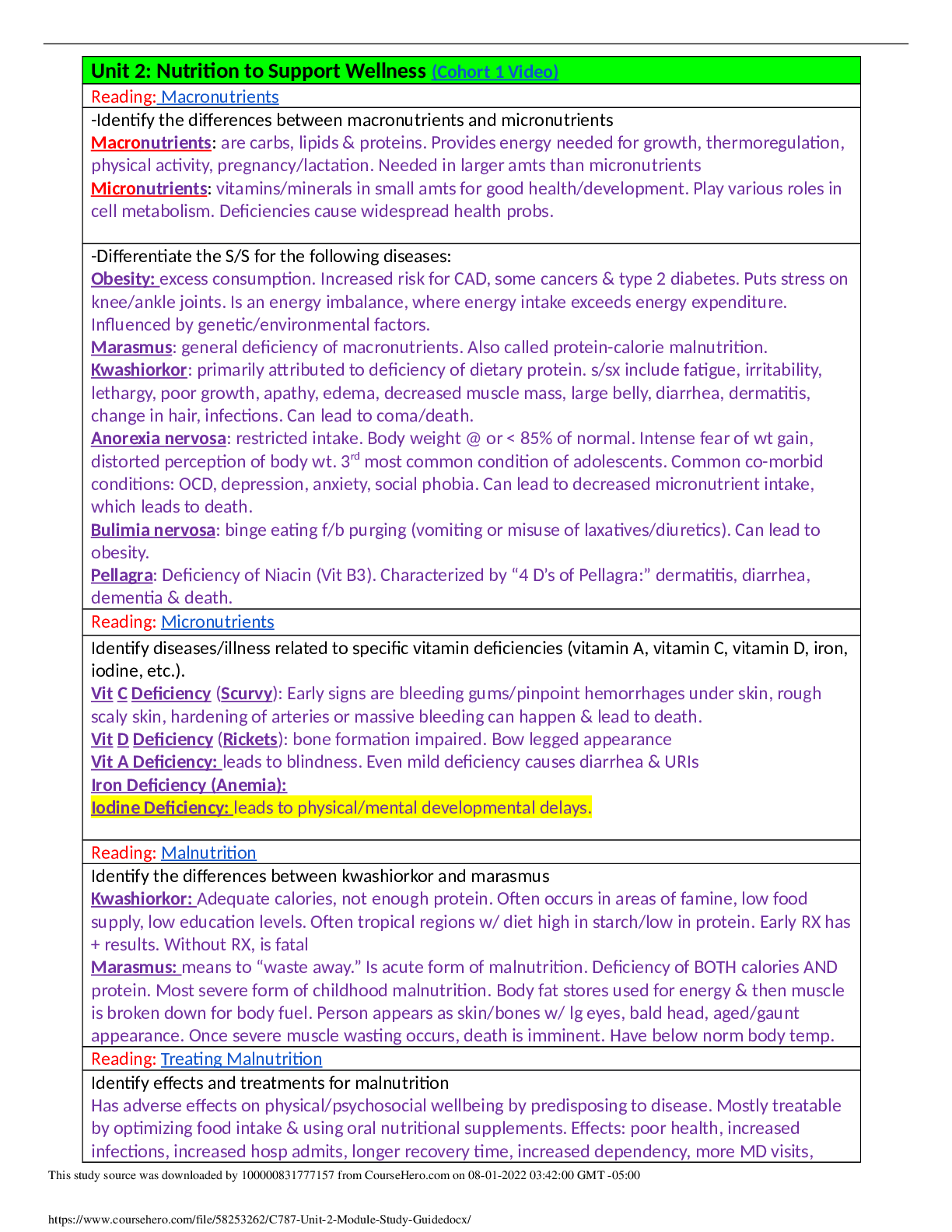
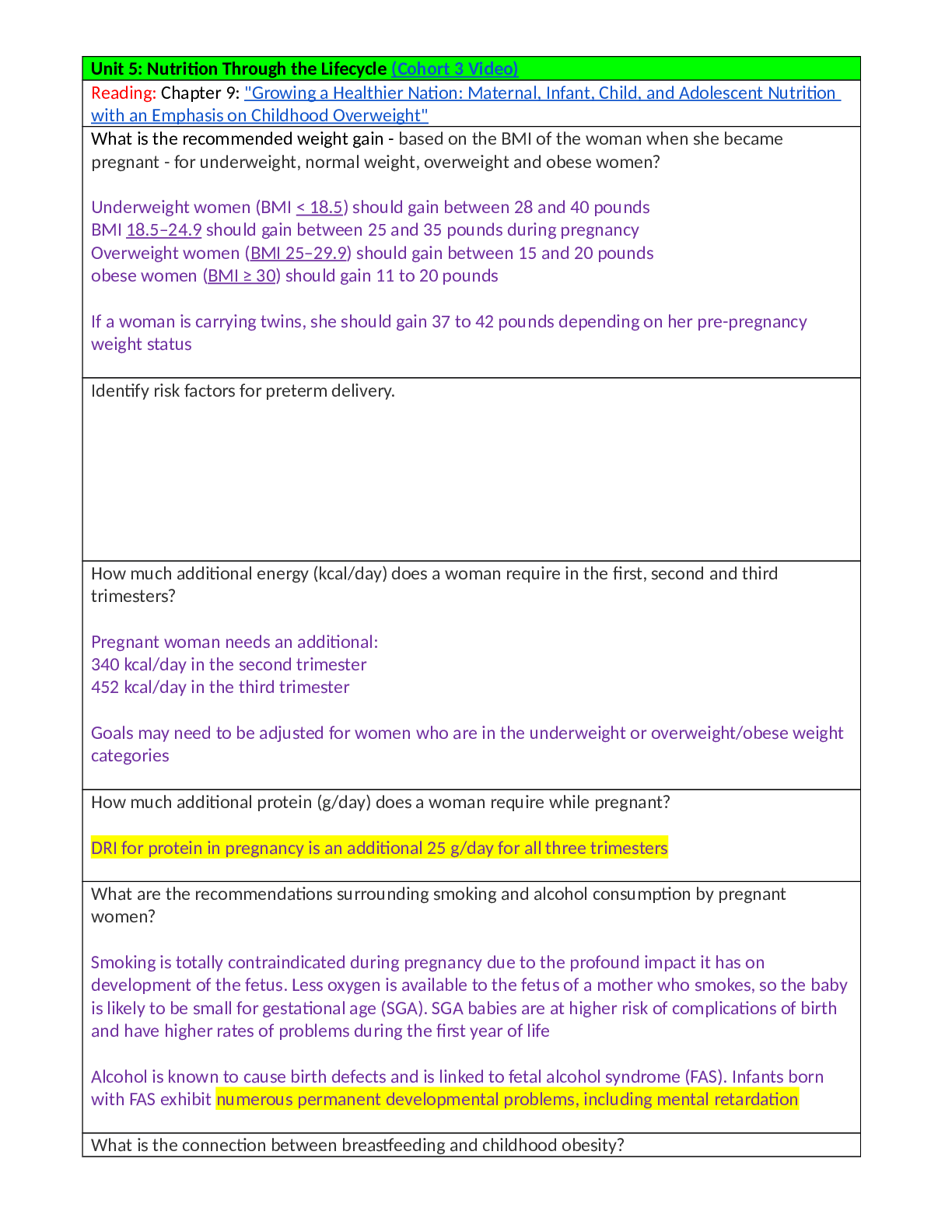
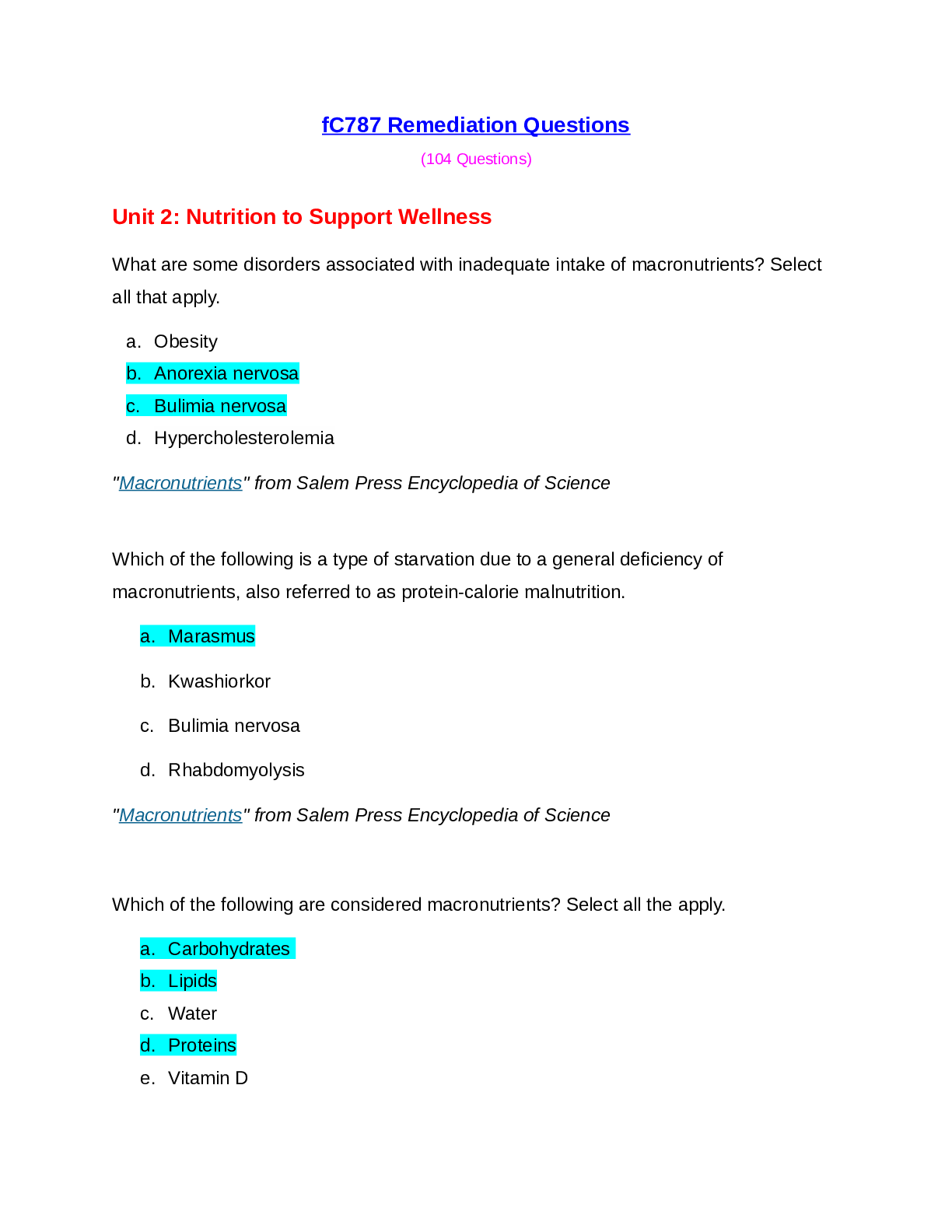
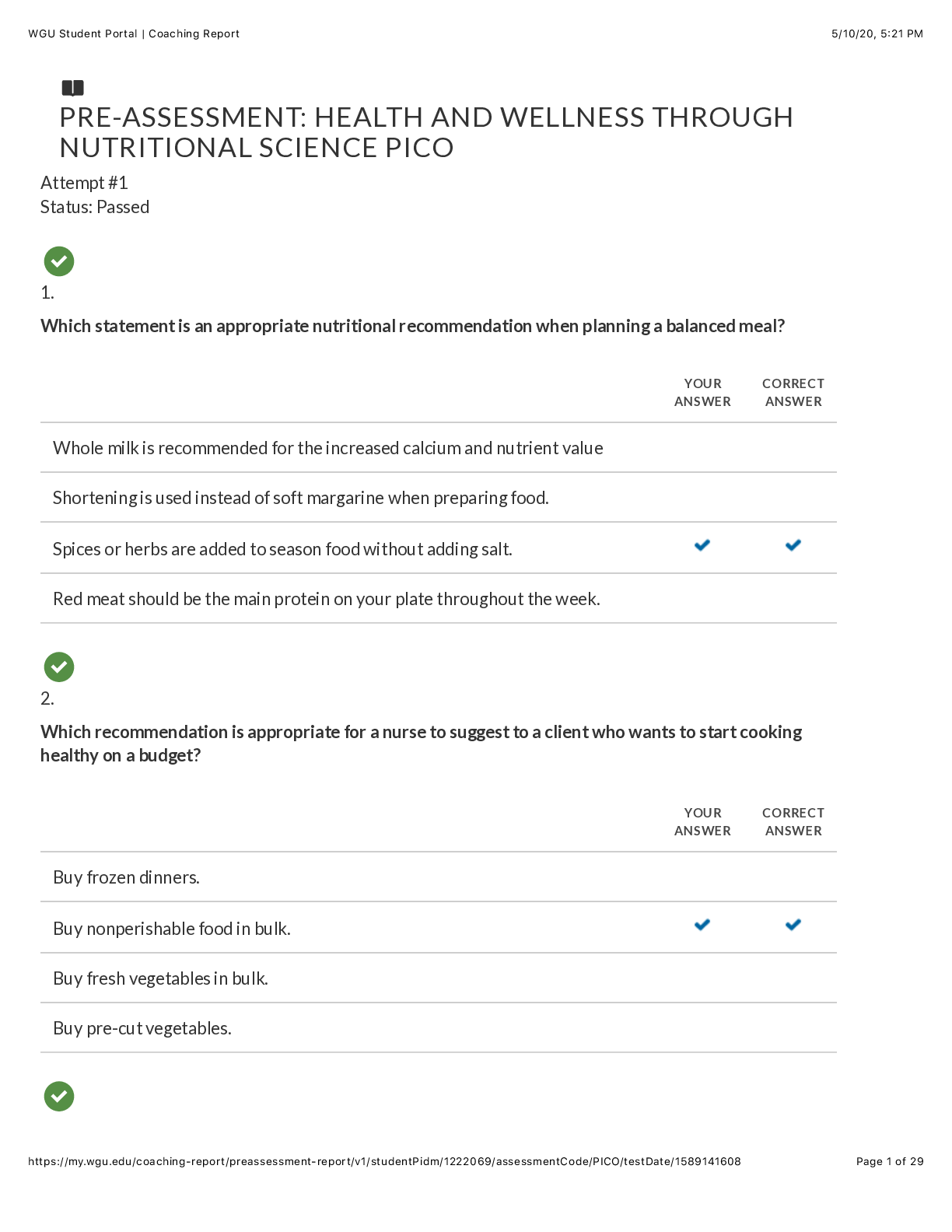
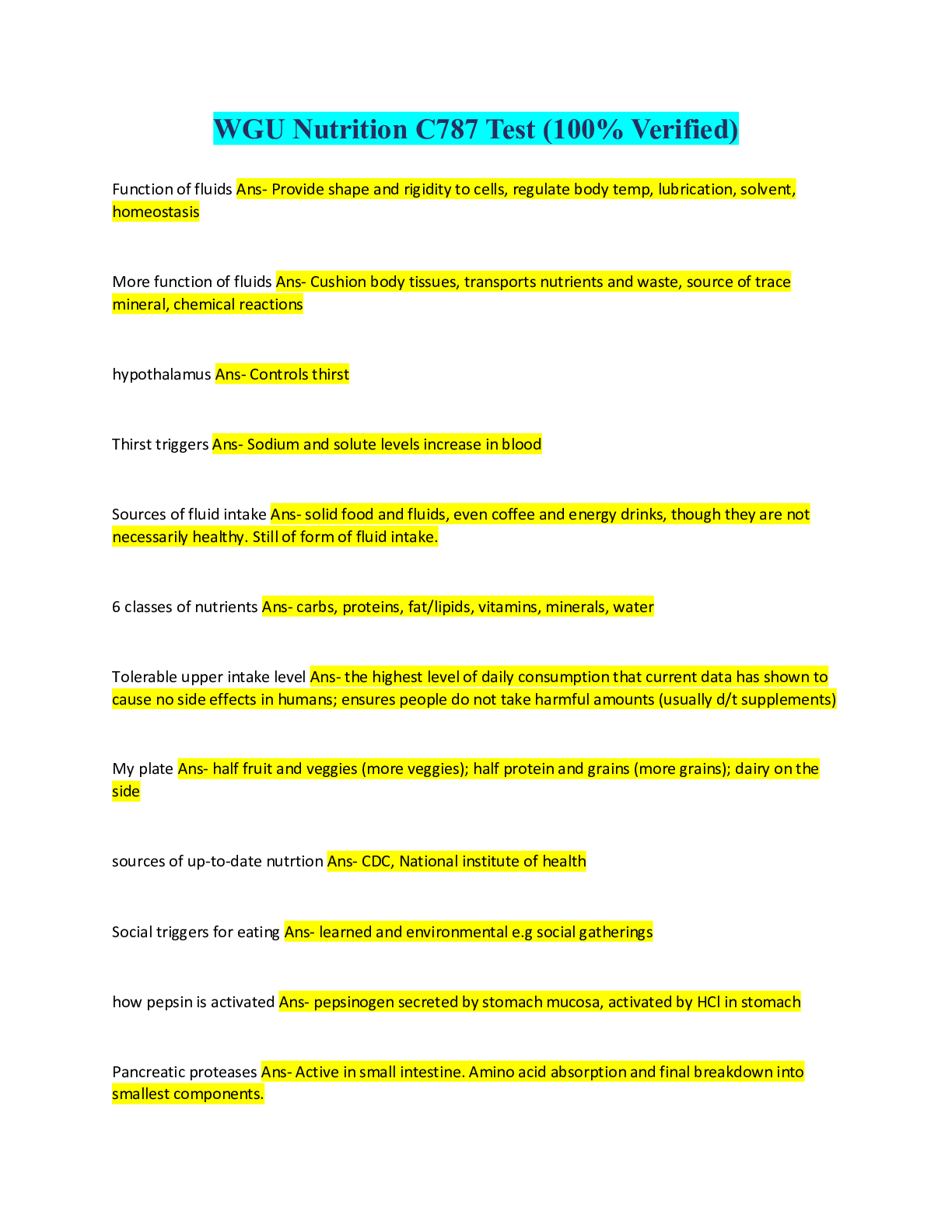
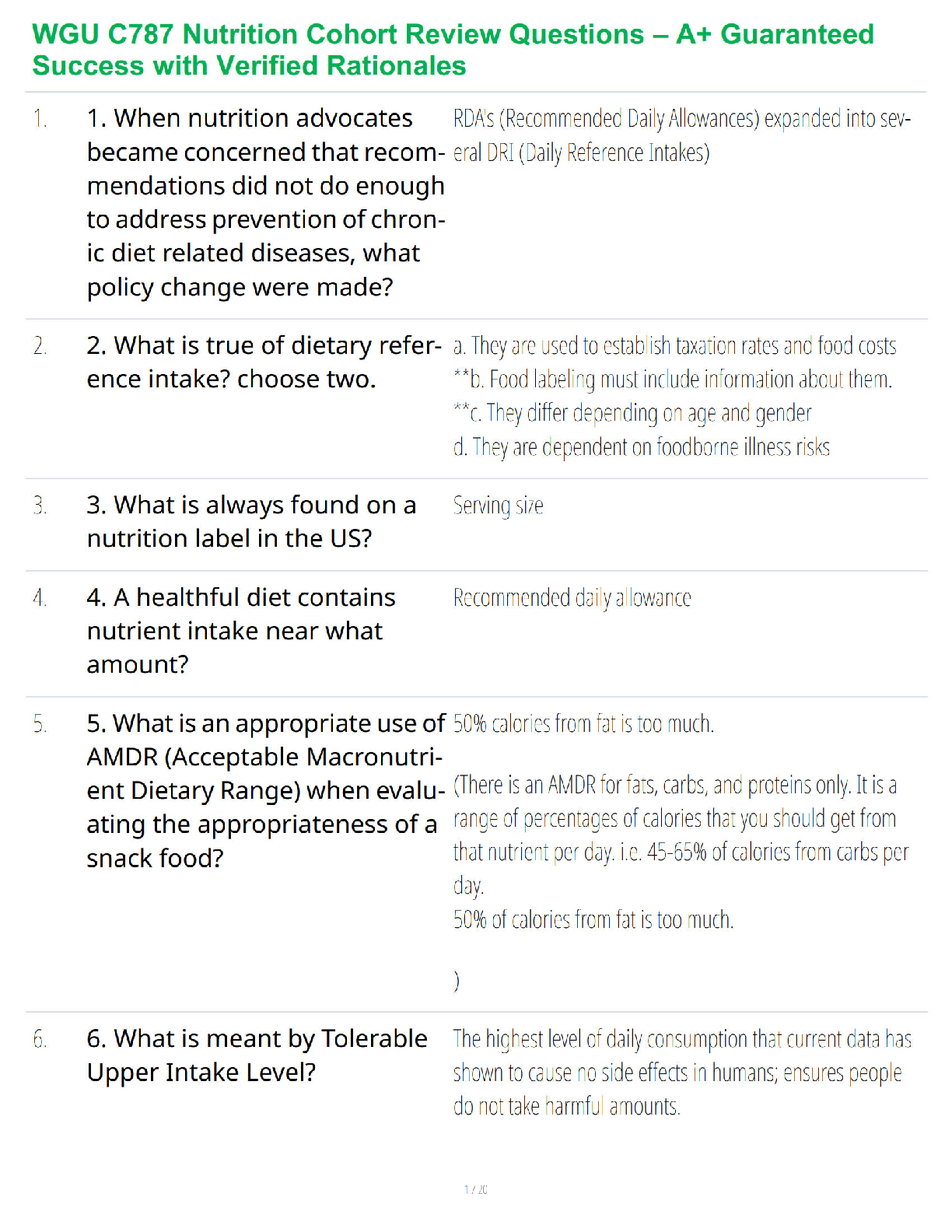
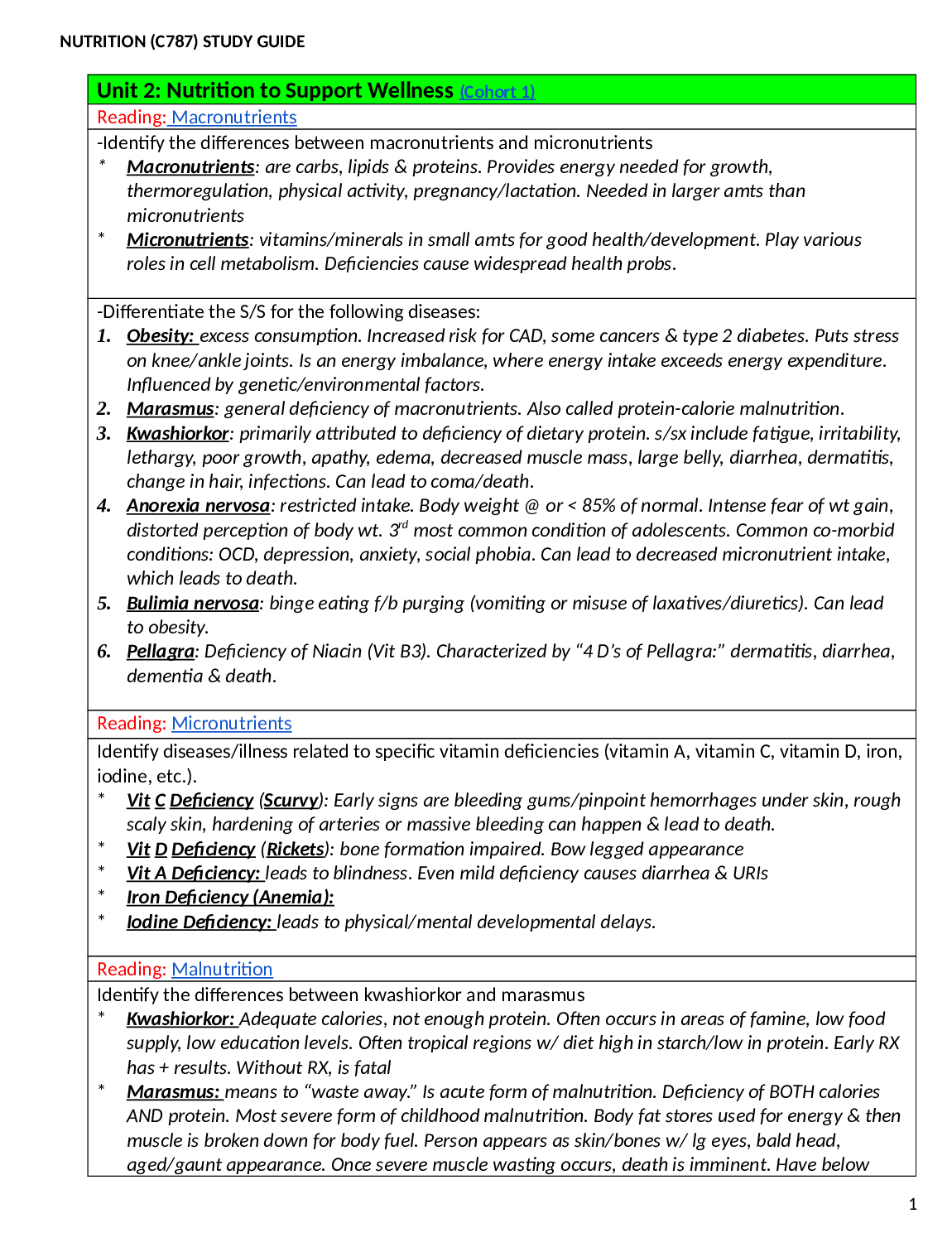
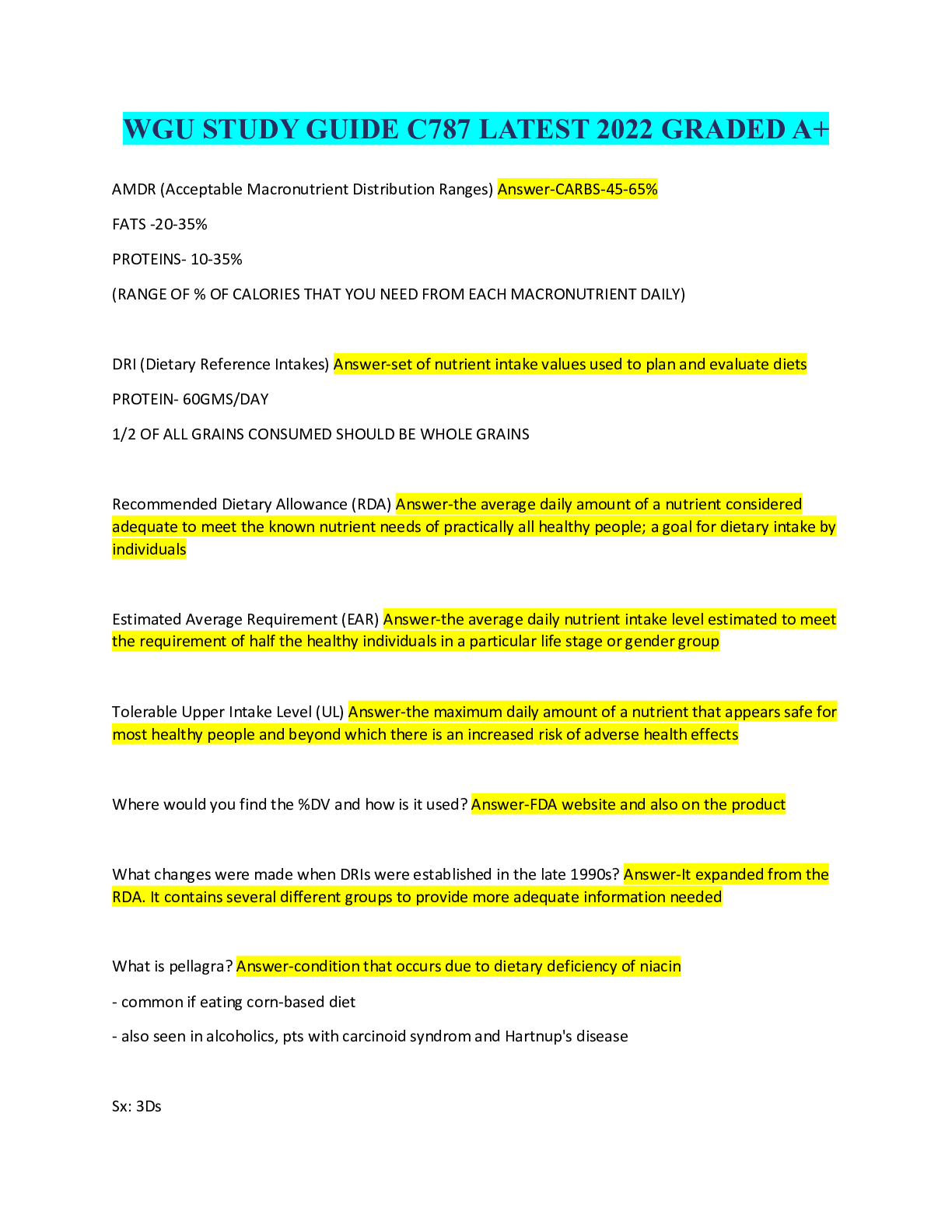
Unit 2: Nutrition to Support Wellness (Cohort 1 Video) Reading: Macronutrients -Identify the differences between macronutrients and micronutrients Macro nutrients: are carbs, lipids & proteins. Pr ... ovides energy needed for growth, thermoregulation, physical activity, pregnancy/lactation. Needed in larger amts than micronutrients Micro nutrients: vitamins/minerals in small amts for good health/development. Play various roles in cell metabolism. Deficiencies cause widespread health probs. -Differentiate the S/S for the following diseases: Obesity: excess consumption. Increased risk for CAD, some cancers & type 2 diabetes. Puts stress on knee/ankle joints. Is an energy imbalance, where energy intake exceeds energy expenditure. Influenced by genetic/environmental factors. Marasmus: general deficiency of macronutrients. Also called protein-calorie malnutrition. Kwashiorkor: primarily attributed to deficiency of dietary protein. s/sx include fatigue, irritability, lethargy, poor growth, apathy, edema, decreased muscle mass, large belly, diarrhea, dermatitis, change in hair, infections. Can lead to coma/death. Anorexia nervosa: restricted intake. Body weight @ or < 85% of normal. Intense fear of wt gain, distorted perception of body wt. 3rd most common condition of adolescents. Common co-morbid conditions: OCD, depression, anxiety, social phobia. Can lead to decreased micronutrient intake, which leads to death. Bulimia nervosa: binge eating f/b purging (vomiting or misuse of laxatives/diuretics). Can lead to obesity. Pellagra: Deficiency of Niacin (Vit B3). Characterized by “4 D’s of Pellagra:” dermatitis, diarrhea, dementia & death. Reading: Micronutrients Identify diseases/illness related to specific vitamin deficiencies (vitamin A, vitamin C, vitamin D, iron, iodine, etc.). Vit C Deficiency (Scurvy): Early signs are bleeding gums/pinpoint hemorrhages under skin, rough scaly skin, hardening of arteries or massive bleeding can happen & lead to death. Vit D Deficiency (Rickets): bone formation impaired. Bow legged appearance Vit A Deficiency: leads to blindness. Even mild deficiency causes diarrhea & URIs Iron Deficiency (Anemia): Iodine Deficiency: leads to physical/mental developmental delays. Reading: Malnutrition Identify the differences between kwashiorkor and marasmus Kwashiorkor: Adequate calories, not enough protein. Often occurs in areas of famine, low food supply, low education levels. Often tropical regions w/ diet high in starch/low in protein. Early RX has + results. Without RX, is fatal Marasmus: means to “waste away.” Is acute form of malnutrition. Deficiency of BOTH calories AND protein. Most severe form of childhood malnutrition. Body fat stores used for energy & then muscle is broken down for body fuel. Person appears as skin/bones w/ lg eyes, bald head, aged/gaunt appearance. Once severe muscle wasting occurs, death is imminent. Have below norm body temp. Reading: Treating Malnutrition Identify effects and treatments for malnutrition Has adverse effects on physical/psychosocial wellbeing by predisposing to disease. Mostly treatable by optimizing food intake & using oral nutritional supplements. Effects: poor health, increased infections, increased hosp admits, longer recovery time, increased dependency, more MD visits, This study source was downloaded by 100000831777157 from CourseHero.com on 08-01-2022 03:42:00 GMT -05:00 https://www.coursehero.com/file/58253262/C787-Unit-2-Module-Study-Guidedocx/ higher medicine costs, higher rate of admits to nsg home, decreased muscle strength, inactivity, impaired temp regulation, electrolyte/fluid imbalance. Must screen for BMI < 18.5, recent unintentional wt loss, no intake > 5 days. “Food first” approach, then oral nutritional supplements (ONS) Reading: Chapter 1: Applying Nutrition Science to Public Health ((PLEASE ACCESS THE CHAPTER THROUGH THE UNIT 2 COURSE MATERIAL IF THE LINK DOES NOT WORK FOR YOU) Briefly define HEI, NHANES, DGA, and the foods/products regulated by the FDA/USDA. HEI: Healthy Eating Index. Uses a scoring system to evaluate a set of foods. Scores range from 0-100. An ideal overall HEI score of 100 reflects that the set of foods aligns w/ key dietary recommendations from the Dietary Guidelines for Americans. Scoring metric is composed of 12 subcomponents, 9 of which rec [Show More]
Last updated: 3 years ago
Preview 1 out of 8 pages
Buy this document to get the full access instantly
Instant Download Access after purchase
Buy NowInstant download
We Accept:
Can't find what you want? Try our AI powered Search
Connected school, study & course
About the document
Uploaded On
Aug 01, 2022
Number of pages
8
Written in
All
This document has been written for:
Uploaded
Aug 01, 2022
Downloads
0
Views
70
Scholarfriends.com Online Platform by Browsegrades Inc. 651N South Broad St, Middletown DE. United States.
We're available through e-mail, Twitter, and live chat.
FAQ
Questions? Leave a message!
Copyright © Scholarfriends · High quality services·