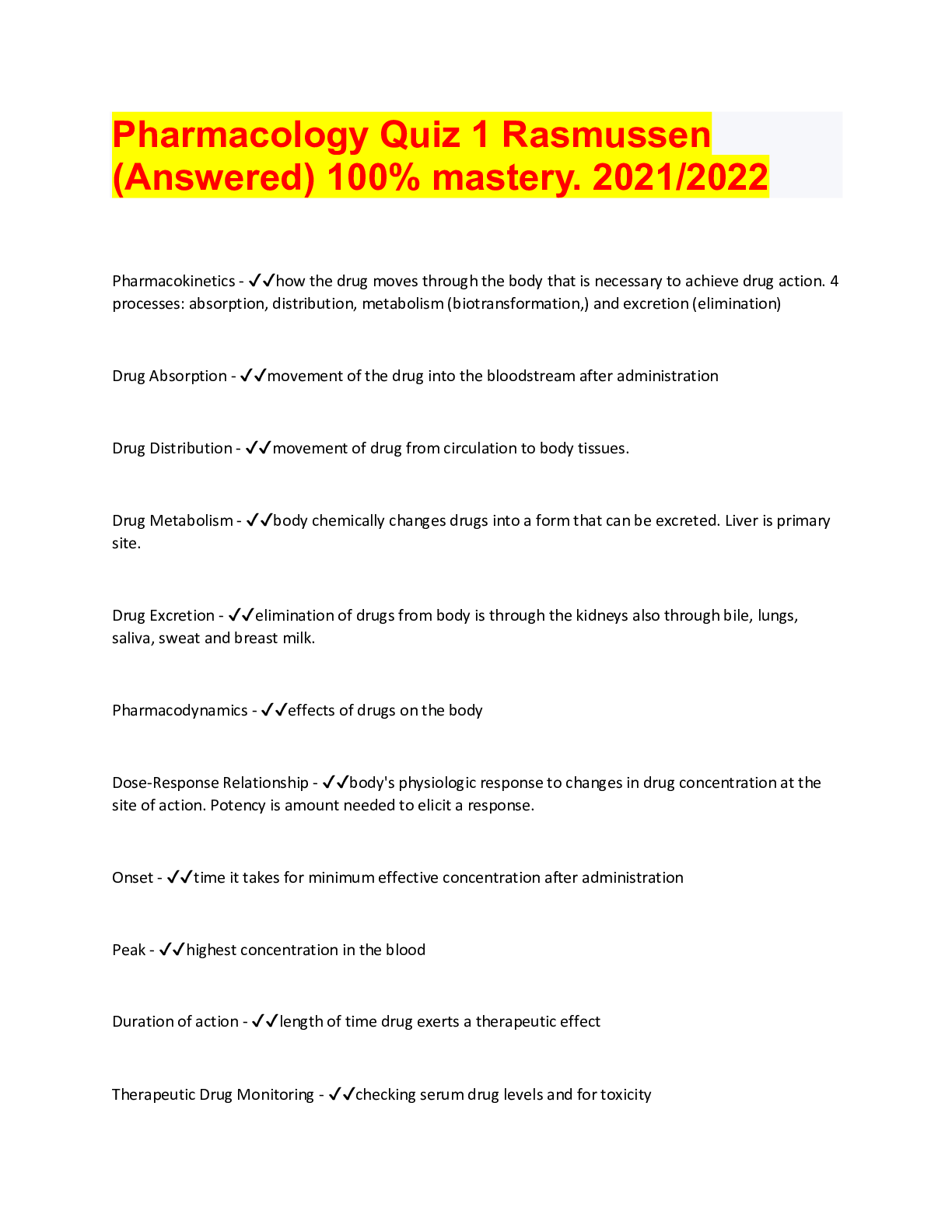
Pharmacology Quiz 1 Rasmussen (Answered) 100% mastery. 2021/2022
Document Content and Description Below
Pharmacokinetics - ✔✔how the drug moves through the body that is necessary to achieve drug action. 4 processes: absorption, distribution, metabolism (biotransformation,) and excretion (elimination)
Drug Absorption - ✔
...
[Show More]
Last updated: 4 years ago
Preview 1 out of 7 pages
Instant download
Buy this Document to get the Full Access Instantly
Provided by Students Who Aced it
We Verify Document Content to Gurantee Accuracy
Reviews( 0 )
Document information
Connected school, study & course
About the document
Uploaded On
Aug 16, 2022
Number of pages
7
Written in
All
Seller

Reviews Received
Additional information
This document has been written for:
Uploaded
Aug 16, 2022
Downloads
0
Views
234
Topic Tags
Recommended For You
Get more on Summary »
$12
22 Pages
NUR 2115 / NUR2115: Fundamentals of Professional Nursing Final...

$7
15 Pages
NR603 / NR-603 Week 3 Quiz Topics (Latest): Advanced Clinical...

$7
18 Pages
NR503 / NR 503: Final Quiz Concepts to Review (Latest 2021: Po...
$7
2 Pages
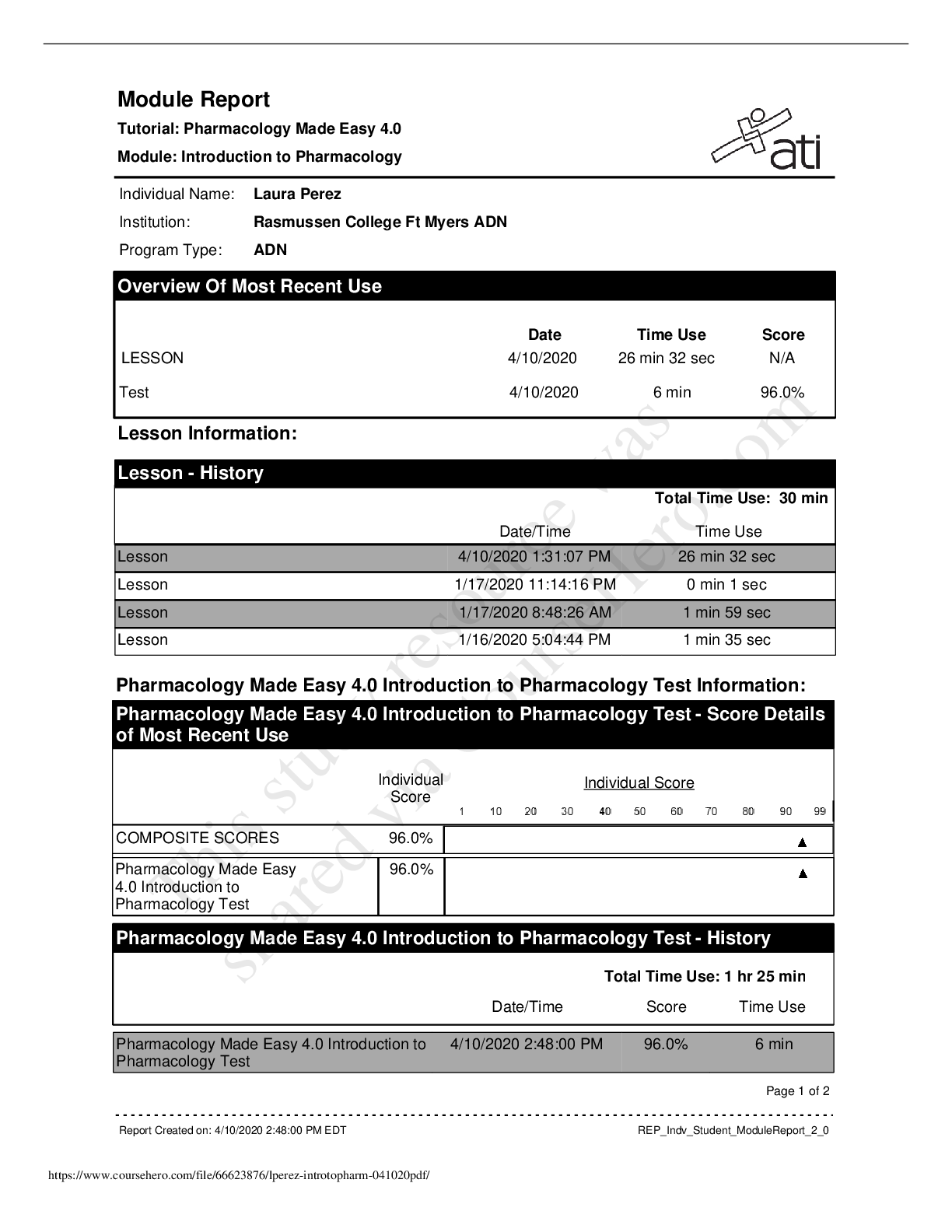
Summary PHARMACOLO 2407 Introduction to Pharmacology ILaura Pe...

$15
36 Pages
Summary NSG 405 EXAM 1 Completed Study Guide > latest (Spring...
$10
18 Pages
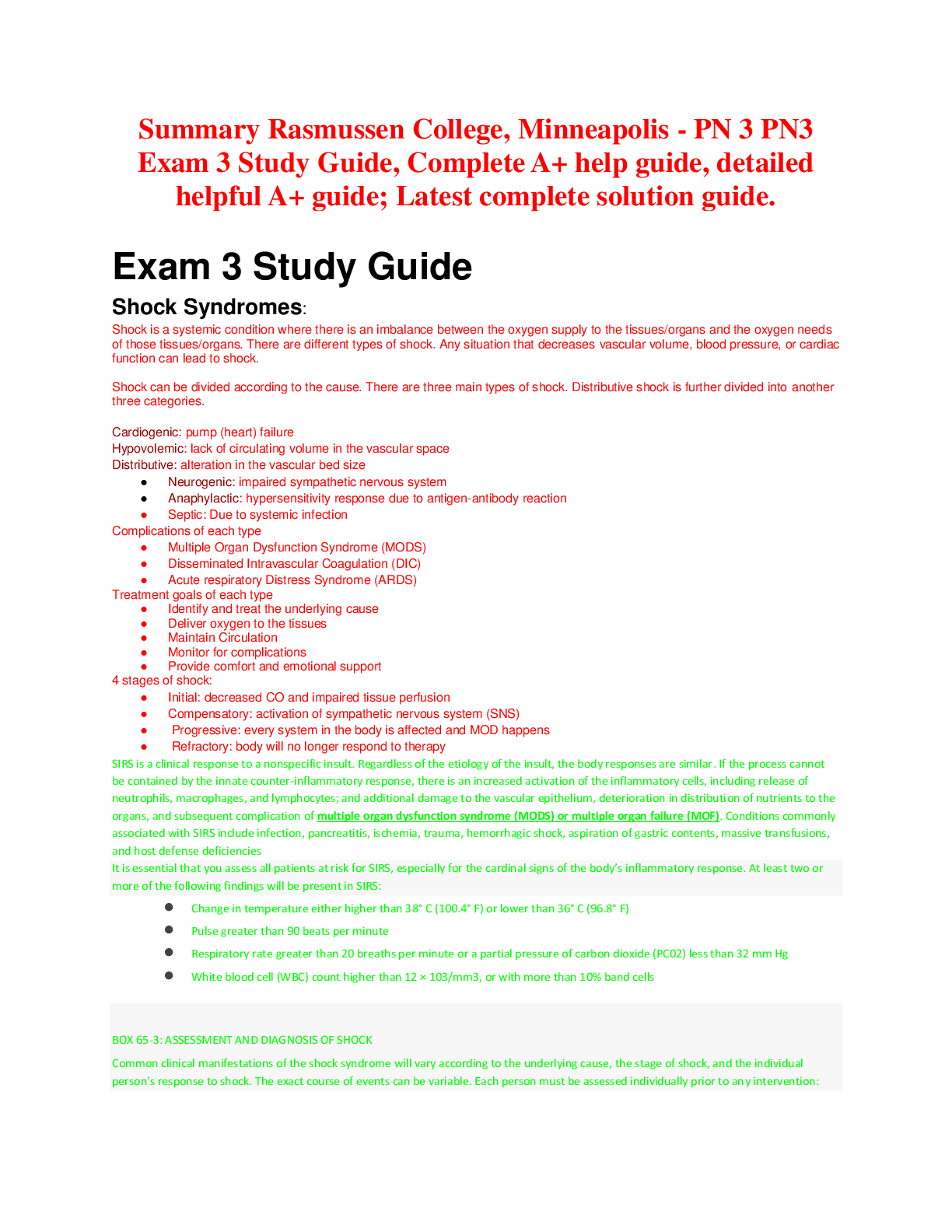
Summary Rasmussen College, Minneapolis - PN 3 PN3 Exam 3 Study...
$22.5
307 Pages
TEST BANK for Davis Advantage for Psychiatric Mental Health Nu...
$17
588 Pages
Test Bank For Fundamentals of Nursing 11th Edition Potter Perr...
$16
496 Pages
TEST BANK for Essentials of Psychiatric Mental Health Nursing:...
$19
553 Pages
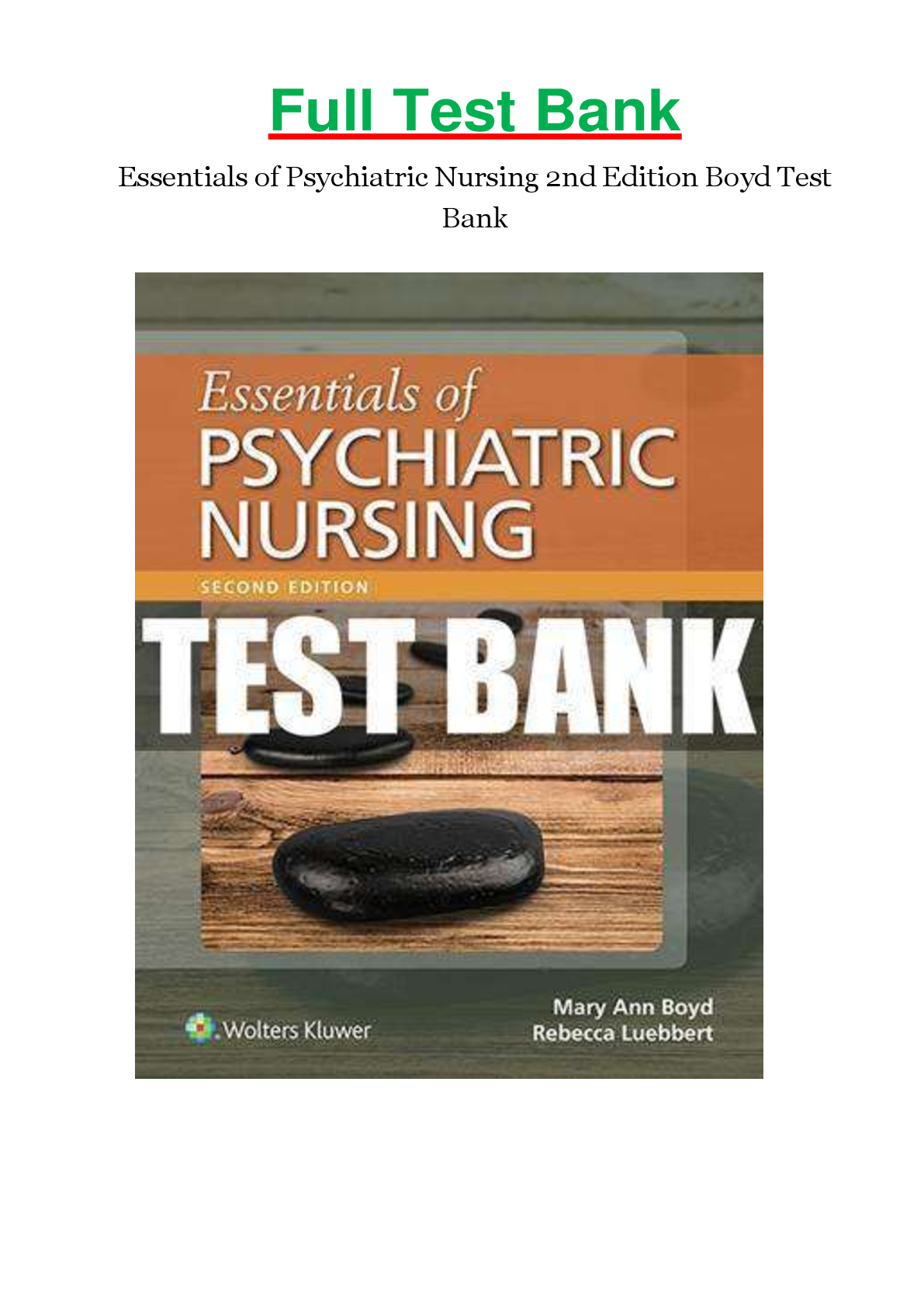
Essentials of Psychiatric Nursing 2nd Edition Boyd TEST BANK
$16
554 Pages
TEST BANK for Essentials of Psychiatric Nursing 2nd Edition by...
$15
554 Pages
Test Bank for Essentials of Psychiatric Nursing 2nd Edition by...
More related documents below