Sociology > QUESTIONS & ANSWERS > WGU C836 Fundamentals of Information security Terms Latest Update Graded A+ (All)
WGU C836 Fundamentals of Information security Terms Latest Update Graded A+
Document Content and Description Below
Last updated: 4 years ago
Preview 1 out of 23 pages
Instant download
.png)
Buy this Document to get the Full Access Instantly
Provided by Students Who Aced it
We Verify Document Content to Gurantee Accuracy
Also available in bundle (1)
Click Below to Access Bundle(s)
.png)
WGU C836 BUNDLED EXAMS COMPLETE QUESTIONS AND ANSWERS WITH VERIFIED SOLUTIONS
WGU C836 BUNDLED EXAMS COMPLETE QUESTIONS AND ANSWERS WITH VERIFIED SOLUTIONS
By Nutmegs 4 years ago
$20
13
Reviews( 0 )
Document information
Connected school, study & course
About the document
Uploaded On
Aug 16, 2022
Number of pages
23
Written in
All

Additional information
This document has been written for:
Uploaded
Aug 16, 2022
Downloads
0
Views
197
Topic Tags
Recommended For You
Get more on QUESTIONS & ANSWERS »
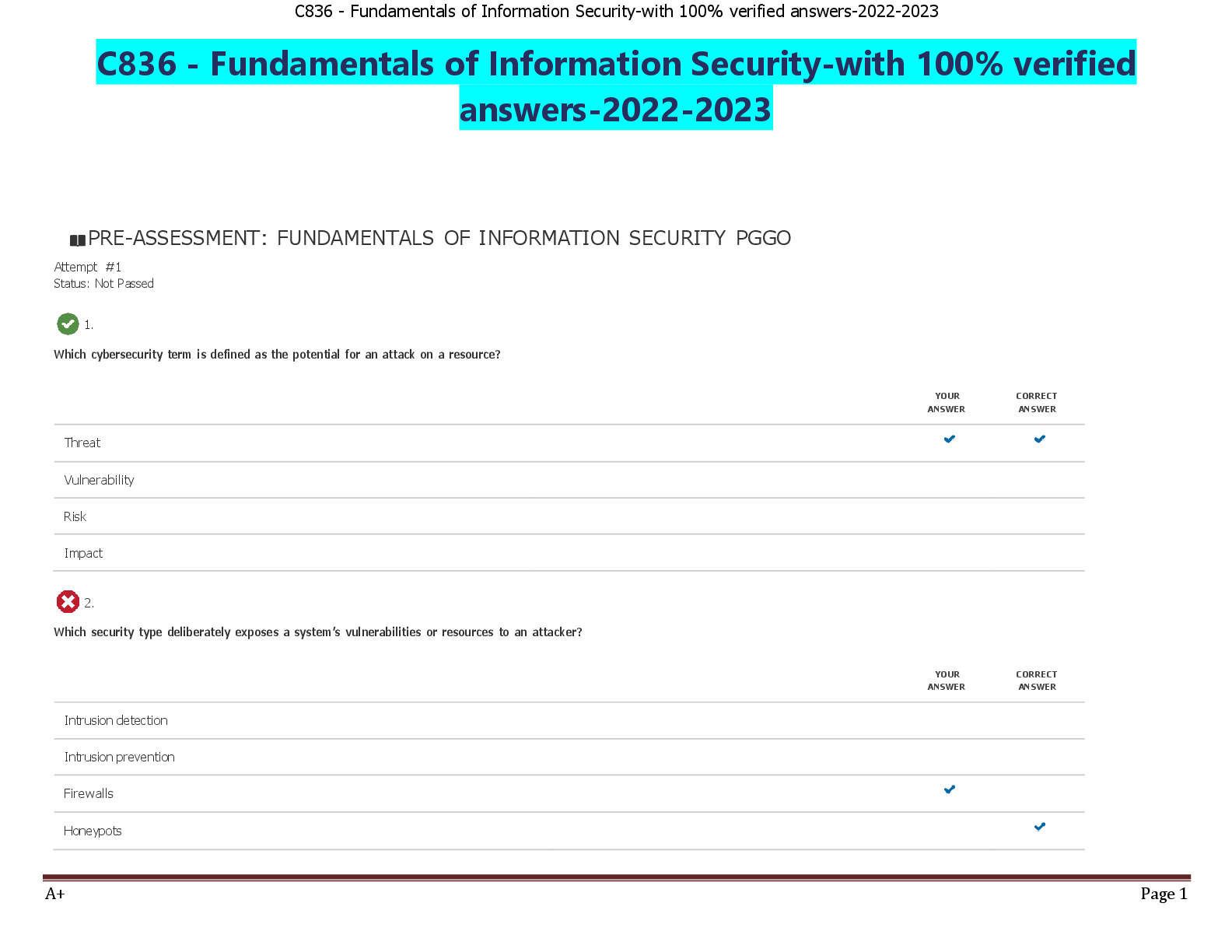
C836 - Fundamentals of Information Security-with 100% verified...
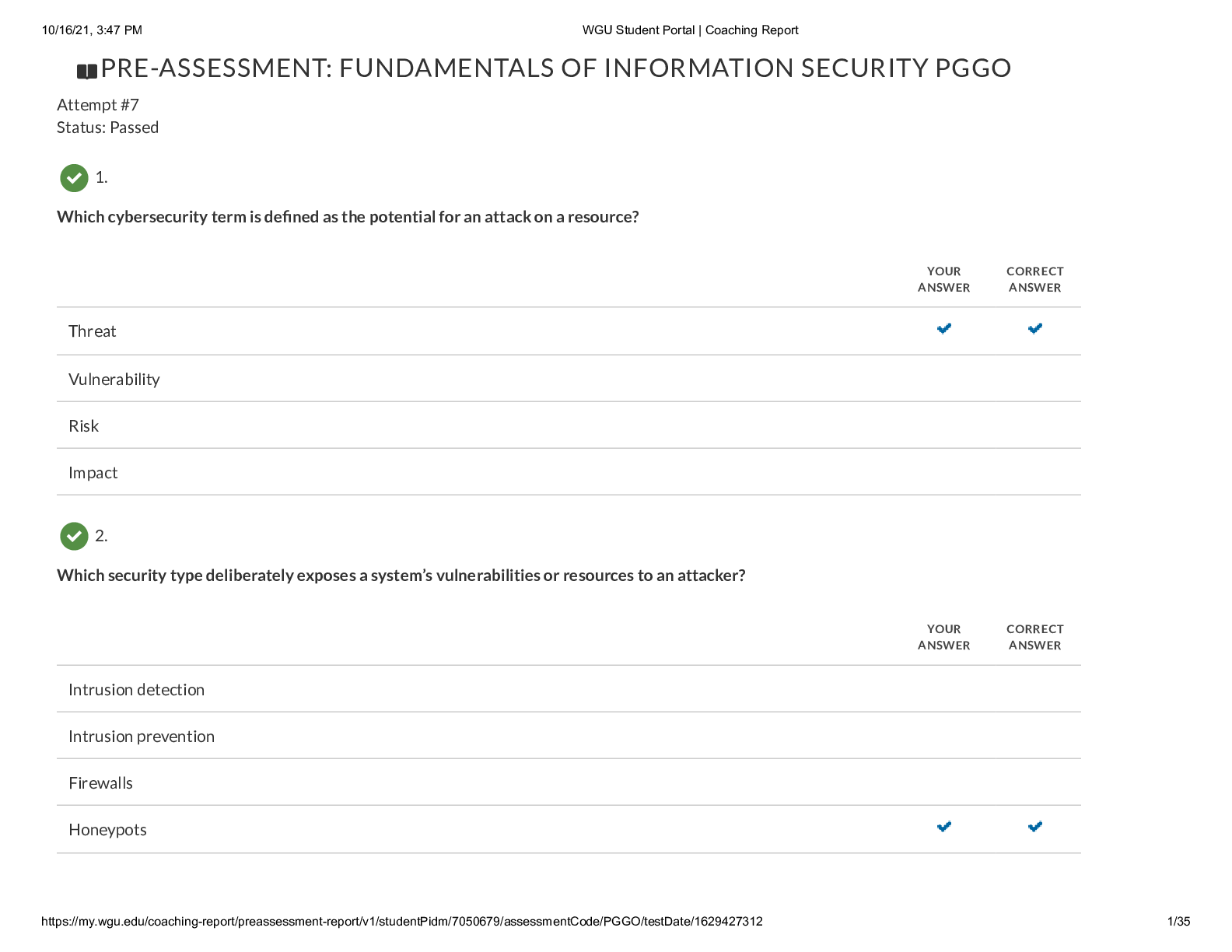
WGU C836 - FUNDAMENTALS OF INFORMATION SECURITY LATEST EXAM 20...
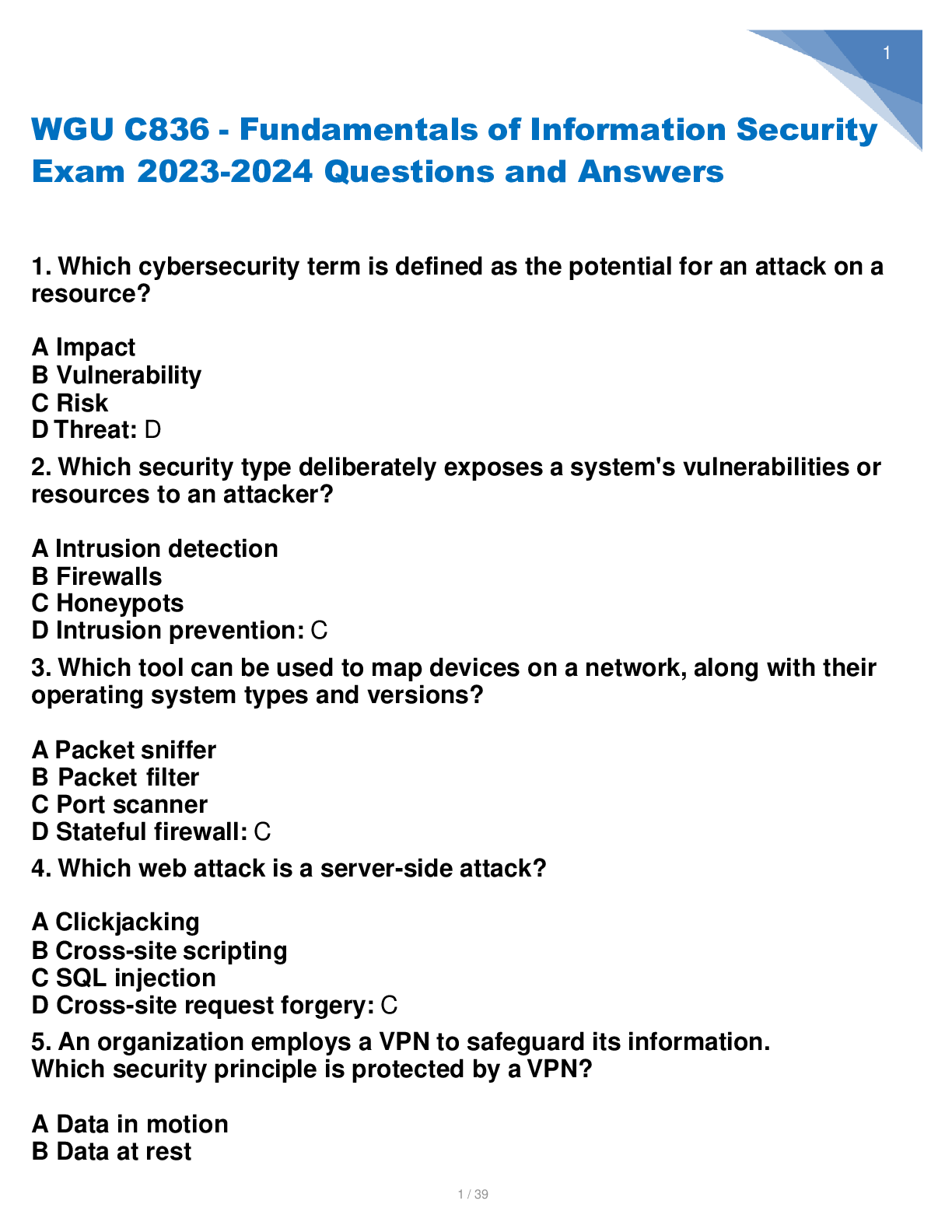
WGU C836 - Fundamentals of Information Security Exam 2023-2024...


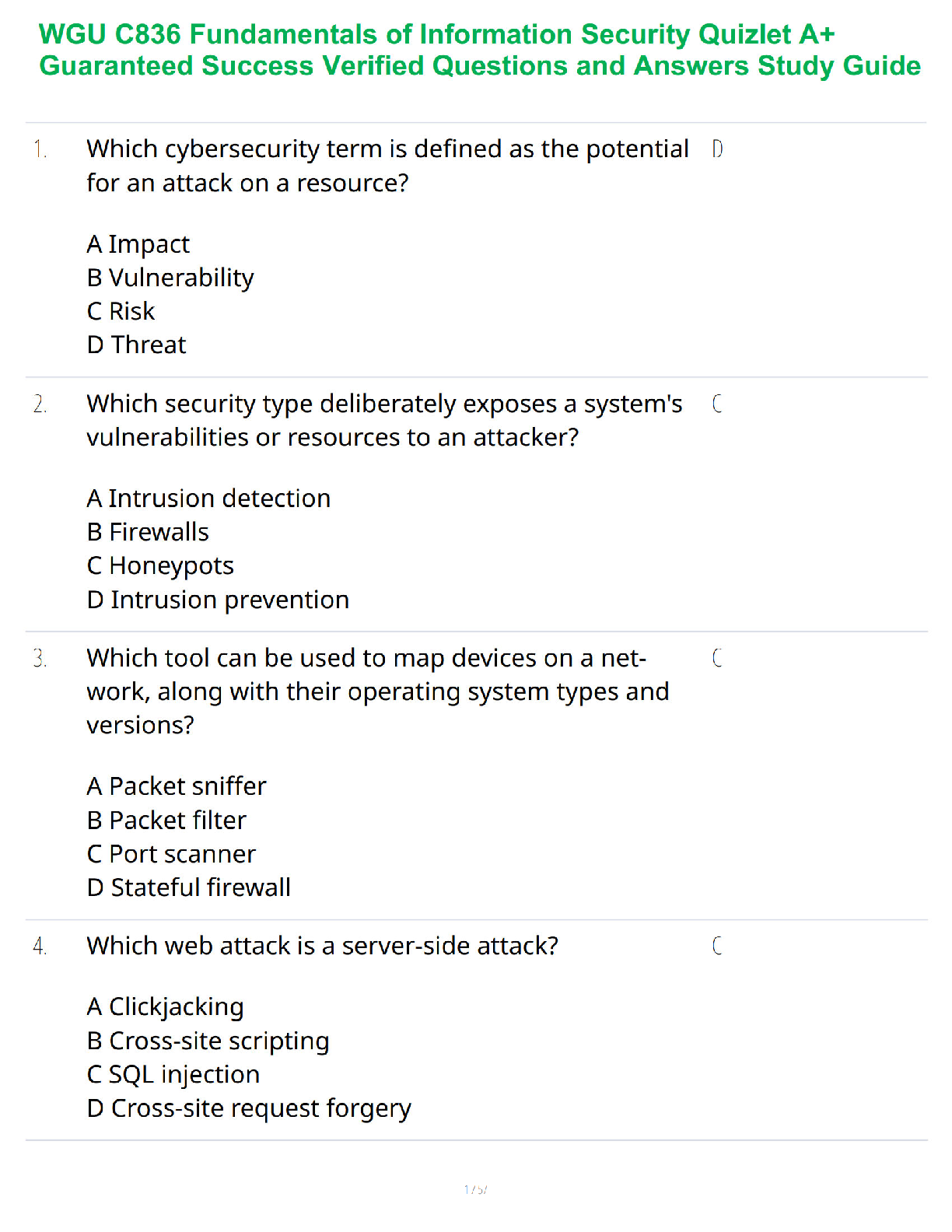
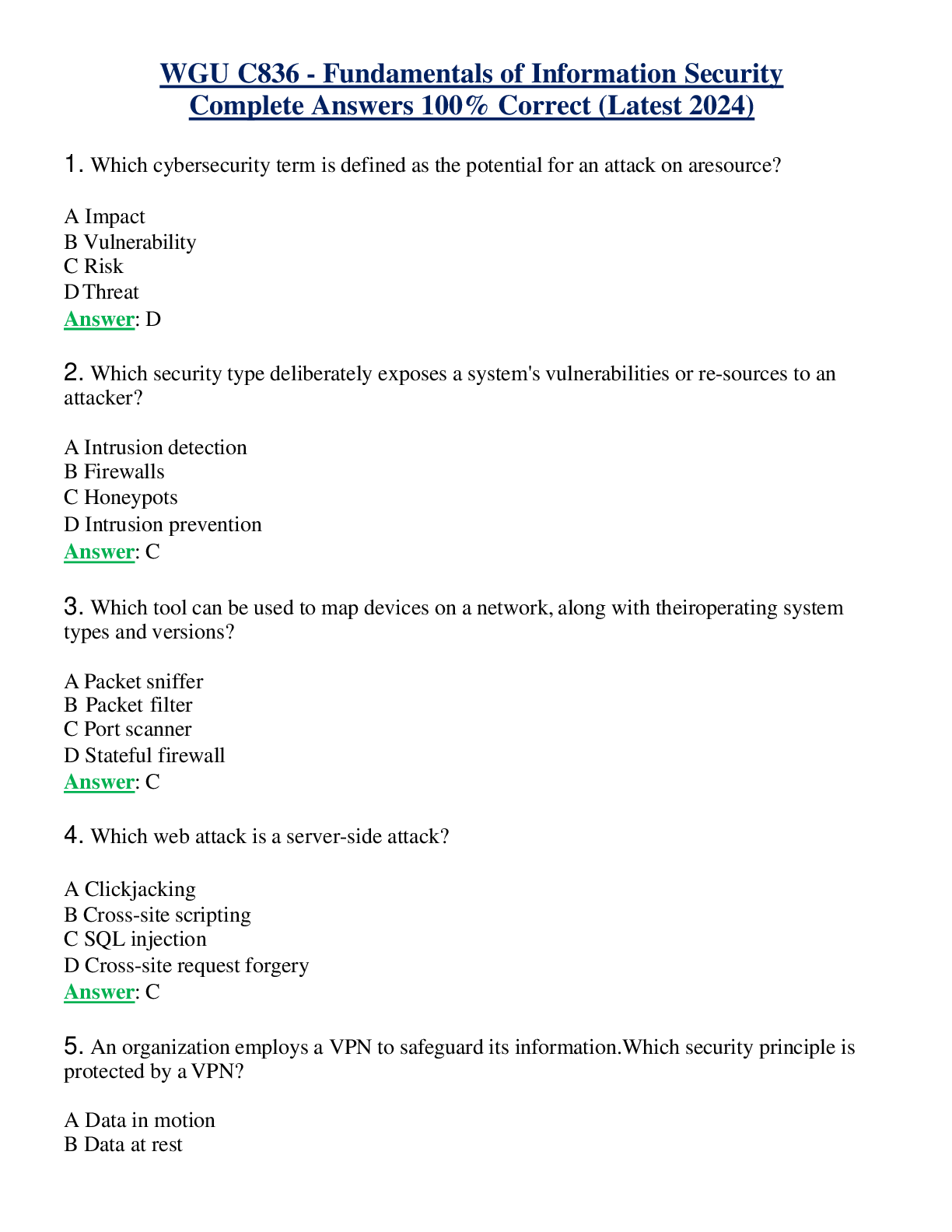
WGU C836 - Fundamentals of Information Security Complete Answe...

WGU Course C836 Fundamentals of Information Security – Quizlet...

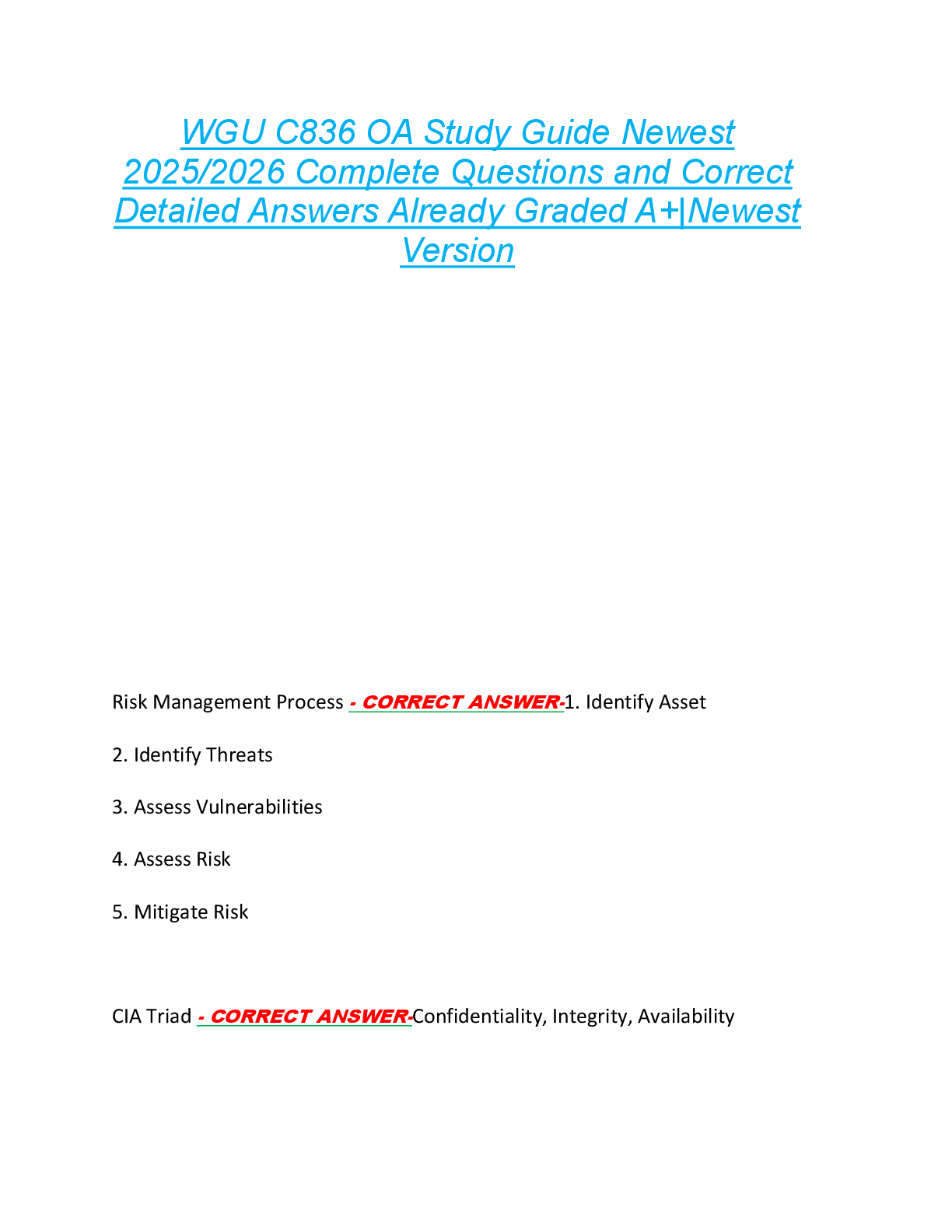
WGU C836 OA Study Guide Newest 2025/2026 Complete Questions a...
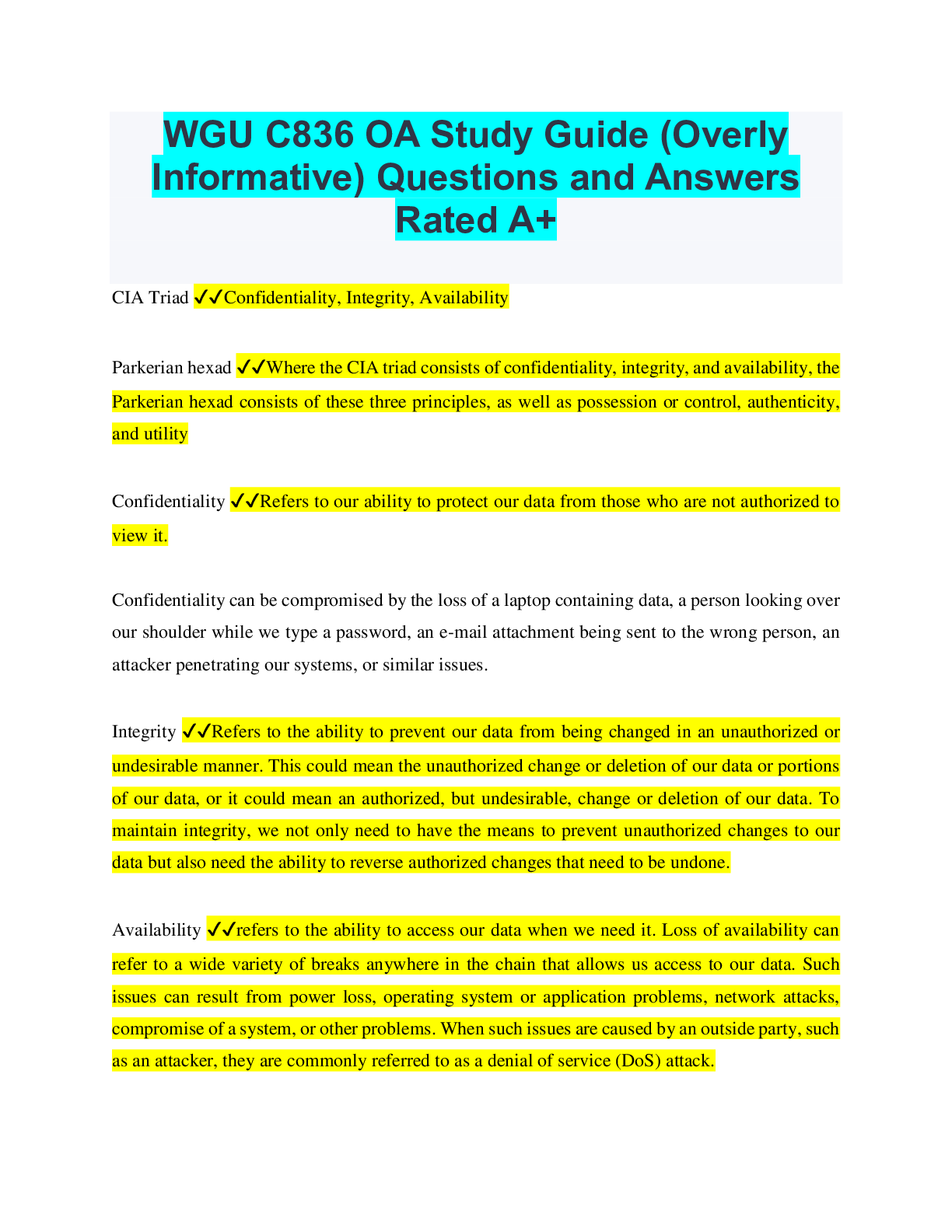
WGU C836 OA Study Guide (Overly Informative) Questions and Ans...
Medical Sociology, 15th Edition William Cockerham | Test Bank
TEST BANK for By the People: Debating American Government 5th...