1. The therapeutic frame supports the clinician in which of the following ways? Select
all that apply.
A . Maintaining a therapeutic stance of neutrality.
B . Maintaining a therapeutic stance of anonymity.
C . Mainta
...
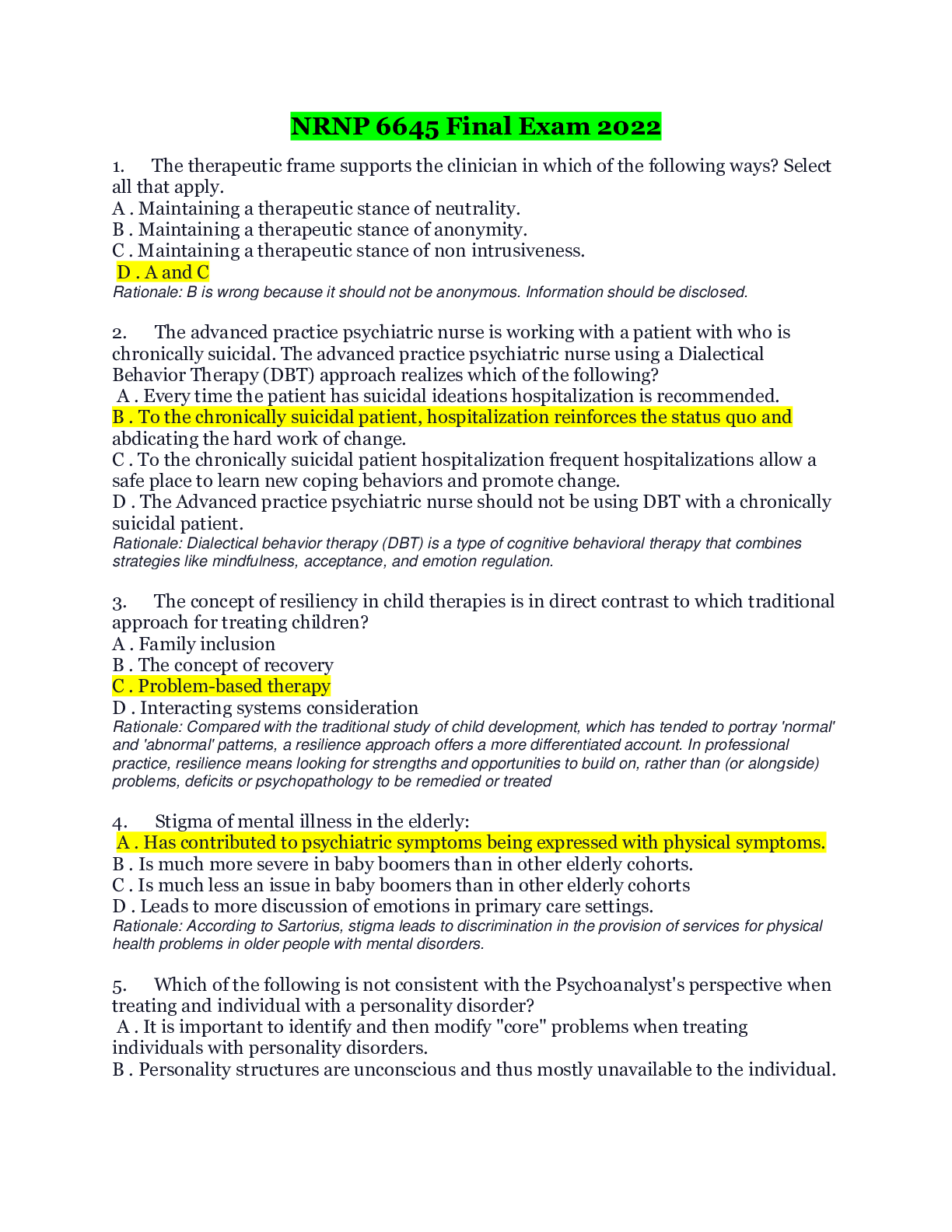
1. The therapeutic frame supports the clinician in which of the following ways? Select
all that apply.
A . Maintaining a therapeutic stance of neutrality.
B . Maintaining a therapeutic stance of anonymity.
C . Maintaining a therapeutic stance of non intrusiveness.
D . A and C
Rationale: B is wrong because it should not be anonymous. Information should be disclosed.
2. The advanced practice psychiatric nurse is working with a patient with who is
chronically suicidal. The advanced practice psychiatric nurse using a Dialectical
Behavior Therapy (DBT) approach realizes which of the following?
A . Every time the patient has suicidal ideations hospitalization is recommended.
B . To the chronically suicidal patient, hospitalization reinforces the status quo and
abdicating the hard work of change.
C . To the chronically suicidal patient hospitalization frequent hospitalizations allow a
safe place to learn new coping behaviors and promote change.
D . The Advanced practice psychiatric nurse should not be using DBT with a chronically
suicidal patient.
Rationale: Dialectical behavior therapy (DBT) is a type of cognitive behavioral therapy that combines
strategies like mindfulness, acceptance, and emotion regulation.
3. The concept of resiliency in child therapies is in direct contrast to which traditional
approach for treating children?
A . Family inclusion
B . The concept of recovery
C . Problem-based therapy
D . Interacting systems consideration
Rationale: Compared with the traditional study of child development, which has tended to portray 'normal'
and 'abnormal' patterns, a resilience approach offers a more differentiated account. In professional
practice, resilience means looking for strengths and opportunities to build on, rather than (or alongside)
problems, deficits or psychopathology to be remedied or treated
4. Stigma of mental illness in the elderly:
A . Has contributed to psychiatric symptoms being expressed with physical symptoms.
B . Is much more severe in baby boomers than in other elderly cohorts.
C . Is much less an issue in baby boomers than in other elderly cohorts
D . Leads to more discussion of emotions in primary care settings.
Rationale: According to Sartorius, stigma leads to discrimination in the provision of services for physical
health problems in older people with mental disorders.
[Show More]