Anatomy  >  STUDY GUIDE  >  TEAS Test Study Guide: Science; A&P, Full solution guide (Summer 2020). (All)

TEAS Test Study Guide: Science; A&P, Full solution guide (Summer 2020).

Document Content and Description Below

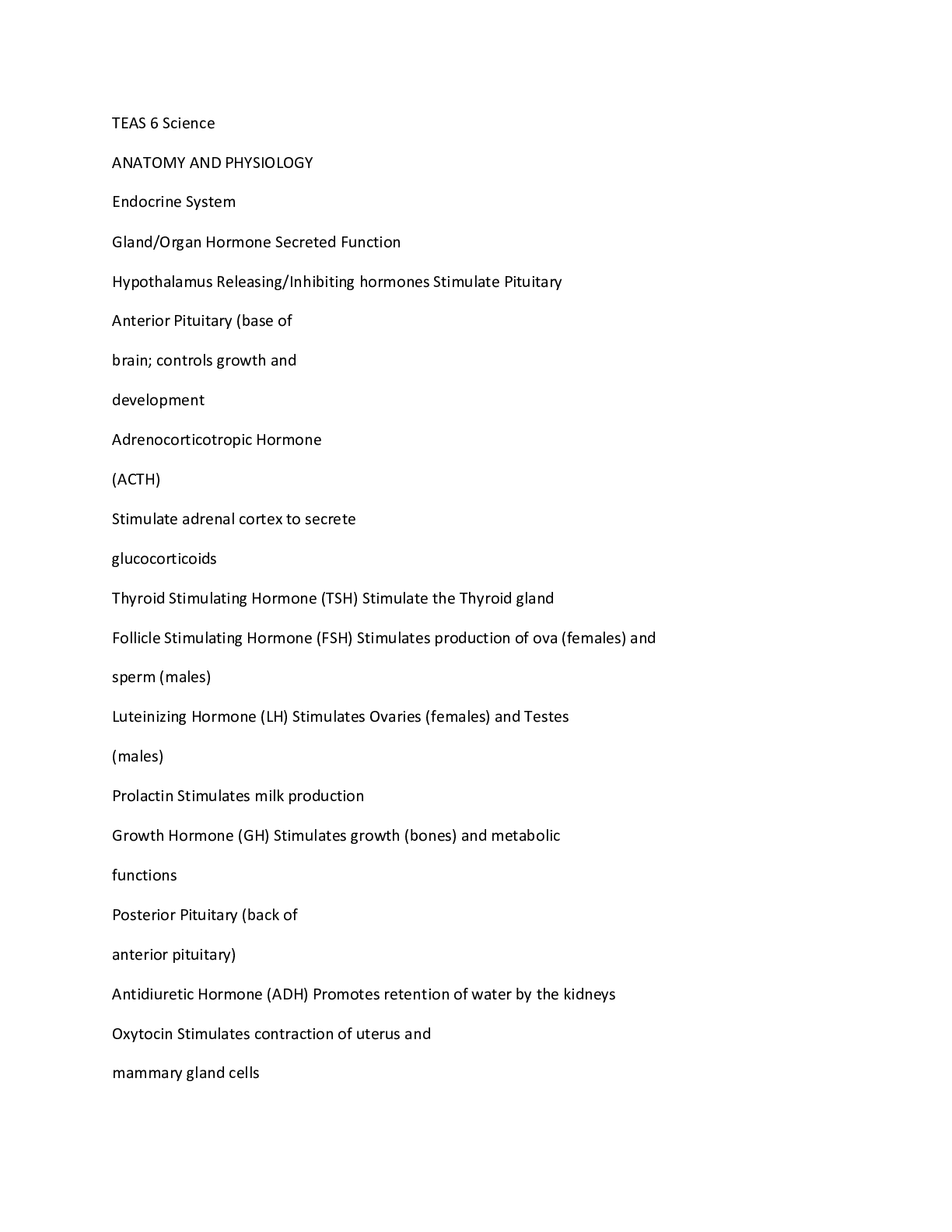
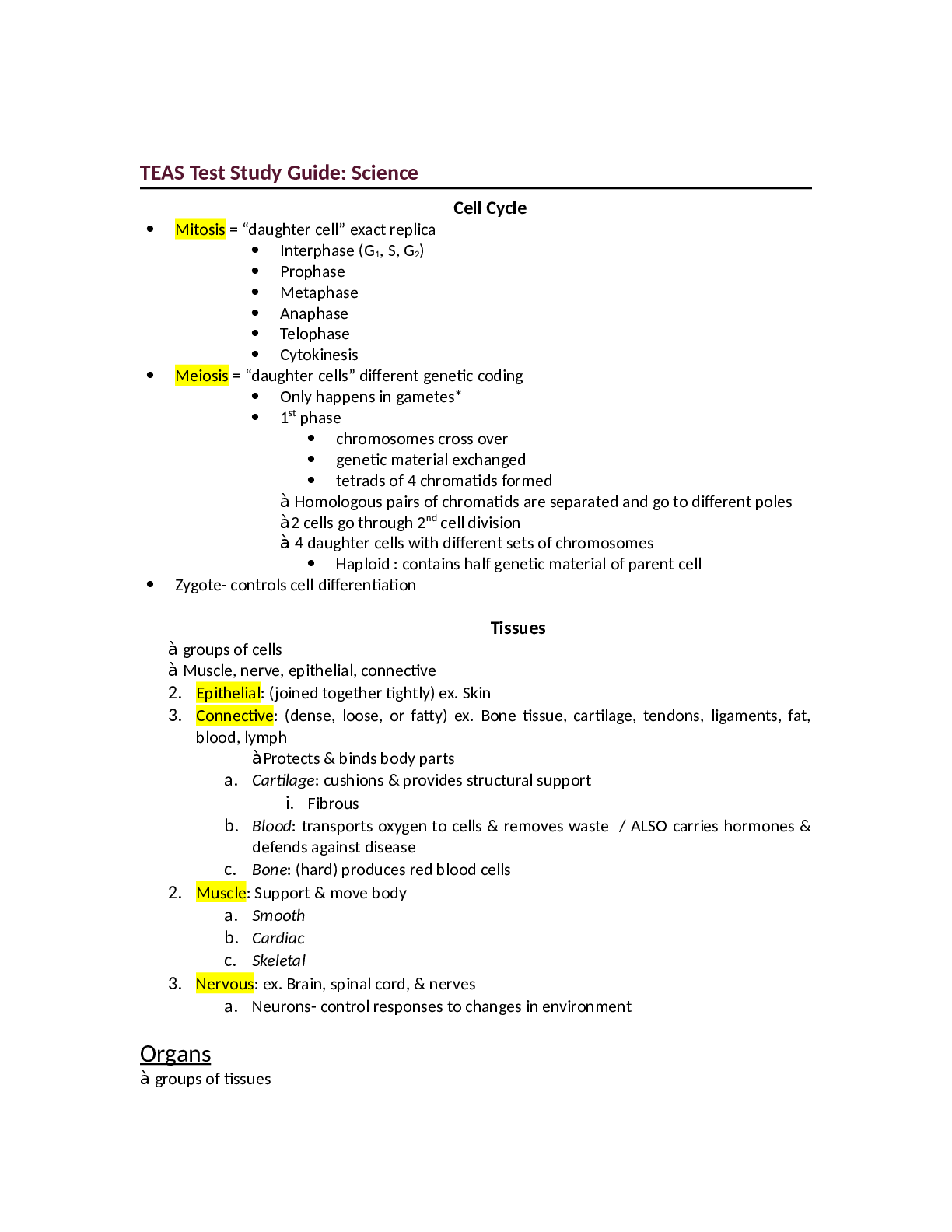
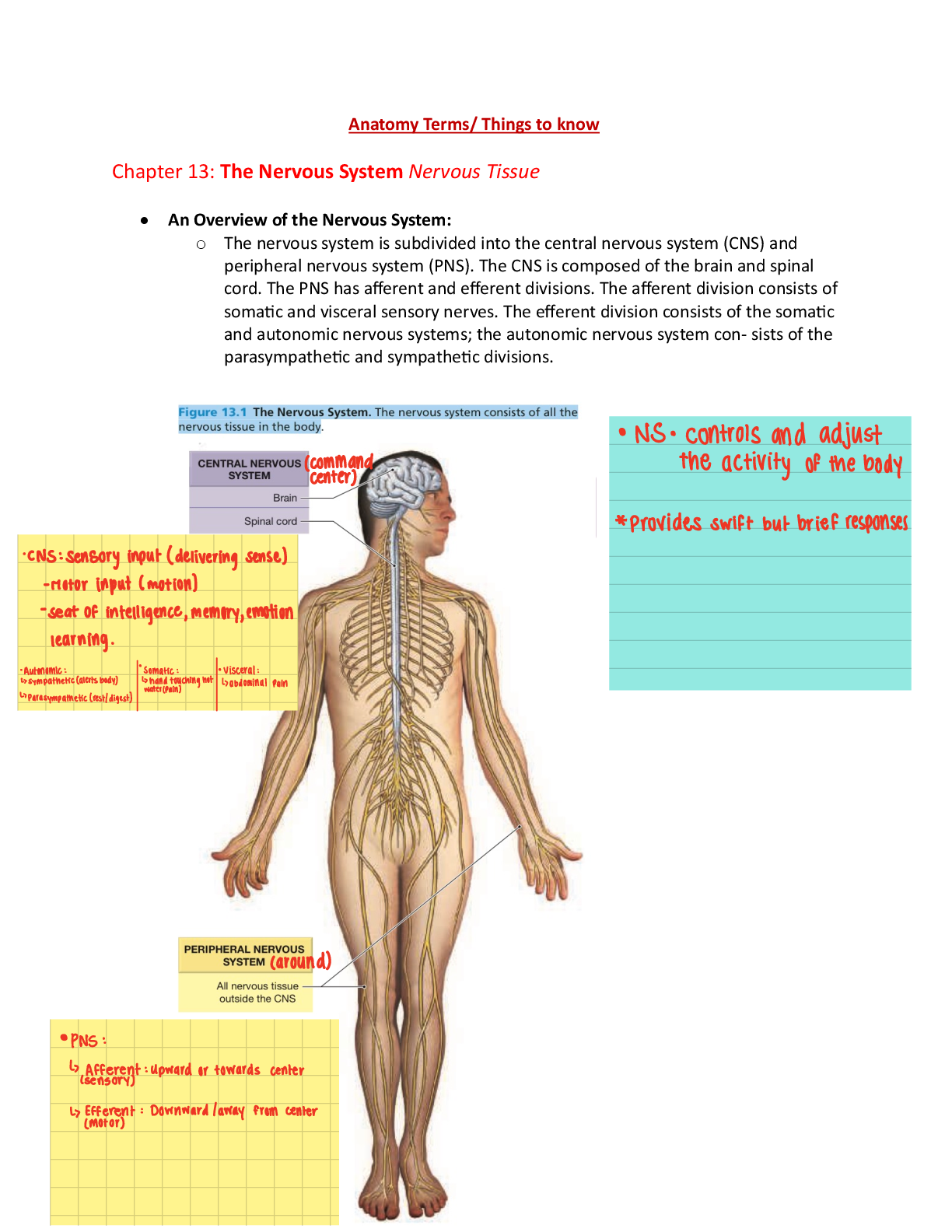
TEAS Test Study Guide: Science Cell Cycle · Mitosis = “daughter cell” exact replica · Interphase (G1, S, G2) · Prophase · Metaphase · Anaphase · Telophase · Cytokinesis · Meios is = “dau ... ghter cells” different genetic coding · Only happens in gametes* · 1st phase · chromosomes cross over · genetic material exchanged · tetrads of 4 chromatids formed  Homologous pairs of chromatids are separated and go to different poles 2 cells go through 2nd cell division  4 daughter cells with different sets of chromosomes · Haploid : contains half genetic material of parent cell • Zygote- controls cell differentiation Tissues  groups of cells  Muscle, nerve, epithelial, connective 1. Epithelial: (joined together tightly) ex. Skin 2. Connective: (dense, loose, or fatty) ex. Bone tissue, cartilage, tendons, ligaments, fat, blood, lymph Protects & binds body parts a. Cartilage: cushions & provides structural support i. Fibrous b. Blood: transports oxygen to cells & removes waste / ALSO carries hormones & defends against disease c. Bone: (hard) produces red blood cells 2. Muscle: Support & move body a. Smooth b. Cardiac c. Skeletal 3. Nervous: ex. Brain, spinal cord, & nerves a. Neurons- control responses to changes in environment Organs  groups of tissues ex. Heart = muscle tissue in myocardium; connective tissue in blood; nervous tissue for heart rate; epithelial tissue in membranes Organ Systems  groups of organs 1. Integumentary (Exocrine system) a. Skin i. Sebaceous glands sweat glands ii. Hair iii. Nails b. Protection i. Protects body from pathogens c. Secretion i. Secrete oil d. Communication i. Sensory receptors send info. about pain, touch, pressure, and temperature LAYERS OF THE SKIN 1. Epidermis a. Most superficial layer of skin b. Epithelial cells **Does not contain any blood vessels c. Stratum basale i. deepest portion ii. single layer of cells iii. keratinized 1. waxy protein waterproofs skin 2. Dermis a. Mostly connective tissue b. Blood vessels, sensory receptors, hair follicles, sebaceous glands, sweat glands c. Elastin and collagen fibers 3. Subcutaneous layer/ Hypodermis a. Connective tissue i. Binds skin to muscle b. Fat deposits cushion and insulate TEMPERATURE HOMEOSTASIS  skin is involved in temperature homeostasis through sweat glands a. Controlled by negative feedback system a. Receptor i. Sensory cells in dermis of skin b. Control center i. Hypothalamus c. Effector i. Sweat glands, blood vessels, and muscles (shivering) ii. Evaporation of sweat cools body ***********************************CONTINUED****************** [Show More]

Last updated: 3 years ago

Preview 1 out of 24 pages

Buy Now

Instant download

We Accept:

Payment methods accepted on Scholarfriends (We Accept)
Preview image of TEAS Test Study Guide: Science; A&P, Full solution guide (Summer 2020). document

Buy this document to get the full access instantly

Instant Download Access after purchase

Buy Now

Instant download

We Accept:

Payment methods accepted on Scholarfriends (We Accept)

Reviews( 0 )

$13.00

Buy Now

We Accept:

Payment methods accepted on Scholarfriends (We Accept)

Instant download

Can't find what you want? Try our AI powered Search

119
0

Document information


Connected school, study & course


About the document


Uploaded On

Dec 15, 2020

Number of pages

24

Written in

All

Seller


Profile illustration for Grademaster
Grademaster

Member since 6 years

107 Documents Sold

Reviews Received
8
6
1
2
1
Additional information

This document has been written for:

Uploaded

Dec 15, 2020

Downloads

 0

Views

 119

Document Keyword Tags

Recommended For You

Get more on STUDY GUIDE »

$13.00
What is Scholarfriends

Scholarfriends.com Online Platform by Browsegrades Inc. 651N South Broad St, Middletown DE. United States.

We are here to help

We're available through e-mail, Twitter, Facebook, and live chat.
 FAQ
 Questions? Leave a message!

Follow us on
 Twitter

Copyright © Scholarfriends · High quality services·