Business Ethics > QUESTIONS & ANSWERS > WGU C715 Organizational Behavior Questions and Answers Already Passed (All)
WGU C715 Organizational Behavior Questions and Answers Already Passed
Document Content and Description Below
Last updated: 4 years ago
Preview 1 out of 54 pages
Instant download
.png)
Buy this Document to get the Full Access Instantly
Provided by Students Who Aced it
We Verify Document Content to Gurantee Accuracy
Also available in bundle (1)
Click Below to Access Bundle(s)
.png)
WGU C715 BUNDLED EXAM QUESTIONS AND ANSWERS WITH COMPLETE SOLUTIONS
WGU C715 BUNDLED EXAM QUESTIONS AND ANSWERS WITH COMPLETE SOLUTIONS
By Nutmegs 4 years ago
$20
14
Reviews( 0 )
Document information
Connected school, study & course
About the document
Uploaded On
Aug 23, 2022
Number of pages
54
Written in
All

Additional information
This document has been written for:
Uploaded
Aug 23, 2022
Downloads
0
Views
312
Topic Tags
Recommended For You
Get more on QUESTIONS & ANSWERS »
WGU C715 Organizational Behavior Questions and Answers 100% Pa...
.png)
WGU C715 Organizational Behavior Questions and Answers with Co...
.png)
WGU C715 - Organizational Behavior Questions and Answers Rated...
.png)
WGU C715 Organizational Behavior Questions and Answers 100% Pa...

WGU C715 ORGANIZATIONAL BEHAVIOR, Top Exam question and answ...

WGU C715 Organizational Behavior, exam Questions and answers,...
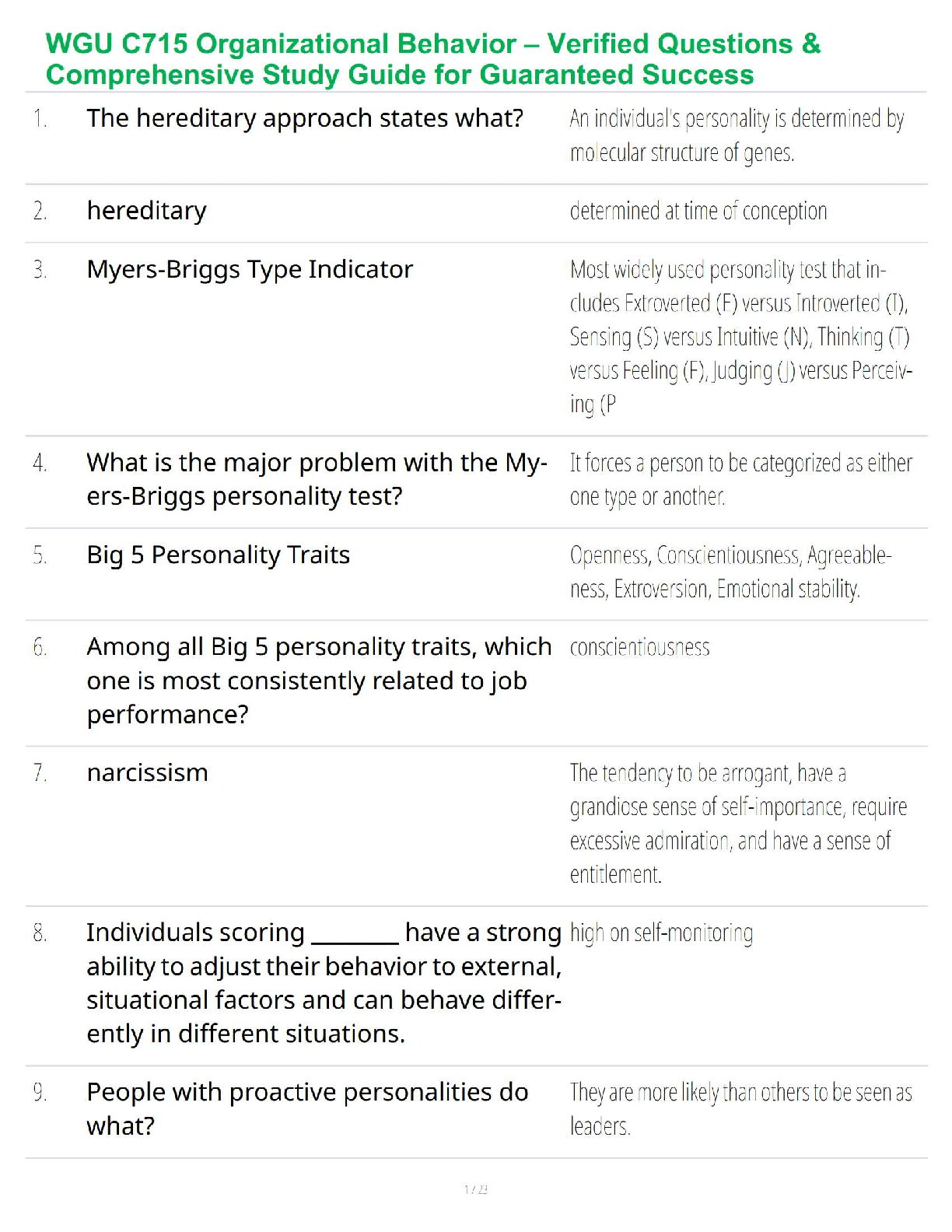
WGU C715 Organizational Behavior – Verified Questions & Compre...
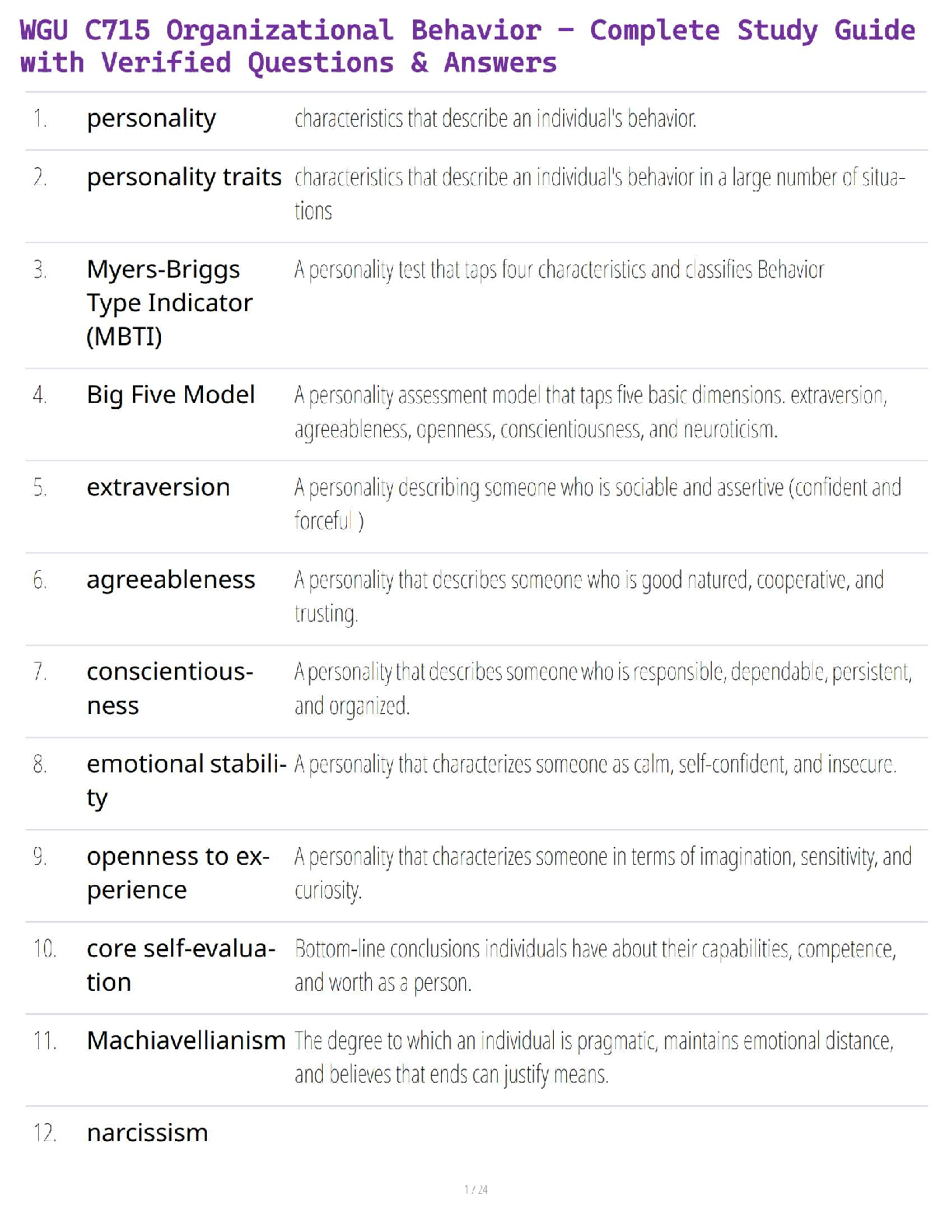
WGU C715 Organizational Behavior – Complete Study Guide with V...
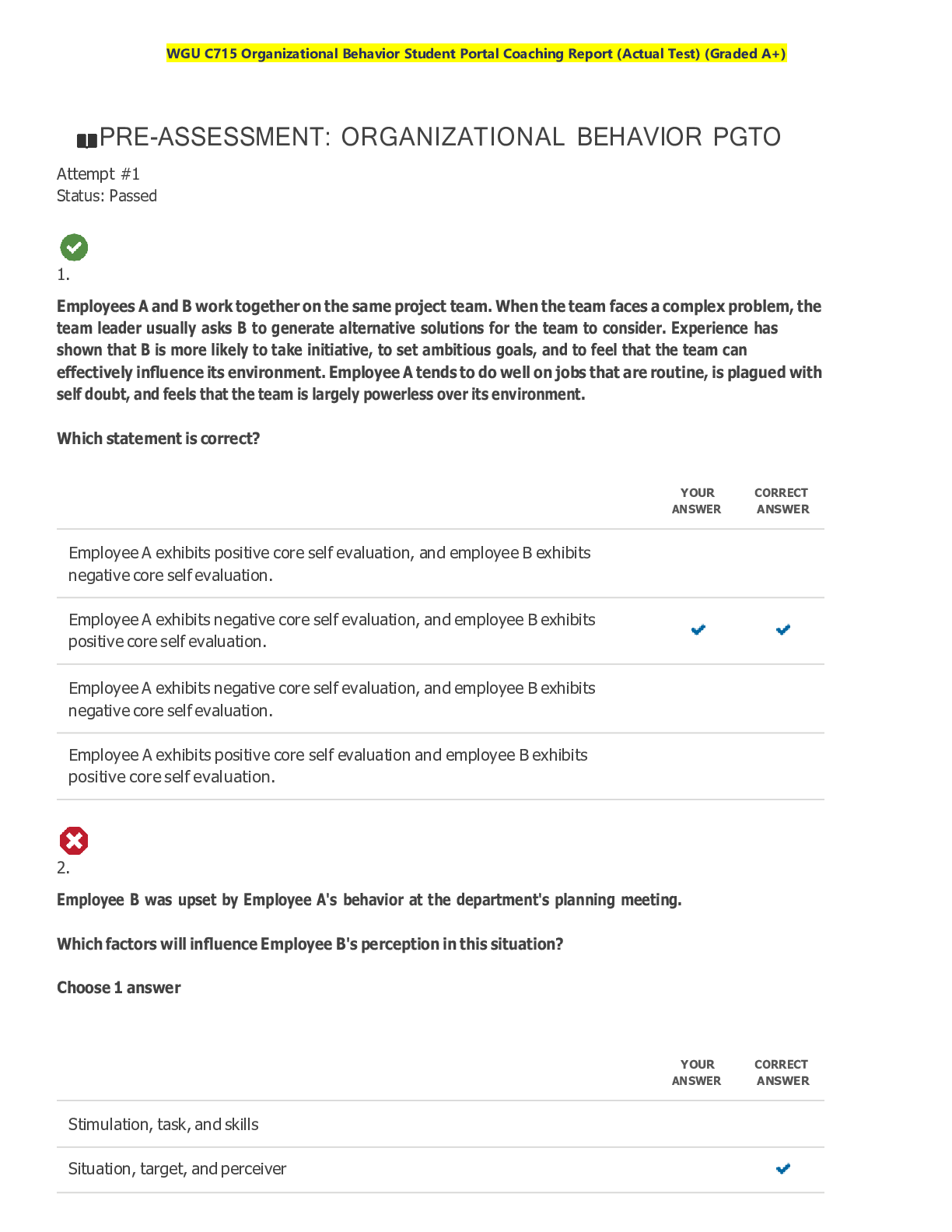
WGU C715 Organizational Behavior Student Portal Coaching Repor...

WGU Organizational Behavior C715 Ch. 9 Foundations of Group B...
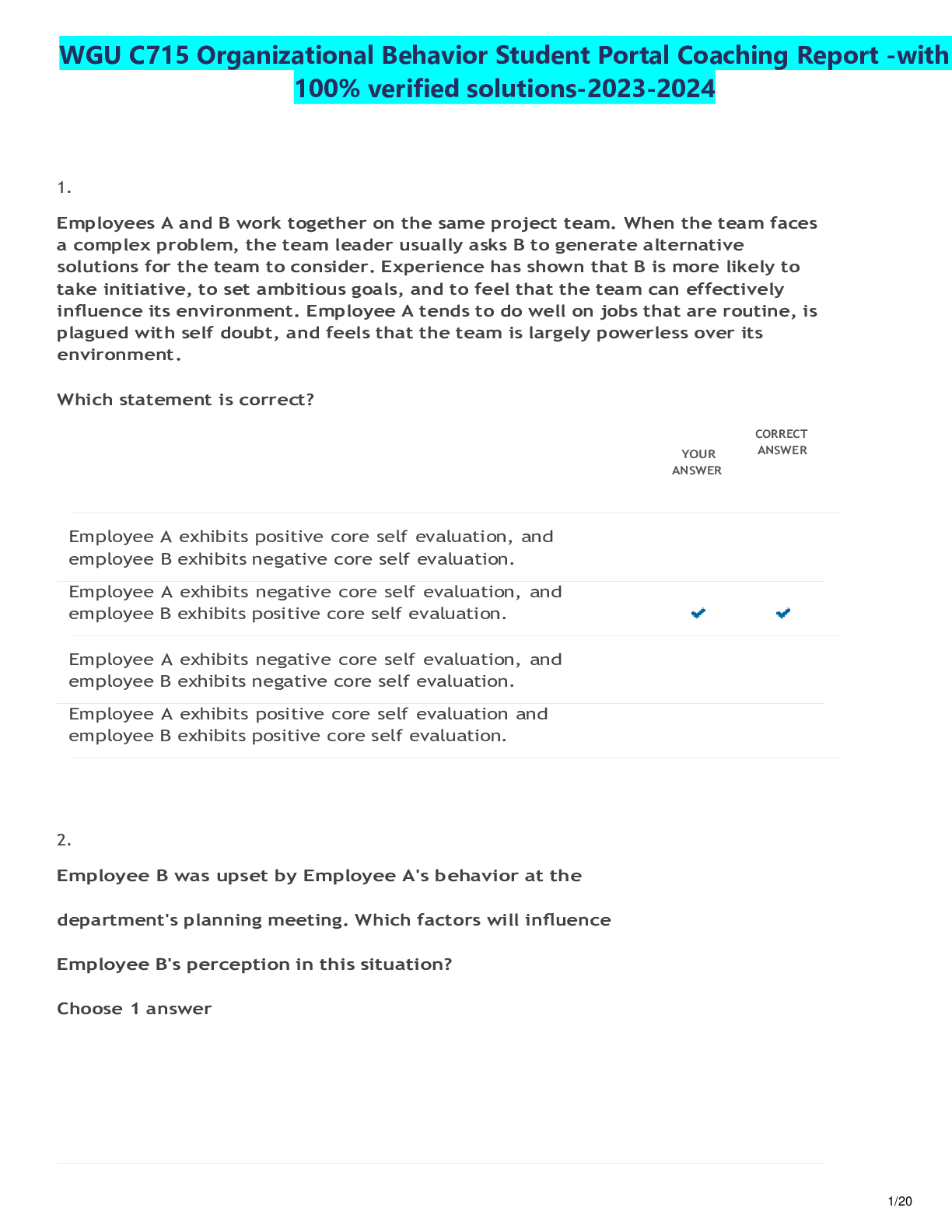
WGU C715 Organizational Behavior Student Portal Coaching Repor...
(WGU C715) - MGMT 3000 Organizational Behavior - OA Review 202...
(WGU C715) - MGMT 3000 Organizational Behavior - OA Review 202...
(WGU C715) - MGMT 3000 Organizational Behavior - OA Review 202...
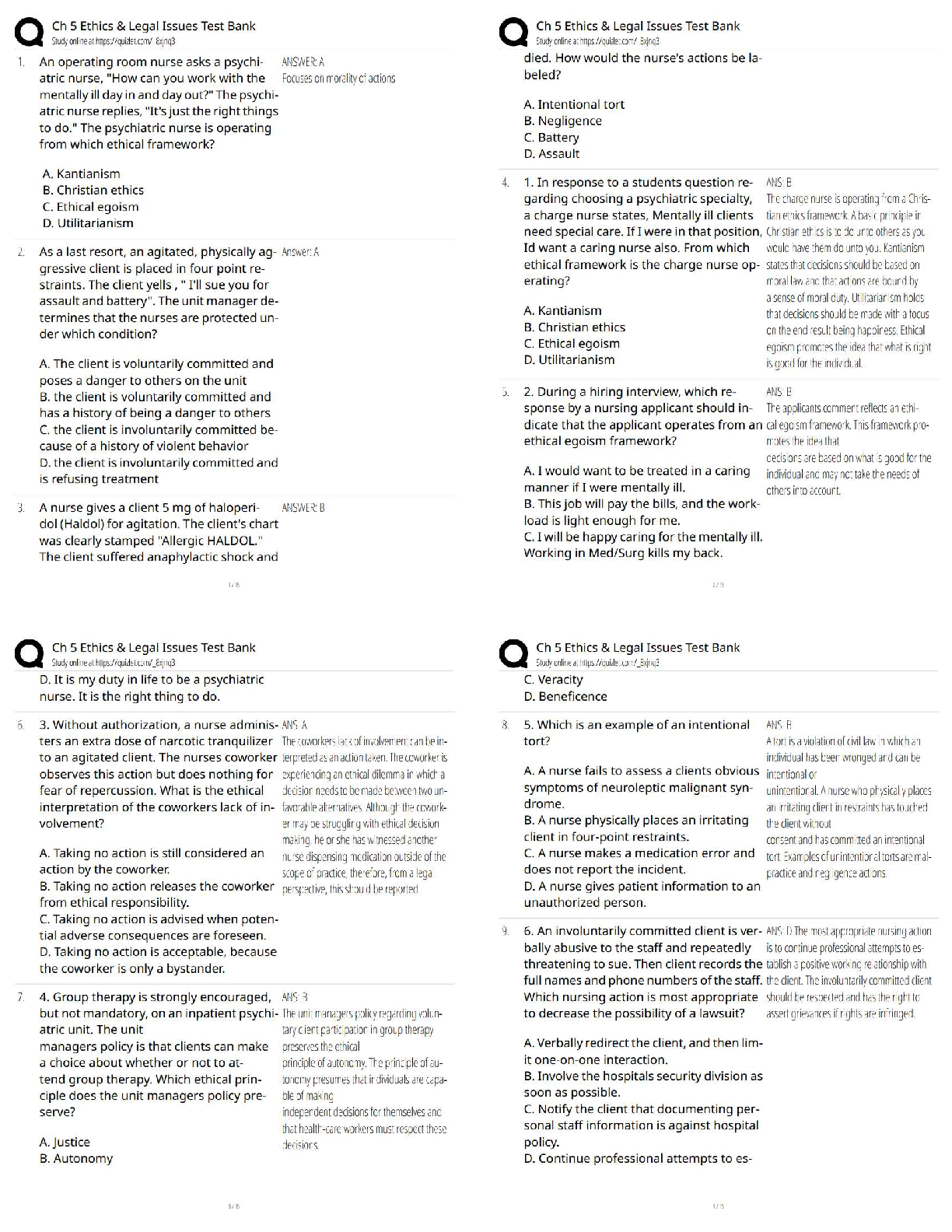
Ch 5 Ethics & Legal Issues Test Bank | | 2025 Updated Exam Q...
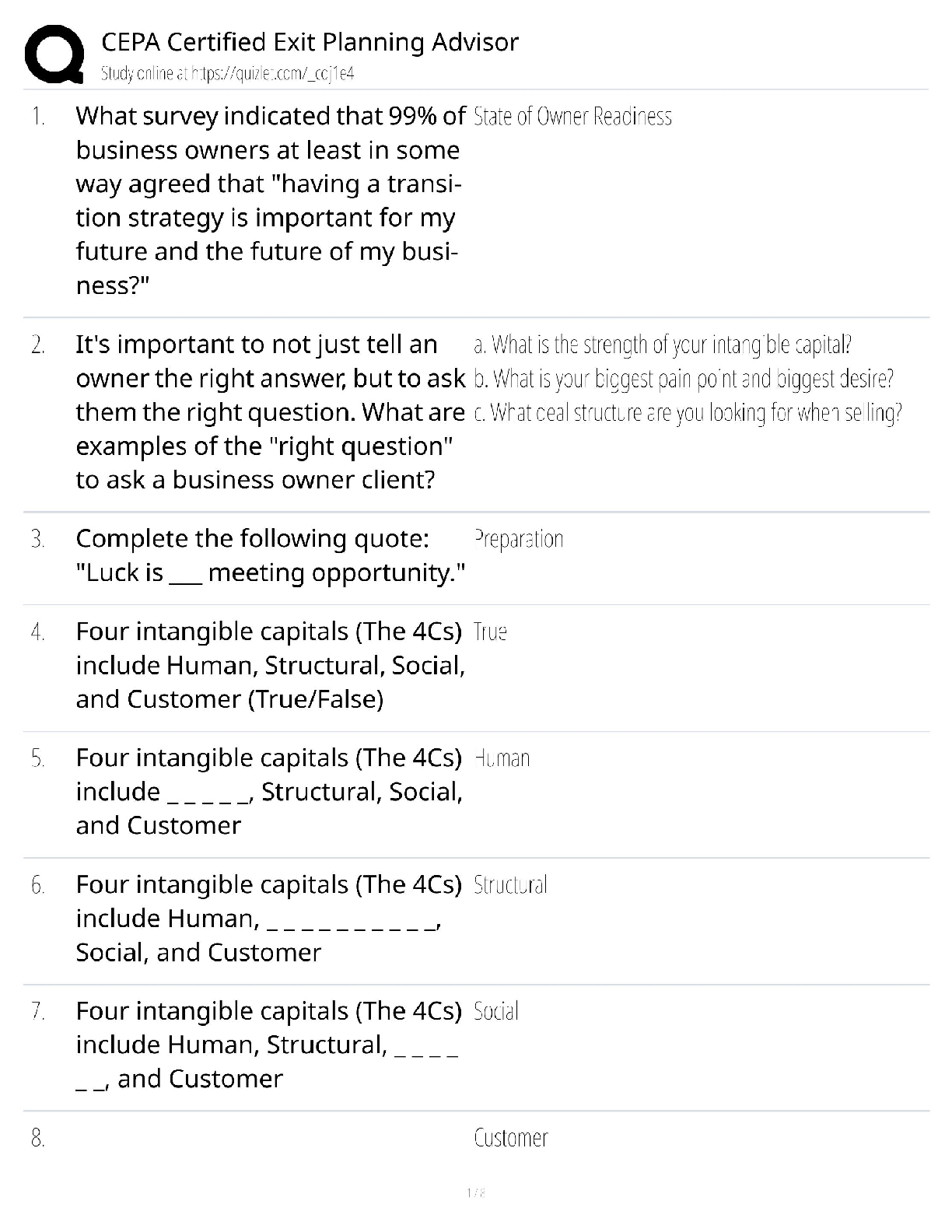
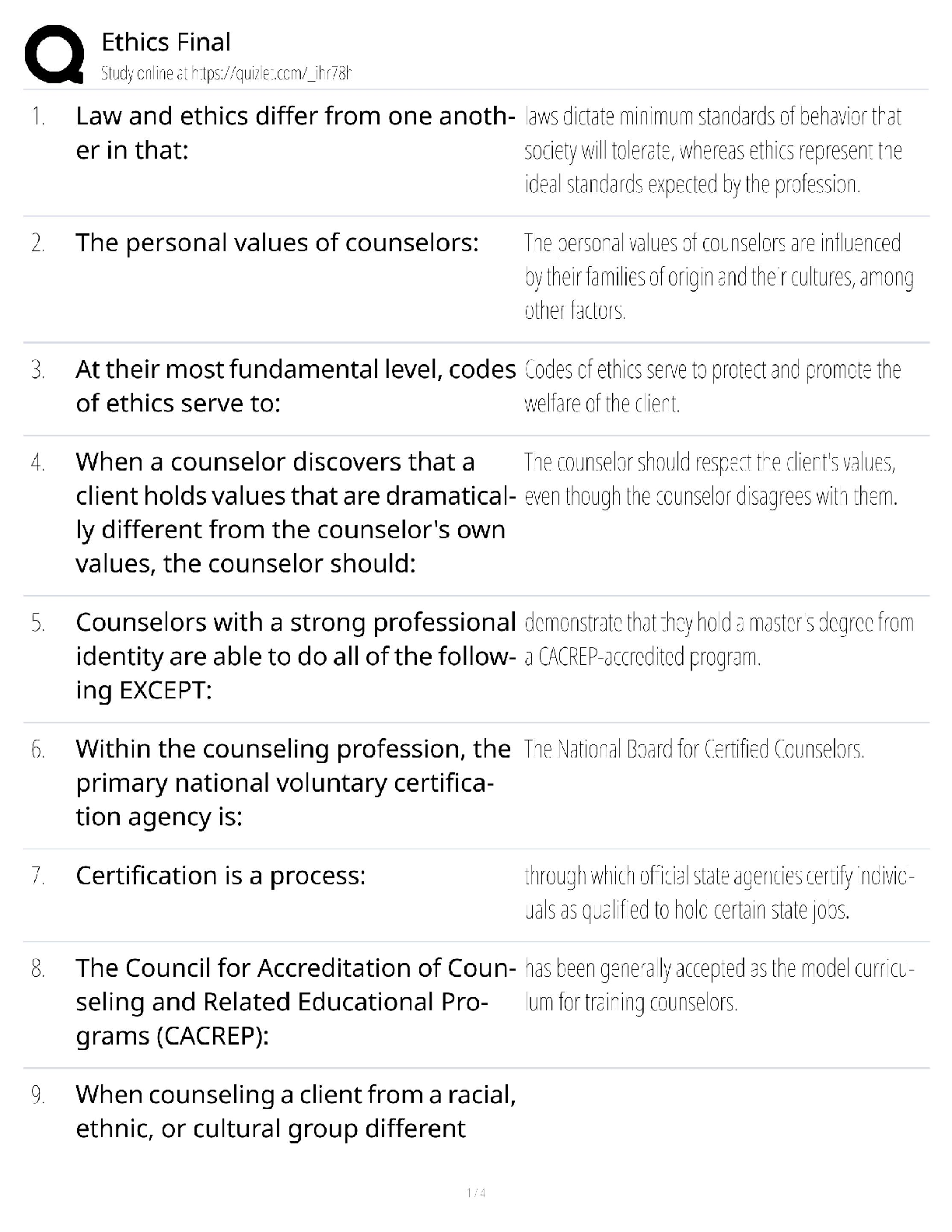

Ethics Chapter 9 / Professional Ethics ACM Code / Study Guide...