Health Care > QUESTIONS & ANSWERS > NUR2755 NUR 2755 Multidimensional Care IV Final Exam Review Rated (All)
NUR2755 NUR 2755 Multidimensional Care IV Final Exam Review Rated
Document Content and Description Below
Last updated: 4 years ago
Preview 1 out of 43 pages
Instant download

Buy this Document to get the Full Access Instantly
Provided by Students Who Aced it
We Verify Document Content to Gurantee Accuracy
Reviews( 0 )
Document information
Connected school, study & course
About the document
Uploaded On
Aug 23, 2022
Number of pages
43
Written in
All

Additional information
This document has been written for:
Uploaded
Aug 23, 2022
Downloads
0
Views
207
Topic Tags
Recommended For You
Get more on QUESTIONS & ANSWERS » Rasmussen.png)
NUR 2755 / NUR2755 Exam 3 Final: Multidimensional Care IV / MD...
.png)
NUR2755 / NUR 2755 Final Exam (Latest2021 / 2022): Multidimens...
.png)
NUR2755 / NUR 2755 Multidimensional Care IV / MDC 4 Exam 3 Rev...


Multidimensional Care IV MDC 4 Exam 3 Review-Contains 120 Q&A...

NUR2755 / NUR 2755 Multidimensional Care IV / MDC 4 FINAL EXA...

NUR2755 / NUR 2755 Final Exam Study Guide Review (Latest Updat...
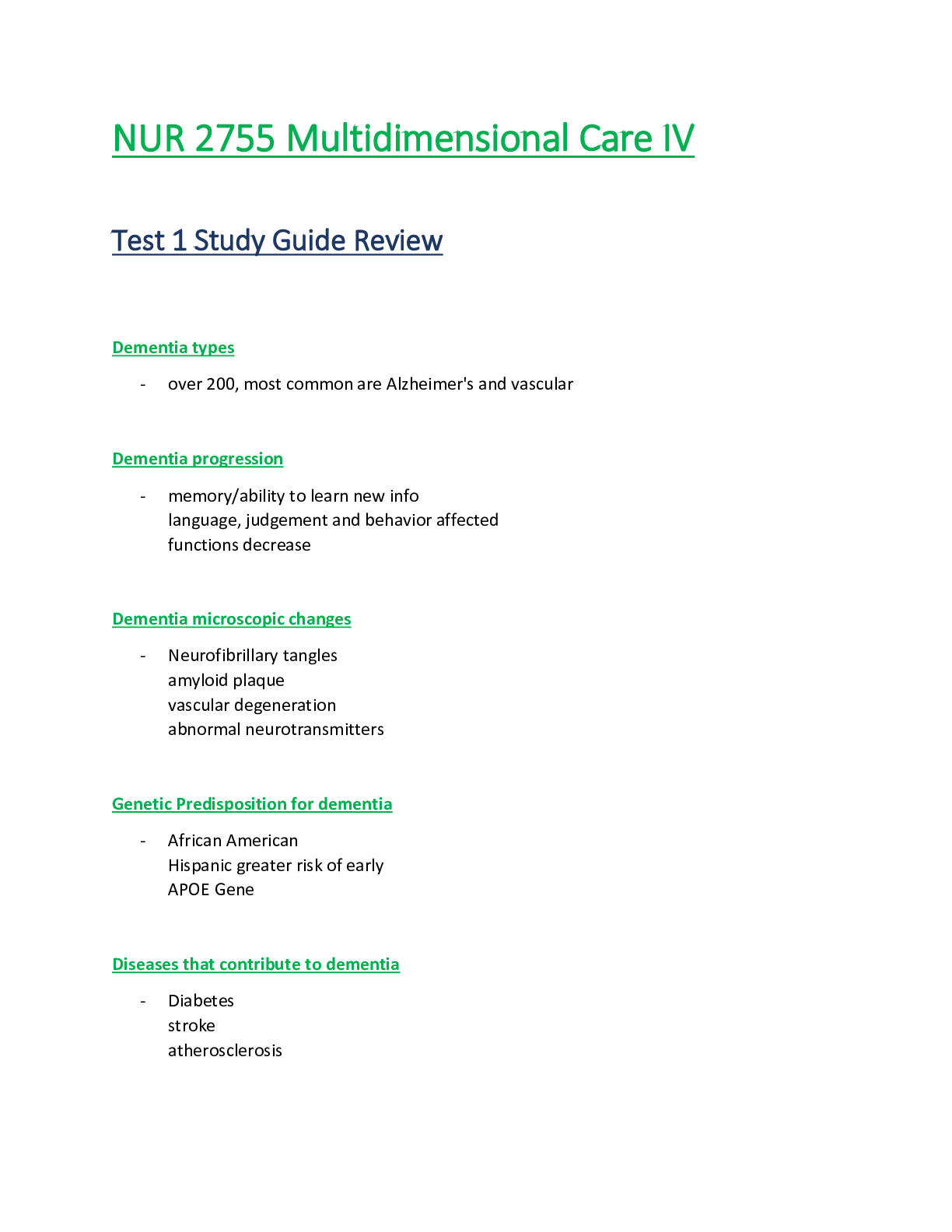
NUR2755 / NUR 2755 Exam 1 Study Guide Review (Latest Update):...
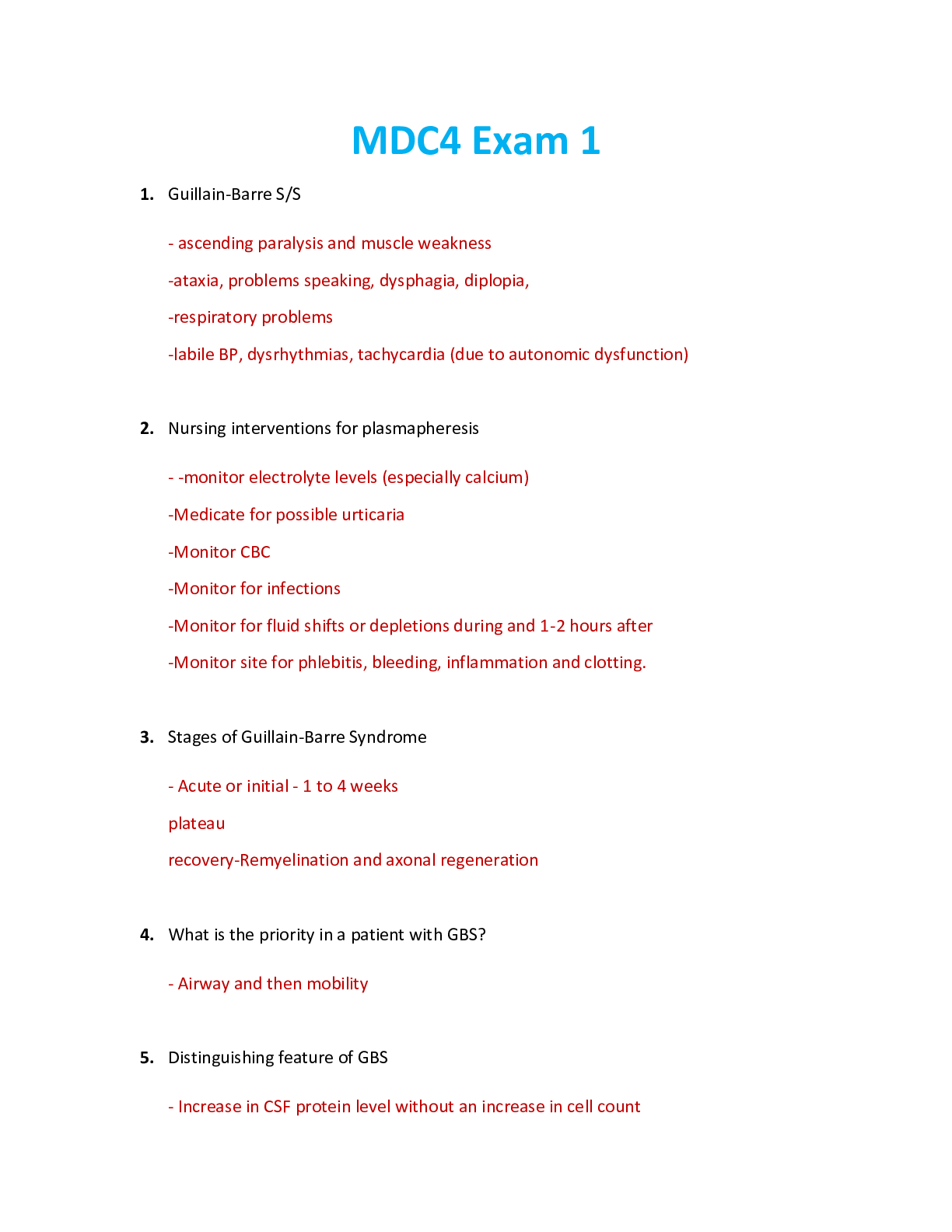
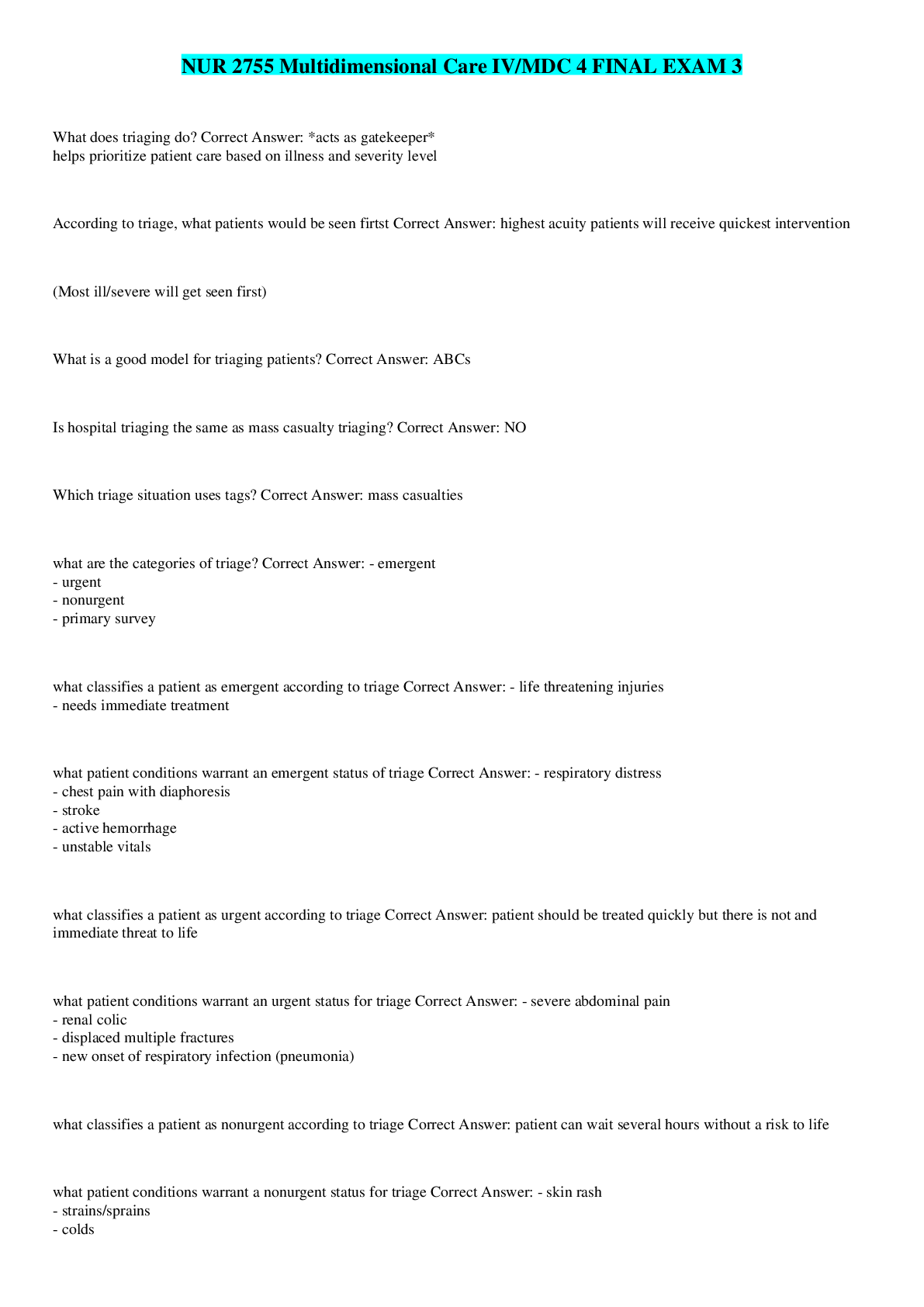
NUR 2755 Multidimensional Care IV MDC IV Exam 2 STUDY GUIDE

NUR 2755 Multidimensional Care II MDCII Assessment 50 Q&A
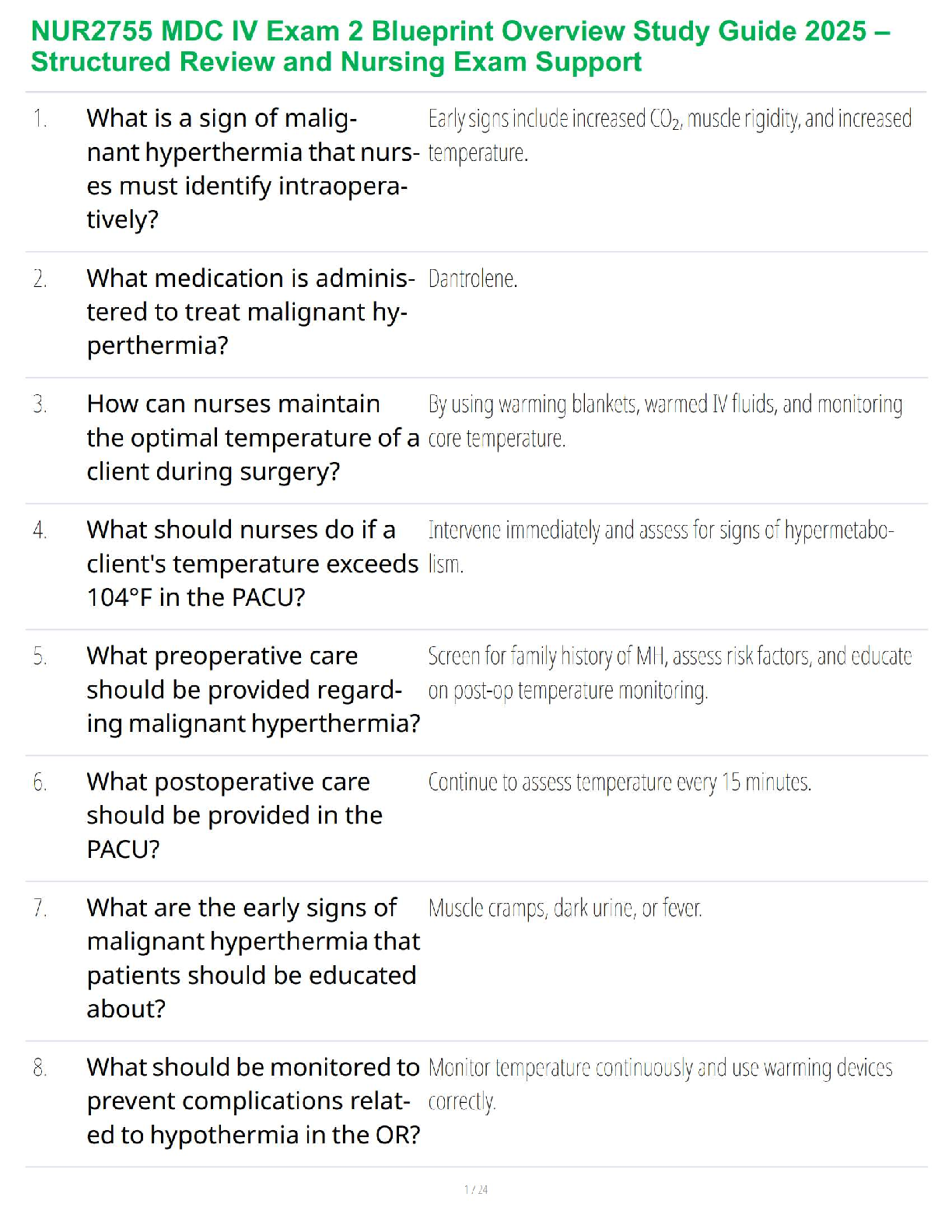
NUR2755 MDC IV Exam 2 Blueprint Overview Study Guide 2025 – St...
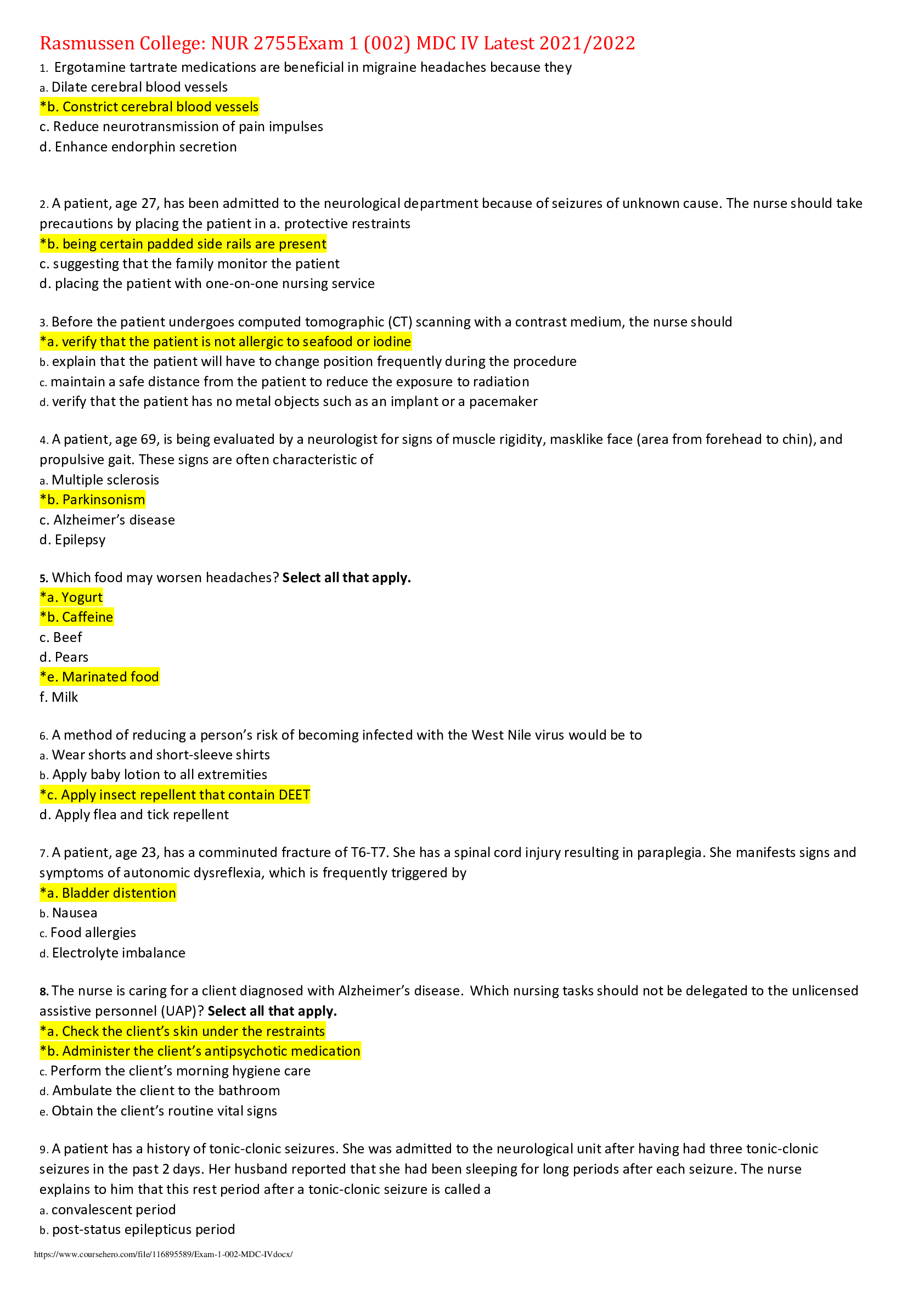
Rasmussen College: NUR 2755Exam 1 (002) MDC IV Latest 2021/202...
Adult Health Exit HESI TEST BANK 700+ Latest Questions & Answe...




 Exit Exam Brand New Questions and Answers Guaranteed Pass With A+ Score.png)
 exit exam – Brand New Q As! Guaranteed Pass w-A+ Actual Screenshots w-Questions & Answers Included!!! Test Taken 4-11-2022 (I scored 1162!!!).png)

.png)

.png)
.png)


