*NURSING  >  QUESTIONS & ANSWERS  >  NURS - 343 PHARMACOLOGY EXAM 1 (All)

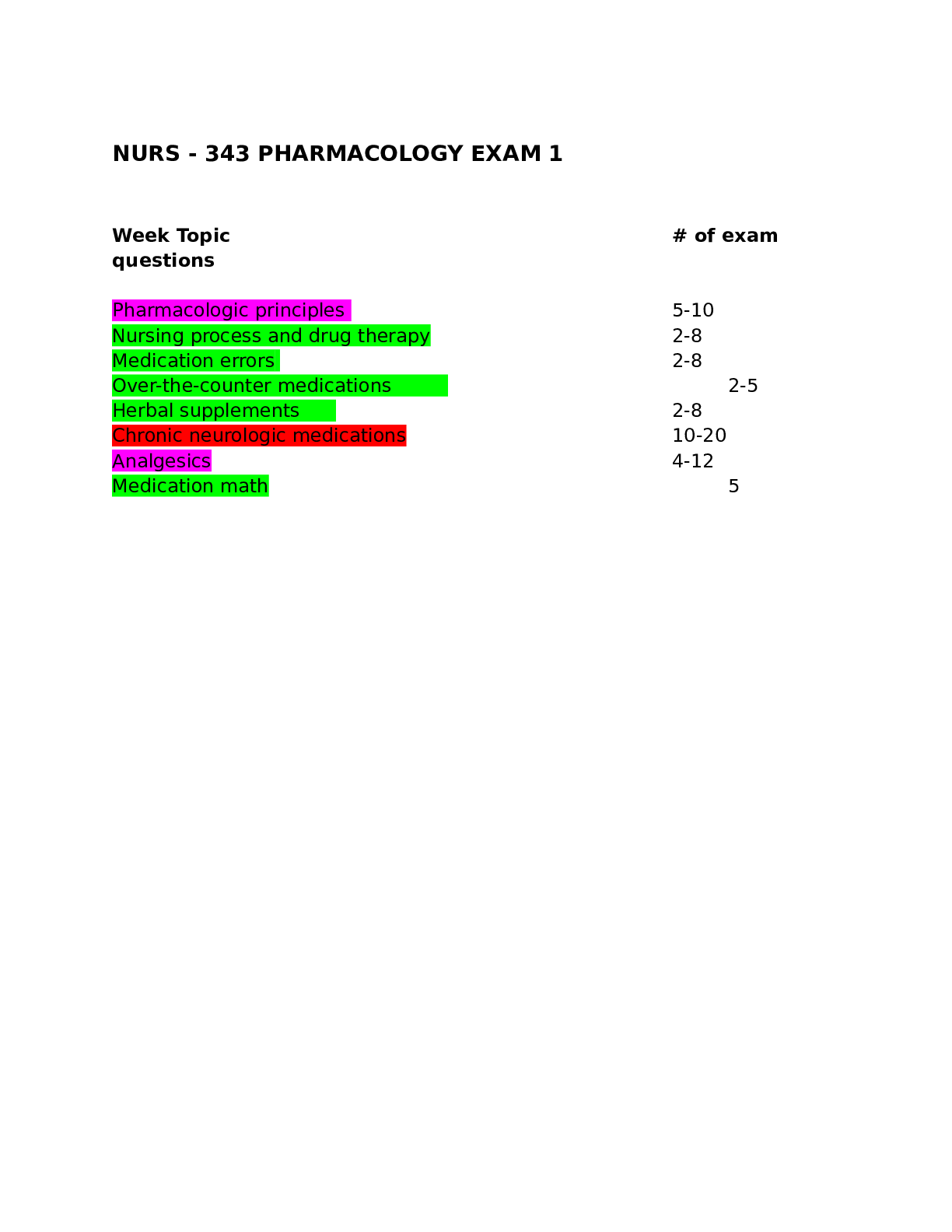
NURS - 343 PHARMACOLOGY EXAM 1

Document Content and Description Below

I. Drug A. Any chemical that affects the physiologic processes of a living organism II. Pharmacology A. Study or science of drugs III. Drug Names A. Chemical name: name of the med that reflects i ... ts chemical composition and molecular structure. B. Generic name: official or nonproprietary name the USANC gives a medication. 1. Ex. Ibuprofen C. Trade name: brand or proprietary name the company that manufactures the medication gives it. 1. Ex. Advil and Motrin I. Pharmaceutics: The study of how various drug forms influence the way in which the drug affects the body II. Pharmacokinetics: How the meds travel through the body III. Phases of Pharmacokinetics A. Absorption: transmission of meds from the location of administration to the bloodstream. The most common routes are enteral and parenteral. Rate determines how soon the meds will take effect. Amount determines the intensity of meds. Route affects the rate and amount of absorption. 1. Oral → BARRIERS: Meds must pass through the layer of epithelial cells that line the GI tract. 2. Sublingual or buccal → BARRIERS: swallowing before the meds are completely dissolved can cause the gastric pH to inactivate the medication 3. Other mucous membranes (rectal, vaginal) → BARRIERS: presence of stool in the rectum or infectious material in the vagina limits tissue contact. Or the sphincters are not working properly and the patient is not able to hold in the medication. 4. Inhalation (mouth or nose) → BARRIERS: Inspiratory effort. Some patients have COPD and they are unable to get a deep enough breath. Sometimes patients do not use the inhaler the correct way. 5. Intradermal or topical → BARRIERS: Close proximity of epidermal cells; lipid soluble meds can be slower processed bc it’s fat that is being absorbed. 6. Subcutaneous or intramuscular → BARRIERS: Capillary walls have large spaces between cells. 7. Intravenous → BARRIERS: No barriers B. Distribution: transportation of medications to sites of action by bodily fluids. 1. Circulation: poor blood flow can restrict med distribution such as those with peripheral vascular or cardiac disease 2. Permeability of the cell membrane: meds must be able to pass through tissues and membranes to reach its target area [Show More]

Last updated: 3 years ago

Preview 1 out of 39 pages

Buy Now

Instant download

We Accept:

Payment methods accepted on Scholarfriends (We Accept)
Preview image of NURS - 343 PHARMACOLOGY EXAM 1 document

Buy this document to get the full access instantly

Instant Download Access after purchase

Buy Now

Instant download

We Accept:

Payment methods accepted on Scholarfriends (We Accept)

Also available in bundle (1)

Click Below to Access Bundle(s)

All PHARMACOLOGY Exams Bundled together

All PHARMACOLOGY Exams Bundled together

By arp 10 months ago

$25.5

5  

Reviews( 0 )

$10.50

Buy Now

We Accept:

Payment methods accepted on Scholarfriends (We Accept)

Instant download

Can't find what you want? Try our AI powered Search

75
0

Document information


Connected school, study & course


About the document


Uploaded On

Aug 24, 2022

Number of pages

39

Written in

All

Seller


Profile illustration for arp
arp

Member since 6 years

15 Documents Sold

Reviews Received
7
1
0
0
0
Additional information

This document has been written for:

Uploaded

Aug 24, 2022

Downloads

 0

Views

 75

Document Keyword Tags


$10.50
What is Scholarfriends

Scholarfriends.com Online Platform by Browsegrades Inc. 651N South Broad St, Middletown DE. United States.

We are here to help

We're available through e-mail, Twitter, Facebook, and live chat.
 FAQ
 Questions? Leave a message!

Follow us on
 Twitter

Copyright © Scholarfriends · High quality services·