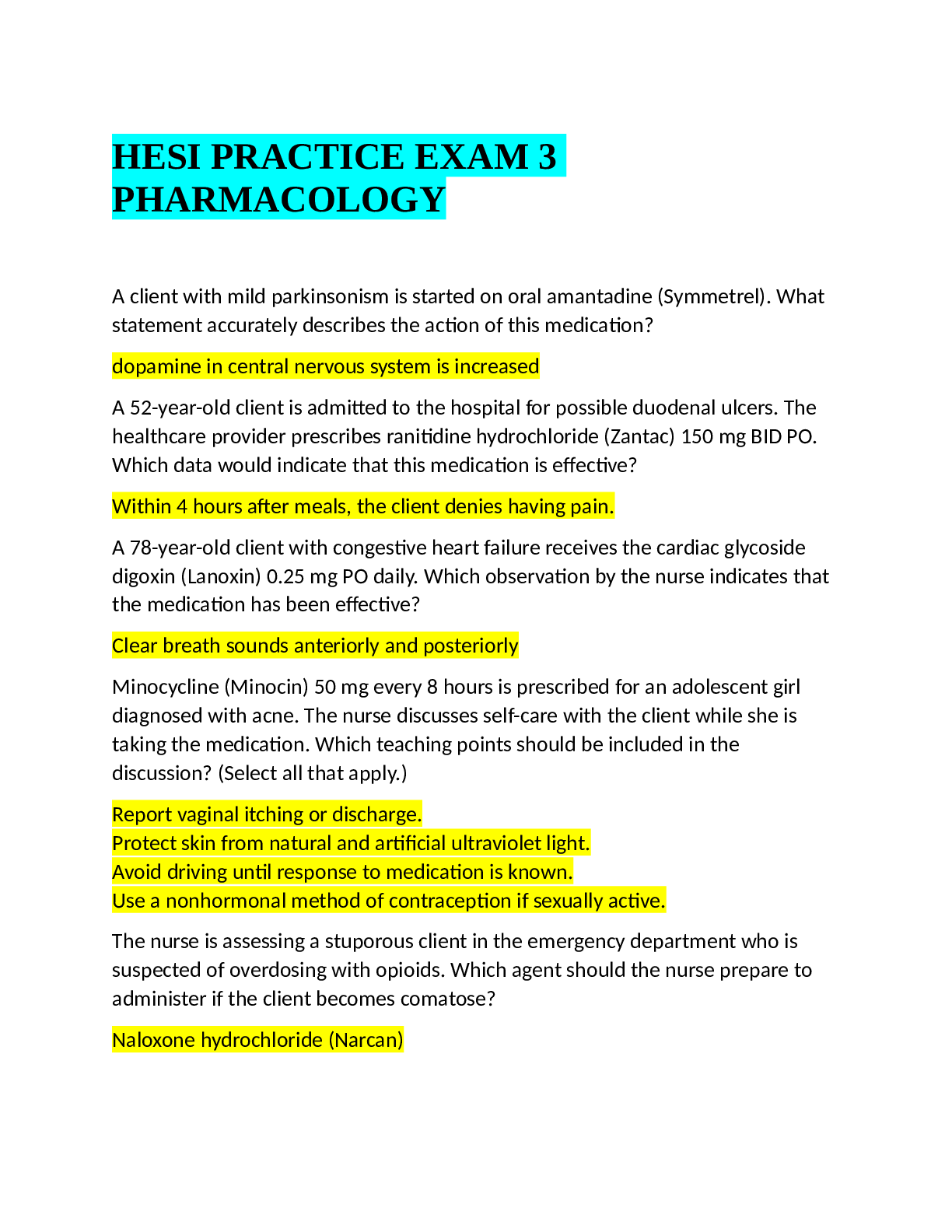
A client with mild parkinsonism is started on oral amantadine (Symmetrel). What
statement accurately describes the action of this medication?
A 52-year-old client is admitted to the hospital for possible duodenal ul
...
A client with mild parkinsonism is started on oral amantadine (Symmetrel). What
statement accurately describes the action of this medication?
A 52-year-old client is admitted to the hospital for possible duodenal ulcers. The
healthcare provider prescribes ranitidine hydrochloride (Zantac) 150 mg BID PO.
Which data would indicate that this medication is effective?
A 78-year-old client with congestive heart failure receives the cardiac glycoside
digoxin (Lanoxin) 0.25 mg PO daily. Which observation by the nurse indicates that
the medication has been effective?
Minocycline (Minocin) 50 mg every 8 hours is prescribed for an adolescent girl
diagnosed with acne. The nurse discusses self-care with the client while she is
taking the medication. Which teaching points should be included in the
discussion? (Select all that apply.)
The nurse is assessing a stuporous client in the emergency department who is
suspected of overdosing with opioids. Which agent should the nurse prepare to
administer if the client becomes comatose?
The healthcare provider prescribes captopril (Capoten) 37.5 mg. The medication is
available in 25 mg tablets. What should the nurse administer?
A client who is HIV positive is receiving epoetin (Epogen) for management of
anemia secondary to zidovudine (AZT) therapy. Which laboratory finding is most
important for the nurse to report to the healthcare provider?
A 75-year-old male client taking hydrochlorothiazide (HCTZ) is admitted to the
hospital having "palpitations" and "skipped heart beats." What is the most likely
cause of these symptoms given the client's medication history?
Which parameter is most important for the nurse to check prior to administering a
subcutaneous injection of heparin?
A. Heart rate
B. Urinary output
C. Activated partial thromboplastin time (aPTT)
D. Prothrombin time (PT) and international normalized ratio (INR)
C. Activated partial thromboplastin time, commonly referred to as aPTT
A client is prescribed a cholinesterase inhibitor, and a family member asks the
nurse how this medication works. Which pharmacophysiologic explanation should
the nurse use to describe this class of drug?
In developing a nursing care plan for a 9-month-old infant with cystic fibrosis, the
nurse writes a nursing diagnosis of Alteration in nutrition: less than body
requirements, related to inadequate digestion of nutrients. Which intervention
would best meet this child's needs?
When providing client teaching about the administration of methylphenidate
(Ritalin) to the mother of a child diagnosed with attention-deficit/hyperactive
disorder (ADHD), what instruction should the nurse include in the teaching plan?
Alteration of which laboratory finding represents achievement of a therapeutic
goal for heparin administration?
The charge nurse is reviewing the admission history and physical data for four
clients newly admitted to the unit. Which client is at greatest risk for adverse
reactions to medications?
A. 30-year-old man with a fracture
B. 7-year-old child with an ear infection
C. 75-year-old woman with liver disease
D. 50-year-old man with an upper respiratory tract infection
A. 75-year-old woman with liver disease
The healthcare provider prescribes ipratropium (Atrovent) for a client. An allergic
reaction to what other medication would cause the nurse to question the
prescription for Atrovent?
[Show More]