PostPartum PrepU 2022 Questions and Answers;100%
Verified
While caring for a multiparous client 4 hours after vaginal birth of a term neonate, the
nurse notes that the mother's temperature is 99.8° F (37.2° C), the pu
...
PostPartum PrepU 2022 Questions and Answers;100%
Verified
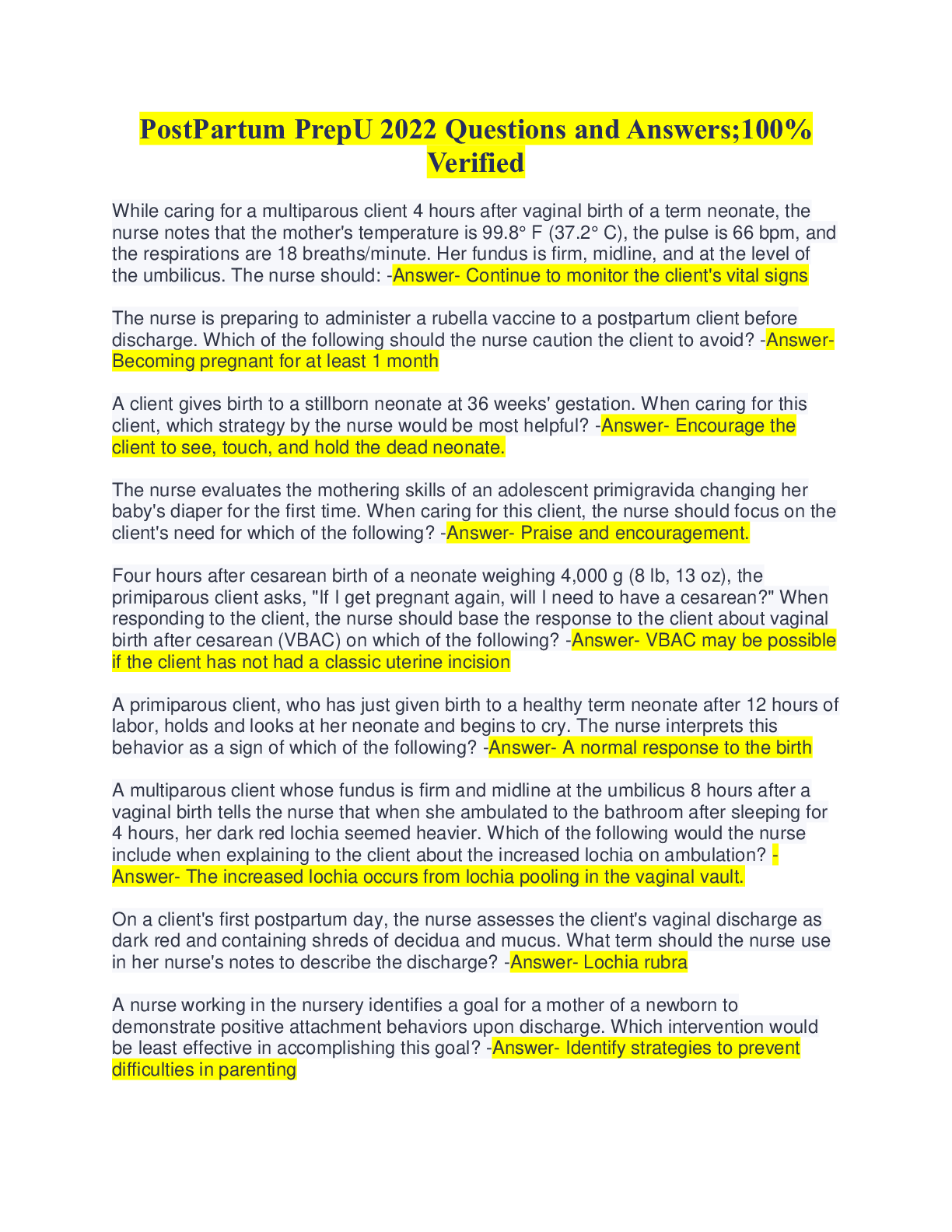
While caring for a multiparous client 4 hours after vaginal birth of a term neonate, the
nurse notes that the mother's temperature is 99.8° F (37.2° C), the pulse is 66 bpm, and
the respirations are 18 breaths/minute. Her fundus is firm, midline, and at the level of
the umbilicus. The nurse should: -Answer- Continue to monitor the client's vital signs
The nurse is preparing to administer a rubella vaccine to a postpartum client before
discharge. Which of the following should the nurse caution the client to avoid? -AnswerBecoming pregnant for at least 1 month
A client gives birth to a stillborn neonate at 36 weeks' gestation. When caring for this
client, which strategy by the nurse would be most helpful? -Answer- Encourage the
client to see, touch, and hold the dead neonate.
The nurse evaluates the mothering skills of an adolescent primigravida changing her
baby's diaper for the first time. When caring for this client, the nurse should focus on the
client's need for which of the following? -Answer- Praise and encouragement.
Four hours after cesarean birth of a neonate weighing 4,000 g (8 lb, 13 oz), the
primiparous client asks, "If I get pregnant again, will I need to have a cesarean?" When
responding to the client, the nurse should base the response to the client about vaginal
birth after cesarean (VBAC) on which of the following? -Answer- VBAC may be possible
if the client has not had a classic uterine incision
A primiparous client, who has just given birth to a healthy term neonate after 12 hours of
labor, holds and looks at her neonate and begins to cry. The nurse interprets this
behavior as a sign of which of the following? -Answer- A normal response to the birth
A multiparous client whose fundus is firm and midline at the umbilicus 8 hours after a
vaginal birth tells the nurse that when she ambulated to the bathroom after sleeping for
4 hours, her dark red lochia seemed heavier. Which of the following would the nurse
include when explaining to the client about the increased lochia on ambulation? -
Answer- The increased lochia occurs from lochia pooling in the vaginal vault.
On a client's first postpartum day, the nurse assesses the client's vaginal discharge as
dark red and containing shreds of decidua and mucus. What term should the nurse use
in her nurse's notes to describe the discharge? -Answer- Lochia rubra
A nurse working in the nursery identifies a goal for a mother of a newborn to
demonstrate positive attachment behaviors upon discharge. Which intervention would
be least effective in accomplishing this goal? -Answer- Identify strategies to prevent
difficulties in parentingA client with cardiac disease gives birth. Afterward, the nurse assesses the client for
signs and symptoms of cardiac decompensation. During the postpartum period, which
assessment finding indicates a need for further investigation? -Answer- Tachycardia
While observing a new mother interact with her first baby, the nurse observes that the
client appears hesitant to care for the neonate. Which of the following actions would be
most important for the nurse to do? -Answer- Continue to provide praise and support to
the client
Which of the following should the nurse include in the teaching plan for a primiparous
client who asks about weaning her neonate? -Answer- Gradually eliminate one feeding
at a time.
While changing the neonate's diaper, the client asks the nurse about some red-tinged
drainage from the neonate's vagina. Which of the following responses would be most
appropriate? -Answer- Sometimes baby girls have this from hormones received from
the mother."
A primigravid client gave birth vaginally 2 hours ago with no complications. As the nurse
plans care for this postpartum client, which postpartum goal would have the highest
priority? -Answer- The client will demonstrate self-care and infant care by the end of the
shift
During the first formula feeding, a client has difficulty getting her neonate to take the
artificial nipple into the mouth. In assessing the problem, the nurse should intervene if
the mother -Answer- pushes only the tip of the nipple into the neonate's mouth
[Show More]