Paramedic Medical Unit Exam – Study Terms
Meningitis
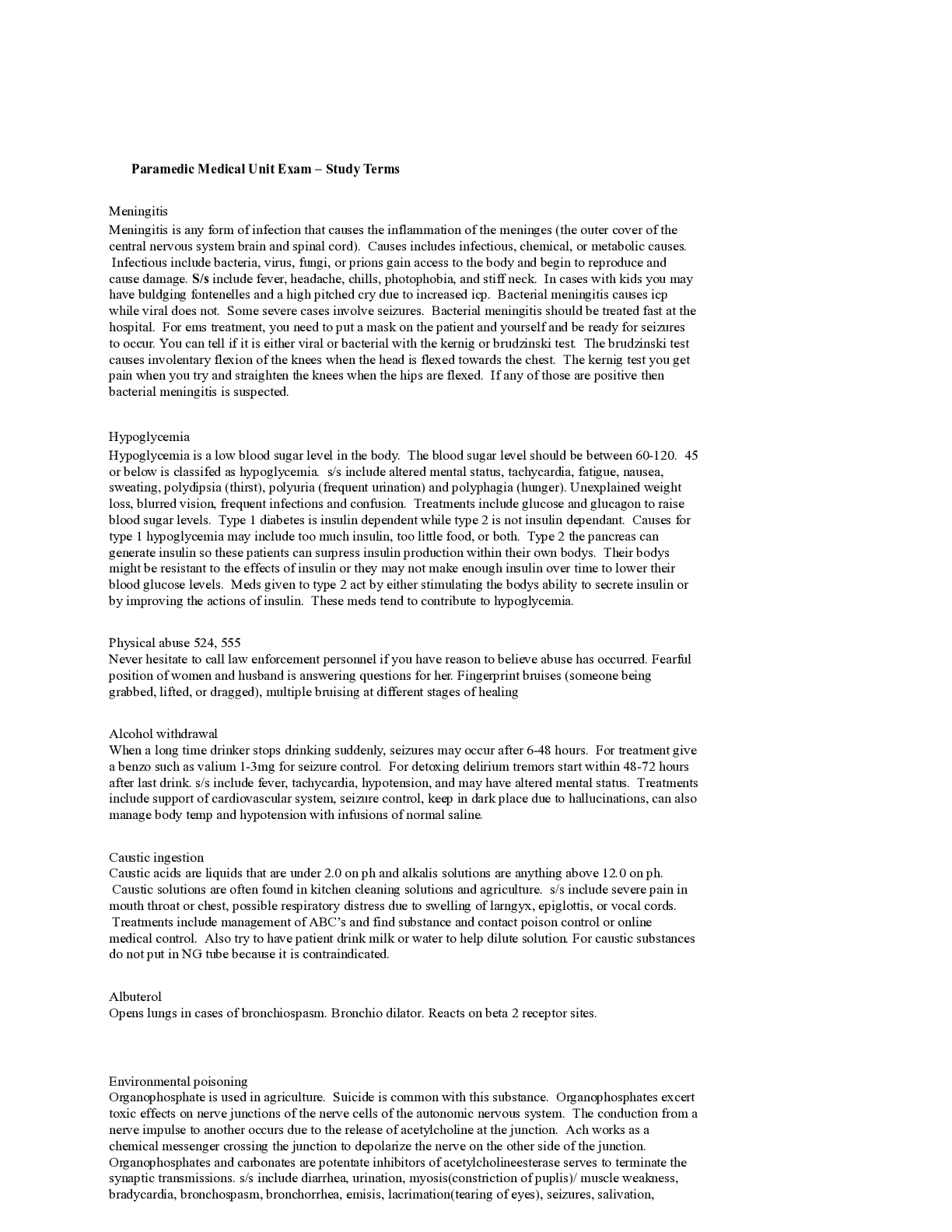
Meningitis is any form of infection that causes the inflammation of the meninges (the outer cover of the
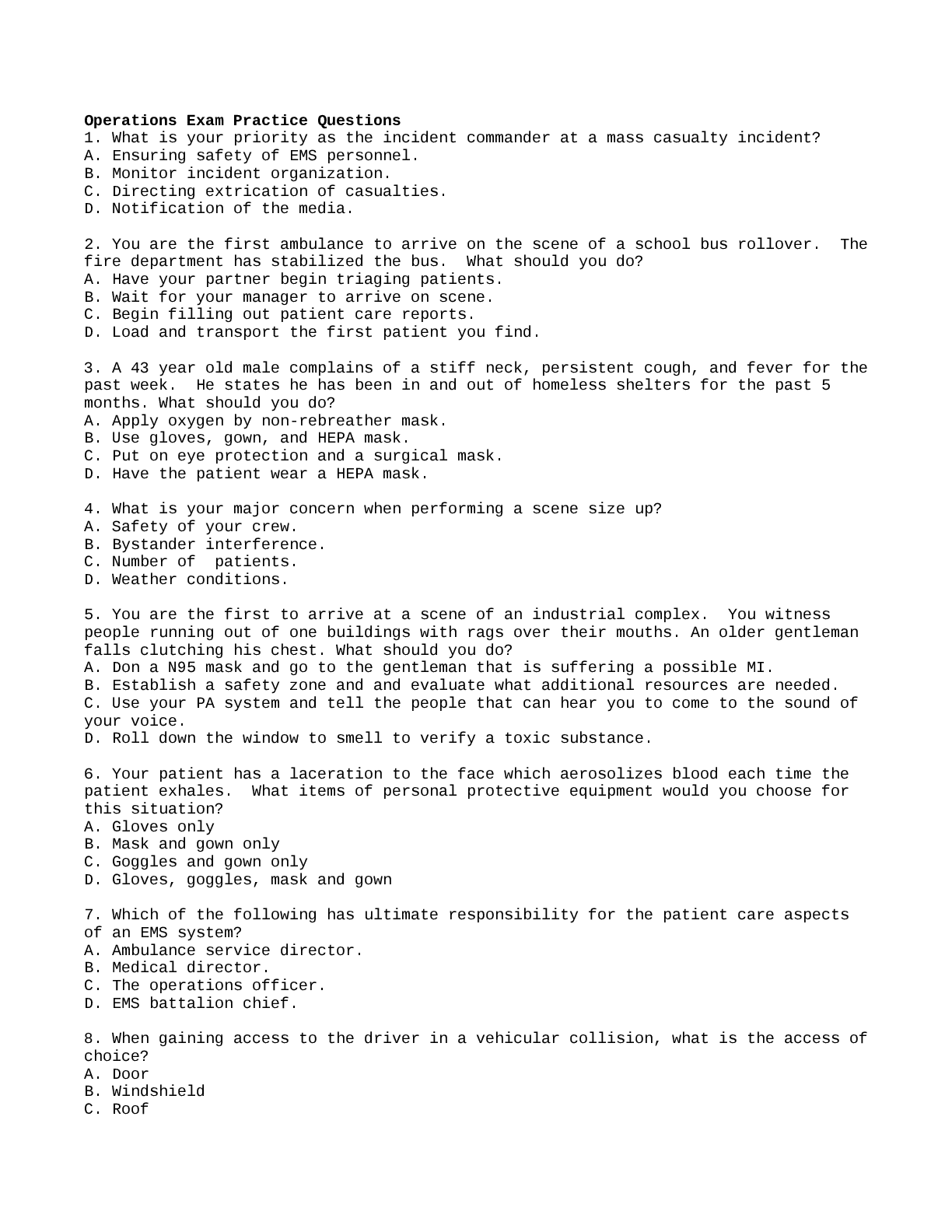
central nervous system brain and spinal cord). Causes inclu
...
Paramedic Medical Unit Exam – Study Terms
Meningitis
Meningitis is any form of infection that causes the inflammation of the meninges (the outer cover of the
central nervous system brain and spinal cord). Causes includes infectious, chemical, or metabolic causes.
Infectious include bacteria, virus, fungi, or prions gain access to the body and begin to reproduce and
cause damage. S/s include fever, headache, chills, photophobia, and stiff neck. In cases with kids you may
have buldging fontenelles and a high pitched cry due to increased icp. Bacterial meningitis causes icp
while viral does not. Some severe cases involve seizures. Bacterial meningitis should be treated fast at the
hospital. For ems treatment, you need to put a mask on the patient and yourself and be ready for seizures
to occur. You can tell if it is either viral or bacterial with the kernig or brudzinski test. The brudzinski test
causes involentary flexion of the knees when the head is flexed towards the chest. The kernig test you get
pain when you try and straighten the knees when the hips are flexed. If any of those are positive then
bacterial meningitis is suspected.
Hypoglycemia
Hypoglycemia is a low blood sugar level in the body. The blood sugar level should be between 60-120. 45
or below is classifed as hypoglycemia. s/s include altered mental status, tachycardia, fatigue, nausea,
sweating, polydipsia (thirst), polyuria (frequent urination) and polyphagia (hunger). Unexplained weight
loss, blurred vision, frequent infections and confusion. Treatments include glucose and glucagon to raise
blood sugar levels. Type 1 diabetes is insulin dependent while type 2 is not insulin dependant. Causes for
type 1 hypoglycemia may include too much insulin, too little food, or both. Type 2 the pancreas can
generate insulin so these patients can surpress insulin production within their own bodys. Their bodys
might be resistant to the effects of insulin or they may not make enough insulin over time to lower their
blood glucose levels. Meds given to type 2 act by either stimulating the bodys ability to secrete insulin or
by improving the actions of insulin. These meds tend to contribute to hypoglycemia.
Physical abuse 524, 555
Never hesitate to call law enforcement personnel if you have reason to believe abuse has occurred. Fearful
position of women and husband is answering questions for her. Fingerprint bruises (someone being
grabbed, lifted, or dragged), multiple bruising at different stages of healing
Alcohol withdrawal
When a long time drinker stops drinking suddenly, seizures may occur after 6-48 hours. For treatment give
a benzo such as valium 1-3mg for seizure control. For detoxing delirium tremors start within 48-72 hours
after last drink. s/s include fever, tachycardia, hypotension, and may have altered mental status. Treatments
include support of cardiovascular system, seizure control, keep in dark place due to hallucinations, can also
manage body temp and hypotension with infusions of normal saline.
Caustic ingestion
Caustic acids are liquids that are under 2.0 on ph and alkalis solutions are anything above 12.0 on ph.
Caustic solutions are often found in kitchen cleaning solutions and agriculture. s/s include severe pain in
mouth throat or chest, possible respiratory distress due to swelling of larngyx, epiglottis, or vocal cords.
Treatments include management of ABC’s and find substance and contact poison control or online
medical control. Also try to have patient drink milk or water to help dilute solution. For caustic substances
do not put in NG tube because it is contraindicated.
[Show More]