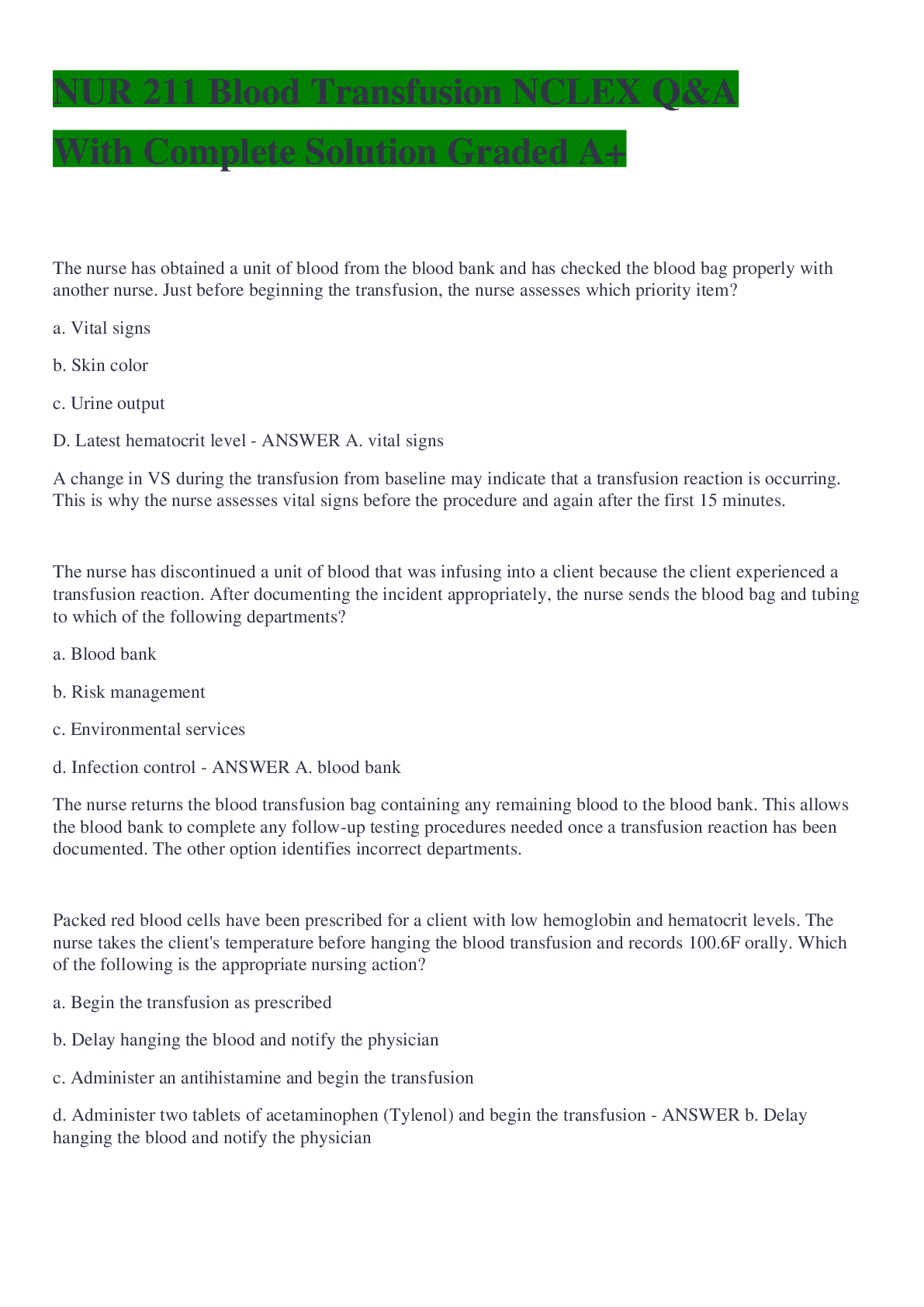
The nurse has obtained a unit of blood from the blood bank and has checked the blood bag properly with another nurse. Just before the beginning transfusion, the nurse assesses which of the following items?
A. Vital sign
...
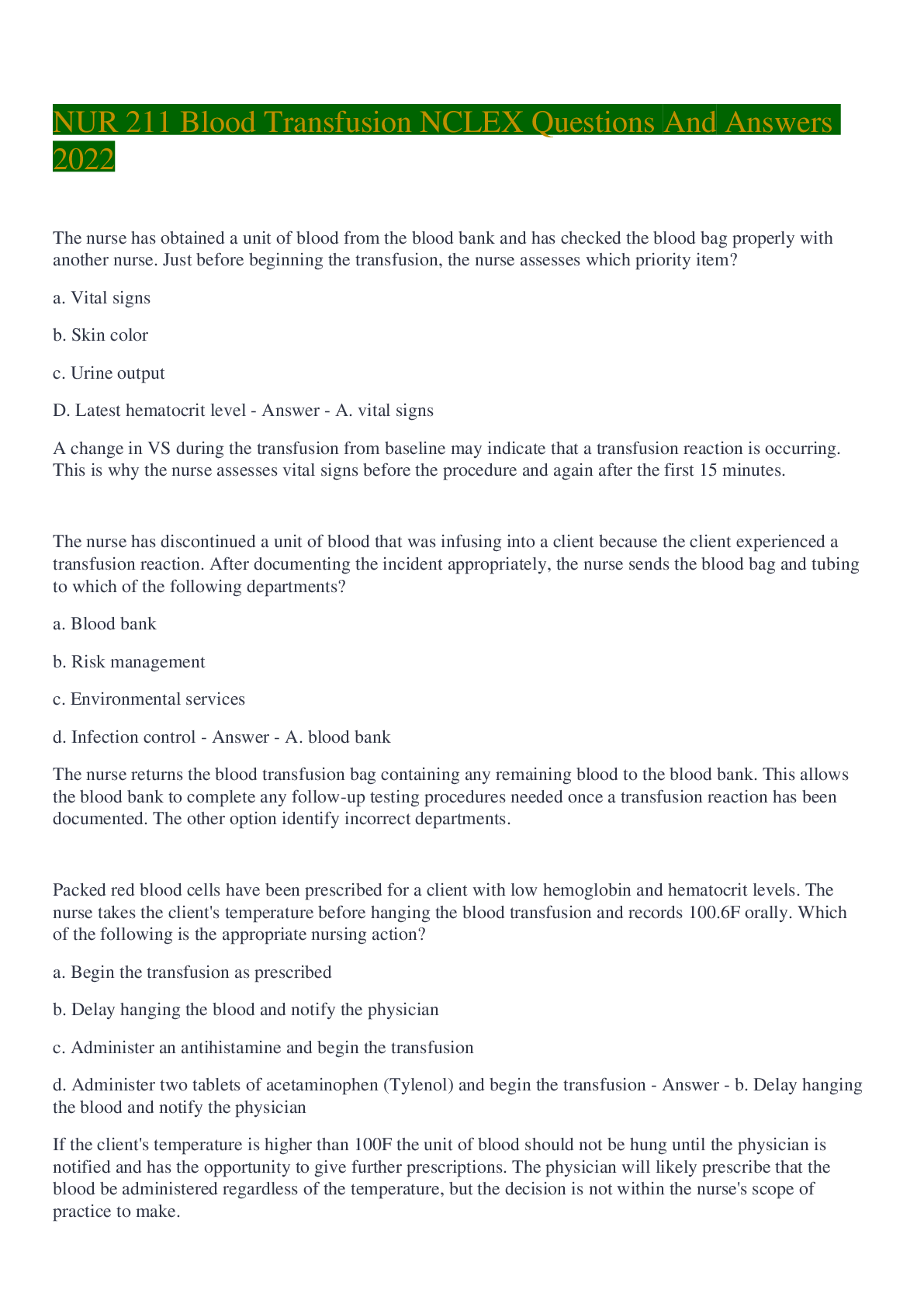
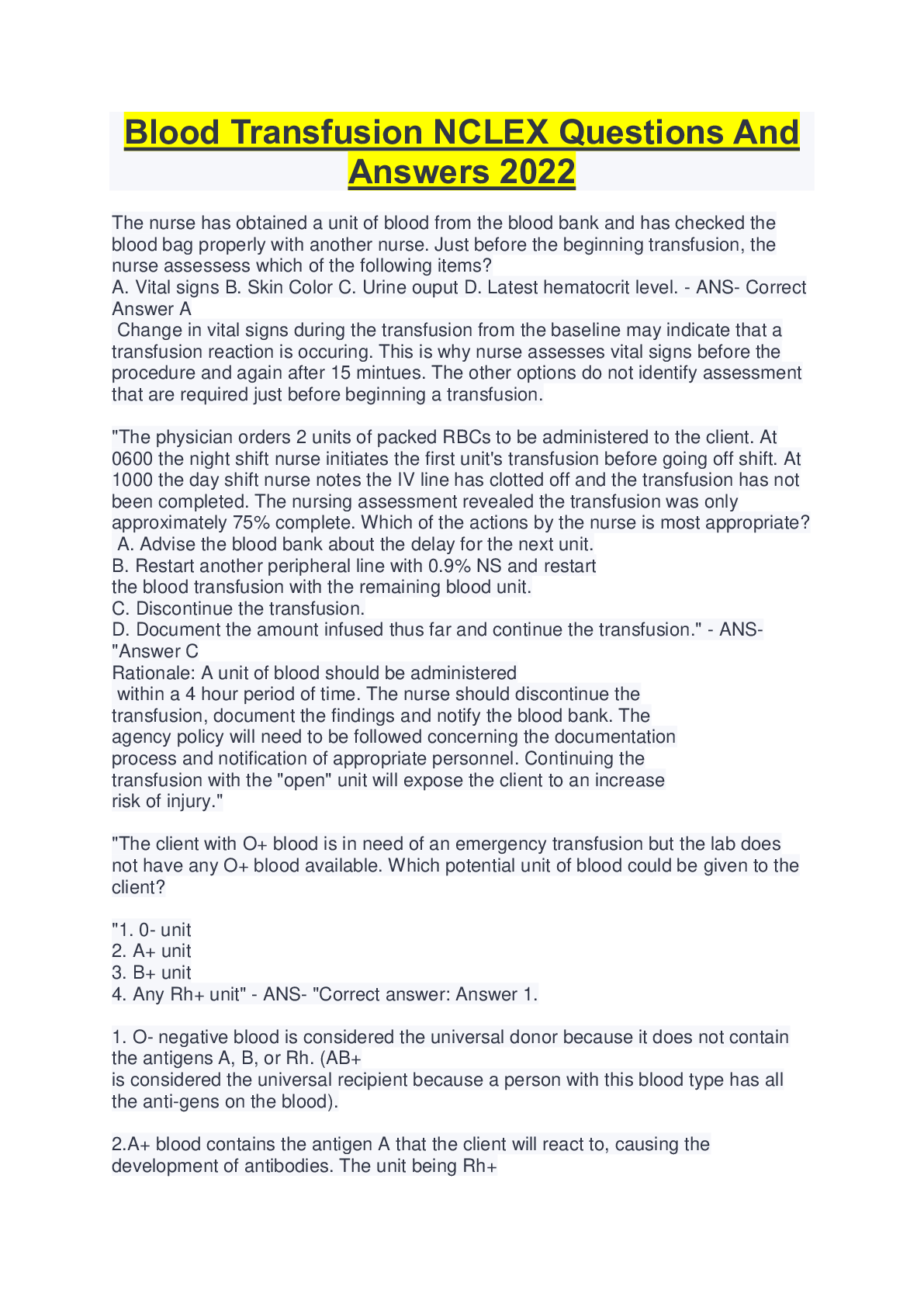
The nurse has obtained a unit of blood from the blood bank and has checked the blood bag properly with another nurse. Just before the beginning transfusion, the nurse assesses which of the following items?
A. Vital signs B. Skin Color C. Urine output D. Latest hematocrit level. - ANSWER Correct Answer A
Change in vital signs during the transfusion from the baseline may indicate that a transfusion reaction is occurring. This is why nurse assesses vital signs before the procedure and again after 15 minutes. The other options do not identify assessment that are required just before beginning a transfusion.
"The physician orders 2 units of packed RBCs to be administered to the client. At 0600 the night shift nurse initiates the first unit's transfusion before going off shift. At 1000 the day shift nurse notes the IV line has clotted off and the transfusion has not been completed. The nursing assessment revealed the transfusion was only approximately 75% complete. Which of the actions by the nurse is most appropriate?
A. Advise the blood bank about the delay for the next unit.
B. Restart another peripheral line with 0.9% NS and restart
the blood transfusion with the remaining blood unit.
C. Discontinue the transfusion.
D. Document the amount infused thus far and continue the transfusion." - ANSWER "Answer C
Rationale: A unit of blood should be administered
within a 4 hour period of time. The nurse should discontinue the
transfusion, document the findings and notify the blood bank. The
agency policy will need to be followed concerning the documentation
process and notification of appropriate personnel. Continuing the
transfusion with the "open" unit will expose the client to an increase
risk of injury."
"The client with O+ blood is in need of an emergency transfusion but the lab does not have any O+ blood available. Which potential unit of blood could be given to the client?
"1. 0- unit
2. A+ unit
3. B+ unit
4. Any Rh+ unit" - ANSWER "Correct answer: Answer 1.
1. O- negative blood is considered the universal donor because it does not contain the antigens A, B, or Rh. (AB+
is considered the universal recipient because a person with this blood type has all the anti-gens on the blood).
2.A+ blood contains the antigen A that the client will react to, causing the development of antibodies. The unit being Rh+
is compatible with the client.
3.B+ blood contains the antigen B that the client will react to, causing the development of anti-bodies. The unit being Rh+
is compatible with the client.
4.This client does not have antigens A or B on the blood. Administration of these types would cause an antigen/antibody reaction within the client's body, resulting in a massive hemolysis of the client's blood and death."
About ten minutes after the nurse begins an infusion of packed RBCs, the patient complains of chills, chest and back pain, and nausea. His face is flushed, and he's anxious. Which is the priority nursing action?
1. Administering antihistamines STAT for an allergic reaction.
2. Notifying the physician of a possible transfusion reaction.
3. Obtaining a urine and serum specimen to send to the lab immediately.
4. Stopping hte transfusion and maintaining a patent IV catheter." - ANSWER The correct answer is 4. The patietn is experiencing a transfusion reaction. The immediate nursing action is to stop the transfusion and maintain a patent IV line. The other options may be indicated but aren't the priority in this case.
"The nurse is administering packed red blood cells (PRBCs) to a client. The nurse should first:
"1. Discontinue the I.V. catheter if a blood transfusion reaction occurs.
2. Administer the PRBCs through a percutaneously inserted central
catheter line with a 20-gauge needle. 3. Flush PRBCs with 5% dextrose
and 0.45% normal saline solution. 4. Stay with the client during the
first 15 minutes of infusion. - ANSWER Correct: 4
The most likely time for a blood transfusion reaction to occur is during the first 15 minutes or first 50 mL of the infusion. If a blood transfusion reaction does occur, it is imperative to keep an established I.V. line so that medication can be administered to prevent or treat cardiovascular collapse in case of anaphylaxis. PRBCs should be administered through a 19-gauge or larger needle; a peripherally inserted central catheter line is not recommended, in order to avoid a slow flow. RBCs will hemolyze in dextrose or lactated Ringer's solution and should be infused with only normal saline solution.
". A unit of packed red blood cells has been prescribed for a client with low hemoglobin and hematocrit levels. The nurse notifies the blood bank of the order, and a blood specimen is drawn from the client for typing and cross-matching. The nurse receives a telephone call from the blood bank and is informed that he unit of blood is ready for administration. Arrange the actions in order of priority that the nurse should take to administer the blood. (Letter A is the first and letter F is the last action.)
a) hang the bag of blood
[Show More]



.png)