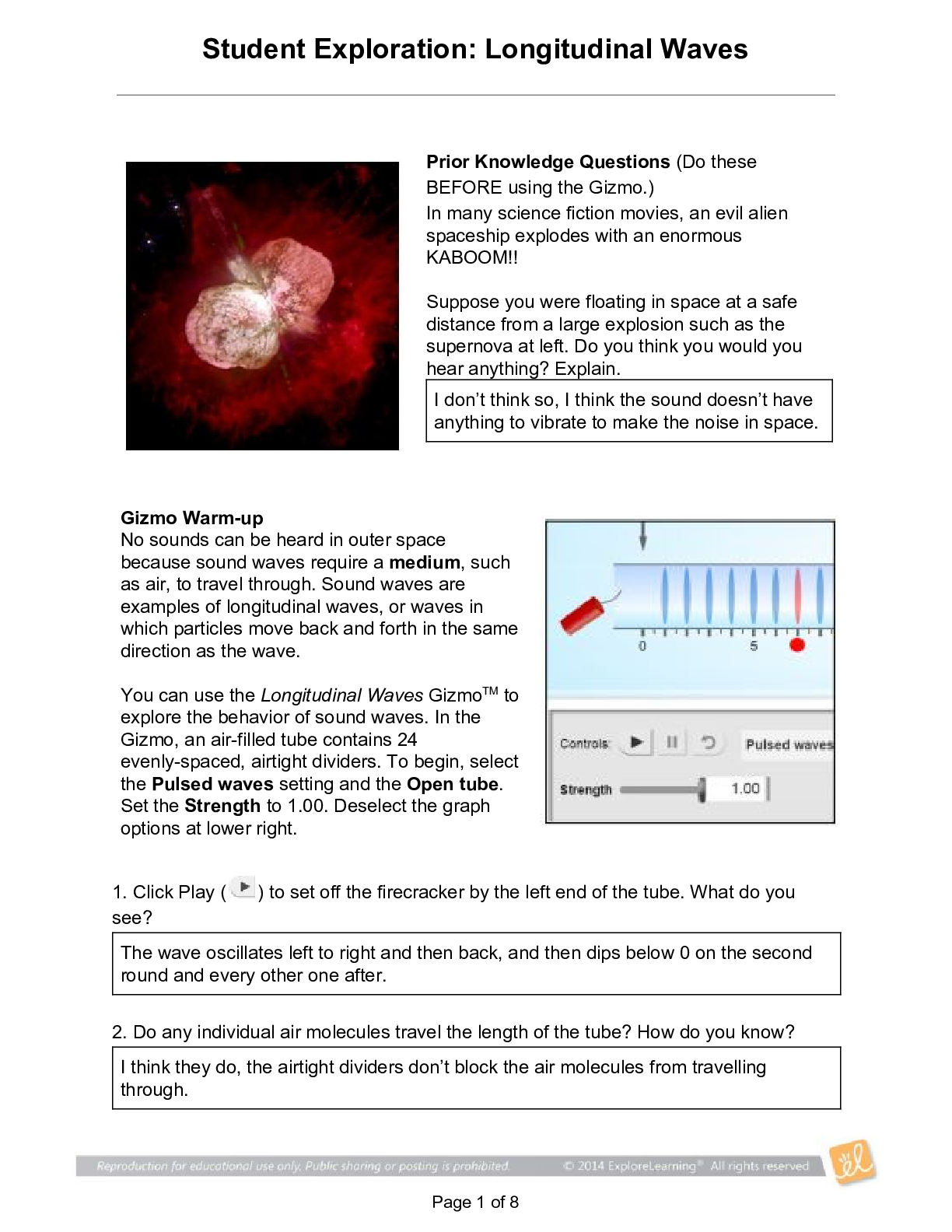
Longitidinal Waves Gizmo | with 100% correct answers | 9 pages
Document Content and Description Below
Vocabulary: antinode, compression, displacement, frequency, interference, longitudinal wave,
medium, node, rarefaction, standing wave
Prior Knowledge Question (Do this BEFORE using
the Gizmo.)
In many science fiction
...
[Show More]
Last updated: 3 years ago
Preview 1 out of 9 pages
Instant download

Buy this Document to get the Full Access Instantly
Provided by Students Who Aced it
We Verify Document Content to Gurantee Accuracy
Reviews( 0 )
Document information
Connected school, study & course
About the document
Uploaded On
Aug 25, 2022
Number of pages
9
Written in
All

Additional information
This document has been written for:
Uploaded
Aug 25, 2022
Downloads
0
Views
442
Document Keyword Tags
Recommended For You
Get more on GIZMOS »



$11
8 Pages
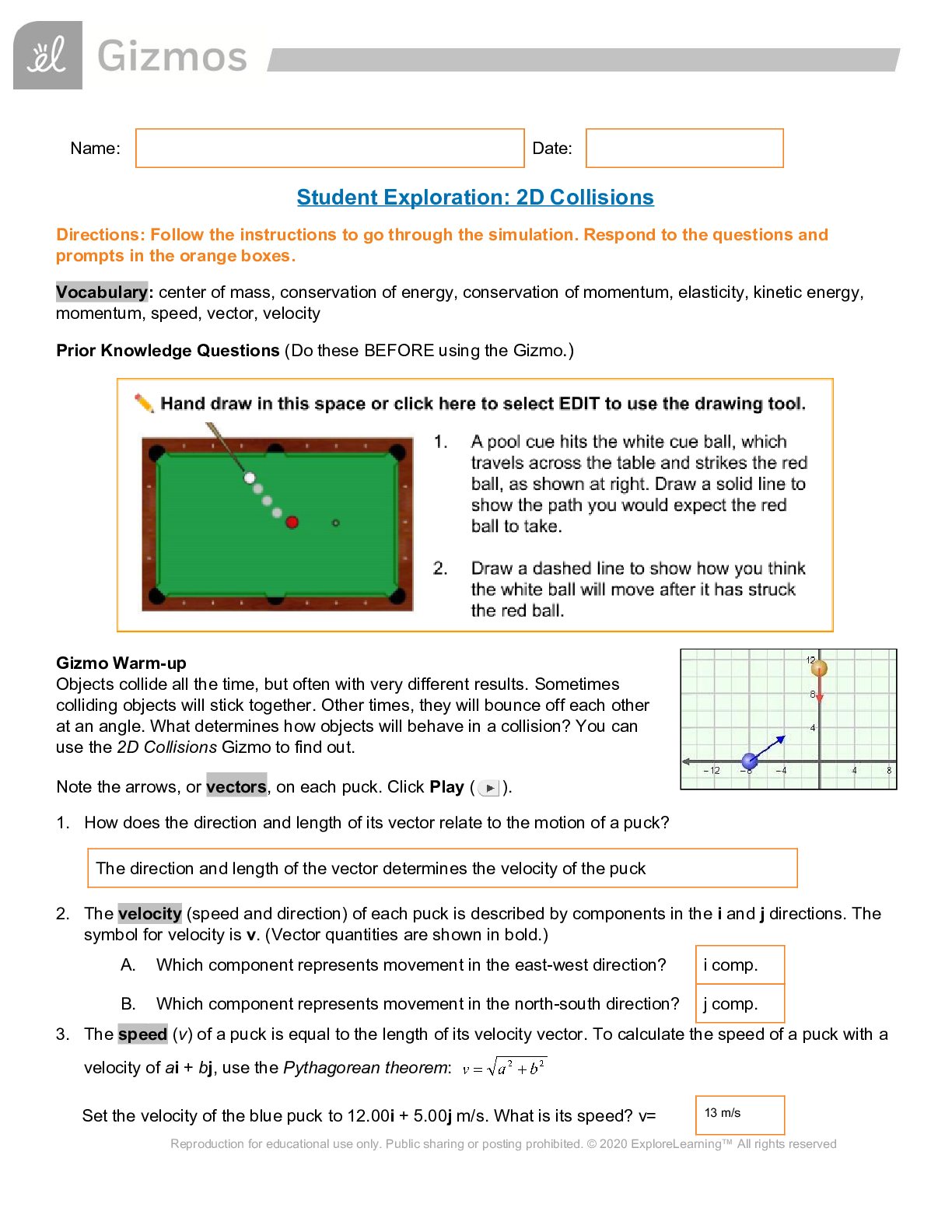
2D Collisions GIZMO ( VERIFIED ANSWERS, 100% CORRECT ) DOWNLOA...
$22
713 Pages
Test Bank for Physics for Scientists and Engineers A Strategic...

$25
100 Pages
Plasma Physics, 2e by Richard Fitzpatrick (Solutions Manual)

$25
79 Pages
A Concise Introduction to Thermodynamics for Physicists, 1e by...
.png)
$25
19 Pages
How Things Work The Physics of Everyday Life, 6e Louis Bloomfi...
More related documents below

 (1).png)

.png)

.png)

.png)

