CFT FINAL EXAM
Document Content and Description Below
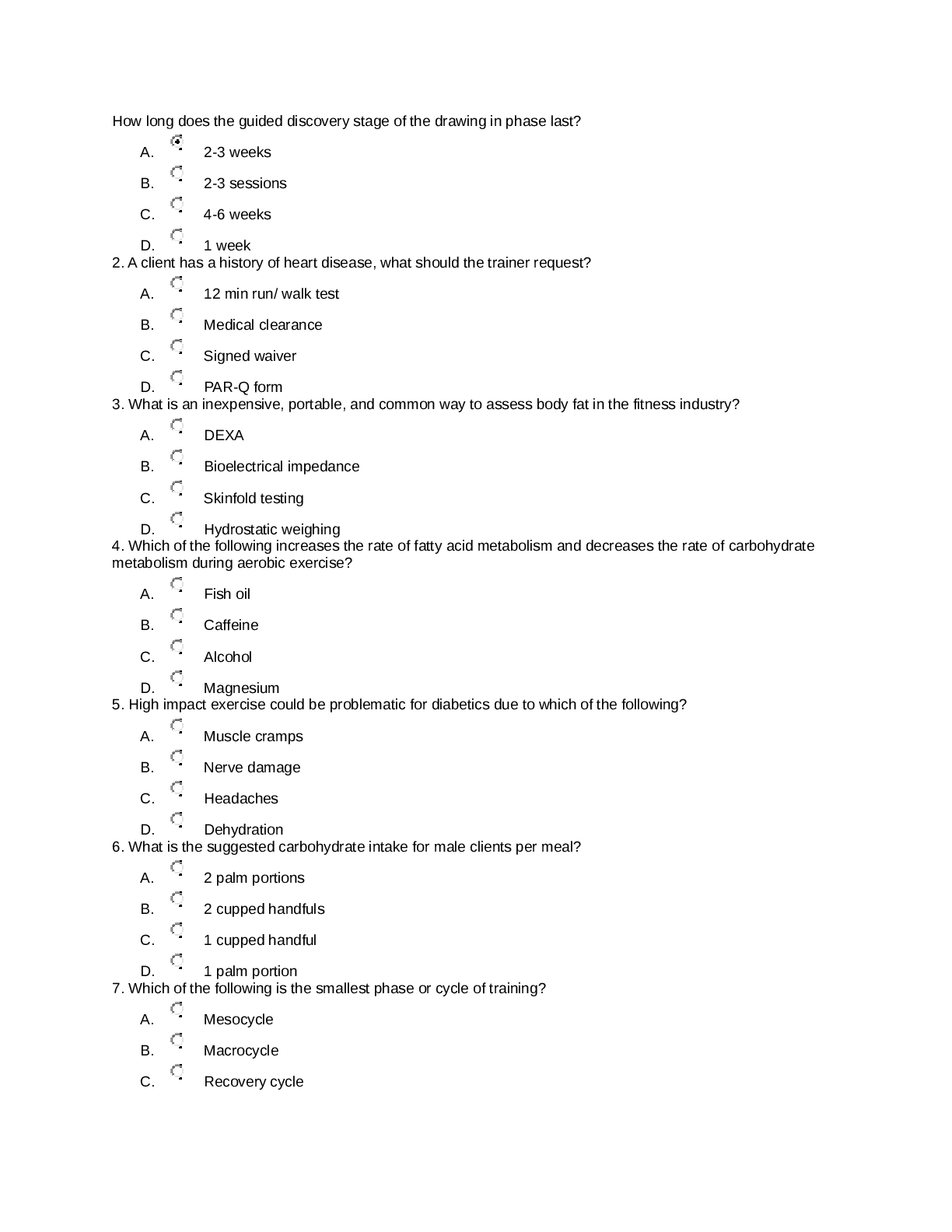
1. How long does the guided discovery stage of the drawing in phase last? A. 2-3 weeks B. 2-3 sessions C. 4-6 weeks D. 1 week 2. A client has a history of heart disease, what should the trainer r ... equest? A. 12 min run/ walk test B. Medical clearance C. Signed waiver D. PAR-Q form 3. What is an inexpensive, portable, and common way to assess body fat in the fitness industry? A. DEXA B. Bioelectrical impedance C. Skinfold testing D. Hydrostatic weighing 4. Which of the following increases the rate of fatty acid metabolism and decreases the rate of carbohydrate metabolism during aerobic exercise? A. Fish oil B. Caffeine C. Alcohol D. Magnesium 5. High-impact exercise could be problematic for diabetics due to which of the following? A. Muscle cramps B. Nerve damage C. Headaches D. Dehydration 6. What is the suggested carbohydrate intake for male clients per meal? A. 2 palm portions B. 2 cupped handfuls C. 1 cupped handful D. 1 palm portion 7. Which of the following is the smallest phase or cycle of training? A. Mesocycle B. Macrocycle C. Recovery cycleD. Microcycle 8. Which muscle fiber type is best for competing in a triathlon? A. Type I B. Type II C. Type IIA D. Type III 9. Which of the following are the building blocks of protein? A. Fatty acids B. Amino acids C. Ribonucleic acids D. Alpha-linolenic acids 10. Which of the following measures exercise intensity? A. Rate of perceived exertion B. Daily caloric intake C. Basal metabolic rate D. Heinneman's Size Principle 11. Which of the following is total energy expenditure? A. Sum of a client's resting metabolic rate, physical activity, and thermic effect of food B. A client's resting metabolic rate minus physical activity C. A client's resting metabolic rate minus the thermic effect of food D. Sum of a client's resting metabolic rate, sedentary activity, and thermic effect of food 12. Which type of muscle arrangement runs parallel to the longitudinal axis of the muscle? A. Parallel B. Unipennate C. Triangular D. Fusiform 13. Which of the following is the recommended exercise intensity level for a client with Type I diabetes? A. Less than 40% MHR B. 40-54% MHR C. 55-85% MHR D. More than 86% of MHR 14. Obesity and stress are confirmed risk factors for which of the following? A. Arthritis B. Coronary heart disease C. Type II diabetes. Kidney disease 15. Fat-soluble vitamins include A, D, E, and which of the following? A. B B. C C. K D. H [Show More]
Last updated: 3 years ago
Preview 1 out of 31 pages
Buy this document to get the full access instantly
Instant Download Access after purchase
Buy NowInstant download
We Accept:

Reviews( 0 )
$7.00
Can't find what you want? Try our AI powered Search
Document information
Connected school, study & course
About the document
Uploaded On
Aug 25, 2022
Number of pages
31
Written in
All

Additional information
This document has been written for:
Uploaded
Aug 25, 2022
Downloads
0
Views
58