Biology  >  EXAM  >  BIOS 255 Unit 4 Midterm Exam - Latest Complete Solution Guide; DeVry University, Chicago (All)

BIOS 255 Unit 4 Midterm Exam - Latest Complete Solution Guide; DeVry University, Chicago

Document Content and Description Below

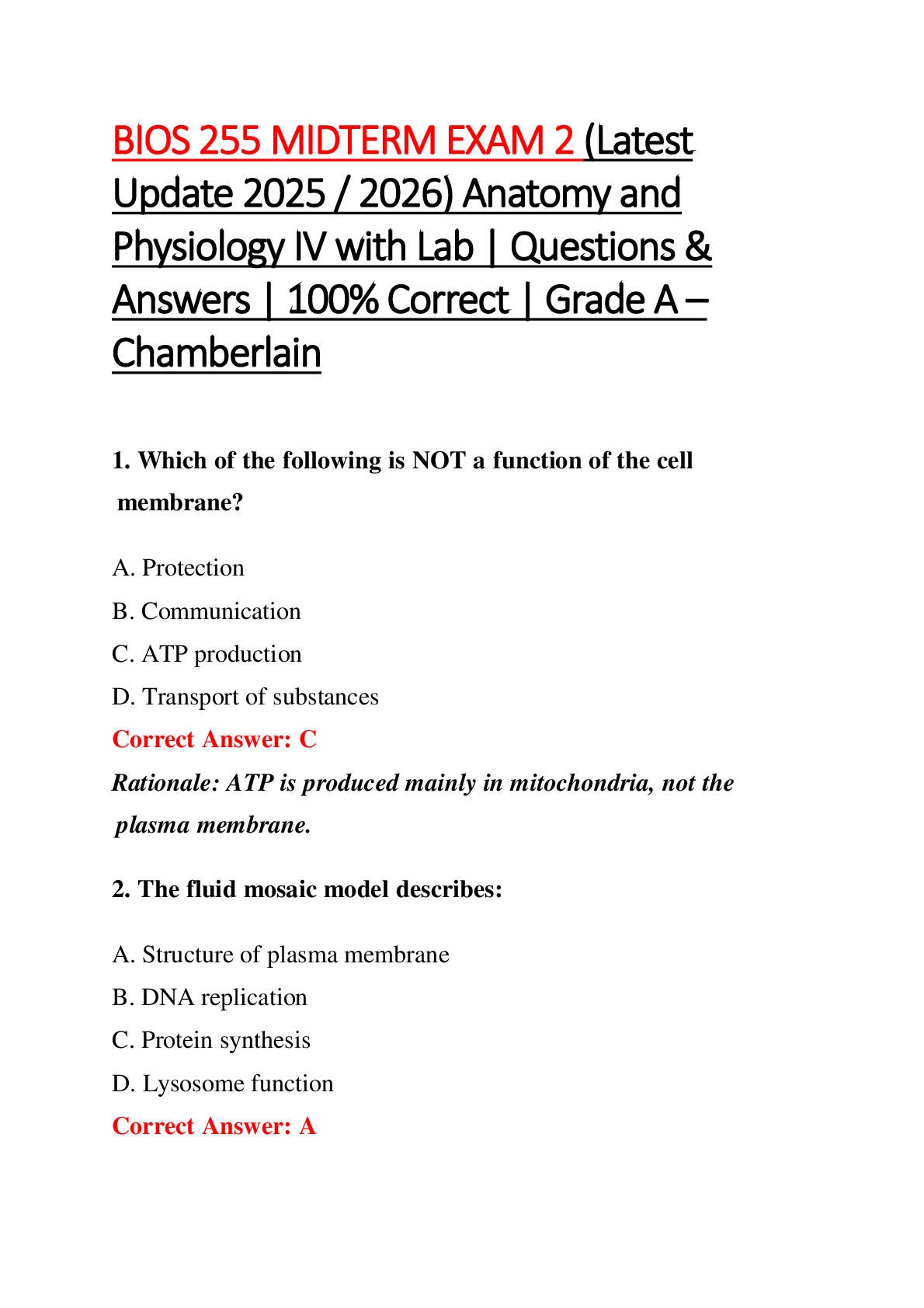
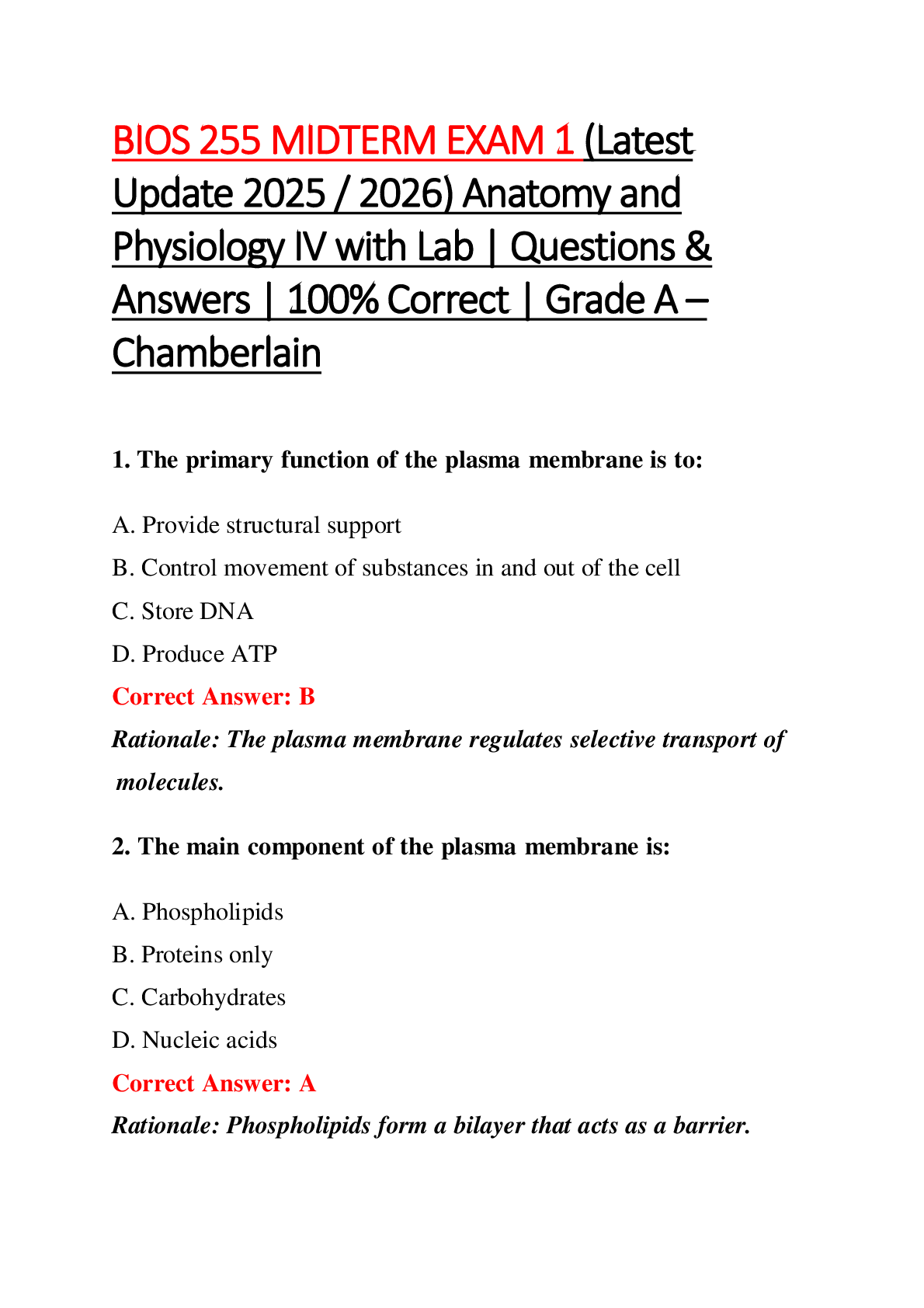
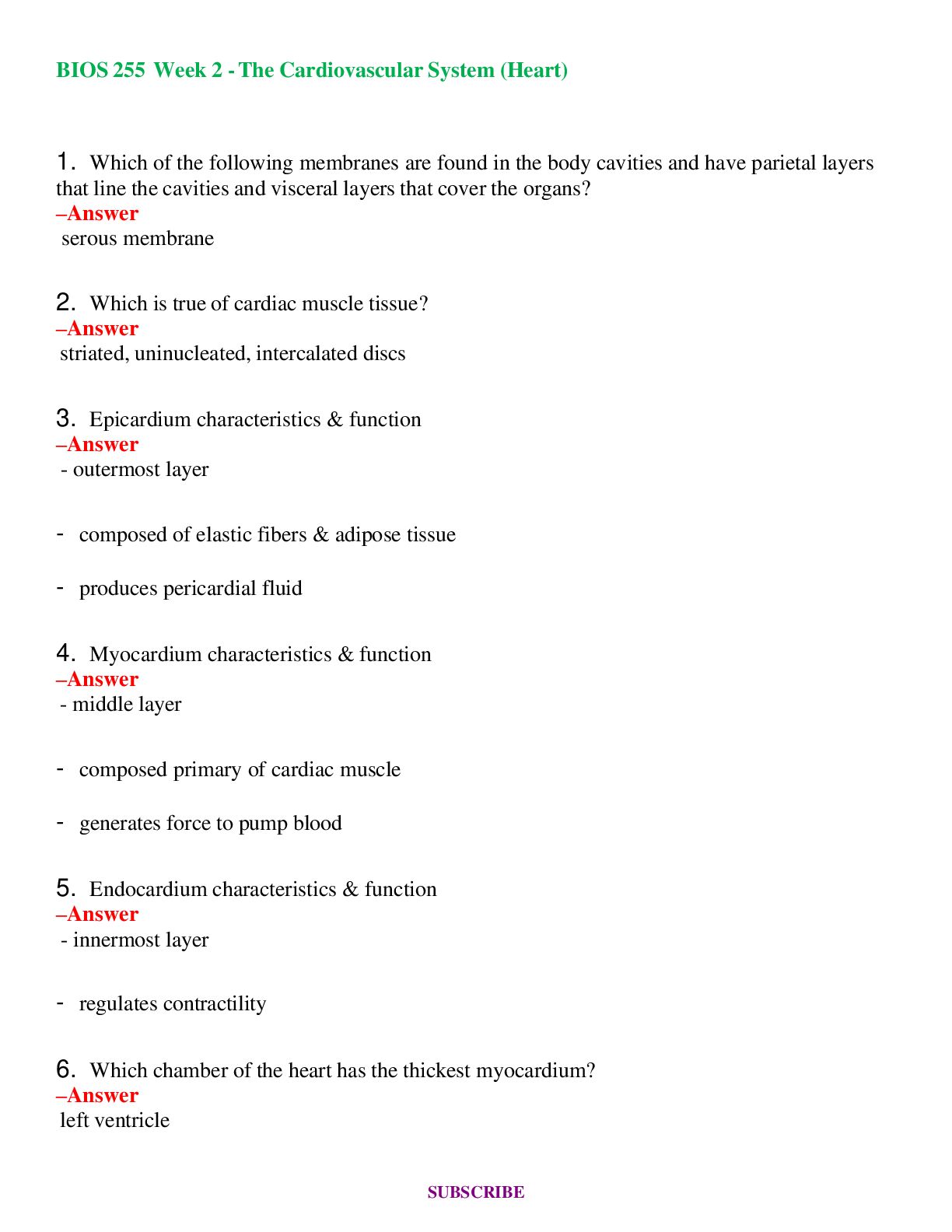
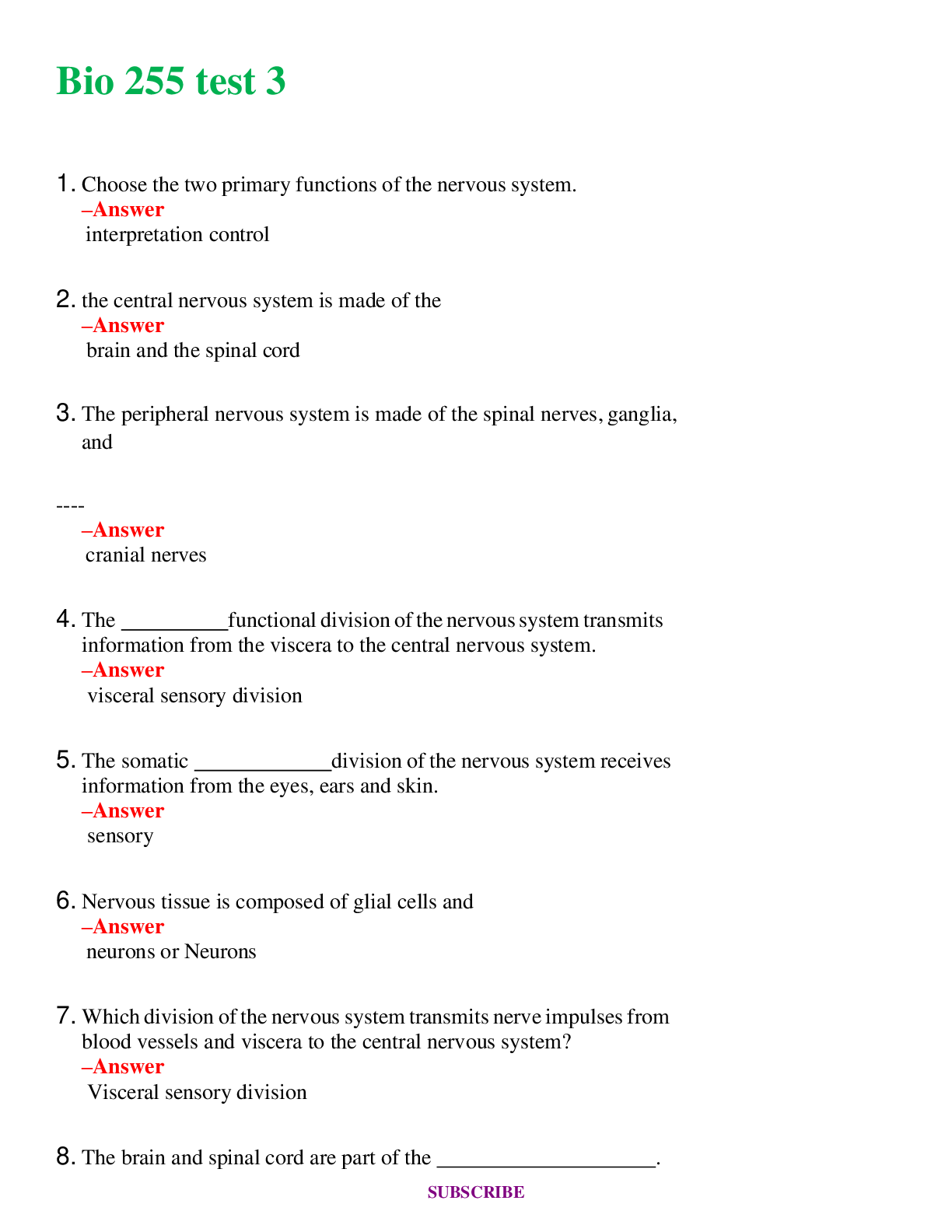
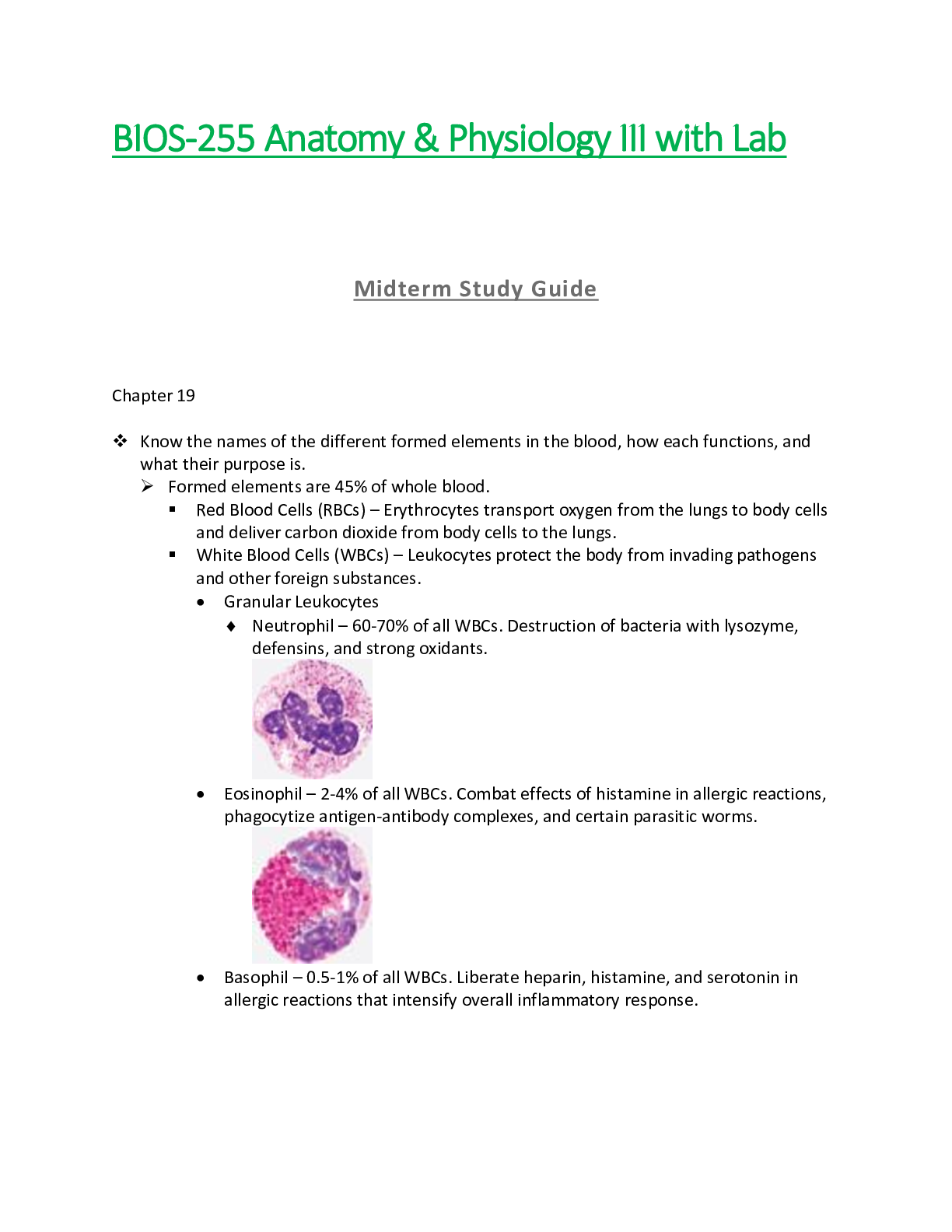
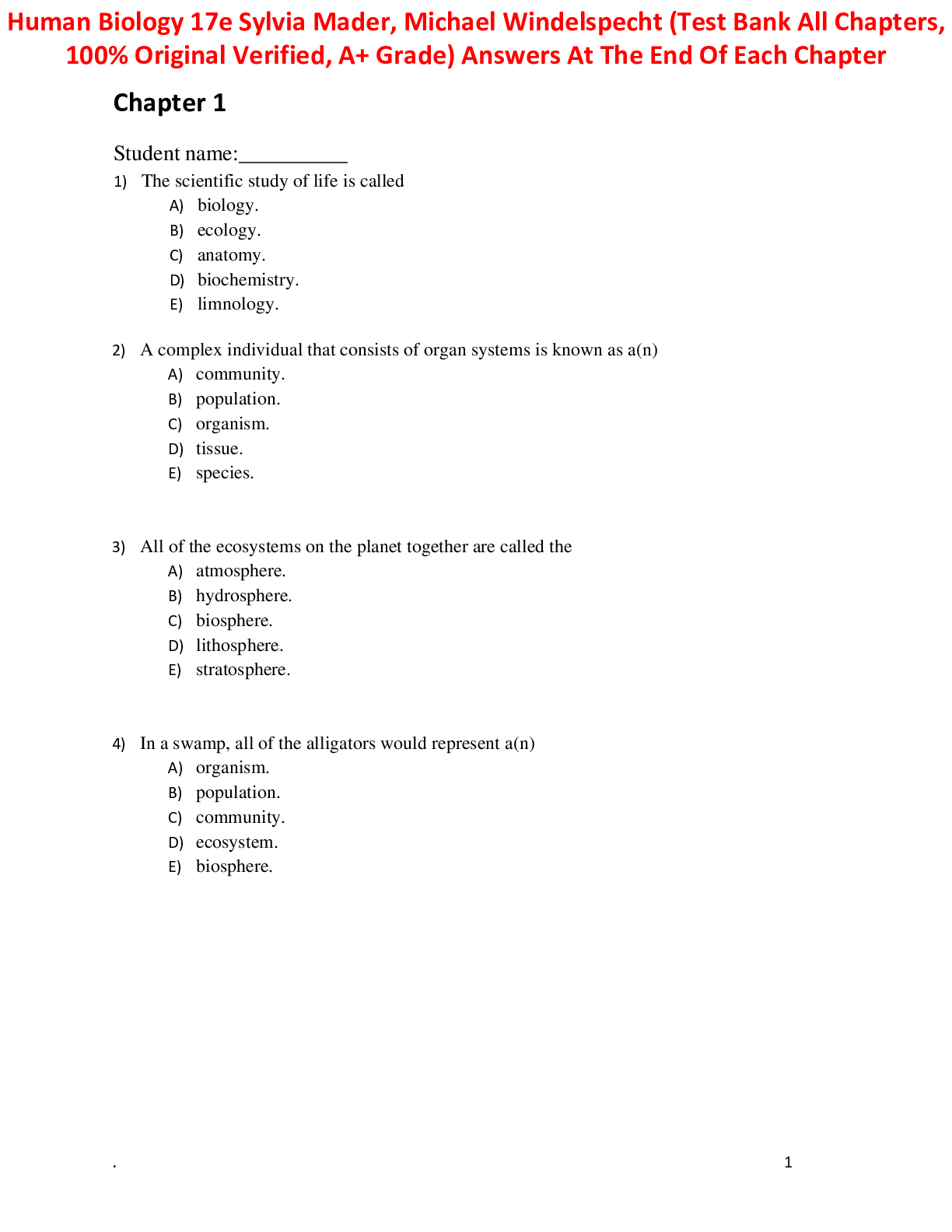
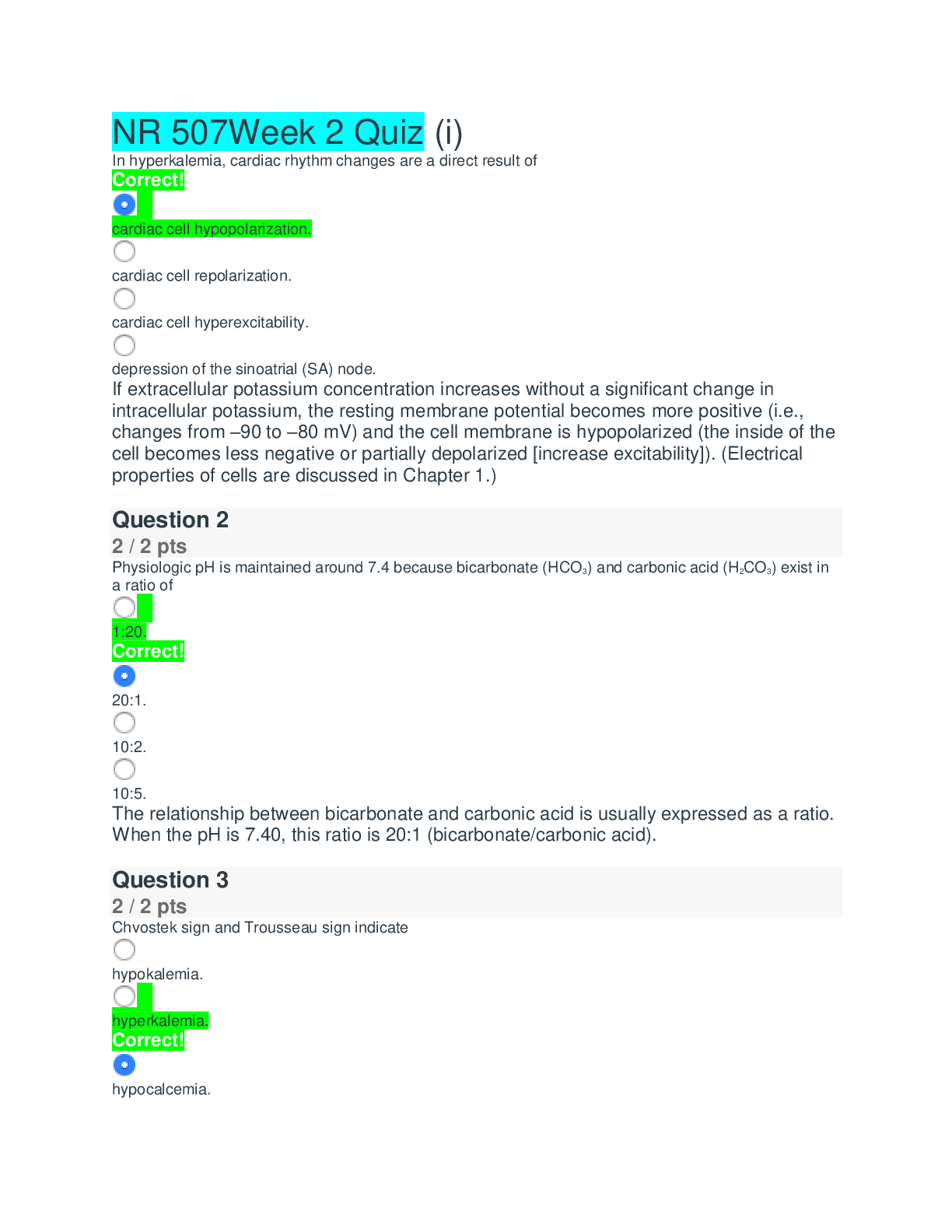
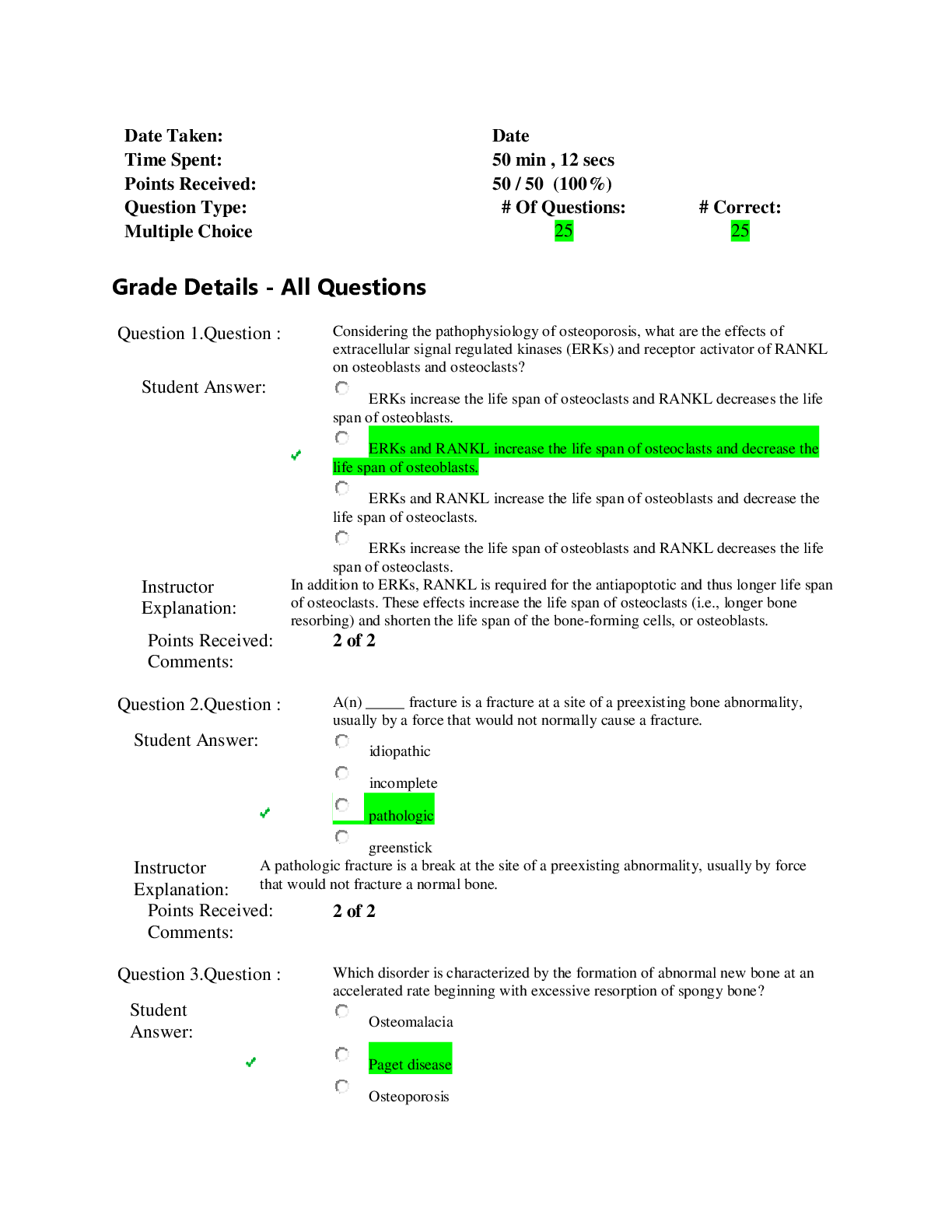
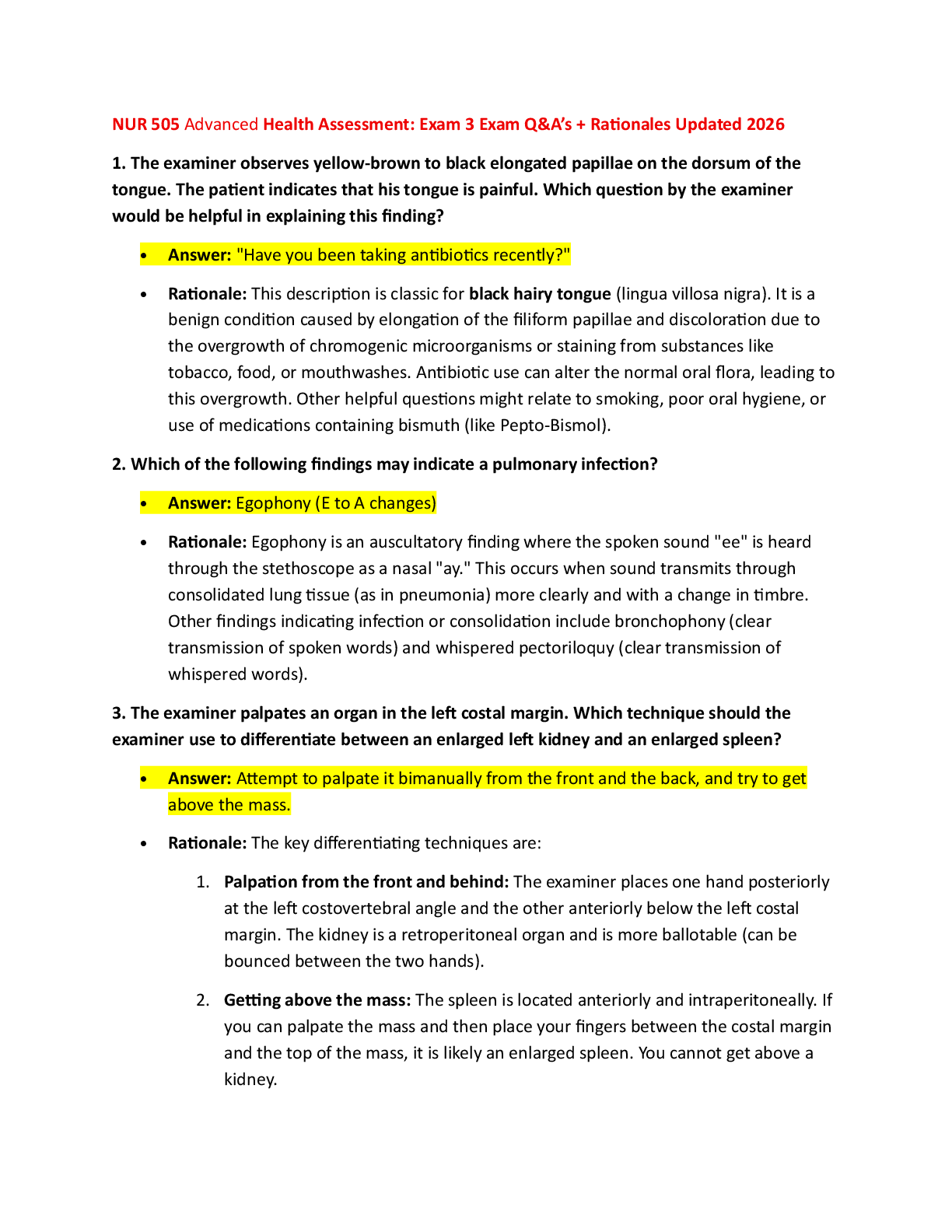
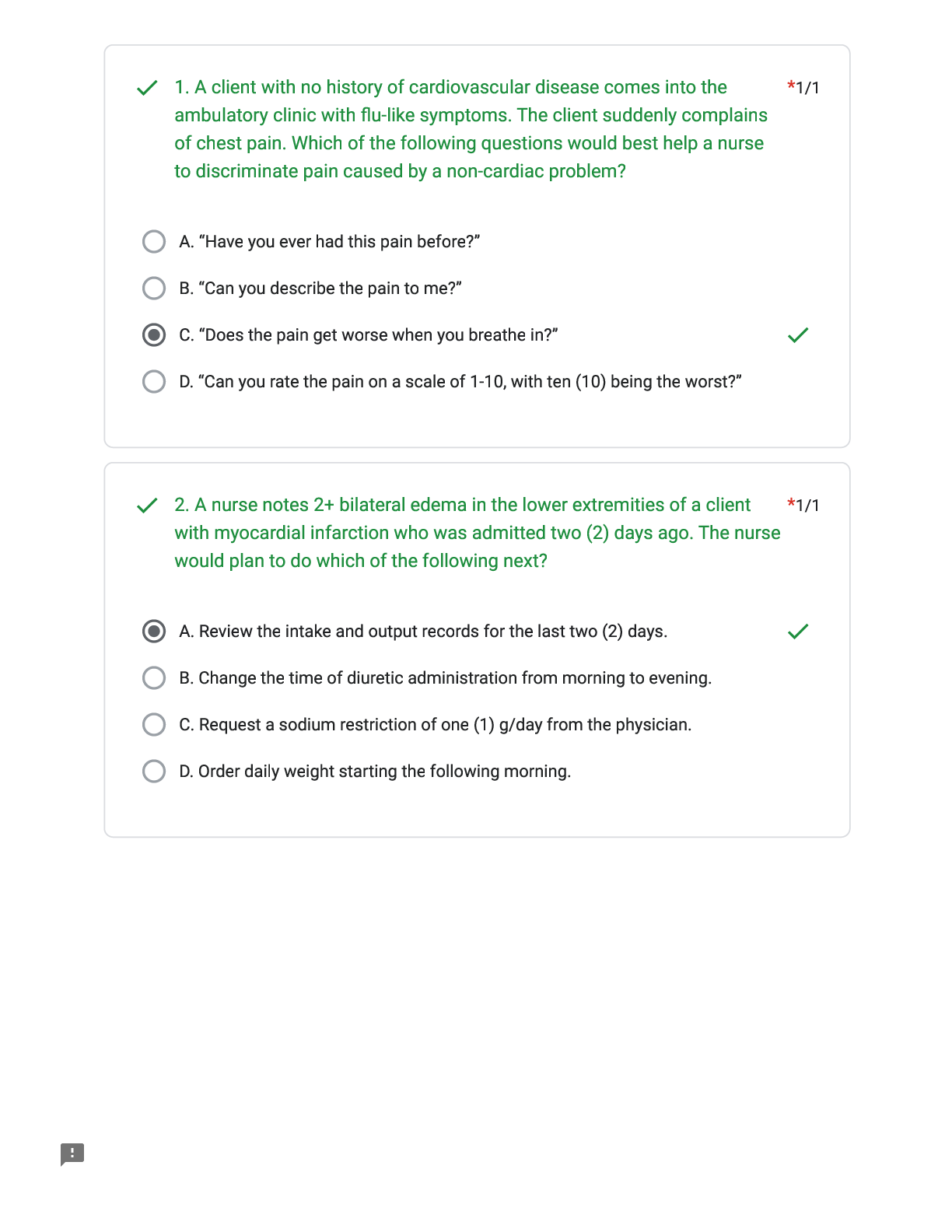
BIOS 255 Unit 4 Midterm Exam 1. Question : (TCO3) Which of the following is a major function of blood? 2. Question : (TCO3) Which of the following blood types is a person whose blood cells were ... not agglutinated by anti-A serum, anti-B serum, and anti-Rh serum 3. Question : (TCO3) Which of the following formed elements in blood are removed by fixed macrophages in the spleen and liver after about 4 months in the circulation? 4. Question : (TCO3) A condition in which inadequate intake of vitamin B12 or folic acid cause production of large abnormal red blood cells is called 5. Question : (TCO3) Lymph is 6. Question : (TCO3) Which of the following precursor cells give rise to granular leukocytes? 7. Question : (TCO3) Which of the following substances is an anticoagulant formed by mast cells and basophils? 8. Question : (TCO3) Myeloid stem cells reside in 9. Question : (TCO1) The membrane that surrounds and protects the heart is called the 10. Question : (TCO1) Stimulation of the sympathetic output to the heart would lead to 11. Question : (TCO1) Which of the following hormones do not increase the heart rate? 12. Question : (TCO1) The difference between a person’s maximum cardiac output and resting cardiac output is called the 13. Question : (TCO1) The remnant of the foramen ovale in the adult heart is the 14. Question : (TCO1) Which of the following chambers of the heart is surrounded by the thickest layer of myocardium? 15. Question : (TCO1) Which of the following electrocardiogram (ECG) waves represents ventricular repolarization? 16. Question : (TCO1) Elevated levels of _____ in the blood lead to reduced heart rate. 17. Question : (TCO1) Which layer of the heart is the major contributor to the pumping action of the heart? 18. Question : (TCO2) Which of the following categories of hypertensive drugs lower blood pressure by blocking the formation of angtiotensin II, which results in vasodilation and decreased aldosterone secretion? 19. Question : (TCO2) Which of the following categories would an individual with a blood pressure of 130/85 be placed in? 20. Question : (TCO2) Which of the following effectors would NOT be activated as described below in response to hypovolemic shock? 21. Question : (TCO2) Which of the following types of blood vessels have high pulsing blood pressure? 22. Question : (TCO2) During embryonic development, blood cells are formed from 23. Question : (TCO2) Fenestrated capillaries that have small pores are commonly found in the 24. Question : (TCO2) Which of the following structures are found in veins but NOT in arteries? 25. Question : (TCO2) The largest driving force for pulling fluid from the interstitial spaces back into the capillaries is: 26. Question : (TCO3) What is the pulse pressure of a person that has a diastolic pressure of 60 mm Hg with a systolic pressure of 125 mm Hg? 27. Question : (TCO3) Determine the mean arterial pressure for a patient with an average systolic pressure of 120 mm Hg with a mean diastolic pressure of 60 mm Hg: 28. Question : (TCO3) What is the resting cardiac output (in liters) of an athlete with a stroke volume of 75 ml and a resting heart rate of 60 beats/minute? 29. Question : (TCO3) The same athlete during exercise has a heart rate of 180 beats/minute with an increase of stroke volume to 125 ml. What is their cardiac output during exercise? 30. Question : (TCO3) What is the cardiac cycle for a person with a resting heart rate of 66 beats per minute? 31. Question : (TCO3) What is the name of the blood vessel that supplies the face and head (except the brain) with oxygenated blood? 32. Question : (TCO3) What is the name of the blood vessel that is the distal extension of the external iliac artery as it enters the leg? 33. Question : (TCO3) What is the name of the blood vessel that drains deoxygenated blood from the medial aspect of the forearm? 34. Question : (TCO3) What is the name of the vein that is found behind the kneecap on the posterior surface of the leg? 35. Question : (TCO3) What is the name of this blood vessel that is highlighted? 36. Question : (TCO3) List and briefly describe the three mechanisms used to reduce blood loss from a damaged blood vessel. 37. Question : (TCO1) Define arrhythmia and discuss different categories of arrhythmias. 38. Question : (TCO2) What is a portal vein? Describe the hepatic portal circulation and its functional significance [Show More]

Last updated: 1 year ago

Preview 4 out of 14 pages

Buy Now

Instant download

We Accept:

Payment methods accepted on Scholarfriends (We Accept)
Loading document previews for BIOS 255 Unit 4 Midterm Exam - Latest Complete Solution Guide; DeVry University, Chicago

Loading document previews ...

Buy this document to get the full access instantly

Instant Download Access after purchase

Buy Now

Instant download

We Accept:

Payment methods accepted on Scholarfriends (We Accept)

Reviews( 0 )

$10.00

Buy Now

We Accept:

Payment methods accepted on Scholarfriends (We Accept)

Instant download

Can't find what you want? Try our AI powered Search

205
0

Document information


Connected school, study & course


About the document


Uploaded On

Jan 10, 2020

Number of pages

14

Written in

All

Seller


Profile illustration for Expert#1
Expert#1

Member since 6 years

414 Documents Sold

Reviews Received
39
8
3
2
8
Additional information

This document has been written for:

Uploaded

Jan 10, 2020

Downloads

 0

Views

 205

Recommended For You

Get more on EXAM »

$10.00
What is Scholarfriends

Scholarfriends.com Online Platform by Browsegrades Inc. 651N South Broad St, Middletown DE. United States.

We are here to help

We're available through e-mail, Twitter, Facebook, and live chat.
 FAQ
 Questions? Leave a message!

Follow us on
 Twitter

Copyright © Scholarfriends · High quality services·