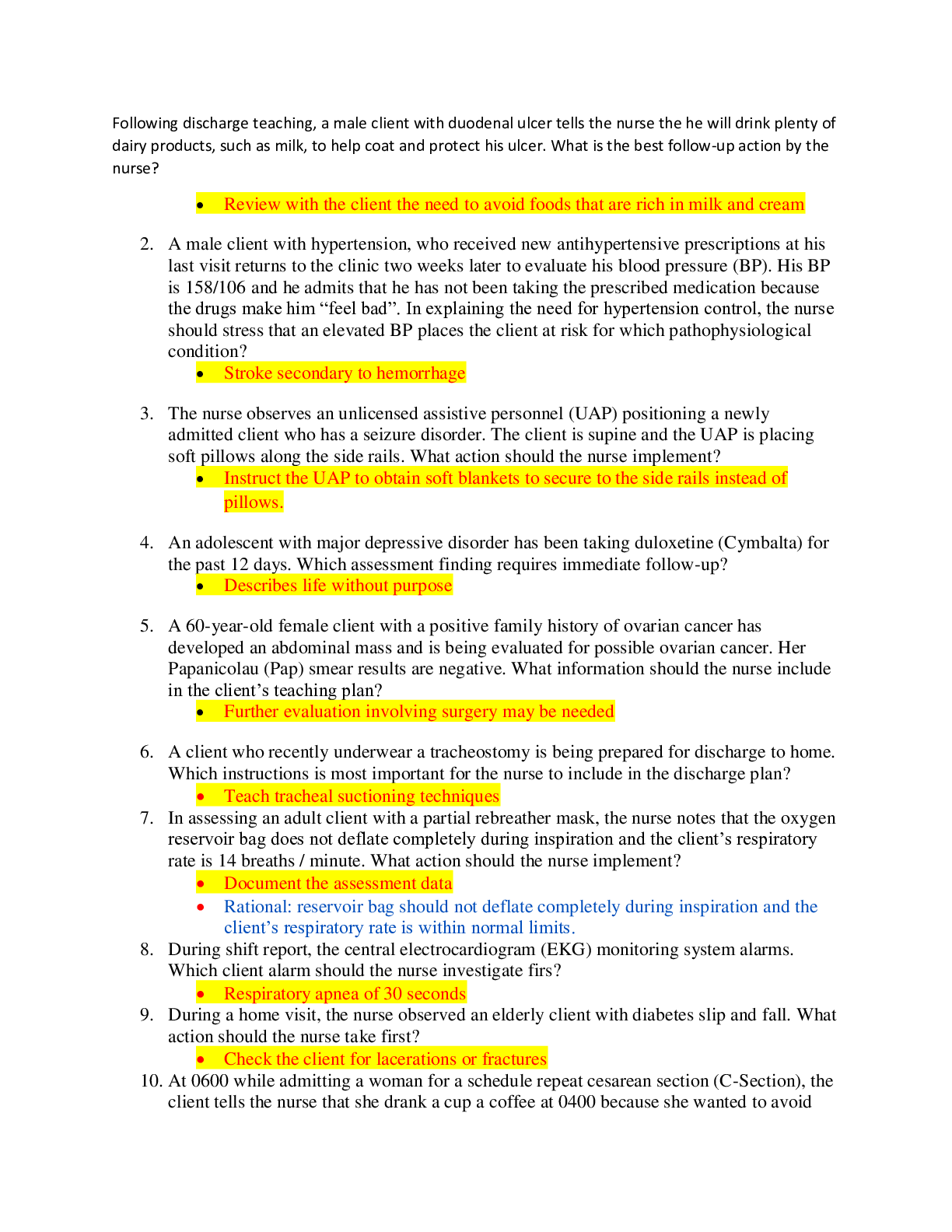
NSG 6440 APEA 6440 Psych Neuro 2020 with complete solution;South University
Document Content and Description Below
APEA 6440 Psych Neuro 6020Question:
Sudden, brief, rapid jerks, involving the trunk or limbs may be consistent with:
a myoclonic seizure. Correct
Explanation:
A patient experiencing a myoclonic seizure manifests s
...
[Show More]
Last updated: 4 years ago
Preview 1 out of 24 pages
Instant download

Buy this Document to get the Full Access Instantly
Provided by Students Who Aced it
We Verify Document Content to Gurantee Accuracy
Reviews( 0 )
Document information
Connected school, study & course
About the document
Uploaded On
Dec 17, 2020
Number of pages
24
Written in
All

Additional information
This document has been written for:
Uploaded
Dec 17, 2020
Downloads
0
Views
145
Topic Tags
Recommended For You
Get more on EXAM »
$19.5
92 Pages
Nsg 6440 Week 8 Apea Predictor Newest Exam COMPLETE TEST BANK...
$18
50 Pages
APEA 6440 Psych Neuro 6020 QUESTIONS WITH ANSWERS 100% CORRECT...
$19.5
38 Pages
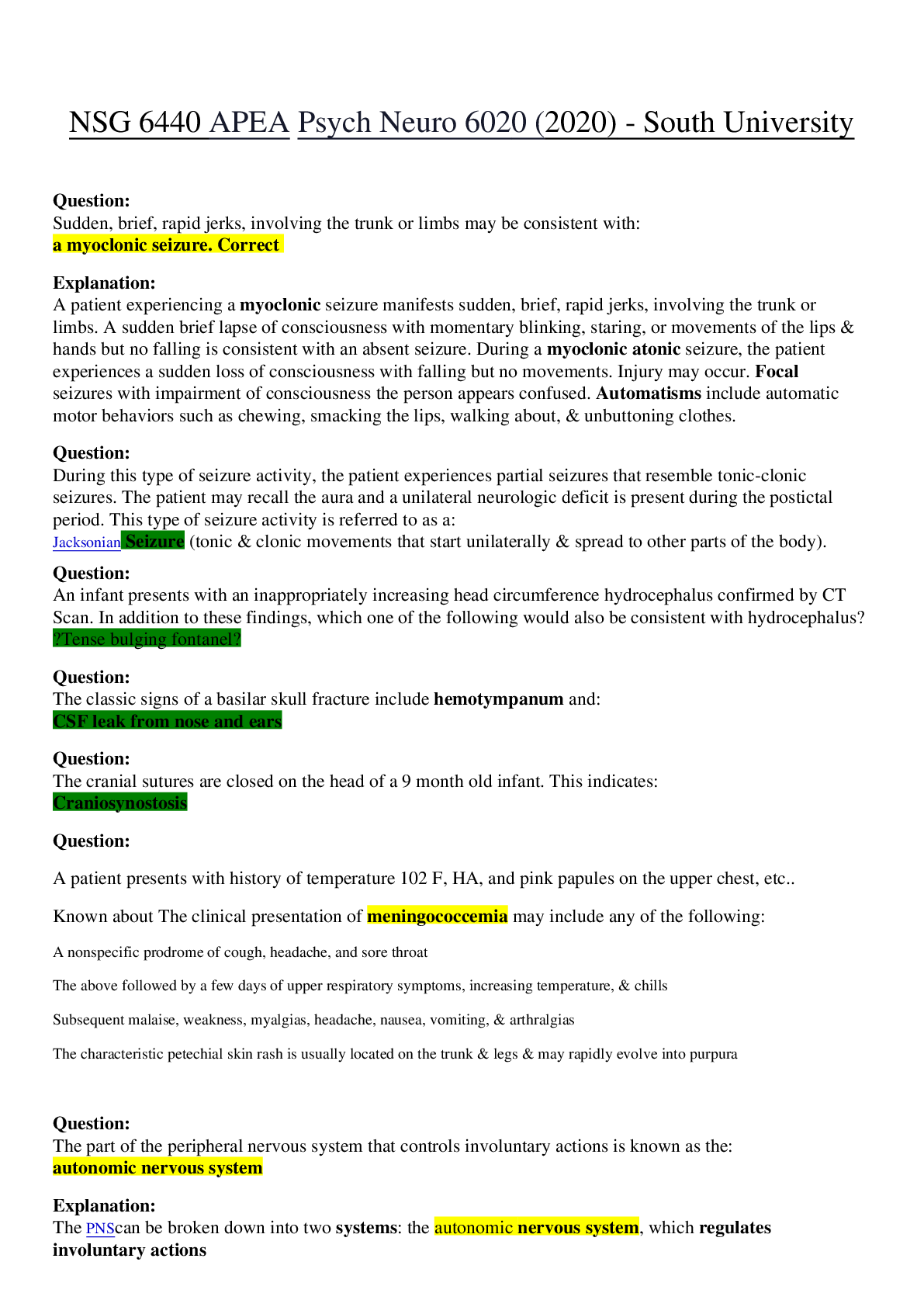
NSG 6440 APEA Psych Neuro 6020 (2020) - South University / NSG...
$12.5
14 Pages
NSG6440 / NSG 6440 Final Exam : Practicum IV Family Health -...
$7
26 Pages
NSG 6440 FINAL EXAM QUESTIONS ONLY / NSG6440 FINAL EXAM QUESTI...
$10
81 Pages
NSG6440 / NSG 6440 Pre-Predictor Exam Q & A (Latest): Practicu...

$12
43 Pages
South UniversityNSG 6440Week 9 Practice Exam ( all answers are...

$9.5
22 Pages
NSG 6440 Practice Test Random 2 Questions and Verified Answ...

$12.5
8 Pages
NSG 6440 APEA Antibiotics_2020 - South University NSG6440 APEA...

$12.5
14 Pages
NSG 6440 APEA Cadiovascular_2020 - South University / NSG6440...
$10
9 Pages
NSG 6440 Practicum IV Family Health Primary Care SU Full Cours...

$11
81 Pages
NSG 6440 Predictor Test latest Complete Solutions (Elaborated)...


$19
43 Pages
NSG 6440 FINAL EXAM NEWEST 2026 ACTUAL EXAM TEST BANK| COMPL...

$17
115 Pages
NSG 6440 Predictor STUDY GUIDE QUESTIONS WITH ANSWERS(SCORES 1...
$15
92 Pages
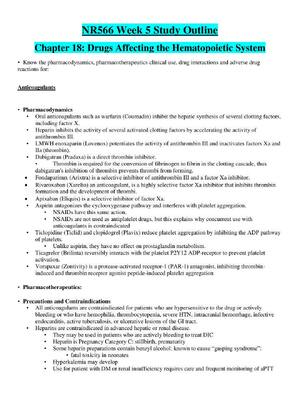
NR566 Week 5 Study Guide Chapter 18: Drugs Affecting the Hemat...
$29
547 Pages
STUDY GUIDE for Lehne's Pharmacology for Nursing Care 12th Edi...
More related documents below

.png)


.png)