HESI A2 ANATOMY & PHYSIOLOGY Exam-with verified answers-2022
Document Content and Description Below
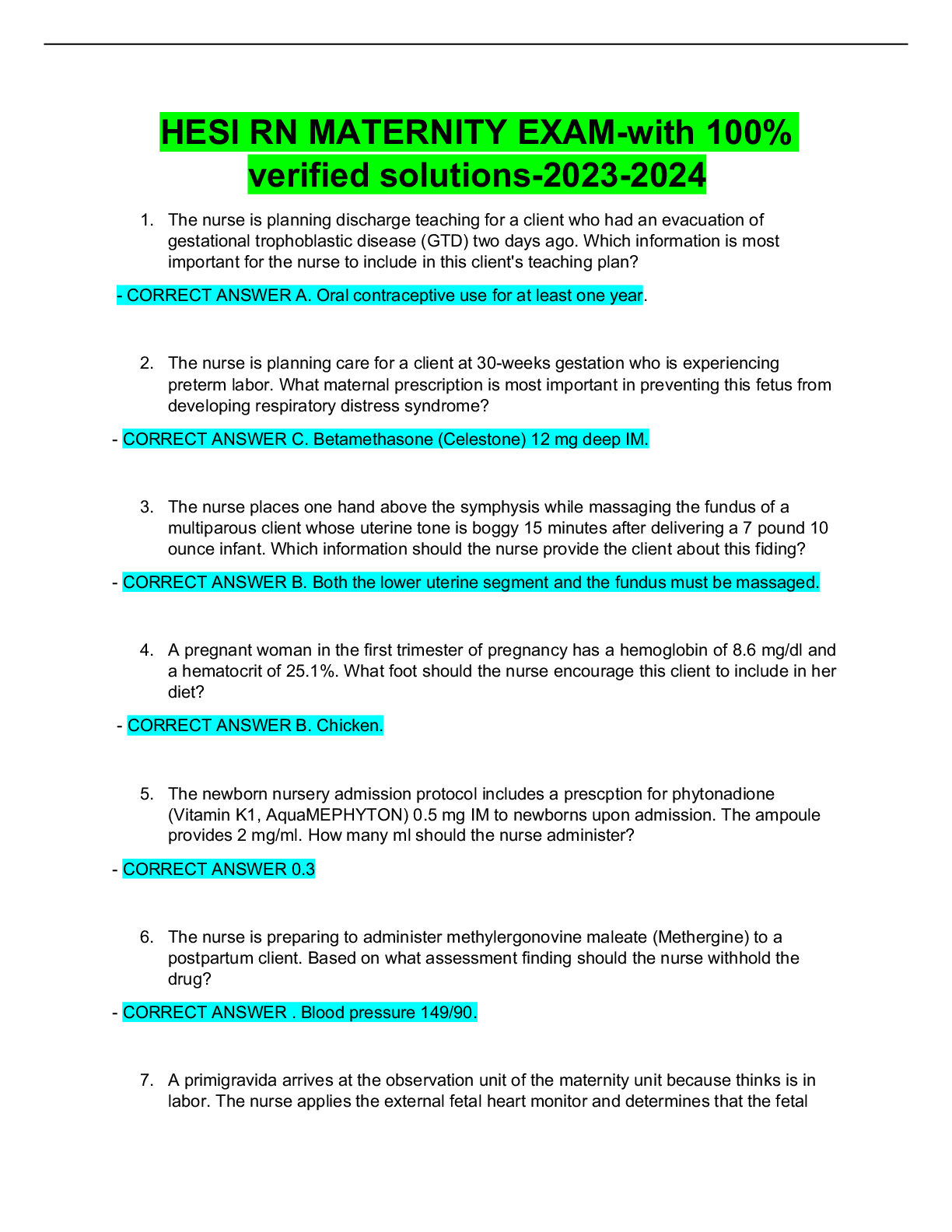
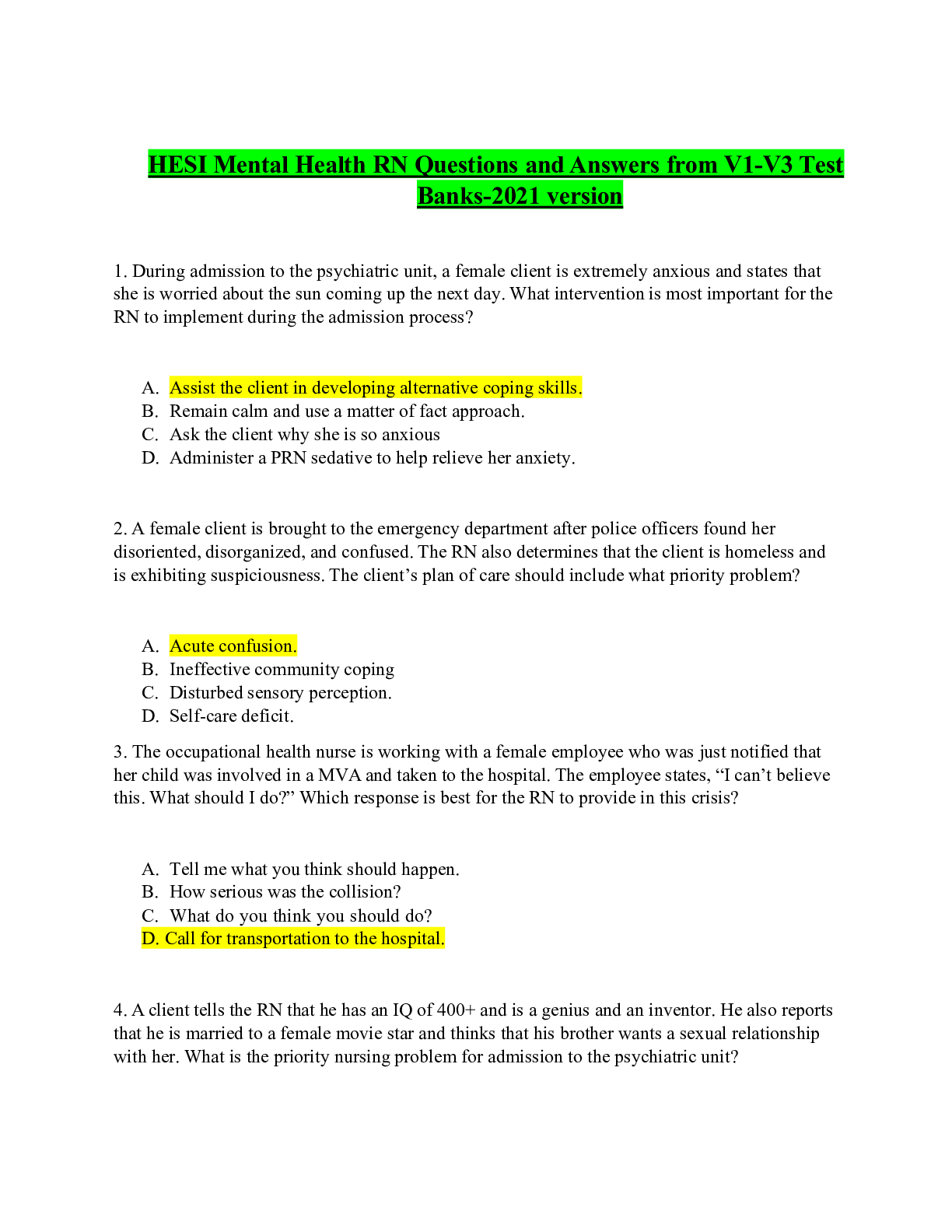
1. What is a clear, watery fluid found in the anterior and posterior chambers of the eye?
A. Vitreous humor
B. Ciliary body
C. Lacrimal gland
D. Aqueous humor
Answer: D
Rationale: Aqueous humor is a clear, wate
...
[Show More]
Last updated: 4 years ago
Preview 1 out of 49 pages
Instant download
Buy this Document to get the Full Access Instantly
Provided by Students Who Aced it
We Verify Document Content to Gurantee Accuracy
Reviews( 0 )
Document information
Connected school, study & course
About the document
Uploaded On
Aug 30, 2022
Number of pages
49
Written in
All

Additional information
This document has been written for:
Uploaded
Aug 30, 2022
Downloads
0
Views
103
Topic Tags
Recommended For You
Get more on HESI »
$10
24 Pages
HESI A2 Anatomy & Physiology Version 1 & 2 Questions | Graded...
 Test Bank 2022.png)
$10
6 Pages
HESI A2 Anatomy & Physiology Version 3 Questions and Verified...
$19.5
257 Pages
HESI A2 REVIEW 2025 TEST BANK, HESI A2 Anatomy and Physiology,...
$20.5
16 Pages
HESI A2 ANATOMY AND PHYSIOLOGY EXAM TEST BANK || LATEST 2025 (...

$37.5
130 Pages
HESI A2 ANATOMY AND PHYSIOLOGY Exam Questions and Answers 10co...

$15
5 Pages
HESI A2 ANATOMY AND PHYSIOLOGY_ HESI TEST QUESTIONS & ANSWERS_...
$9.5
15 Pages
HESI A2 Anatomy and Physiology Exam 1 2023 Graded A+ With Genu...
.png)

$20
257 Pages
HESI A2 REVIEW TEST BANK, HESI A2 Anatomy and Physiology, HESI...

 Questions, Answers & Rationale, A+ Guide.png)
$26
345 Pages
eBook [PDF] Barash, Cullen, and Stoelting's Clinical Anesthesi...
$29
551 Pages
eBook [PDF] Fundamentals of Nursing 3rd Edition By Joanne Toll...
$29
1067 Pages
eBook [PDF] Burns' Pediatric Primary Care 7th Edition BY Dawn...

$16
137 Pages
Test Bank for Burns' Pediatric Primary Care 7th Edition by Daw...
$25
591 Pages
AACN Essentials of Progressive Care Nursing 5th Edition By S...
More related documents below