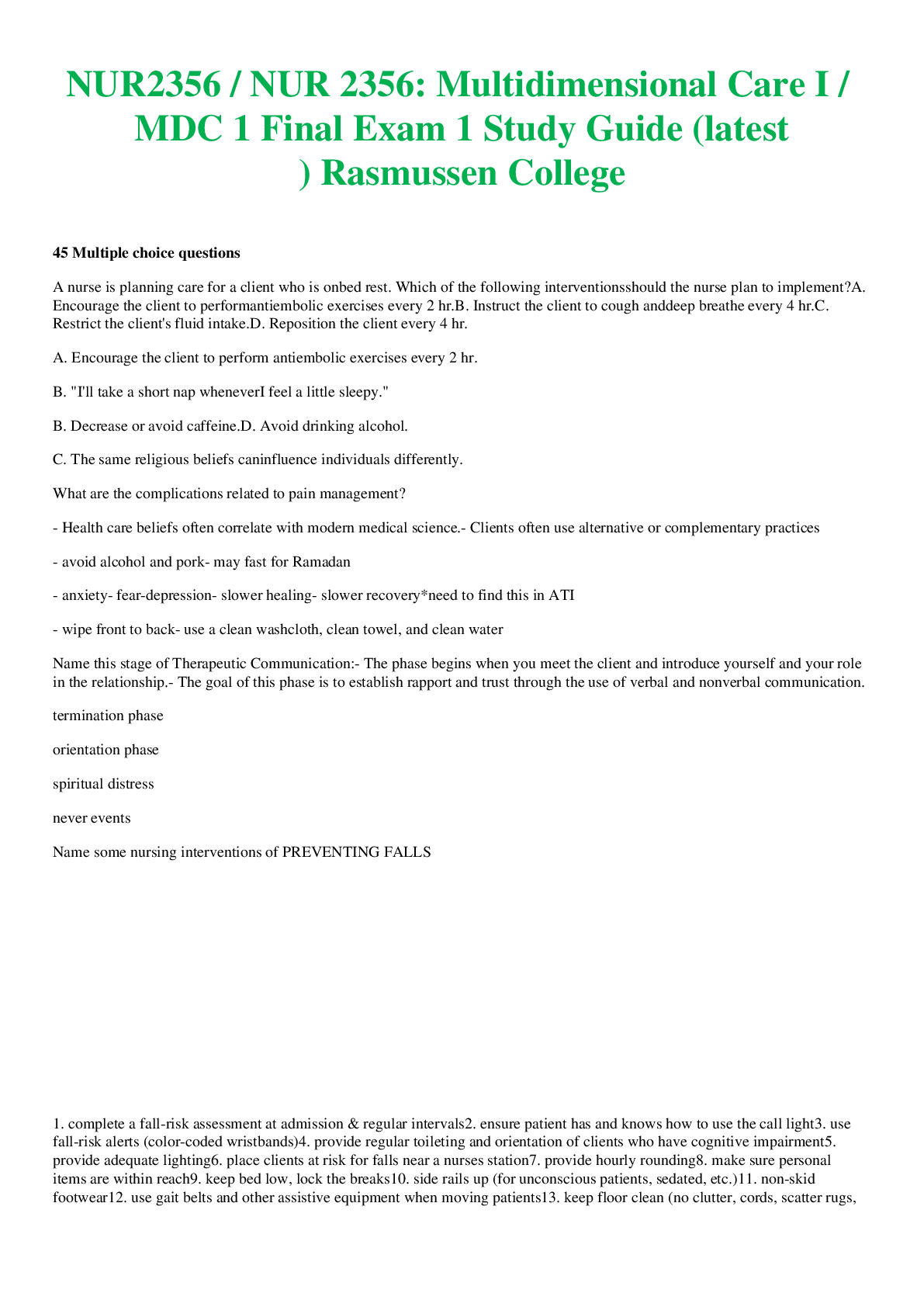
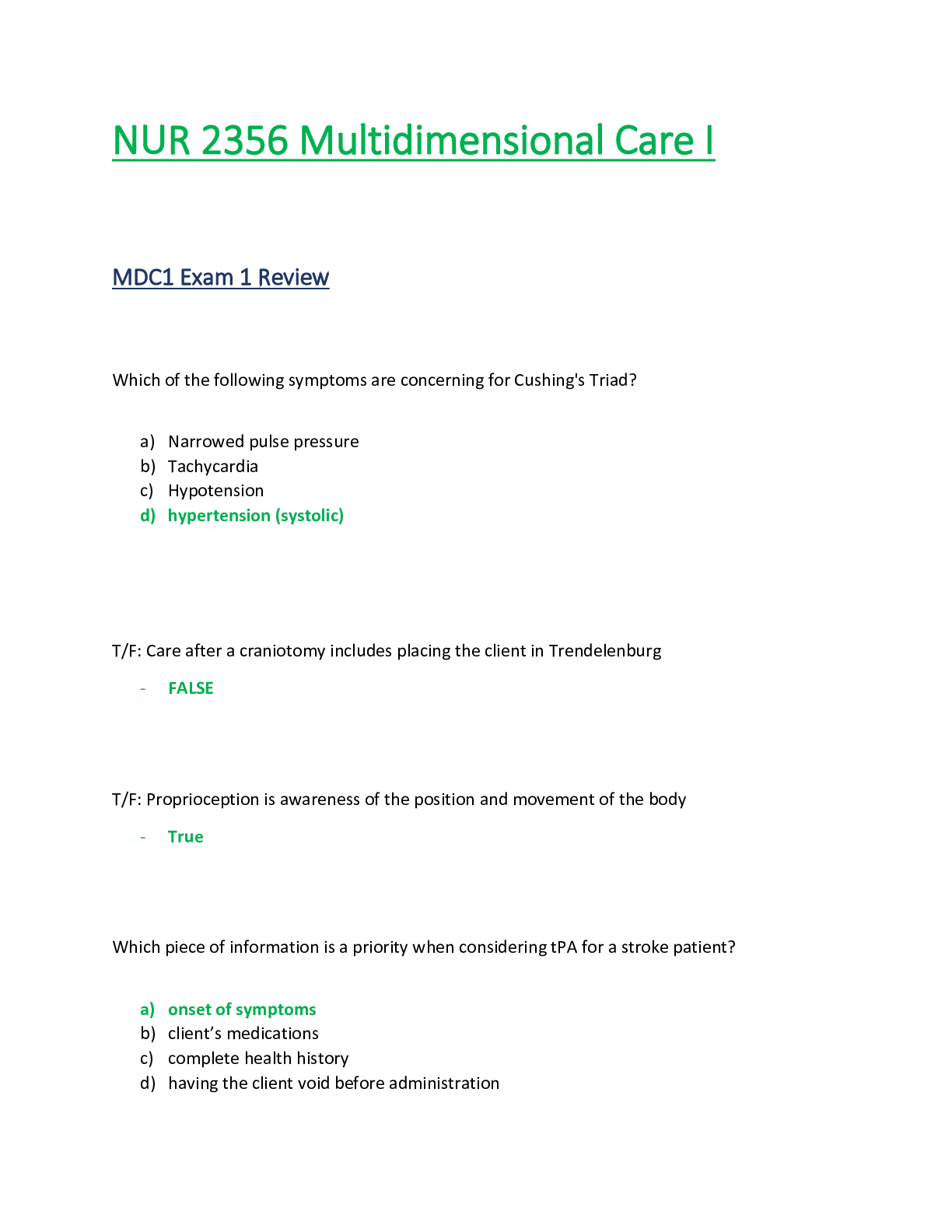
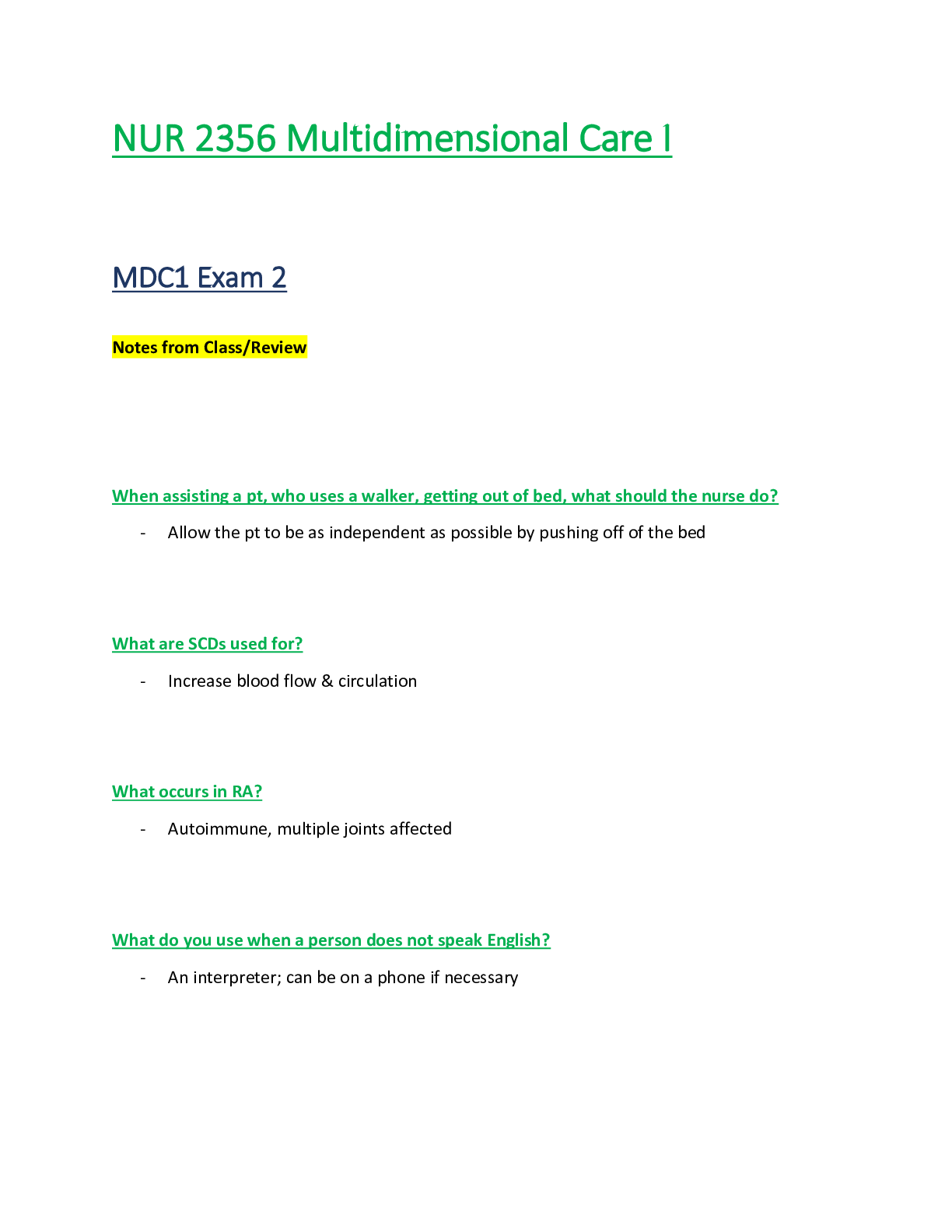
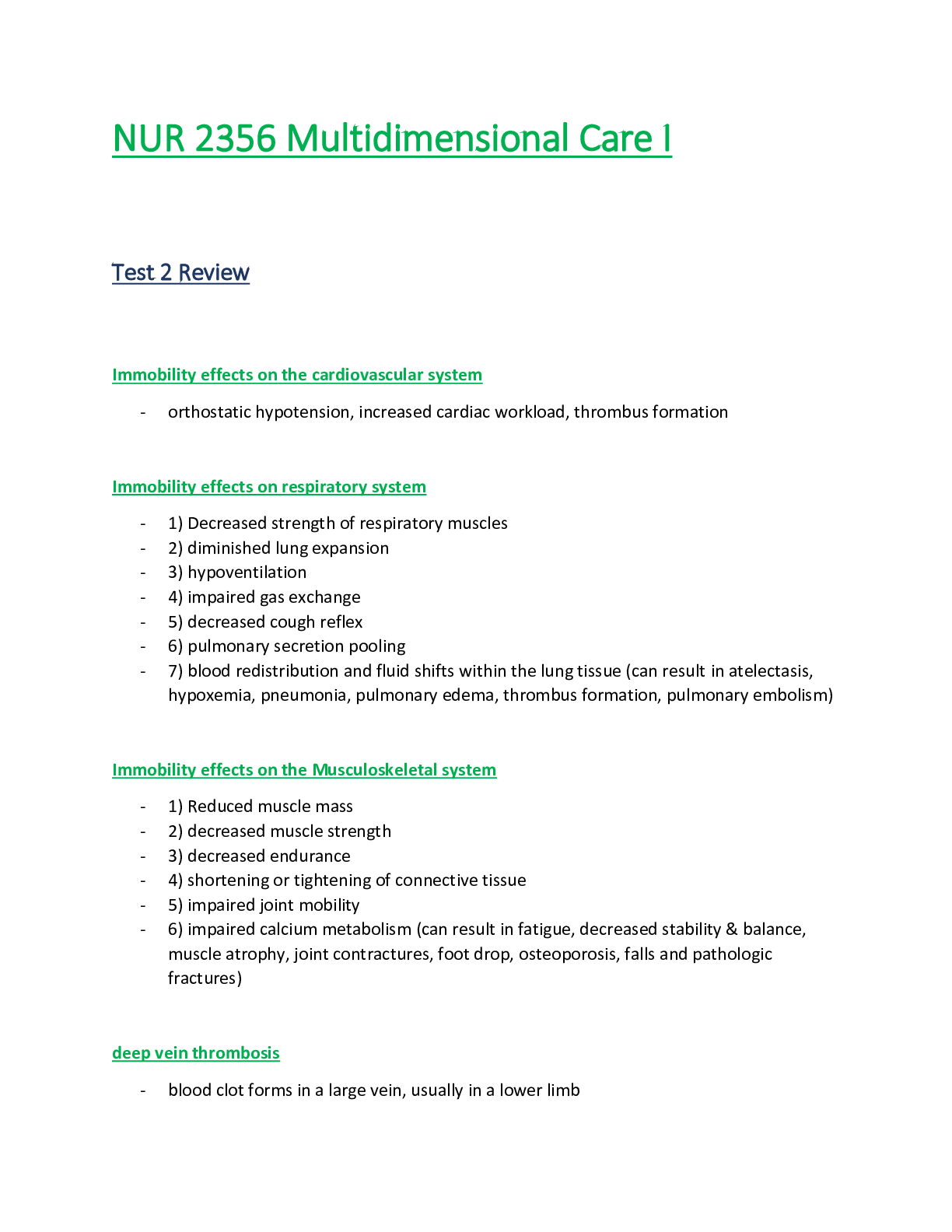
NUR2356 / NUR 2356: Multidimensional Care I / MDC 1 Final Exam 1 Study Guide (latest) Rasmussen College
45 Multiple choice questions
1. A nurse is planning care for a client who is on
bed rest. Which of the followin
...
NUR2356 / NUR 2356: Multidimensional Care I / MDC 1 Final Exam 1 Study Guide (latest) Rasmussen College
45 Multiple choice questions
1. A nurse is planning care for a client who is on
bed rest. Which of the following interventions
should the nurse plan to implement?
A. Encourage the client to perform
antiembolic exercises every 2 hr.
B. Instruct the client to cough and
deep breathe every 4 hr.
C. Restrict the client's fluid intake.
D. Reposition the client every 4 hr.
1. A. Encourage the client to perform antiembolic exercises every 2 hr.
2. B. "I'll take a short nap whenever
I feel a little sleepy."
3. B. Decrease or avoid caffeine.
D. Avoid drinking alcohol.
4. C. The same religious beliefs can
influence individuals differently.
2. What are the complications related to pain management?
1. - Health care beliefs often correlate with modern medical science.
- Clients often use alternative or complementary practices
2. - avoid alcohol and pork
- may fast for Ramadan
3. - anxiety
- fear
-depression
- slower healing
- slower recovery
*need to find this in ATI
4. - wipe front to back
- use a clean washcloth, clean towel, and clean water
3. Name this stage of Therapeutic Communication:
- The phase begins when you meet the client and introduce yourself and your role in the relationship.
- The goal of this phase is to establish rapport and trust through the use of verbal and nonverbal communication.
1. termination phase
2. orientation phase
3. spiritual distress
4. never events
4. Name some nursing interventions of PREVENTING FALLS
1. 1. complete a fall-risk assessment at admission & regular intervals
2. ensure patient has and knows how to use the call light
3. use fall-risk alerts (color-coded wristbands)
4. provide regular toileting and orientation of clients who have cognitive impairment
5. provide adequate lighting
6. place clients at risk for falls near a nurses station
7. provide hourly rounding
8. make sure personal items are within reach
9. keep bed low, lock the breaks
10. side rails up (for unconscious patients, sedated, etc.)
11. non-skid footwear
12. use gait belts and other assistive equipment when moving patients
13. keep floor clean (no clutter, cords, scatter rugs, etc.)
14. electronic safety monitors (chair or bed sensors)
2. Direct eye contact
Concerned facial expression
Leaning forward
Personal space
Professional appearance
Sitting down to talk
Touch
3. Active listening
Establishing trust
Being assertive
Restating, clarifying, and validating messages
Interpreting body language and sharing observations
Exploring issues
Using silence
Summarizing the conversation
Process recordings
4. - inspect daily
- use lukewarm water, and dry feet thoroughly
- apply moisturizer
- avoid over-the-counter meds with alcohol or other strong chemicals
- clean socks
- check shoes for objects, rough seams, or edges
- cut nails straight across
- avoid self-treating corns or calluses
- do not apply heat
5. Name some benefits of perineal care
[Show More]