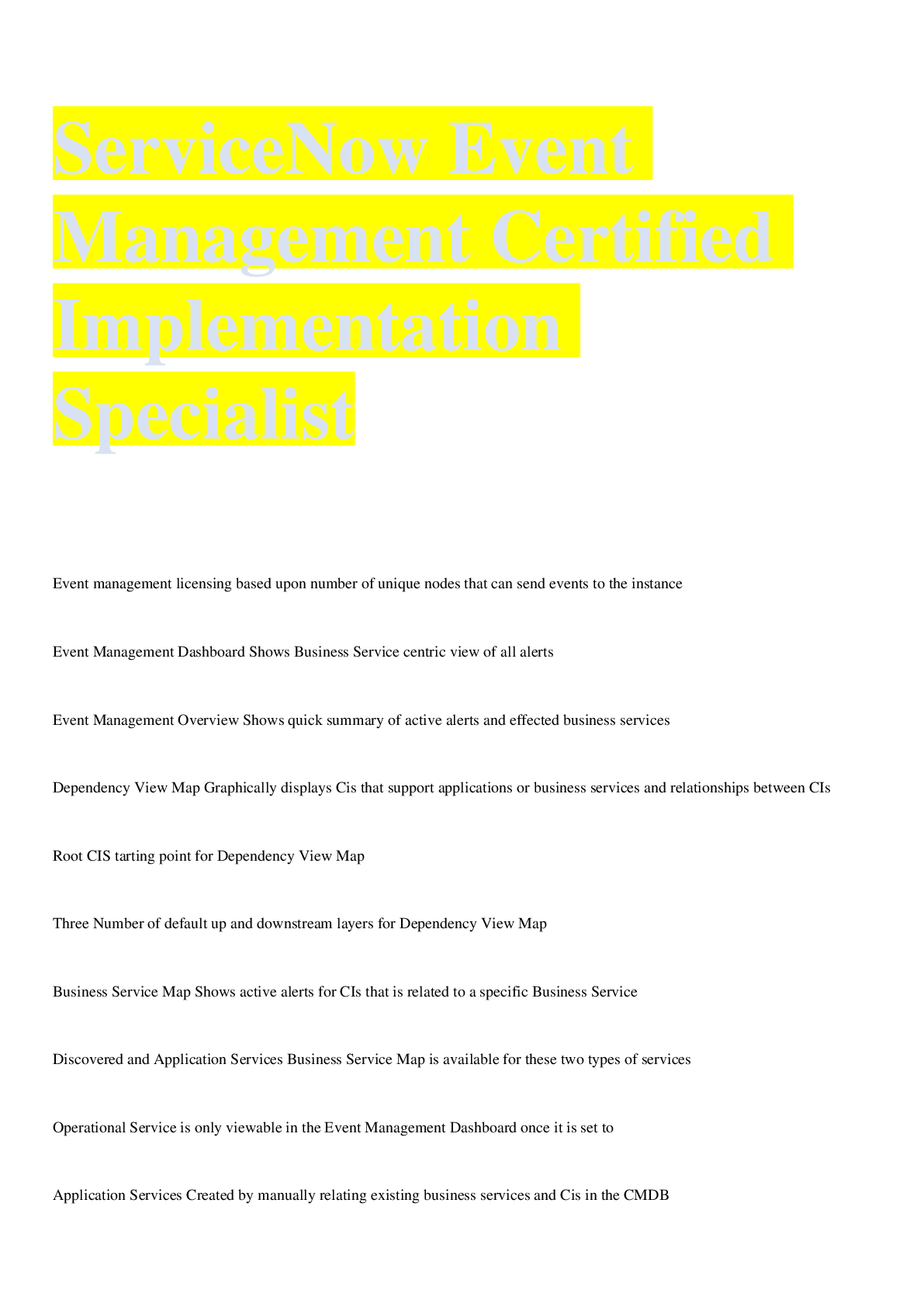
NURS 6501 Patho Final exam Version #4. 2021
Document Content and Description Below
Question 1. A woman diagnosed with trichomoniasis asks if her sexual partner should be treated as well.
What is the appropriate response by the healthcare professional? Selected Answer: Sexual partners
should be treate
...
[Show More]
Last updated: 4 years ago
Preview 1 out of 8 pages
Instant download
Buy this Document to get the Full Access Instantly
Provided by Students Who Aced it
We Verify Document Content to Gurantee Accuracy
Reviews( 0 )
Document information
Connected school, study & course
About the document
Uploaded On
Aug 31, 2022
Number of pages
8
Written in
All

Additional information
This document has been written for:
Uploaded
Aug 31, 2022
Downloads
0
Views
53
Topic Tags
Related Subjects & Courses
Explore similar study resources and related concepts.
Recommended For You
Get more on EXAM »

$7
8 Pages
NURS 6501 Christine Jean-Baptiste Knowledge Check: Module 6 St...

$22.5
307 Pages
TEST BANK for Davis Advantage for Psychiatric Mental Health Nu...
More related documents below


![Preview of ATI critical points (1/1)[updated 2022/2023]](https://scholarfriends.com/storage/ATI critical points.png)