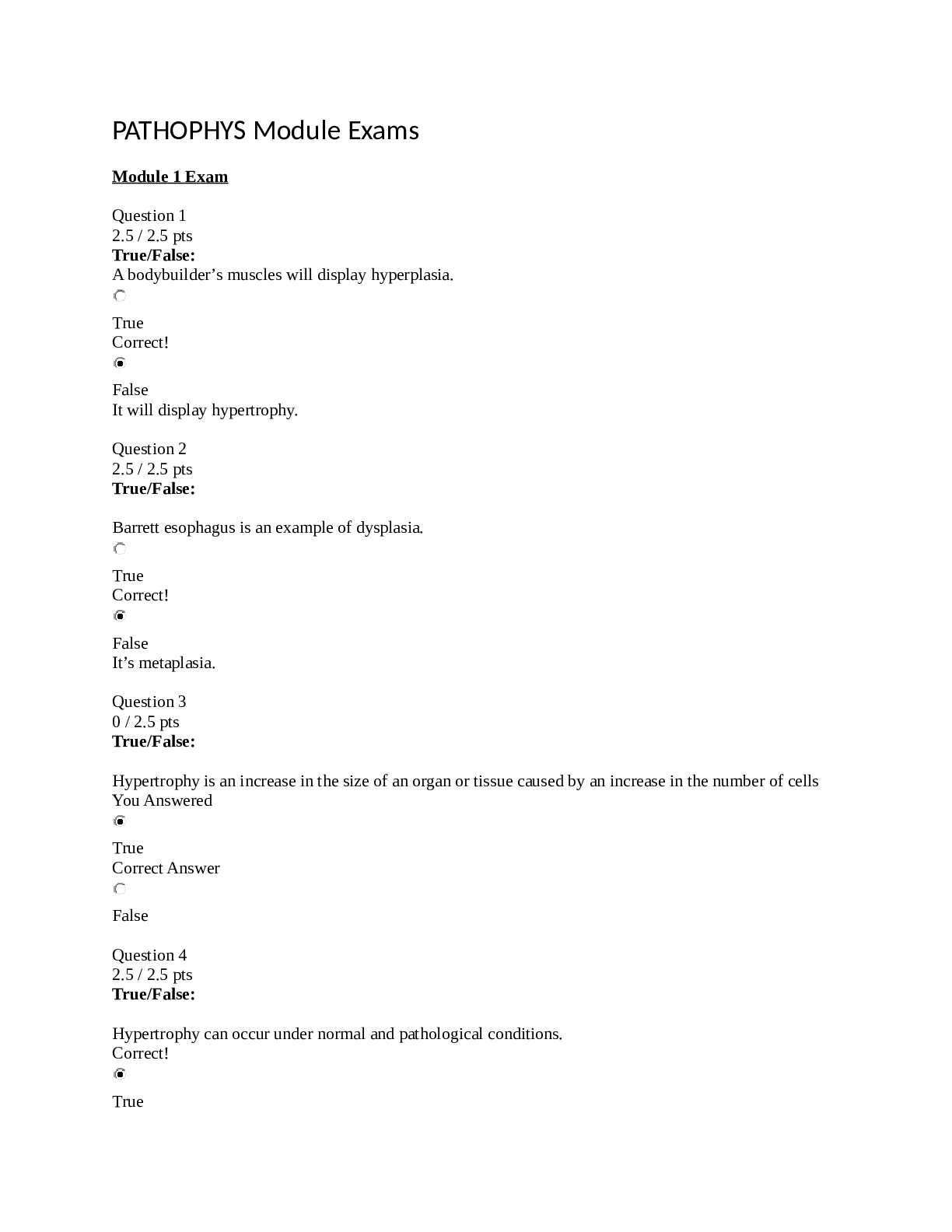
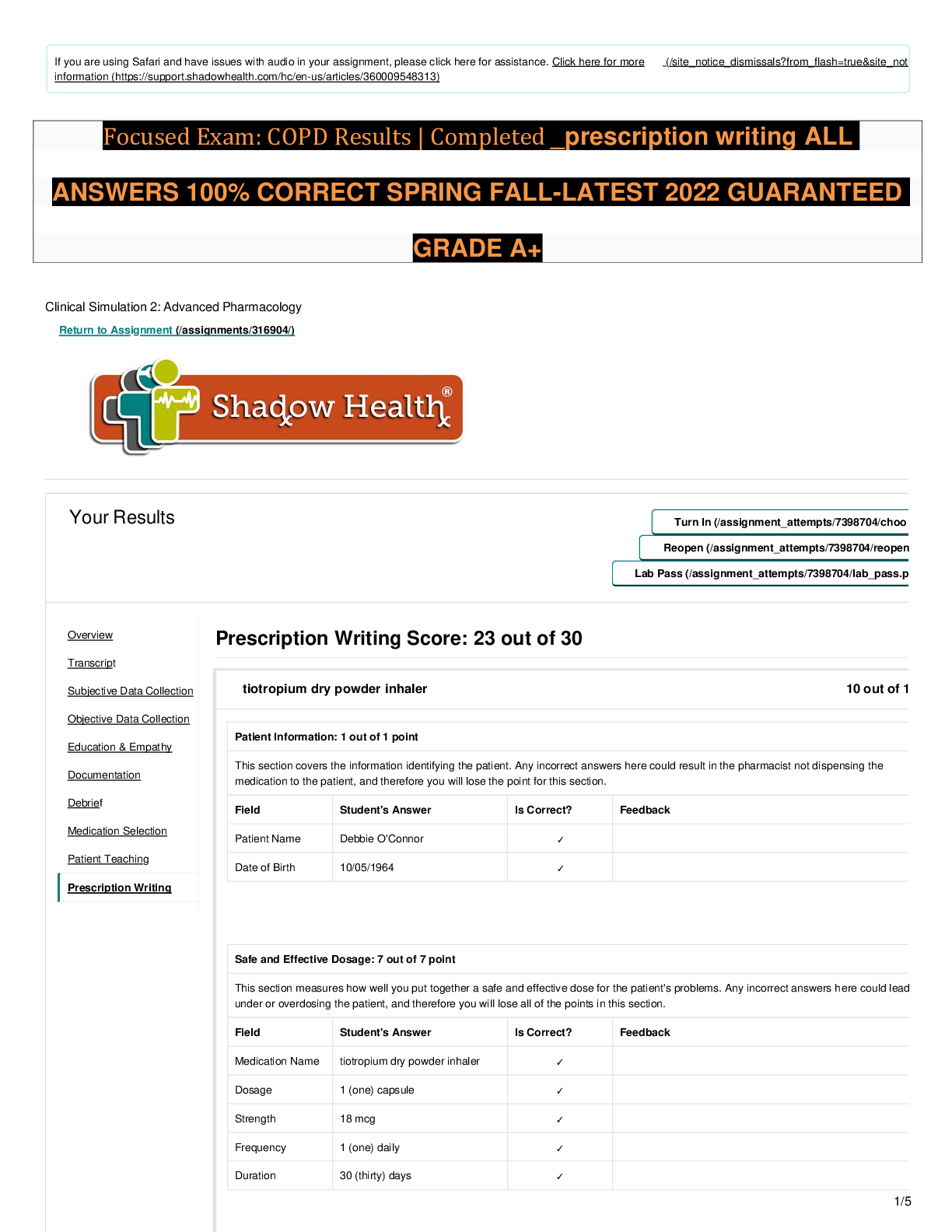
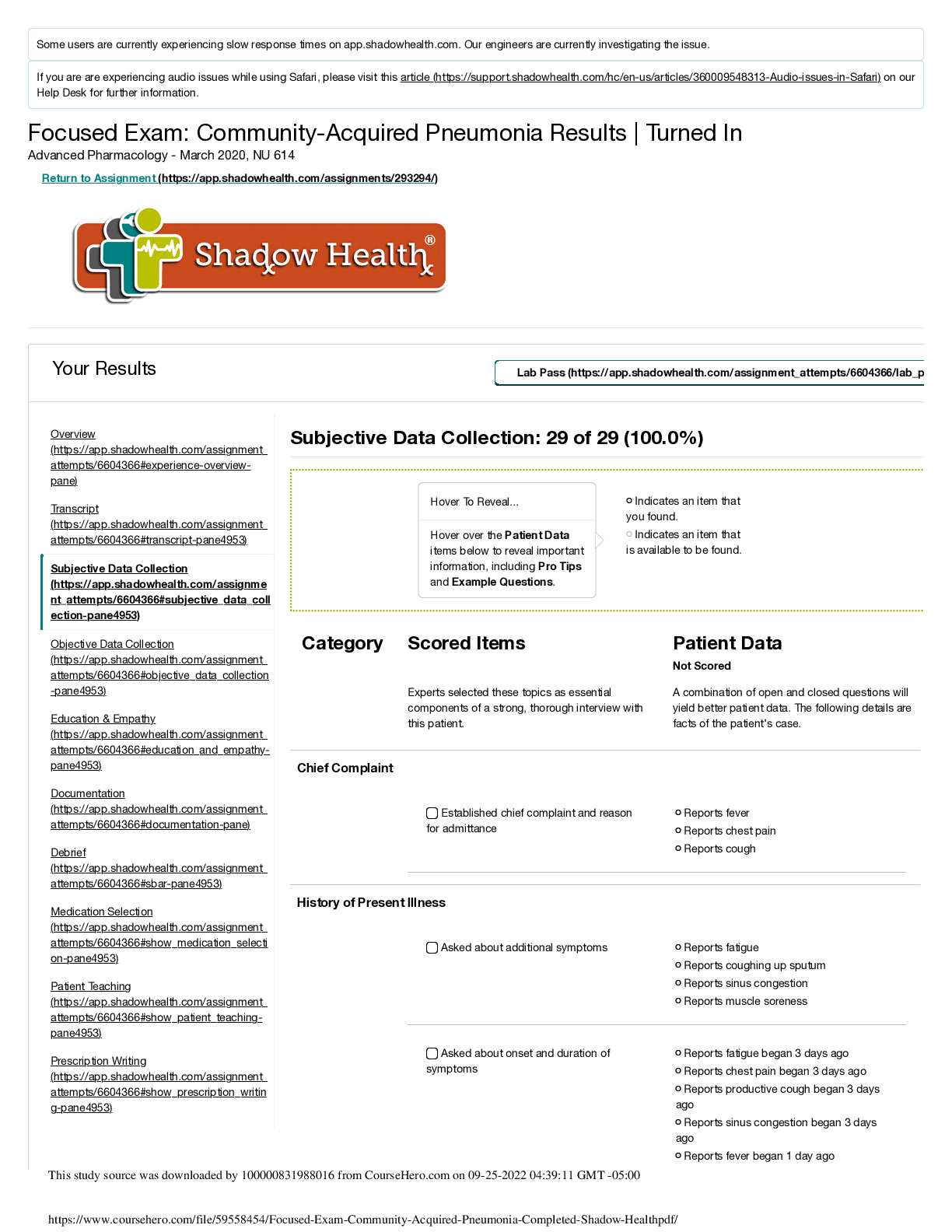
Language Development > EXAM > Final Exam: LLT 307 ALL ANSWERS 100% CORRECT SPRING FALL 2022/2023 EDITION RATED GRADE A+ (All)
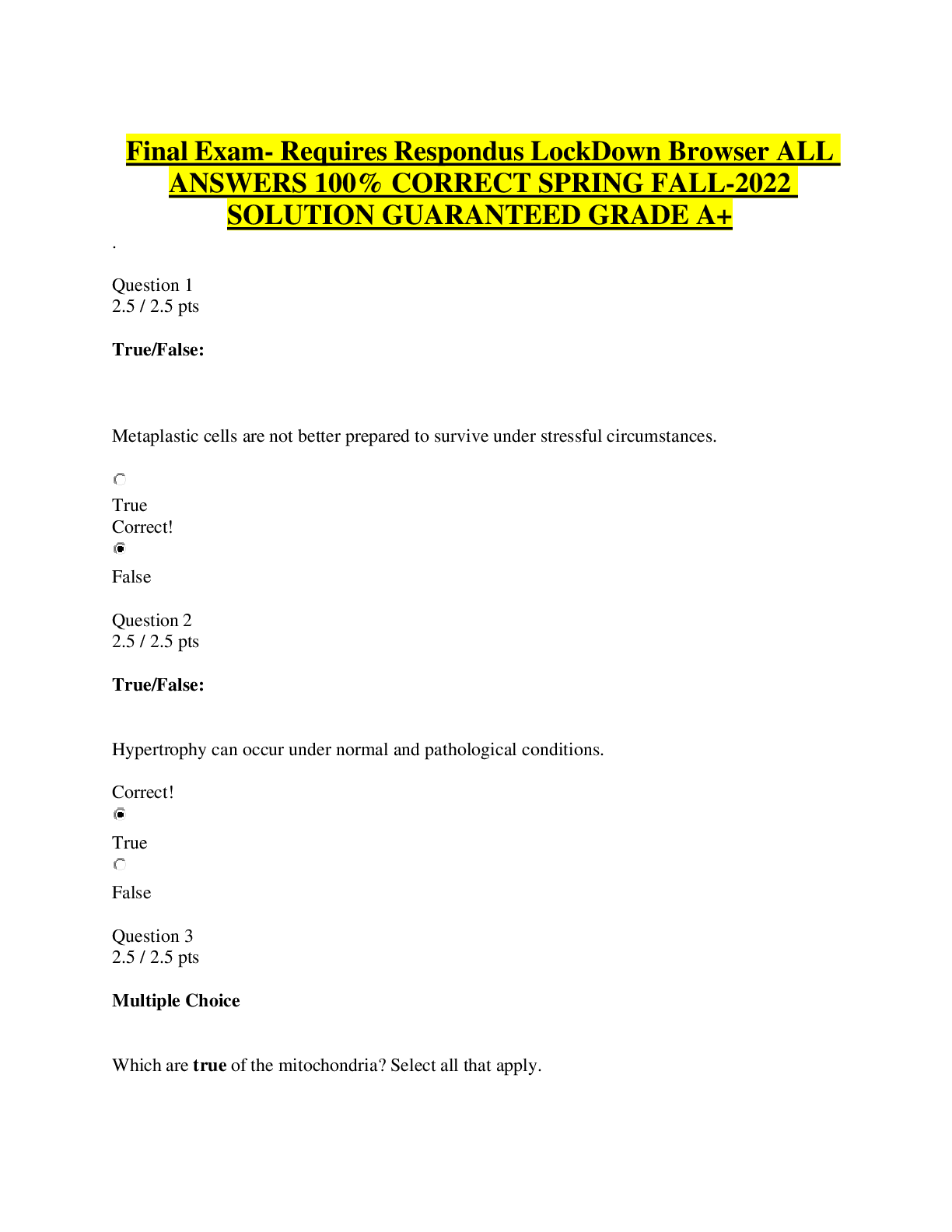
Final Exam: LLT 307 ALL ANSWERS 100% CORRECT SPRING FALL 2022/2023 EDITION RATED GRADE A+
Document Content and Description Below
Last updated: 4 years ago
Preview 1 out of 33 pages
Instant download

Buy this Document to get the Full Access Instantly
Provided by Students Who Aced it
We Verify Document Content to Gurantee Accuracy
Reviews( 0 )
Document information
Connected school, study & course
About the document
Uploaded On
Sep 04, 2022
Number of pages
33
Written in
All

Additional information
This document has been written for:
Uploaded
Sep 04, 2022
Downloads
0
Views
127
Topic Tags
Recommended For You
Get more on EXAM »
LETRS-Unit-2-Session 1-8 FInal Assessment| Question with answe...

Letrs Unit 4 Sessions 1-8 & Final assessment Question with ans...
LETRS Unit 4 Assessment. LETRS-Language Essentials for Teacher...

Test Bank For Reading Across the Disciplines College Reading a...

Mosaicos Spanish as a World Language 7th Edition By Elizabeth...

Language in Mind, An Introduction to Psycholinguistics, 2e by...
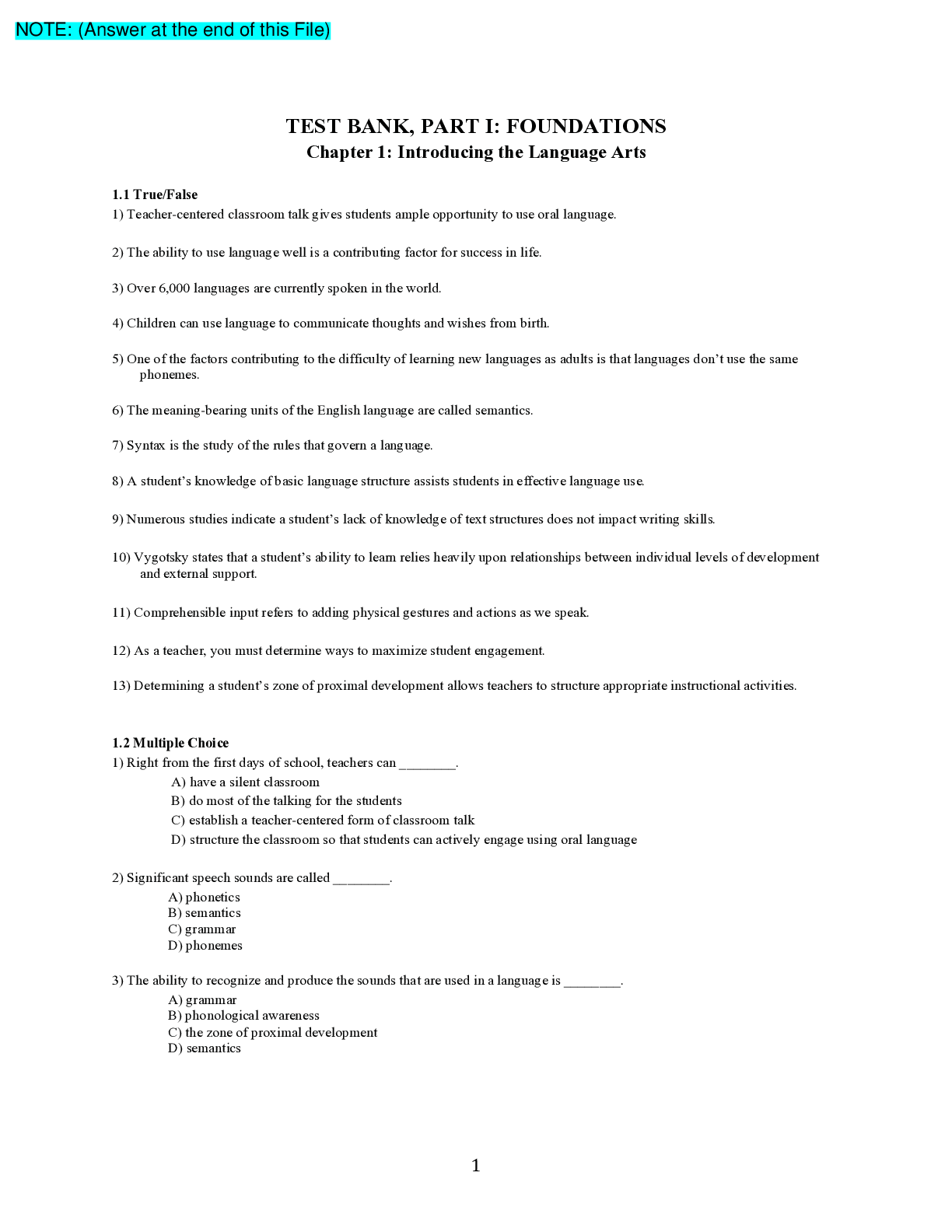
Engaging in the Language Arts Exploring the Power of Language...
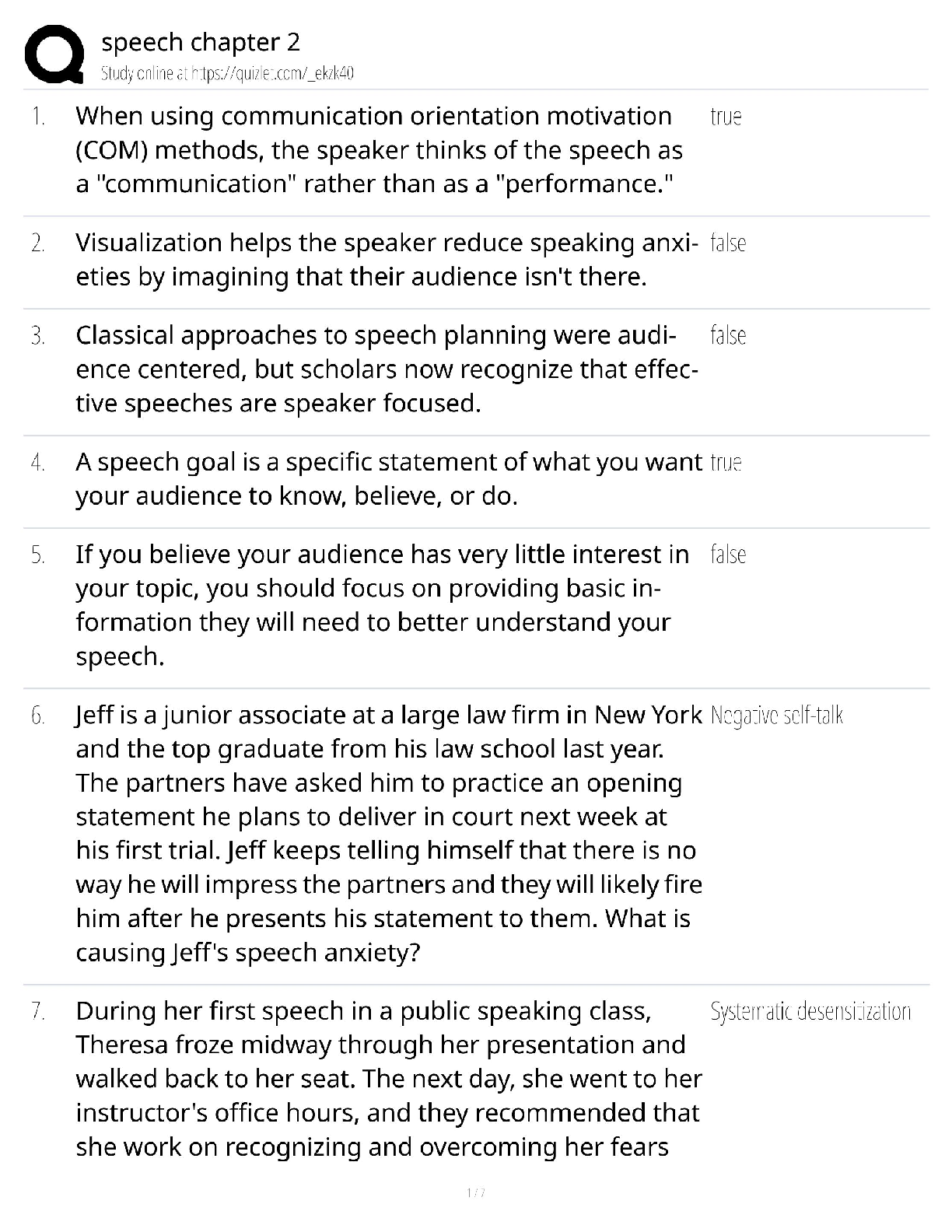
Test Bank for Child Development From Infancy to Adolescence, 2...
Test Bank for A Guide to SQL 8th Edition By Philip Pratt, Mary...
Solution Manual for Assembly Language for x86 Processors 7th E...
Praxis Test 3, praxis test 4, PRAXIS SLP, ETS Praxis Review 2,...
American Language Course Placement Test ALCPT/ECL Practice Tes...
 LISTENING AND READING ANSWER KEYS.png)