1. Dispatched at 10:00 pm to the homeless shelter for a 54-year-old male who is behaving strangely.
General impression
Patient is agitated, pacing back and forth. Speech is somewhat slurred. Smell of alcohol.
Mental S
...
1. Dispatched at 10:00 pm to the homeless shelter for a 54-year-old male who is behaving strangely.
General impression
Patient is agitated, pacing back and forth. Speech is somewhat slurred. Smell of alcohol.
Mental Status
Alert and disoriented, not answering questions appropriately, doesn’t know what is happening
Airway
Open
Breathing
Normal respirations
Lung sounds clear/= bilaterally
Circulation
Rapid, irregular pulse
Skin is pale, cool, diaphoretic
Vitals
BP 152/96
HR 120
RR 20
Pulse ox 98%
Pupils dilated, equal and reactive
Assessment
SAMPLE
S: Altered mental status, sudden onset – approx 30 minutes ago; denies any pain; BG 50 mg/dl
A: none
M: insulin
P: Diabetic, substance abuse
L: breakfast
E: came in from outside and began acting strange Bystanders don’t know his medical history. States
he was seen earlier with another resident who was later found taking drugs.
Treatment
Oxygen by NC at 2L; 15g oral glucose
Impression
Hypoglycemia
Differentials: drugs, alcohol overdose, trauma, stroke
Critical Thinking:
What would a normal blood glucose range be?
80-120
What could be a possible cause of this patient’s hypoglycemia?
Last oral intake was lunch and it is now 10:00PM
Webster Rev. 3/30/10
.
ALTERED MENTAL STATUS - Basic
2. Dispatched at 11:00 AM to the college dorm room of a 20-year-old male with altered mental status.
General Impression:
Patient is lying on the bed in his dorm room
Mental Status
Conscious, somewhat confused but answers questions
Airway:
Open
Breathing:
Rapid and deep
Breath sounds clear/= bilaterally
Circulation:
Pulse rapid & regular; skin warm, dry, flushed color
Vitals:
BP 106/74, HR 115 lying down; BP 84/60, HR 130 standing
RR 32
Pulse ox 99%;
Temp. 101.8 oral
PEARL
Assessment:
Physical Exam: Grip strength equal all extremities; no facial droop, no slurred speech
SAMPLE
S: Nausea/vomiting today; muscle cramps; BG 380
A: None
M: Insulin, Dilantin
P: Diabetes, seizures
L: Breakfast
E: Has not been feeling well for about 4 or 5 days. Thought he had the flu or sinus infection; has been
incredibly hungry and thirsty; denies any seizures
Treatment:
NC at 2-4 LPM
Call for ALS backup if long transport
Impression:
Diabetic Ketoacidosis (DKA)
Critical Thinking:
What do you think was the underlying cause of the DKA?
Infection as demonstrated by fever
Why is this patient positive orthostatic?
Extreme dehydration from osmotic diuresis secondary to elevated blood sugar
What are the 3 P’s which are flagship signs for hyperglycemia or DKA? Polyuria (excessive urination);
Polydypsia (excessive thirst); Polyphagia (excessive hunger)
Webster Rev. 3/30/10
ALTERED MENTAL STATUS - Basic
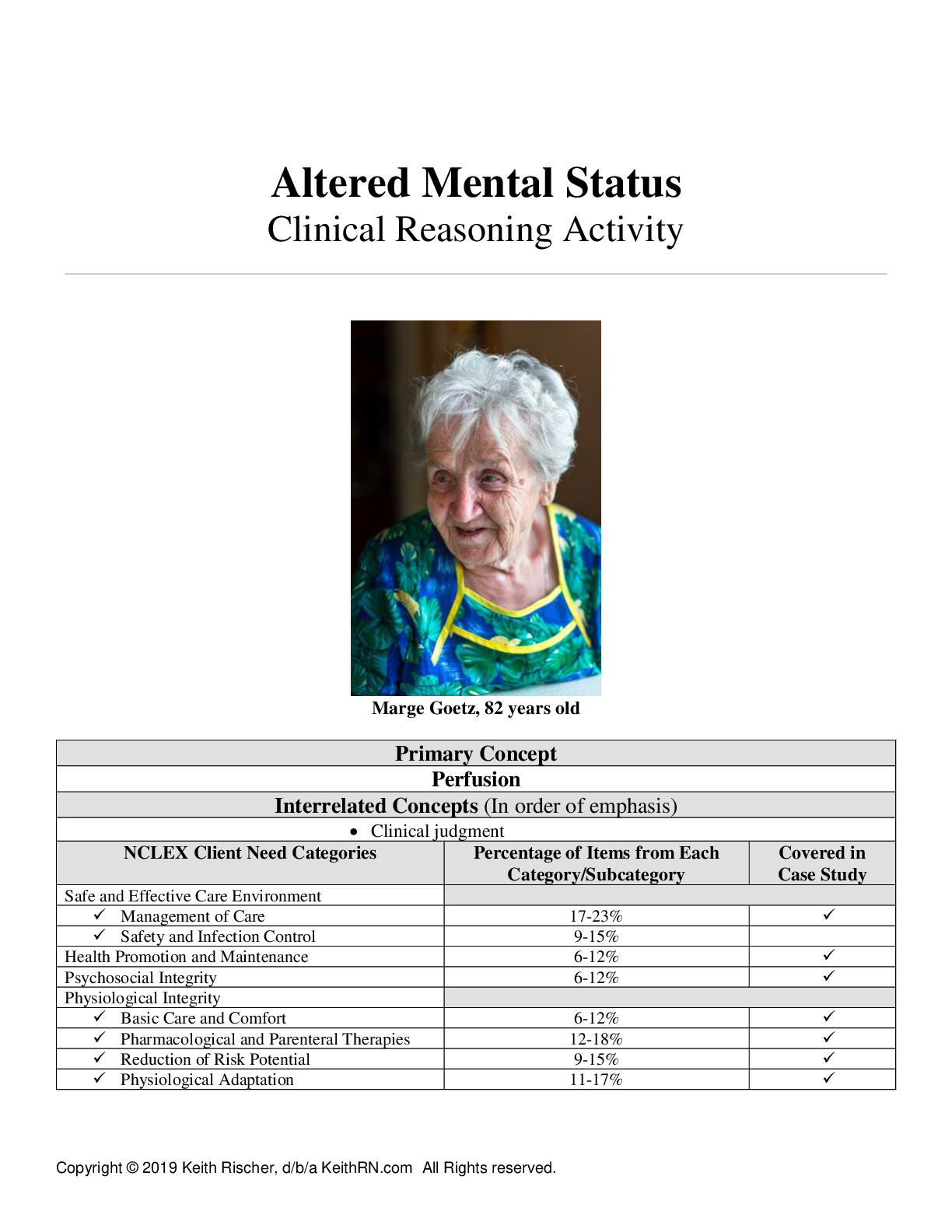
3. Dispatched at 7:00 PM to the home of a 82-year-old female with altered mental status
General Impression:
Patient is lying across the bed on her side and not moving
Mental Status:
Opens eyes to voice but does not respond verbally; able to follow commands
Airway: Open
Breathing:
Non-labored
Breath sounds =/clear bilaterally
Circulation:
Pulse regular
Skin pale, cool, diaphoretic
Vitals:
BP 118/84;
HR 90
RR 16
Pulse ox: 96%;
Pupils dilated and equal but sluggish
Assessment:
Physical Exam: No evidence of trauma; patient follows commands; grips unequal with weakness on right
side, no facial droop, positive right-sided arm drift
SAMPLE:
S: Clammy skin, tachycardic, stroke like symptoms; BG 48 mg/dL
A: Allergies: none
M: Atenolol, Insulin, Plavix, Lipitor
P: Diabetes, TIA’s, Coronary Artery Disease (CAD), Hypertension (HTN)
L: Dinner
E: According to family members the patient ate dinner; about 2 hours later she seemed to have trouble
swallowing her medications and seemed to be weak on her right side because she dropped the glass.
Treatment:
NRB at 15 LPM
Oral glucose
Impression:
Hypoglycemia
Critical Thinking:
What other differential are you most concerned about and why?
Stroke because of difficulty swallowing and weakness.
Which hypoglycemic patients are more likely to exhibit stroke-like symptoms? What symptoms
might you see?
The elderly. Weakness or paralysis on one side
Why is it important not to administer glucose if the blood glucose level is within normal limits?
It could be a stroke. Administering glucose to stroke victims can cause increased swelling and edema as
glucose brings water with it as it enters brain cells.
Webster R
[Show More]
.png)








.png)