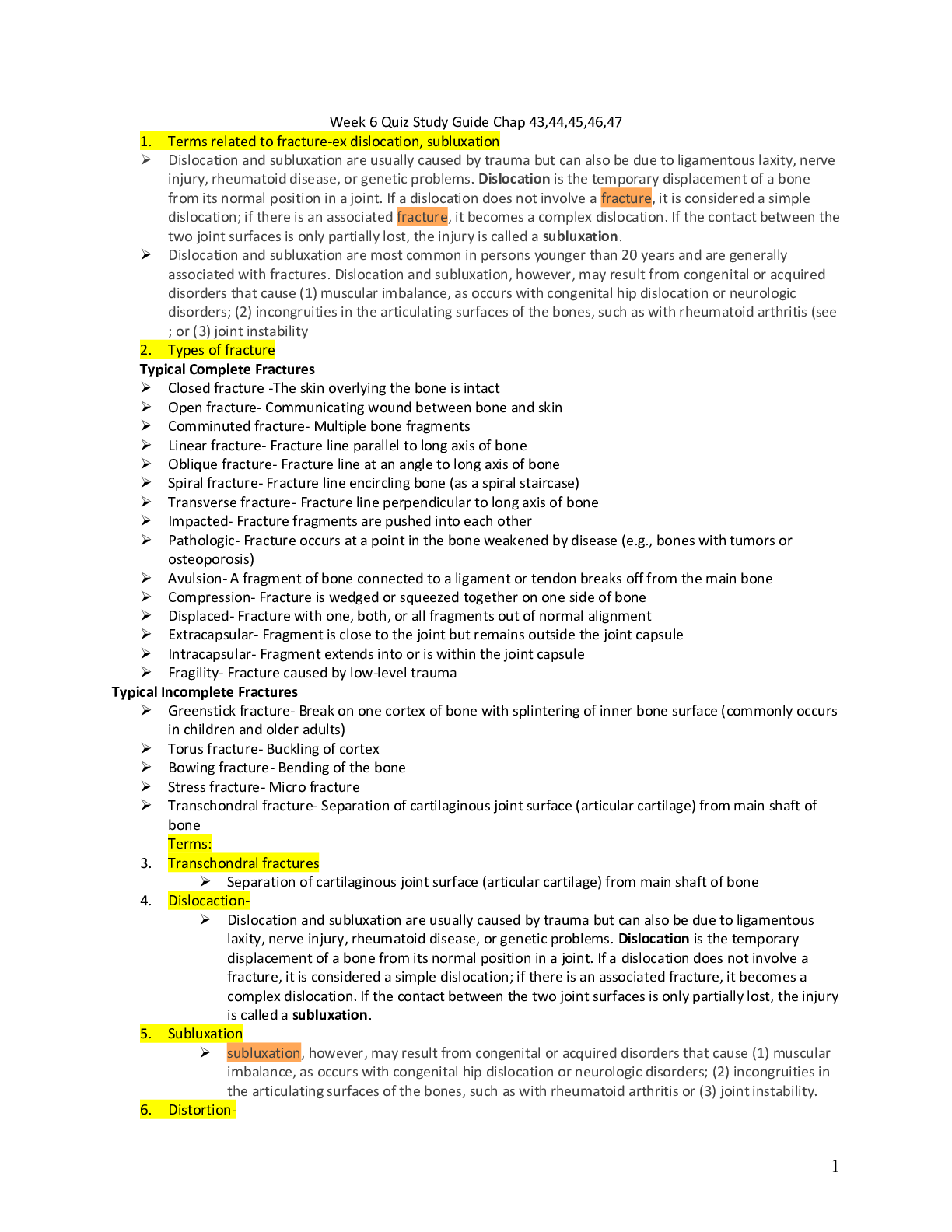
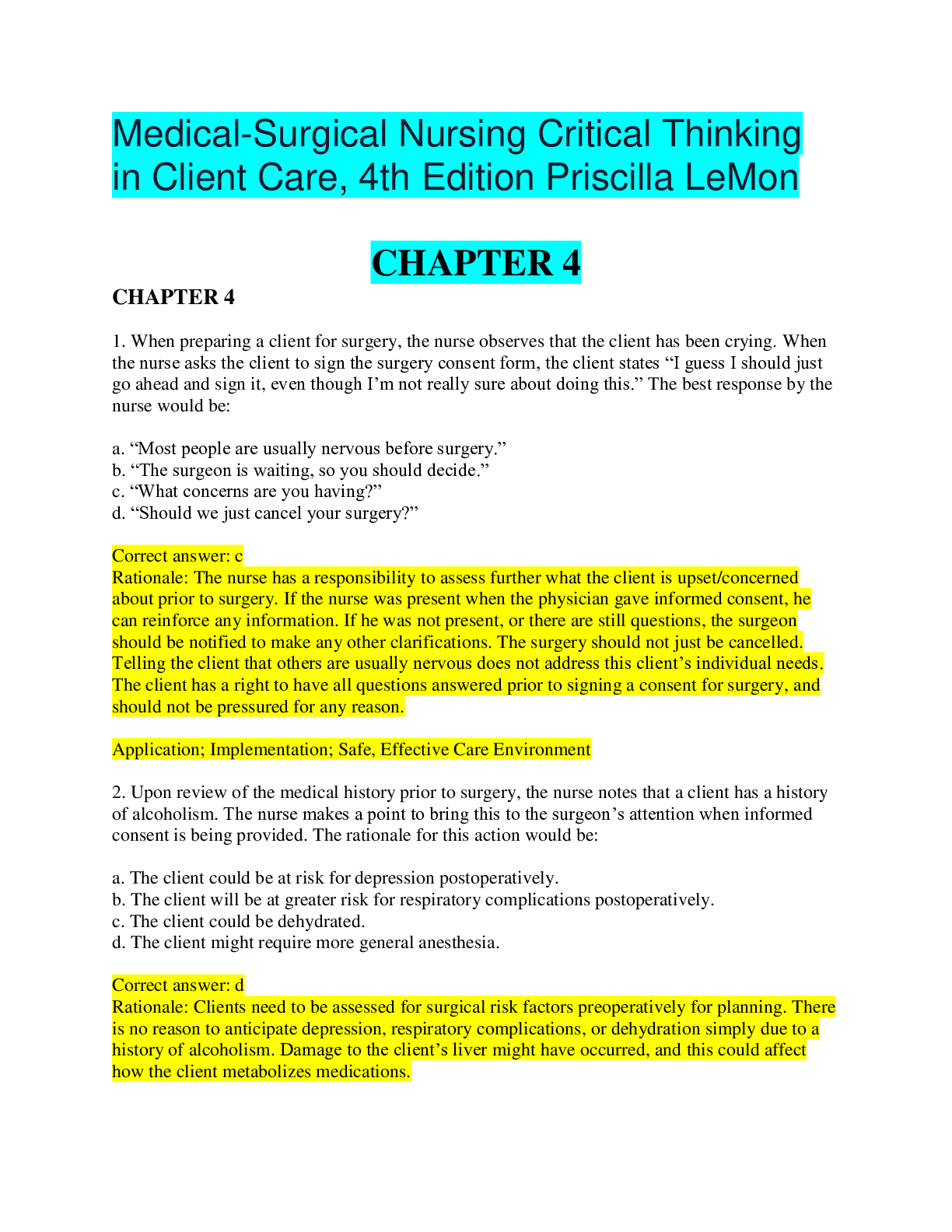
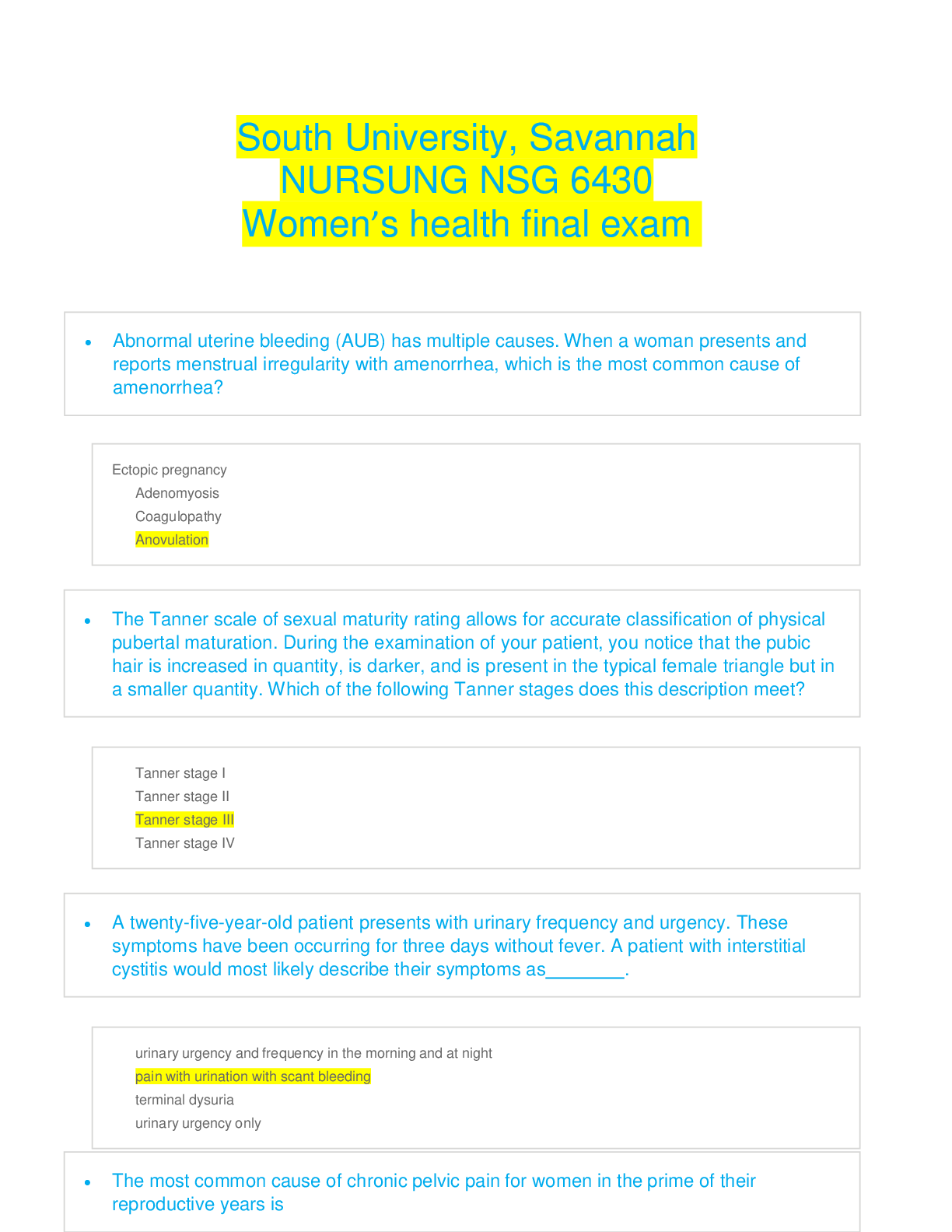
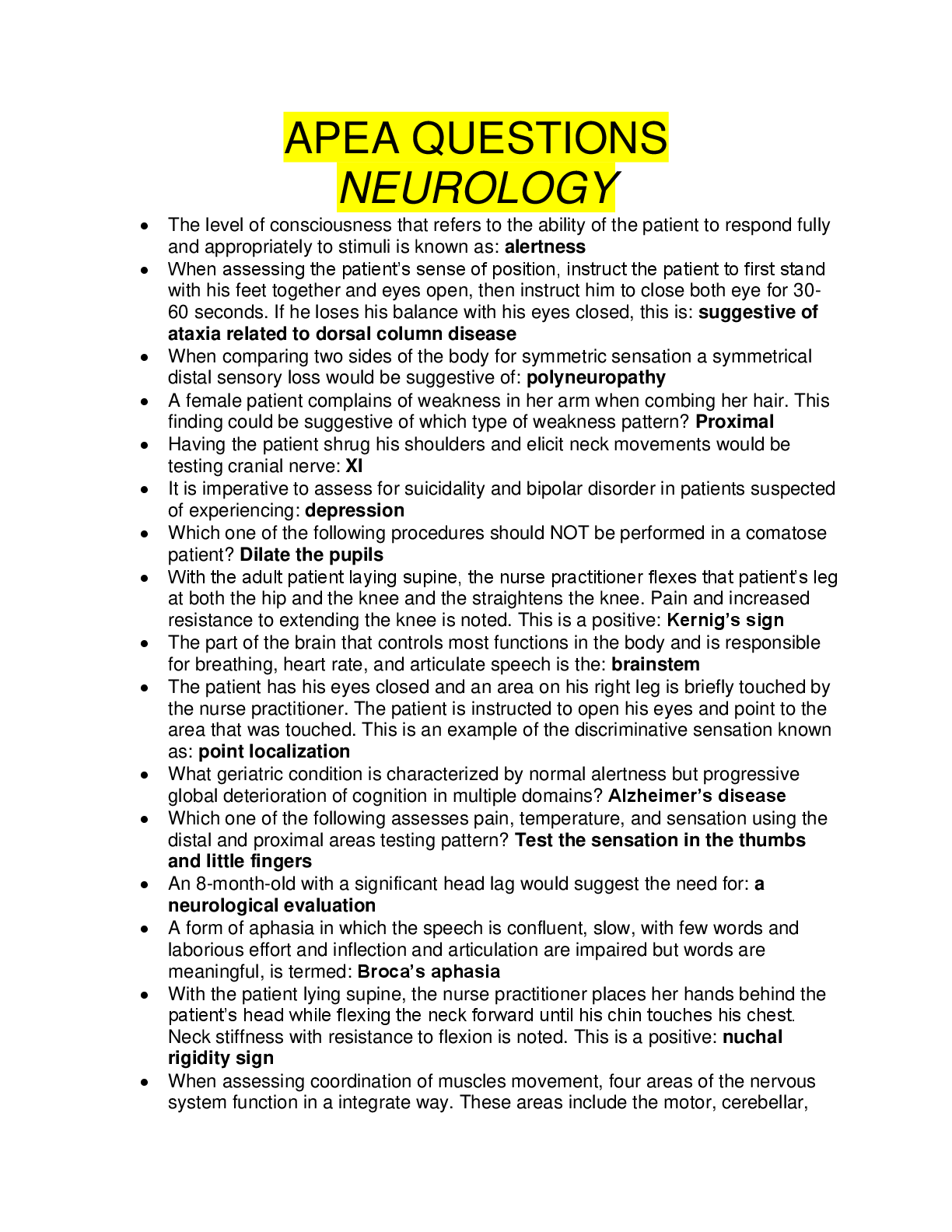
Chapter 43--Allergic Dysfunction: Nursing Management
MULTIPLE CHOICE
1. The nurse is determining if a client is experiencing an immune response. Which of the following is not
one of the four R’s of the immune response
...
Chapter 43--Allergic Dysfunction: Nursing Management
MULTIPLE CHOICE
1. The nurse is determining if a client is experiencing an immune response. Which of the following is not
one of the four R’s of the immune response?
1. Recognize
2. Remember
3. Remove
4. Respond
PTS: 1 DIF: Analyze REF: Allergic Dysfunction
2. A client is experiencing a transfusion reaction. The nurse realizes that a transfusion reaction is which
type of hypersensitive reaction?
1. Type 1
2. Type 2
3. Type 3
4. Type 4
ANS: 2
PTS: 1 DIF: Analyze
REF: Table 43-2 Hypersensitive Reactions: Gell-Coombs Classification
3. During the health history, the clients says, “I have many allergies.” Of the following medications,
which one would be for the treatment of “allergies?”
1. Acetaminophen
2. Docusate
3. Diphenhydramine hydrochloride
4. Guaifenesin
PTS: 1 DIF: Analyze
REF: Table 43-6 Pharmacology Facts: Pharmaceutical Therapy for Symptom Relief of Chronic
Allergies
4. After instructing a client about food allergies, the nurse would determine that additional instruction is
needed when the client states that which of the following foods should be avoided?
1. Carrots
2. Peanuts
3. Shellfish
4. Strawberries
REF: Table 43-3 Categories of Sensitizing Agents (Allergens)
5. A client recovering from a kidney transplant needs to be assessed for a hypersensitivity reaction.
Which type of hypersensitive reaction is associated with transplants?
1. Type 1
2. Type 2
3. Type 3
4. Type 4
PTS: 1 DIF: Apply
REF: Table 43-2 Hypersensitive Reactions: Gell-Coombs Classification
6. An individual is petting a cat. Early response to an antigen would include all of the following
EXCEPT:
1. airway obstruction.
2. itchy eyes.
3. nasal secretions.
4. sneezing.
PTS: 1 DIF: Analyze
REF: Allergic Dysfunction: Primary and Secondary Response
7. The nurse is teaching a client how to avoid allergic reactions. Which of the following is not an
appropriate recommendation?
1. “Avoid the allergen.”
2. “Carry your prescribed medications.”
3. “Use corticosteroids daily to prevent reactions.”
4. “Wear a medical alert bracelet.”.
PTS: 1 DIF: Apply REF: Anaphylaxis: Planning and Implementation
8. A client begins to sneeze and have an increase in nasal secretions. The nurse realizes that the antibody
that attaches to mast cells and plays a critical role in the allergic process is:
1. IgA.
2. IgD.
3. IgE.
4. IgG.
PTS: 1 DIF: Analyze REF: Allergic Dysfunction: Early Response
9. A client, receiving a dose of penicillin for an infection, begins to complain of difficulty breathing and
has a respiratory rate of 38. This client is experiencing what type of reaction?
1. Type 1
2. Type 2
3. Type 3
4. Type 4
PTS: 1 DIF: Analyze
REF: Table 43-2 Hypersensitive Reactions: Gell-Coombs Classification
10. A client is prescribed a Leukotriene modifier as part of asthma treatment. The nurse should instruct the
client that this medication:
1. relaxes bronchospasm.
2. increases mucociliary clearance.
3. reduces inflammation.
4. inhibits the allergic process.
PTS: 1 DIF: Apply
REF: Table 43-5 Pharmacology Facts: Pharmaceutical Therapy for Asthma
11. A client is experiencing intense pruritis from contact dermatitis. Which of the following would be
helpful for this client?
1. Administer hydroxyzine HCL as prescribed.
2. Cover the area with a warm compress.
3. Instruct to scratch the skin with finger pads.
4. Increase ambulation when itching occurs.
PTS: 1 DIF: Apply
REF: Table 43-10 Pharmacology Facts: Pharmaceutical Therapy for Urticaria
12. A client calls for the nurse and says that her mouth has been itchy since she ate lunch. Which of the
following should the nurse do to assist the client?
1. Ask the client if she has ever been diagnosed with a food allergy.
2. Ask the physician to prescribe an oral steroid.
3. Assess the client’s vital signs.
4. Assess the client’s tongue and throat
PTS: 1 DIF: Apply REF: Food Allergy
13. The nurse begins to experience red, itchy hands after using gloves for client care. Which of the
following should the nurse consider as causing these symptoms?
1. Seasonal allergies
2. Influenza
3. Latex allergy
4. Serum sickness
PTS: 1 DIF: Analyze REF: Latex Allergy
MULTIPLE RESPONSE
1. A client is being instructed to avoid airborne allergens. Which of the following allergens would be
considered airborne? (Select all that apply.)
1. Animal dander
2. Eggs
3. Fungal spores
4. Grass pollen
5. Insect stings
6. Milk
PTS: 1 DIF: Apply
REF: Table 43-3 Categories of Sensitizing Agents (Allergens)
2. The nurse suspects a client is experiencing atopic asthma when which of the following are assessed?
(Select all that apply.)
1. Shortness of breath with exertion
2. Nighttime coughing
3. Chest tightness
4. Wheezing
5. Rash
6. Ear pain
PTS: 1 DIF: Analyze
REF: Atopic Asthma: Assessment with Clinical Manifestations
3. Which of the following should the nurse instruct a client diagnosed with asthma on ways to reduce
asthma triggers? (Select all that apply.)
1. Remove carpets in bedrooms.
2. Use stuffed animals as toys.
3. Keep pets off of furniture.
4. Avoid freshly cut grass.
5. Avoid cigarette smoke.
6. Use asthma medication approximately 10 minutes before exercise.
PTS: 1 DIF: Apply REF: Patient Playbook: Triggers for Asthma
4. A client is scheduled for a skin-prick test to diagnose the cause for his allergic reactions. Prior to this
test, which of the following medications should the client be instructed to avoid? (Select all that
apply.)
1. Corticosteroids
2. Antihistamines
3. Benzodiazepines
4. Theophylline
5. Antidepressants
6. Aspirin
PTS: 1 DIF: Apply REF: Atopic Asthma: Diagnostic Tests
5. A client is demonstrating signs of an anaphylactic reaction. Which of the following should the nurse
do? (Select all that apply.)
1. Place the client in the supine position.
2. Assist the client to ambulate.
3. Maintain the airway.
4. Provide oral fluids.
5. Begin an intravenous access line.
6. Place the client in the prone position.
PTS: 1 DIF: Apply
REF: Table 43-8 Treatment of the Patient with Anaphylaxis
[Show More]



 Med Surg test Latest Verified Questions and all Correct Answers with Explanations Chapter 43 Assessment of Digestive and Gastrointestinal Function.png)


 Correct Study Guide, Download to Score A.png)


.png)