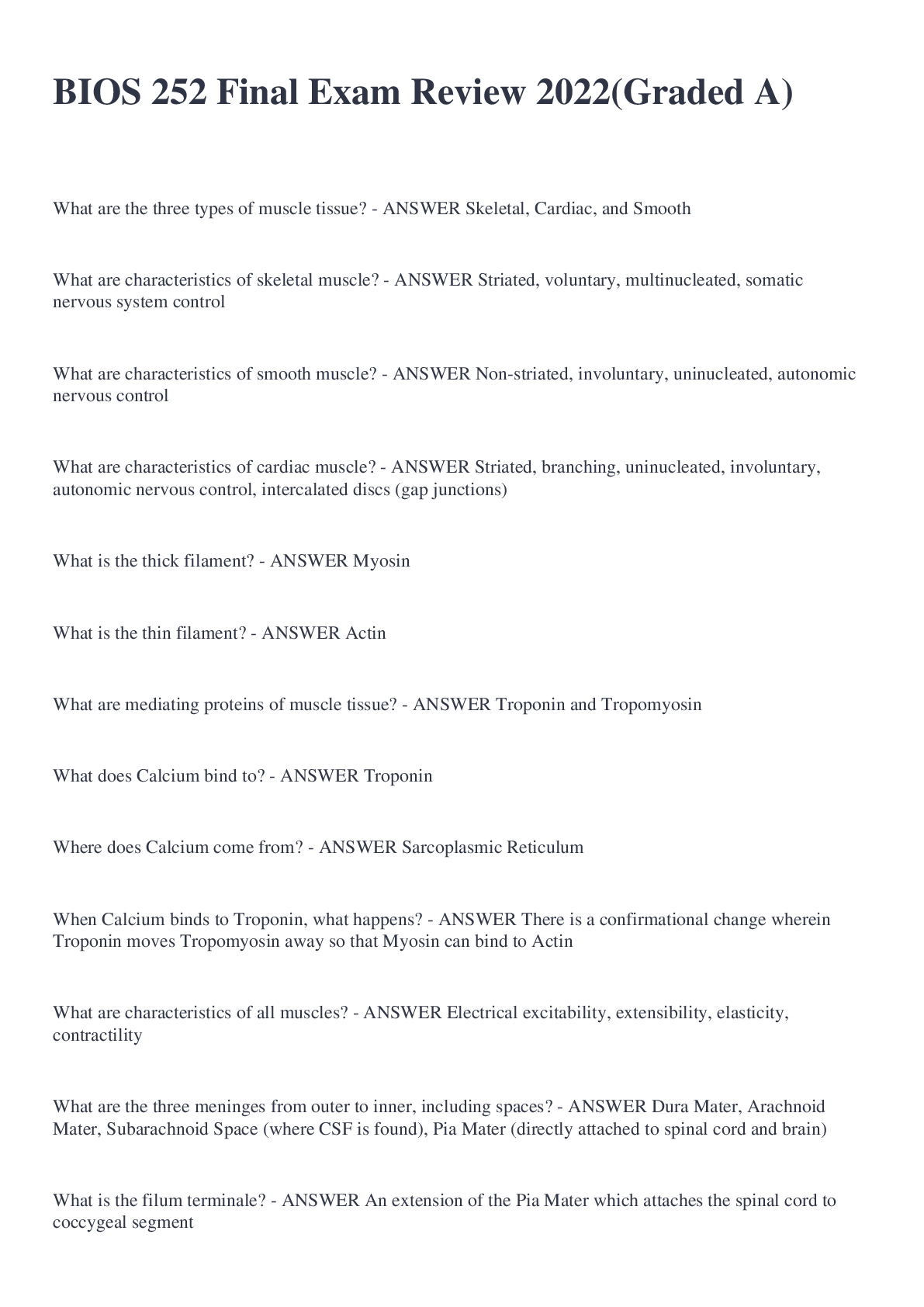
What are the three types of muscle tissue? - ANSWER Skeletal, Cardiac, and Smooth
What are characteristics of skeletal muscle? - ANSWER Striated, voluntary, multinucleated, somatic nervous system control
What are c
...
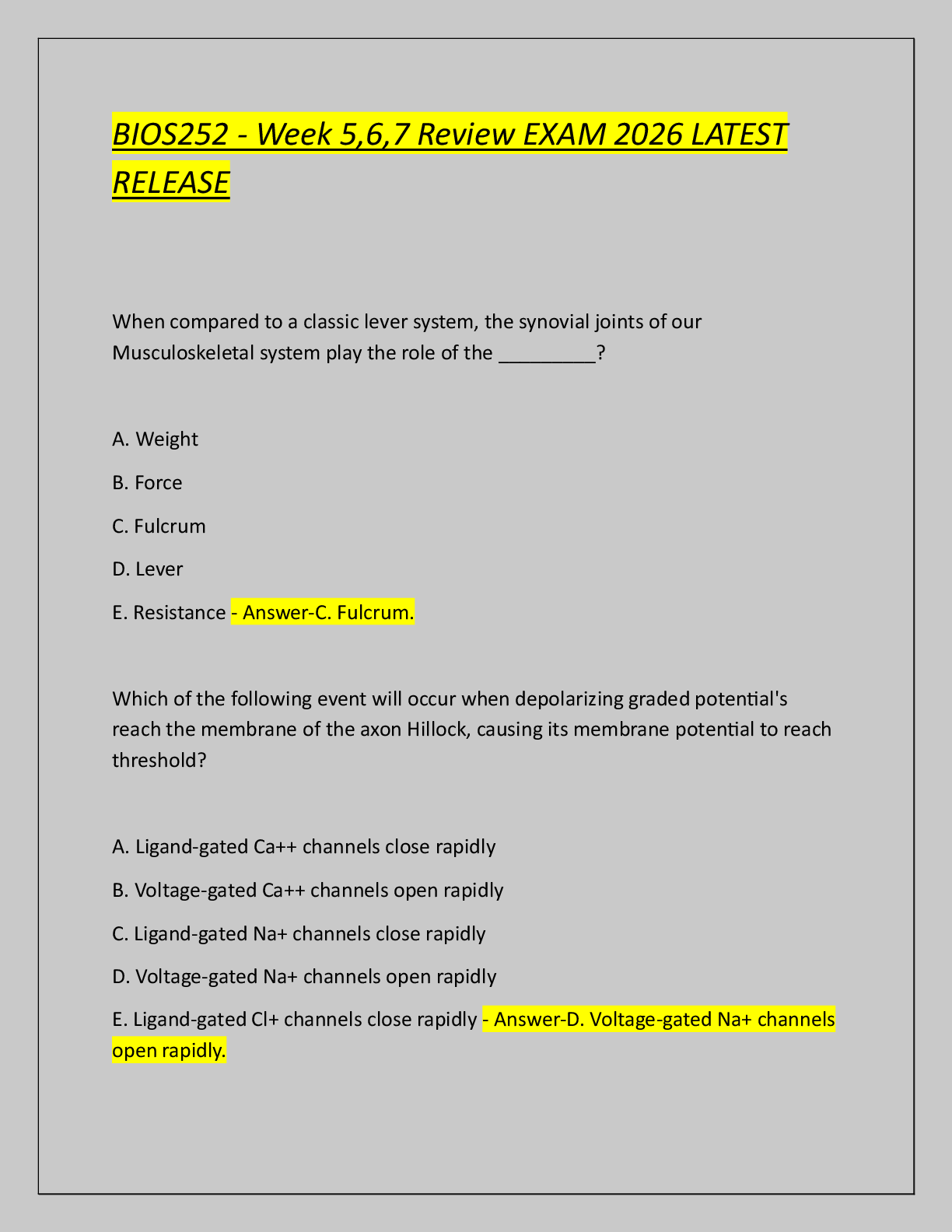
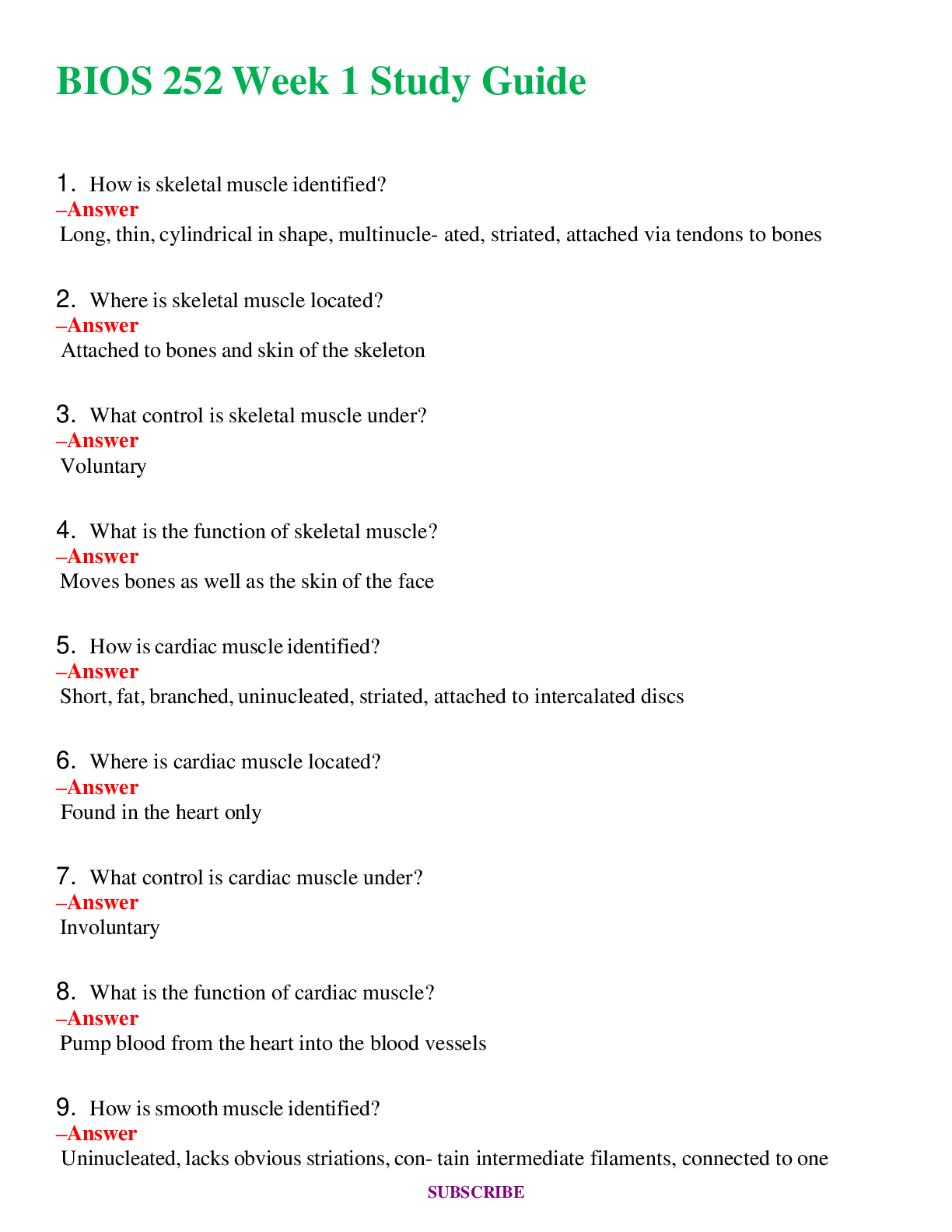
What are the three types of muscle tissue? - ANSWER Skeletal, Cardiac, and Smooth
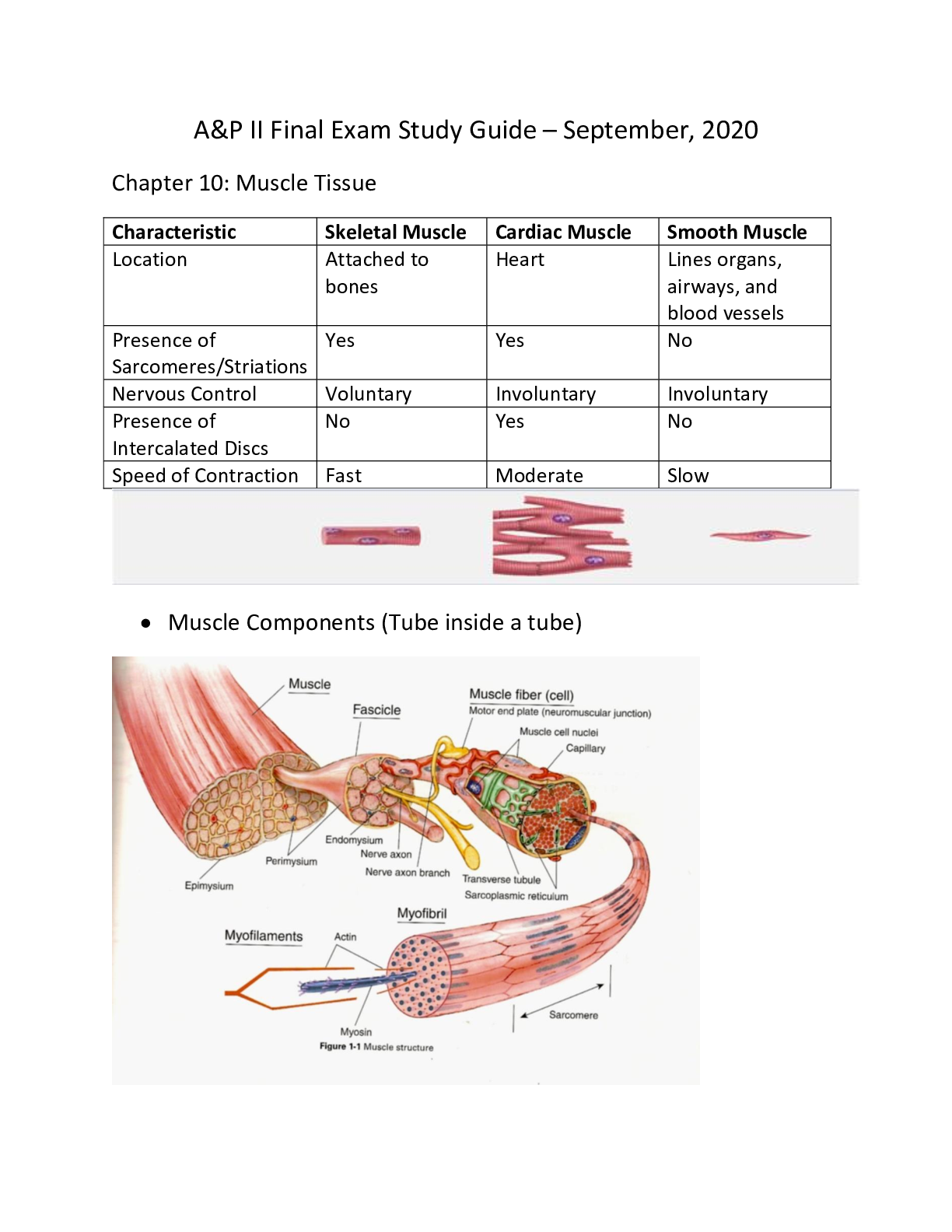
What are characteristics of skeletal muscle? - ANSWER Striated, voluntary, multinucleated, somatic nervous system control
What are characteristics of smooth muscle? - ANSWER Non-striated, involuntary, uninucleated, autonomic nervous control
What are characteristics of cardiac muscle? - ANSWER Striated, branching, uninucleated, involuntary, autonomic nervous control, intercalated discs (gap junctions)
What is the thick filament? - ANSWER Myosin
What is the thin filament? - ANSWER Actin
What are mediating proteins of muscle tissue? - ANSWER Troponin and Tropomyosin
What does Calcium bind to? - ANSWER Troponin
Where does Calcium come from? - ANSWER Sarcoplasmic Reticulum
When Calcium binds to Troponin, what happens? - ANSWER There is a confirmational change wherein Troponin moves Tropomyosin away so that Myosin can bind to Actin
What are characteristics of all muscles? - ANSWER Electrical excitability, extensibility, elasticity, contractility
What are the three meninges from outer to inner, including spaces? - ANSWER Dura Mater, Arachnoid Mater, Subarachnoid Space (where CSF is found), Pia Mater (directly attached to spinal cord and brain)
What is the filum terminale? - ANSWER An extension of the Pia Mater which attaches the spinal cord to coccygeal segment
What is an isometric contraction? - ANSWER Length of muscle does not change, but tension does
What is an isotonic contraction? - ANSWER Length of muscle changes, but tension does not
What is a concentric isotonic contraction? - ANSWER Muscle shortens
What is an eccentric isotonic contraction? - ANSWER Muscle lengthens
What is an agonist? - ANSWER Prime mover
What is an antagonist? - ANSWER Opposes action of the prime mover
What is a synergist? - ANSWER An "assistant" or "helper" muscle to the agonist
What is a fixator? - ANSWER Stabilizes muscles
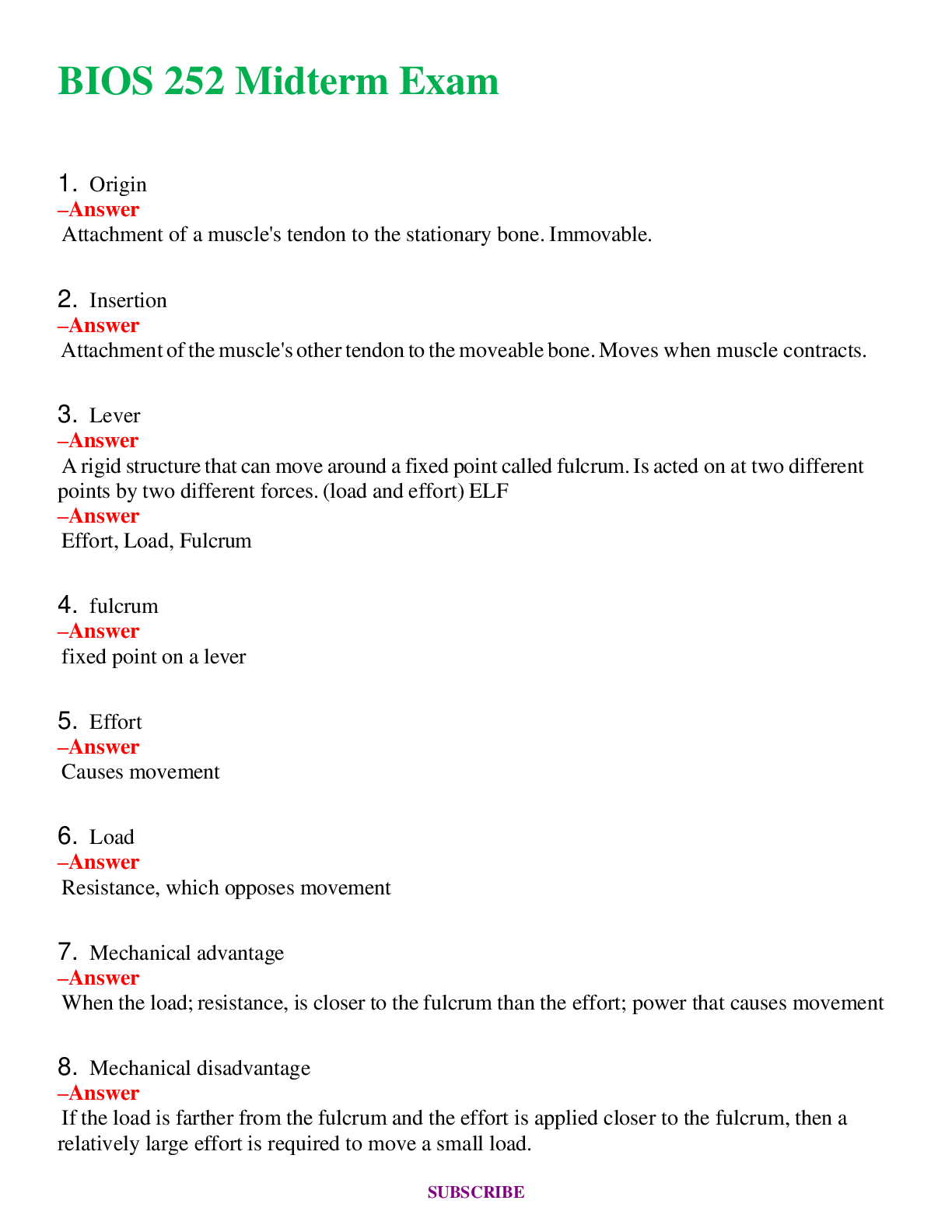
What is the origin? - ANSWER Point of origin for a muscle with NO movement
What is the insertion - ANSWER Where the muscle inserts, non-stable end where most of the movement associated with the muscle is performed
In a first class lever system, what is in the middle? - ANSWER Fulcrum
In a second class lever system, what is in the middle? - ANSWER Load
In a third class lever system, what is in the middle? - ANSWER Effort
What are the neuroglial cells of the CNS and their functions? - ANSWER Astrocytes (blood brain barrier), Oligodendrocytes (myelinator--can myelinate MULTIPLE CNS neuron axons), Microglial (phagocyte/clean-up cells), Ependymal Cell (CSF production)
What are the neuroglial cells of the PNS and their functions? - ANSWER Satellite cells (cover the surface of nerve cell bodies in sensory, sympathetic, and parasympathetic ganglia), Schwann cells (myelinator--only myelinates ONE PNS cell)
Saltatory conduction happens in which type of neuron? Is this fast or slow conudction? - ANSWER Myelinated neurons, fast
Continuous conduction happens in which type of neuron? Is this fast or slow conduction? - ANSWER Unmyelinated neurons, slow
What are the special senses? - ANSWER Sight, hearing, taste, balance, smell
What are the three divisions of the ear? - ANSWER External ear (auricle, external auditory meatus, tympanic membrane), Middle ear (incus, malleus, stapes, eustachian tube), Inner ear (cochlea, vestibule, semicircular canals)
What is the flow of information in hearing? - ANSWER External ear to middle ear to inner ear, transcribed into electrical impulse by cochlea which contains hearing receptors in the organ of Corti in the scala media, carried by cranial nerve VIII to temporal lobe for interpretation
Which structure is responsible for linear balance? - ANSWER Vestibule
Which structure is responsible for dynamic balance? - ANSWER Semicircular canals
Describe the sliding contraction theory - ANSWER Acetylcholine NT is released from synaptic end bulbs of neuron, crossing over synaptic cleft, binds to ligand gated receptor present on muscle tissue sarcolemma, generating a muscle end action potential traveling down the T-Tubule. This activates the sarcoplasmic reticulum to release calcium. From there, Ca binds to Troponin, moving Tropomyosin, allowing Myosin to bind to Actin with the help of ATP.
Where does ATP come from in the muscle? - ANSWER Creatine Phosphate, Anaerobic Glycolysis, Cellular Respiration
What are the structures of the eye? - ANSWER Cornea, Sclera, Lens, Iris, Macula Lutea, Optic Disc, Retina
What are the photoreceptors of the eye? - ANSWER Rods (see black and white) and Cones (see color), only present in retinal layer
What is the flow of information in the eye? - ANSWER Cornea, lens, optic nerve (CN II), optic chiasm, optic tract, thalamus (lateral geniculate nucleus), optic radiations, occipital cortex
What structure refracts light? - ANSWER Lens, causing the information to be concentrated on the Macula Lutea.
What is the "blind spot"? - ANSWER Optic disc
What functions are associated with the various lobes of the brain? - ANSWER Occipital: vision, Temporal: hearing, Parietal: sensation/feeling, Frontal: motor skills/personality
What is the precentral gyrus? - ANSWER Primary motor cortex
What is the postcentral gyrus? - ANSWER Primary sensory cortex
What is Broca's area? - ANSWER Located in frontal lobe of the dominant hemisphere of your brain, used for producing speech. This develops BEFORE Wernicke's area, which is why infants can babble but don't make sense.
What is Wernicke's area? - ANSWER Found in temporal lobe, used for making sense of speech and comprehension (both of your own speech and of the speech of others)
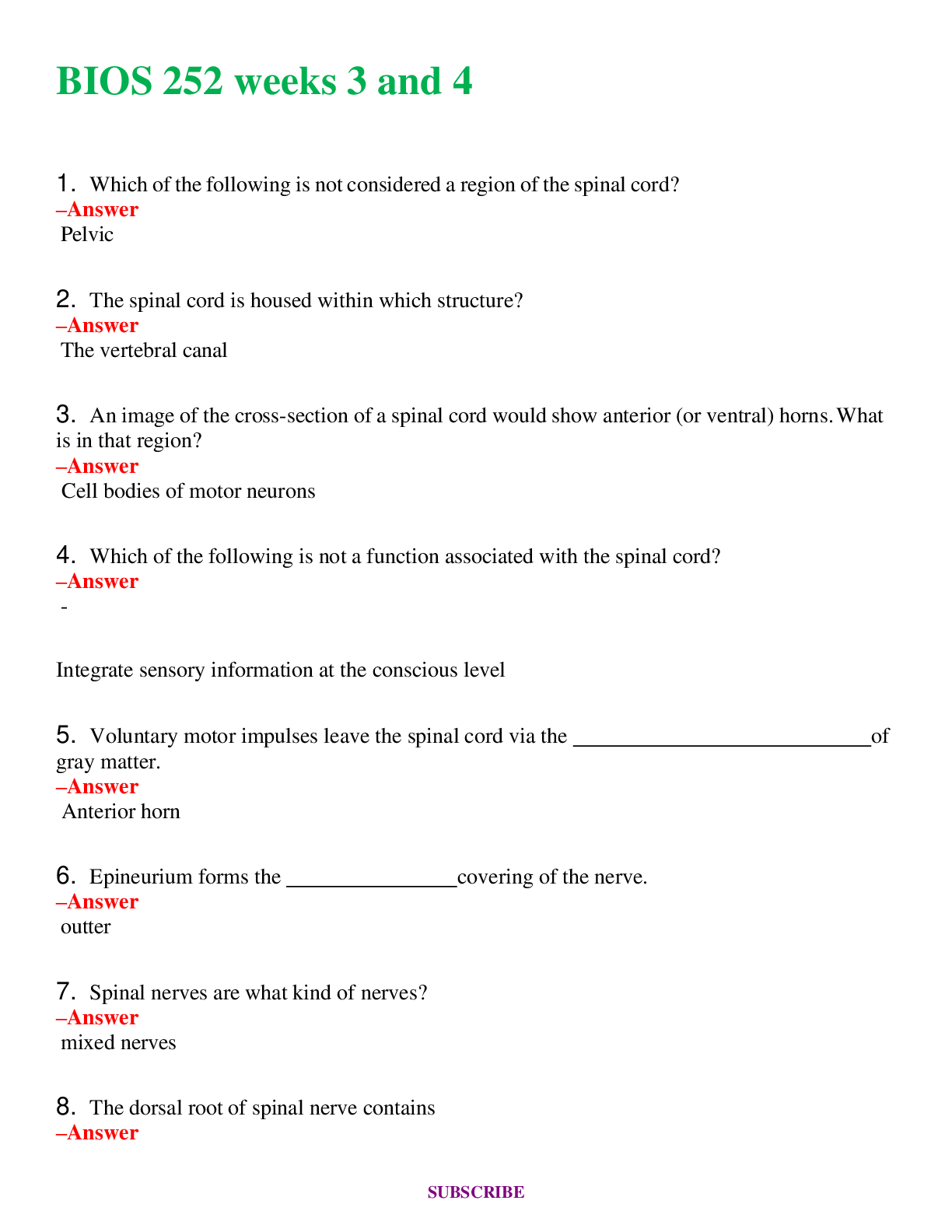
What parts of the gray matter tissue of the spinal cord are responsible for which functions? - ANSWER Anterior horn: somatic motor neurons, Posterior horn: all sensory information, Lateral horn: autonomic system both sympathetic (T1-L2/L3) and parasympathetic (brain stem, S2-S4)
What are the cranial nerves and their functions? - ANSWER CNI: Sensory, Smell
CN II: Sensory, Sight
CN III: Motor, Moving eyes
CN IV: Motor, Moving eyes
CN V: Both, Facial feeling and chewing
CN VI: Motor, Moving eyes
CN VII: Both, Facial expression
CN VIII: Sensory, Hearing and Balance
CN IX: Both, Salivary gland innervation, swallowing, taste on posterior 1/3 of tongue
CN X: Both, Speaking, tasting with epiglottis, cardiovascular depression, defecation/urination
CN XI: Motor, Shoulder elevation and depression
CN XII: Motor, Tongue movement
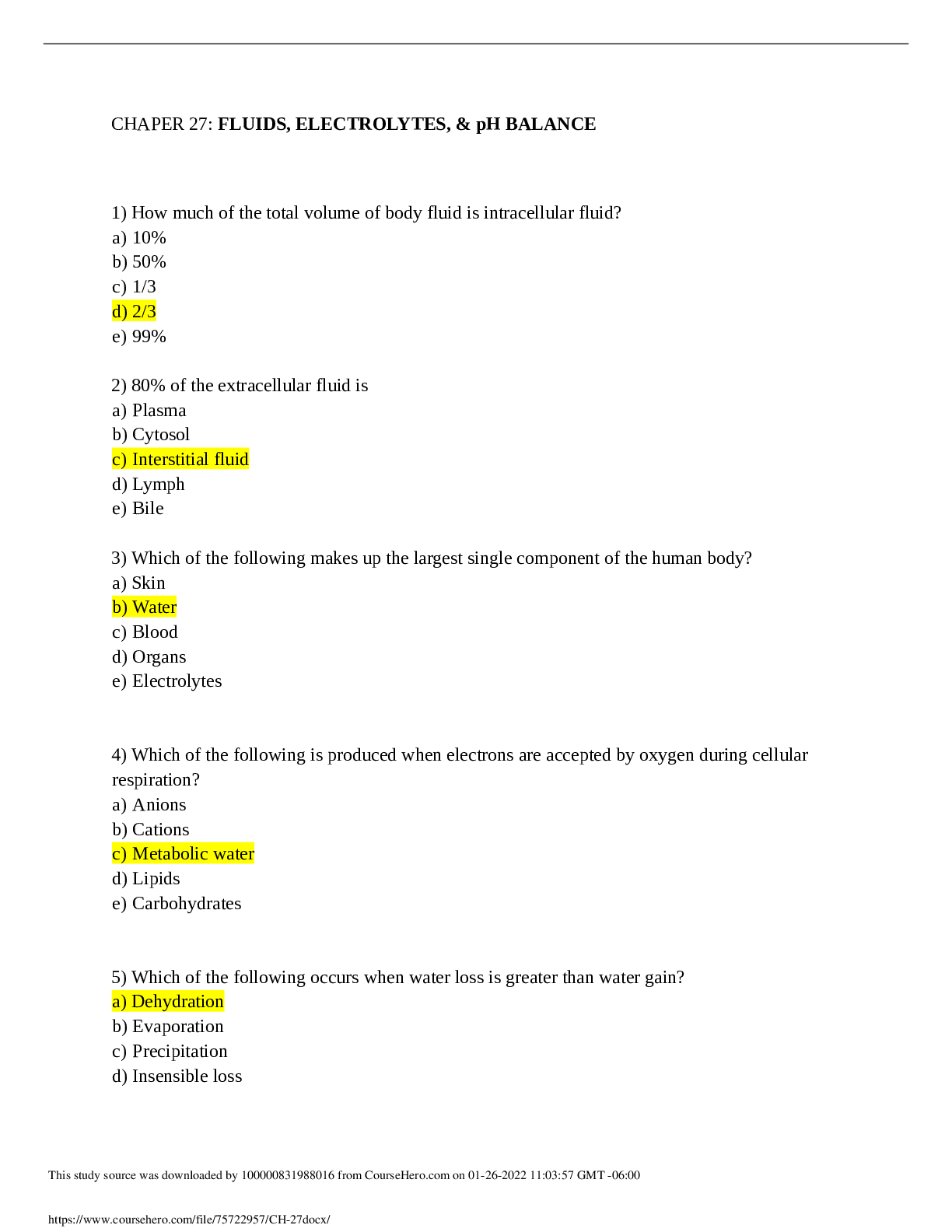
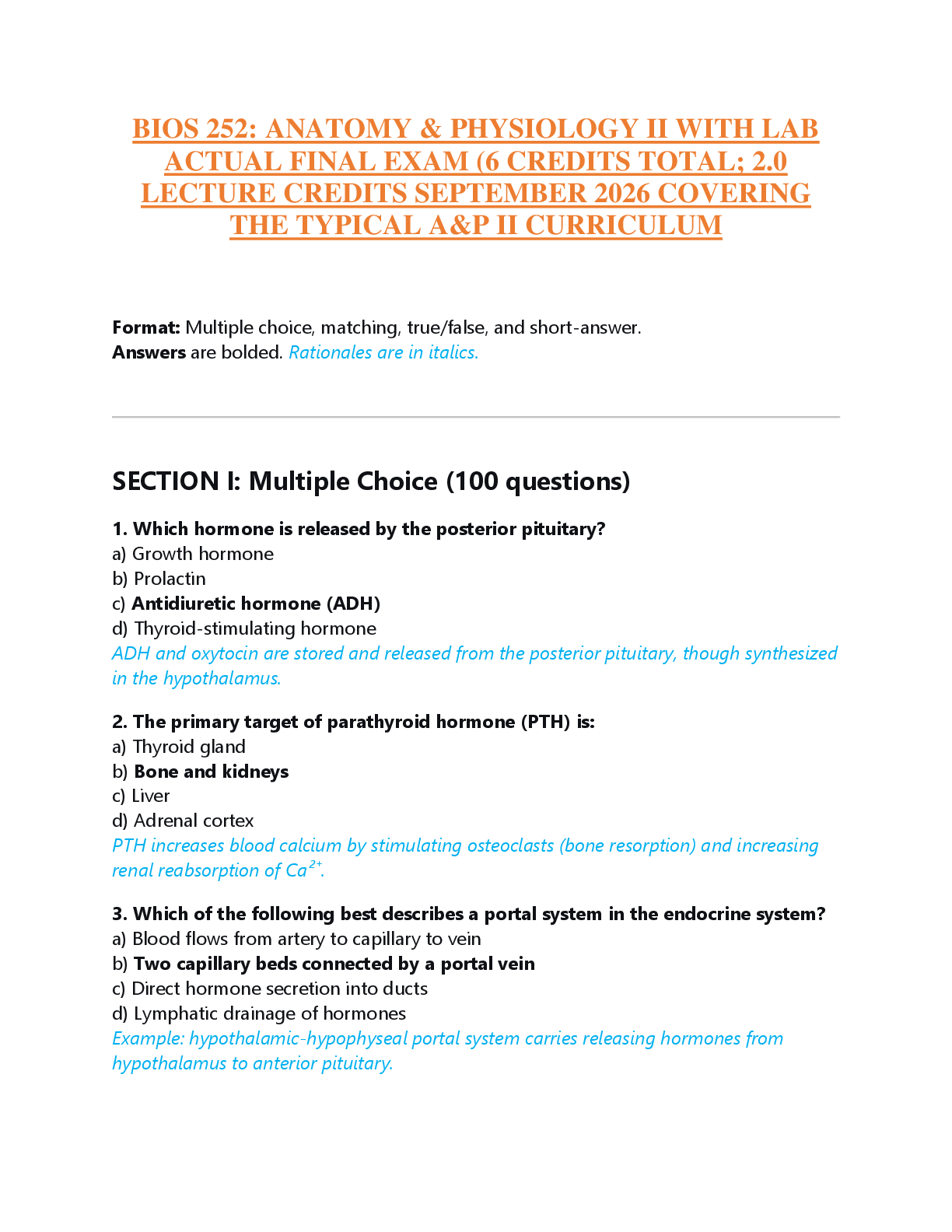
What is the resting membrane potential? - ANSWER -70mV, cell is more negative due to proteins and Potassium (K) inside the cell
What is depolarization? - ANSWER Sodium (Na) rushes into the cell, making it more positive
What is repolarization? - ANSWER Potassium (K) leaves the cell
What is hyperpolarization? - ANSWER Too much Potassium (K) leaves the cell
What is an EPSP? - ANSWER Graded potential leads to membrane becoming LESS negative, leading to an action potential if cell membrane reaches -55mV
What is an IPSP? - ANSWER Graded potential leading to membrane become MORE negative (hyperpolarized), inhibiting an action potential
What are the components of a reflex arc in order? - ANSWER Sensory receptor, sensory neuron, integration center, motor neuron, effector organ (often muscle)
What are the ascending (sensory tracts) we must know? - ANSWER Spinothalamic, Posterior Column Medial Lemniscus, Spinocerebellar, Trigeminothalamic
What are the descending (motor tracts) we must know? - ANSWER Corticobulbar, Corticospinal, Rubrospinal, Tectospinal (if it isn't sensory, assume it's motor!)
What is the CNS? - ANSWER Brain and Spinal Cord
[Show More]