Chapter 50--Lower Gastrointestinal Tract Dysfunction: Nursing Management
MULTIPLE CHOICE
1. In caring for a client diagnosed with a small bowel obstruction, what would the nurse expect to do
first?
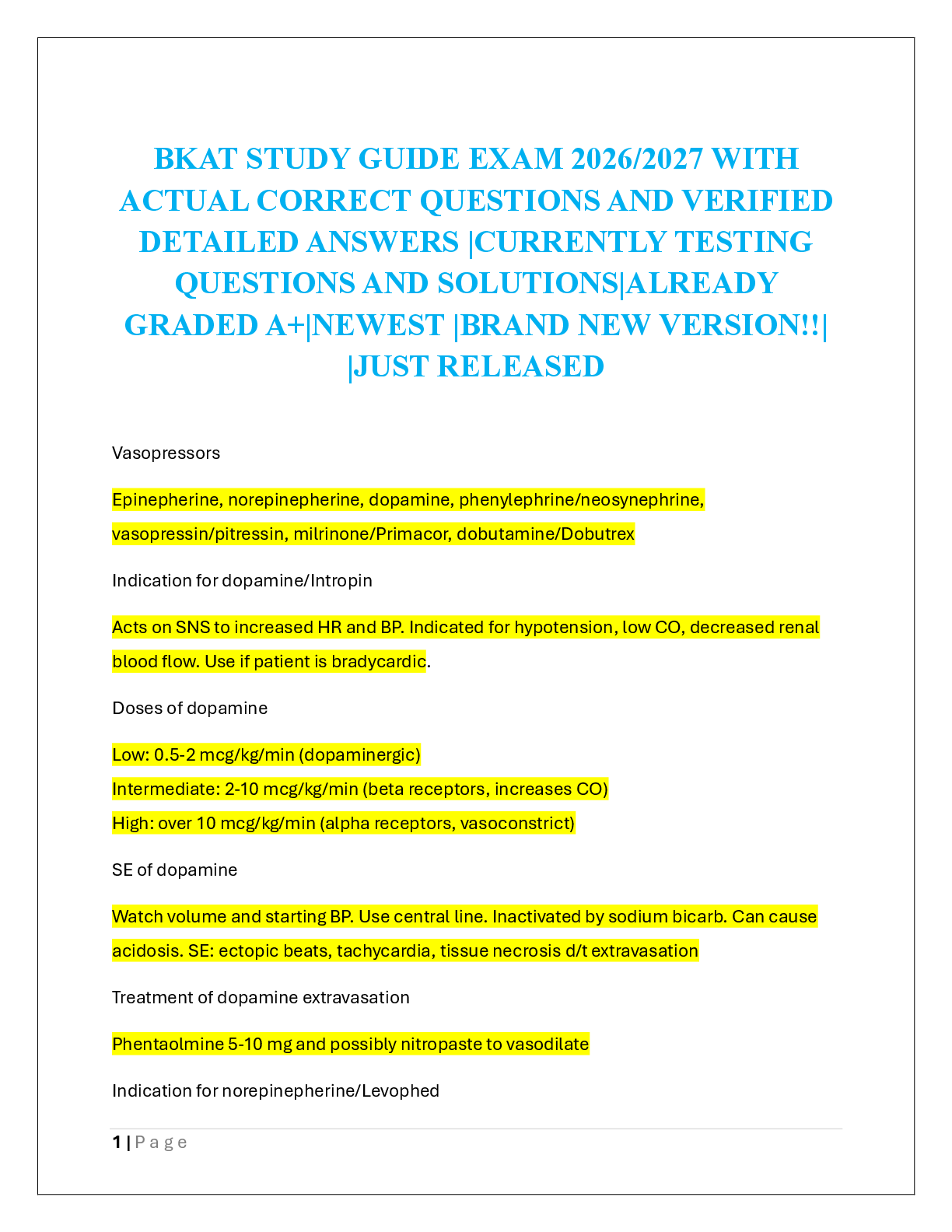
1. Prepare to put
...
Chapter 50--Lower Gastrointestinal Tract Dysfunction: Nursing Management
MULTIPLE CHOICE
1. In caring for a client diagnosed with a small bowel obstruction, what would the nurse expect to do
first?
1. Prepare to put in a nasogastric (NG) tube.
2. Give pain medication.
3. Draw lab work.
4. Start an intravenous (IV) line.
PTS: 1 REF: Surgery
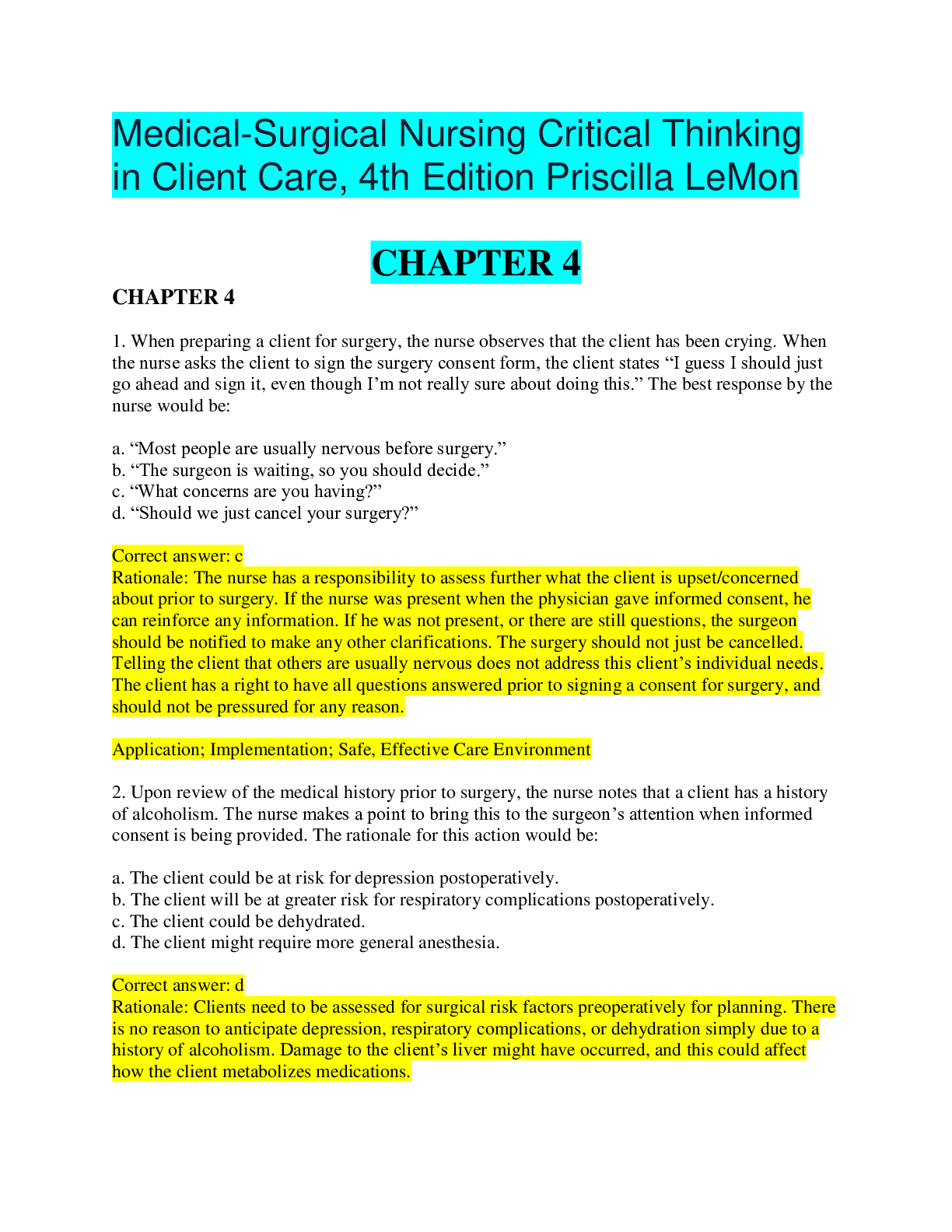
2. The nurse, instructing a client about malabsorption syndrome, should include that food is absorbed in
the:
1. mouth.
2. bloodstream.
3. stomach.
4. small intestine.
PTS: 1 DIF: Apply REF: Small Intestine: Absorption of Nutrients
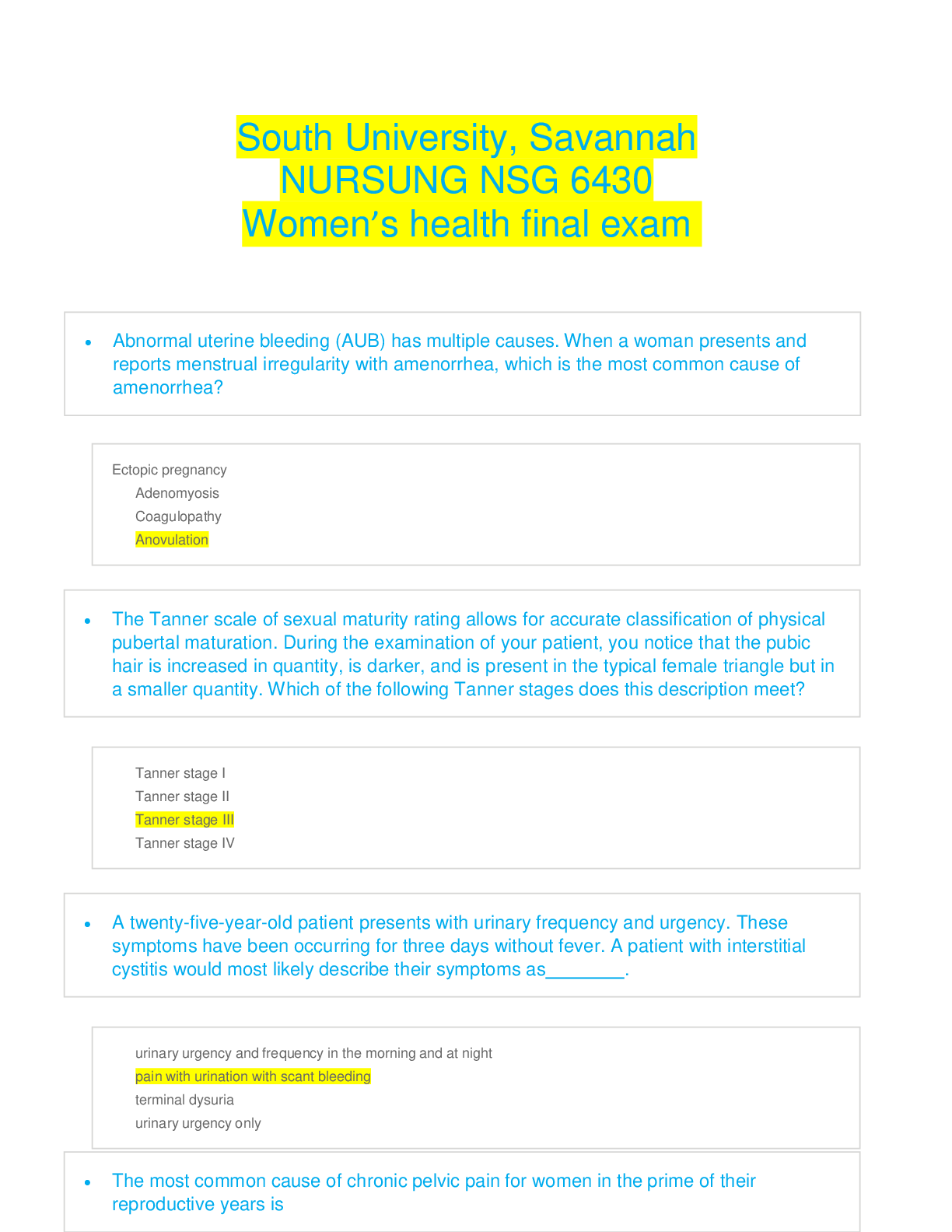
3. A client is diagnosed with appendicitis. One of the laboratory tests the nurse would expect to monitor
would be:
1. serum sodium.
2. white blood cell (WBC) count.
3. hemoglobin (Hgb) and hematocrit (Hct).
4. bilirubin level.
PTS: 1 DIF: Analyze REF: Appendicitis: Diagnostic Tests
4. When assessing the pain in a client diagnosed with appendicitis, the nurse would expect to assess:
1. extreme pain with slight palpation anywhere on the abdomen.
2. pain in the upper back when the right lower quadrant is palpated.
3. more pain when the pressure is released in the right lower quadrant.
4. no pain when the abdomen is palpated.
PTS: 1 DIF: Apply REF: Box 50-3 Rovsing's Sign for Appendicitis
5. A client is being evaluated for symptoms associated with diverticular disease. The nurse realizes that
the best diagnostic test to be used to aid in this diagnosis would be:
1. computed tomography (CT) scan.
2. barium enema.
3. ultrasound.
4. x-ray study.
PTS: 1 DIF: Analyze REF: Diverticulitis: Diagnostic Tests
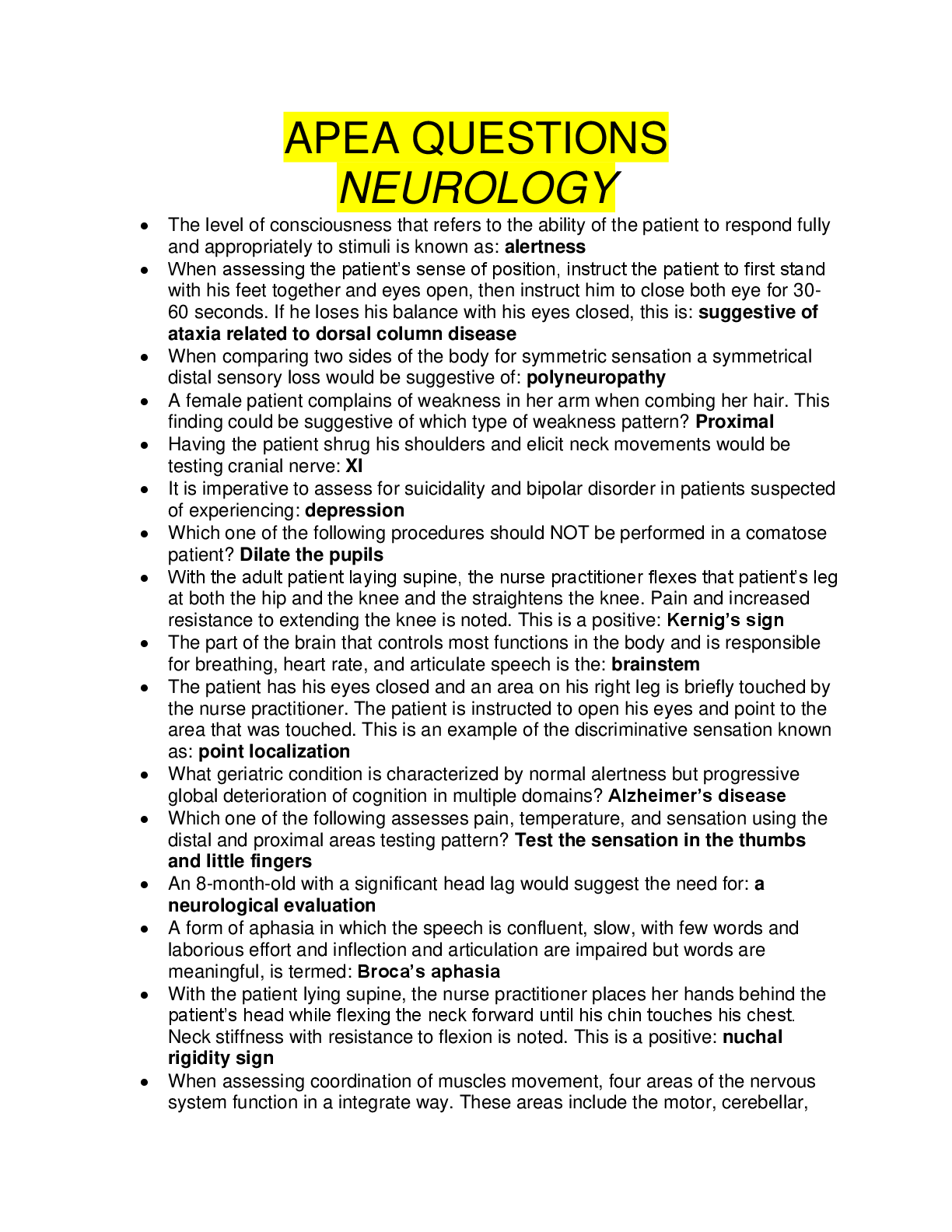
6. An elderly client has noted blood in her stool for the past few months. Which information in the
medical history would strongly suggest colorectal cancer?
1. Increased bouts of vomiting
2. Change in bowel habits
3. Recent infection in the blood
4. Decrease in appetite
ANS: 2
Change in bowel habits is one of the seven danger signals for cancer. Changes in bowel habits and
blood in the stool are common signs of colorectal cancer. Vomiting, decreased appetite, or recent blood
infection could be symptoms of other health problems, but they are not necessarily colorectal cancer.
PTS: 1 DIF: Analyze
REF: Colorectal Cancer: Assessment with Clinical Manifestations
7. The nurse is caring for a client diagnosed with irritable bowel syndrome (IBS) who is experiencing
diarrhea. What medication would the nurse expect to administer?
1. Loperamide (Imodium)
2. Docusate sodium (Colace)
3. Lorazepam (Ativan)
4. Haloperidol (Haldol)
PTS: 1 DIF: Apply REF: Irritable Bowel Syndrome: Pharmacology
8. A client complains of acute gastrointestinal distress. While obtaining a health history, the nurse asks
about the family history. Which disorder has a familial basis?
1. Hepatitis
2. Ulcerative colitis
3. Appendicitis
4. Bowel obstructions
PTS: 1 DIF: Analyze REF: Inflammatory Bowel Disorders
9. A client diagnosed with appendicitis asks the nurse why this illness occurred. The nurse should
respond that the most common cause of appendicitis is:
1. ulcerative colitis.
2. obstruction of the appendix.
3. low-fat diet.
4. infection.
PTS: 1 DIF: Apply REF: Appendicitis: Pathophysiology
10. A young client is experiencing acute abdominal pain. The nurse realizes that the most common cause
for this type of pain would be:
1. appendicitis.
2. biliary tract disease.
3. kidney stones.
4. urinary tract infection.
PTS: 1 DIF: Analyze REF: Acute Abdomen
11. A client experiencing abdominal pain and diarrhea tells the nurse that he used to smoke. Which of the
following gastrointestinal disturbances is this client most likely experiencing?
1. Irritable bowel syndrome
2. Crohn’s disease
3. Acute appendicitis
4. Small bowel obstruction
PTS: 1 DIF: Analyze
REF: Inflammatory Bowel Disorders: Planning and Implementation
12. A client has a history of being treated for ulcerative colitis. The nurse realizes that a life-threatening
complication of this disorder is:
1. Crohn’s disease.
2. small bowel obstruction.
3. peptic ulcer disease.
4. toxic megacolon.
PTS: 1 DIF: Analyze REF: Ulcerative Colitis: Pathophysiology
13. The nurse assesses no bowel sounds with occasional splashing sounds over the large intestines. Which
of the following do these assessment findings suggest to the nurse?
1. Ulcerative colitis
2. Irritable bowel syndrome
3. Appendicitis
4. Bowel obstruction
PTS: 1 DIF: Analyze
REF: Acute Abdomen: Assessment with Clinical Manifestations
14. The nurse is instructing a client on diagnostic tests used to screen for colorectal cancer. Which of the
following should be included in these instructions?
1. A digital rectal exam should be done annually.
2. A test for fecal occult blood should be done annually.
3. A flexible sigmoidoscopy should be done annually.
4. A colonoscopy should be done every 5 years after age 40.
PTS: 1 DIF: Apply REF: Table 50-8: Screening and Detection: CRC
MULTIPLE RESPONSE
1. Laparoscopic surgery is scheduled for a client diagnosed with appendicitis. Which of the following
may be a result of laparoscopic surgery? (Select all that apply.)
1. No risk of infection
2. Less pain
3. Faster recovery times
4. Maybe more complications
5. Shorter hospital stays
6. Better visualization of the abdominal organs
PTS: 1 DIF: Analyze REF: Appendicitis: Surgery
2. The nurse is assessing a client diagnosed with diverticulitis. Which of the following are clinical
manifestations associated with this disorder? (Select all that apply.)
1. Constipation or diarrhea
2. Left lower quadrant abdominal pain
3. Low-grade fever
4. Increased excitability
5. Changes in level of consciousness
6. Thirst.
PTS: 1 DIF: Analyze
REF: Diverticulitis: Assessment with Clinical Manifestations
3. The nurse is assessing a client diagnosed with irritable bowel syndrome (IBS). Which of the following
characteristics are associated with this disorder? (Select all that apply.)
1. Recurrent abdominal pain
2. Abdominal pain that improves with defecation
3. Pain associated with a change in stool frequency
4. Pain associated with a change in stool appearance
5. Pain that occurs only during defecation
6. Pain associated with passing flatus
PTS: 1 DIF: Analyze
REF: Irritable Bowel Syndrome: Assessment with Clinical Manifestations
4. A client, diagnosed with a vitamin B-12 deficiency, tells the nurse that she does not want to receive
injections every month to treat the disorder. Which of the following should the nurse instruct the client
regarding the effects of vitamin B-12 deficiency? (Select all that apply.)
1. Paresthesias in the hands
2. Paresthesias in the feet
3. Ataxia
4. Spinal cord degeneration
5. Loss of memory
6. Loss of the sense of smell
PTS: 1 DIF: Apply REF: Cobalamin
5. The nurse is planning care for a client diagnosed with an acute abdomen. Which of the following
nursing diagnoses would be appropriate for this client? (Select all that apply.)
1. Fear
2. Deficient fluid volume
3. Ineffective coping
4. Acute pain
5. Risk of infection
6. Altered self-perception
PTS: 1 DIF: Apply REF: Acute Abdomen: Nursing Diagnoses
[Show More]



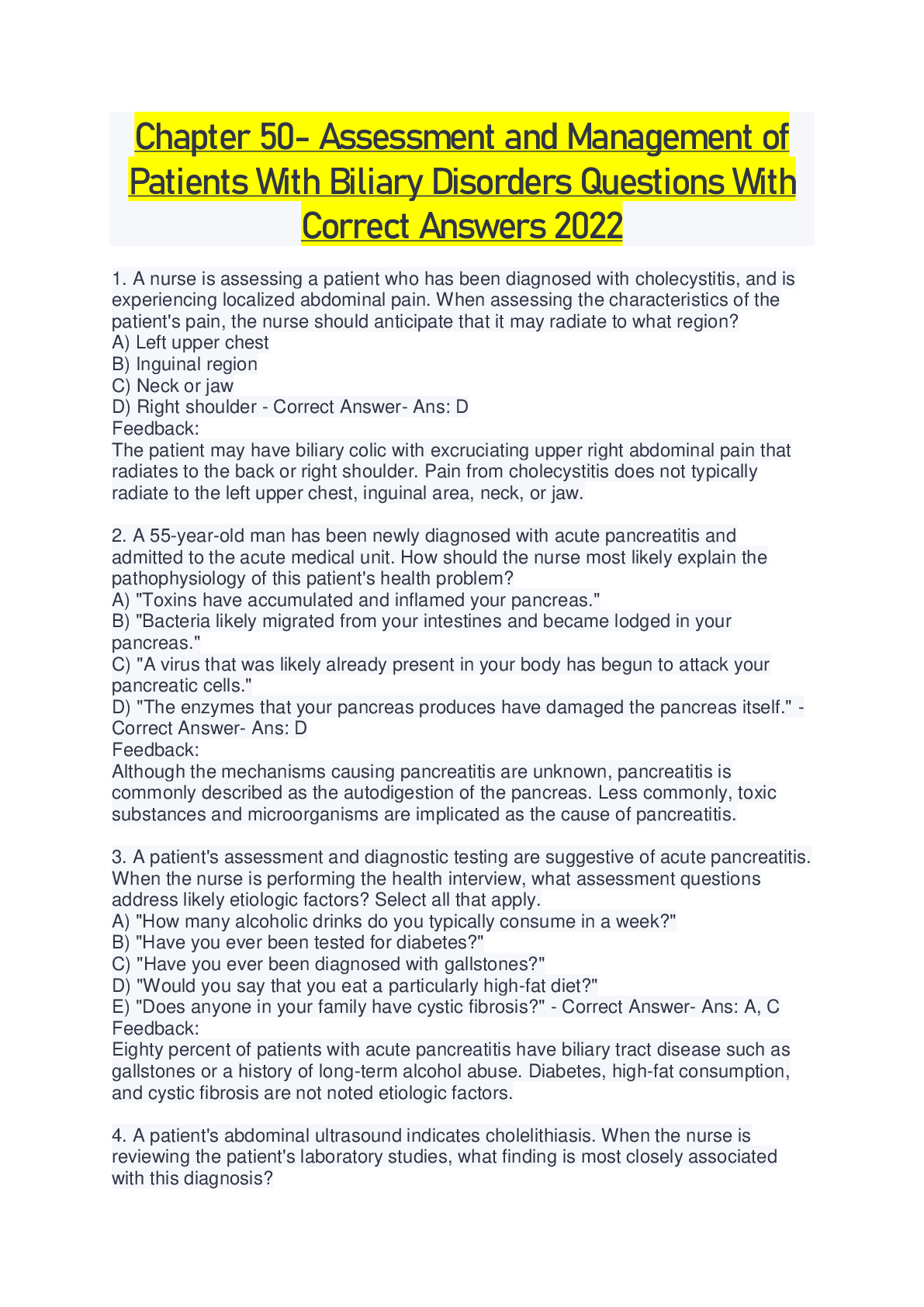
 Med Surg test Latest Verified Questions and all Correct Answers with Explanations Chapter 50 Assessment and Management of Patients with Biliary Disorders.png)

.png)


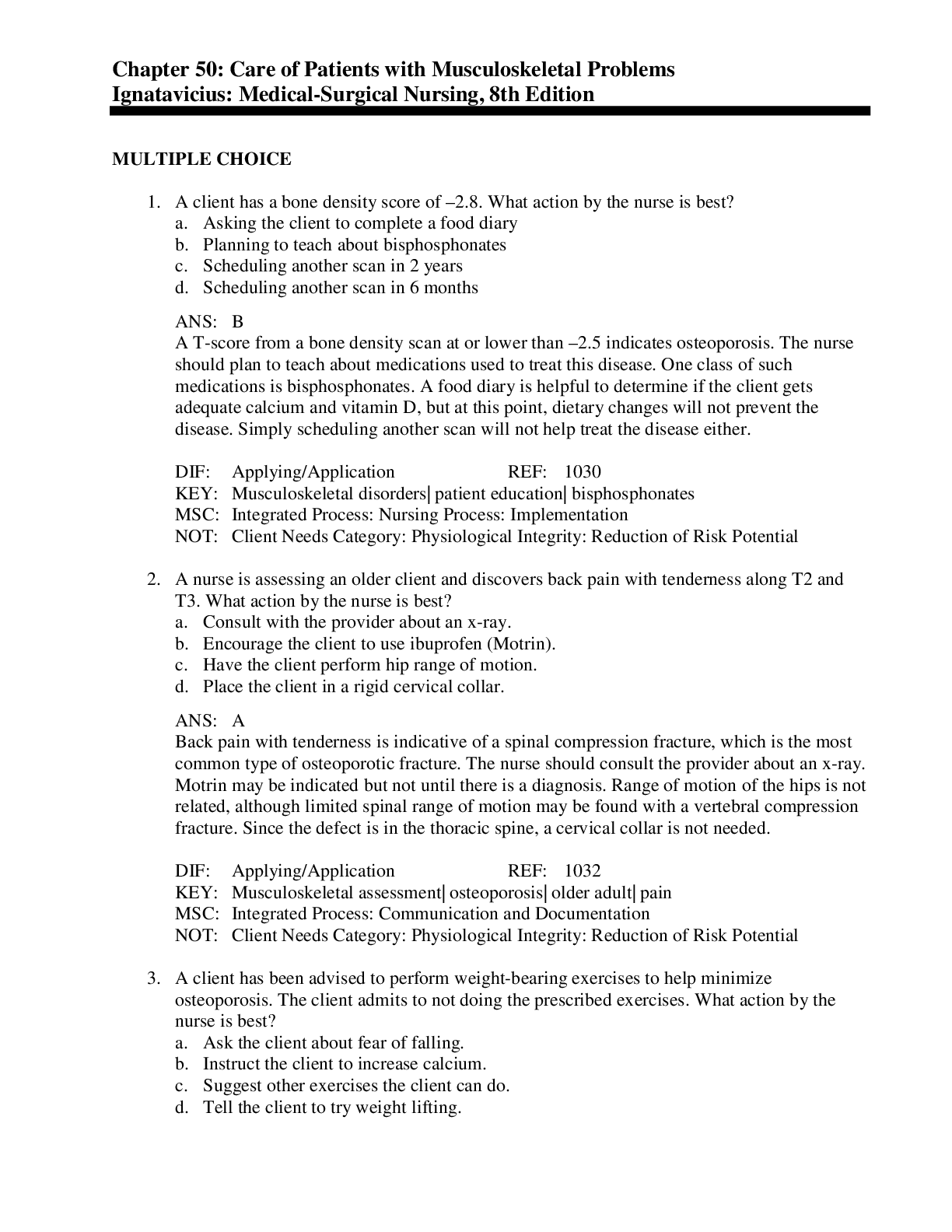
 Med Surg test Latest Verified Questions and all Correct Answers with Explanations Chapter 50 Assessment and Management of Patients with Bi.png)

.png)