NUR2502 Exam 2 Focused Review
· Neck cancer- s/s, nursing interventions, teaching regarding treatment
· S/S: leukoplakia (white, patchy lesions), erythroplakia (red, velvety lesions), lumps in
mouth/throat/neck, diffi
...
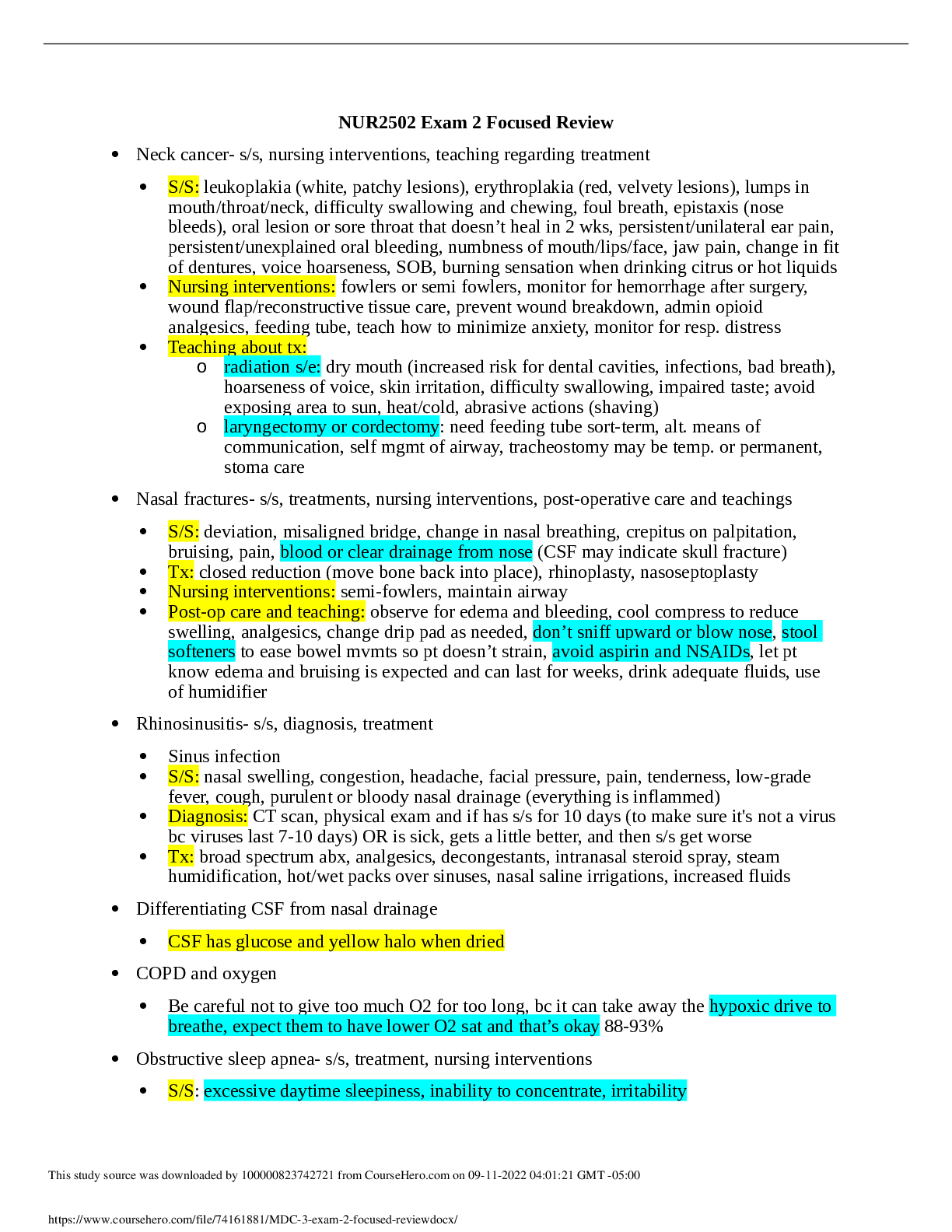
NUR2502 Exam 2 Focused Review
· Neck cancer- s/s, nursing interventions, teaching regarding treatment
· S/S: leukoplakia (white, patchy lesions), erythroplakia (red, velvety lesions), lumps in
mouth/throat/neck, difficulty swallowing and chewing, foul breath, epistaxis (nose
bleeds), oral lesion or sore throat that doesn’t heal in 2 wks, persistent/unilateral ear pain,
persistent/unexplained oral bleeding, numbness of mouth/lips/face, jaw pain, change in fit
of dentures, voice hoarseness, SOB, burning sensation when drinking citrus or hot liquids
· Nursing interventions: fowlers or semi fowlers, monitor for hemorrhage after surgery,
wound flap/reconstructive tissue care, prevent wound breakdown, admin opioid
analgesics, feeding tube, teach how to minimize anxiety, monitor for resp. distress
· Teaching about tx:
o radiation s/e: dry mouth (increased risk for dental cavities, infections, bad breath),
hoarseness of voice, skin irritation, difficulty swallowing, impaired taste; avoid
exposing area to sun, heat/cold, abrasive actions (shaving)
o laryngectomy or cordectomy: need feeding tube sort-term, alt. means of
communication, self mgmt of airway, tracheostomy may be temp. or permanent,
stoma care
· Nasal fractures- s/s, treatments, nursing interventions, post-operative care and teachings
· S/S: deviation, misaligned bridge, change in nasal breathing, crepitus on palpitation,
bruising, pain, blood or clear drainage from nose (CSF may indicate skull fracture)
· Tx: closed reduction (move bone back into place), rhinoplasty, nasoseptoplasty
· Nursing interventions: semi-fowlers, maintain airway
· Post-op care and teaching: observe for edema and bleeding, cool compress to reduce
swelling, analgesics, change drip pad as needed, don’t sniff upward or blow nose, stool
softeners to ease bowel mvmts so pt doesn’t strain, avoid aspirin and NSAIDs, let pt
know edema and bruising is expected and can last for weeks, drink adequate fluids, use
of humidifier
· Rhinosinusitis- s/s, diagnosis, treatment
· Sinus infection
· S/S: nasal swelling, congestion, headache, facial pressure, pain, tenderness, low-grade
fever, cough, purulent or bloody nasal drainage (everything is inflammed)
· Diagnosis: CT scan, physical exam and if has s/s for 10 days (to make sure it's not a virus
bc viruses last 7-10 days) OR is sick, gets a little better, and then s/s get worse
· Tx: broad spectrum abx, analgesics, decongestants, intranasal steroid spray, steam
humidification, hot/wet packs over sinuses, nasal saline irrigations, increased fluids
· Differentiating CSF from nasal drainage
· CSF has glucose and yellow halo when dried
· COPD and oxygen
· Be careful not to give too much O2 for too long, bc it can take away the hypoxic drive to
breathe, expect them to have lower O2 sat and that’s okay 88-93%
· Obstructive sleep apnea- s/s, treatment, nursing interventions
· S/S: excessive daytime sleepiness, inability to concentrate, irritability
[Show More]






.png)