Analytics:
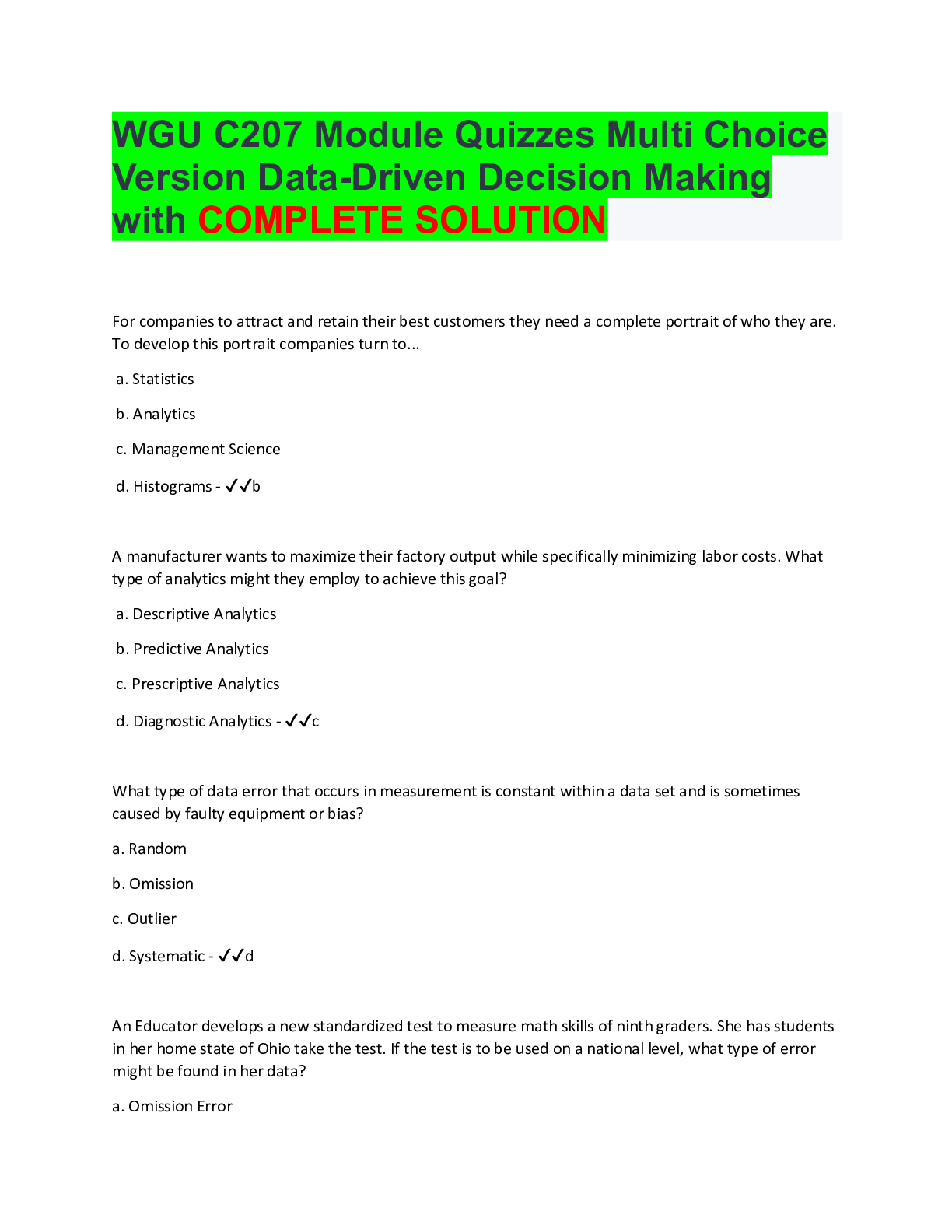
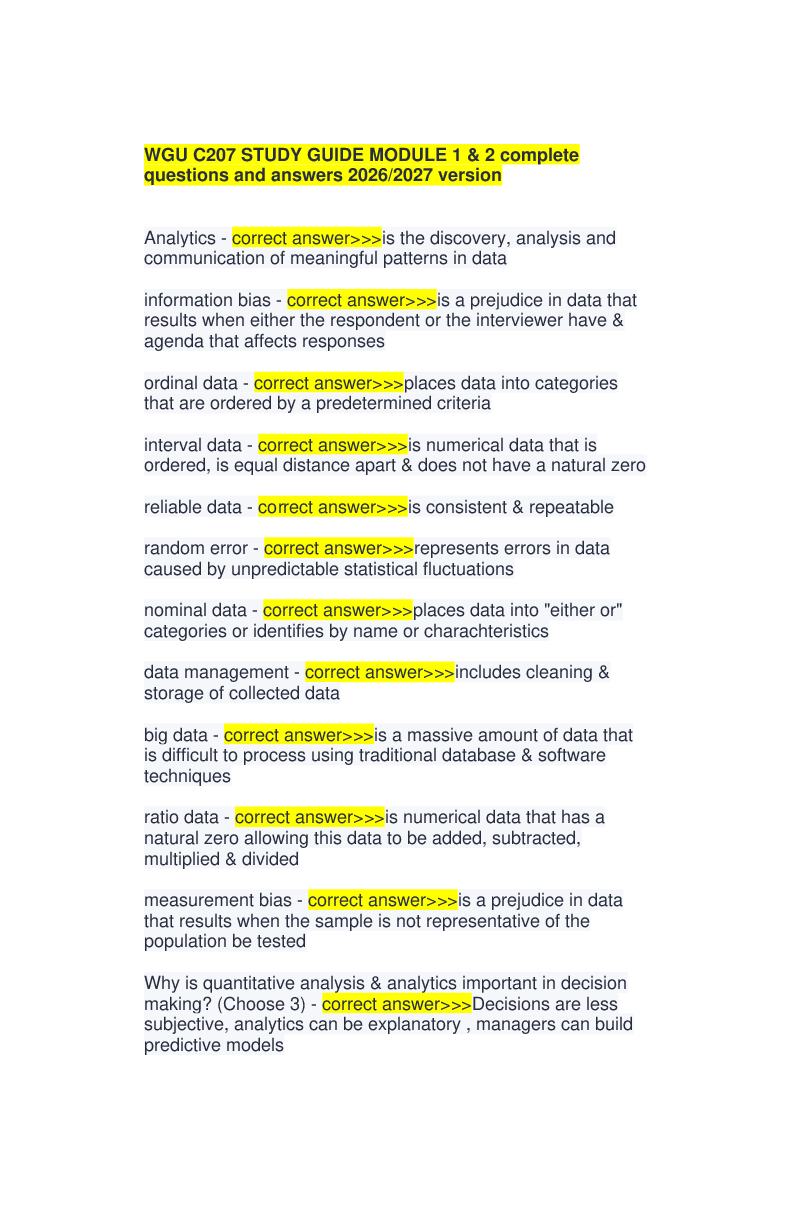
is the discovery, analysis and communication of meaningful patterns in data
Big Data:
is a massive amount of data that is difficult to process using traditional database and software
techniques
Data Manag
...
Analytics:
is the discovery, analysis and communication of meaningful patterns in data
Big Data:
is a massive amount of data that is difficult to process using traditional database and software
techniques
Data Management:
includes cleaning and storage of collected data
Structured Data: multiple choice
Unstructured Data: Searching med notes to see if there was a mention of depression over last 20 years
Why is quantitative analysis and analytics important in decision making?
Decisions are less subjective, analytics can be explanatory, managers can build predictive models
Responses:
Variables:
experimental units:
Relational Database: A database structured to recognize relations among stored items of information
Balanced Scorecard keywords: FLIC = Financial, Learning/Innovation, Internal Business
Processes, and Customer; also helps to align to strategy
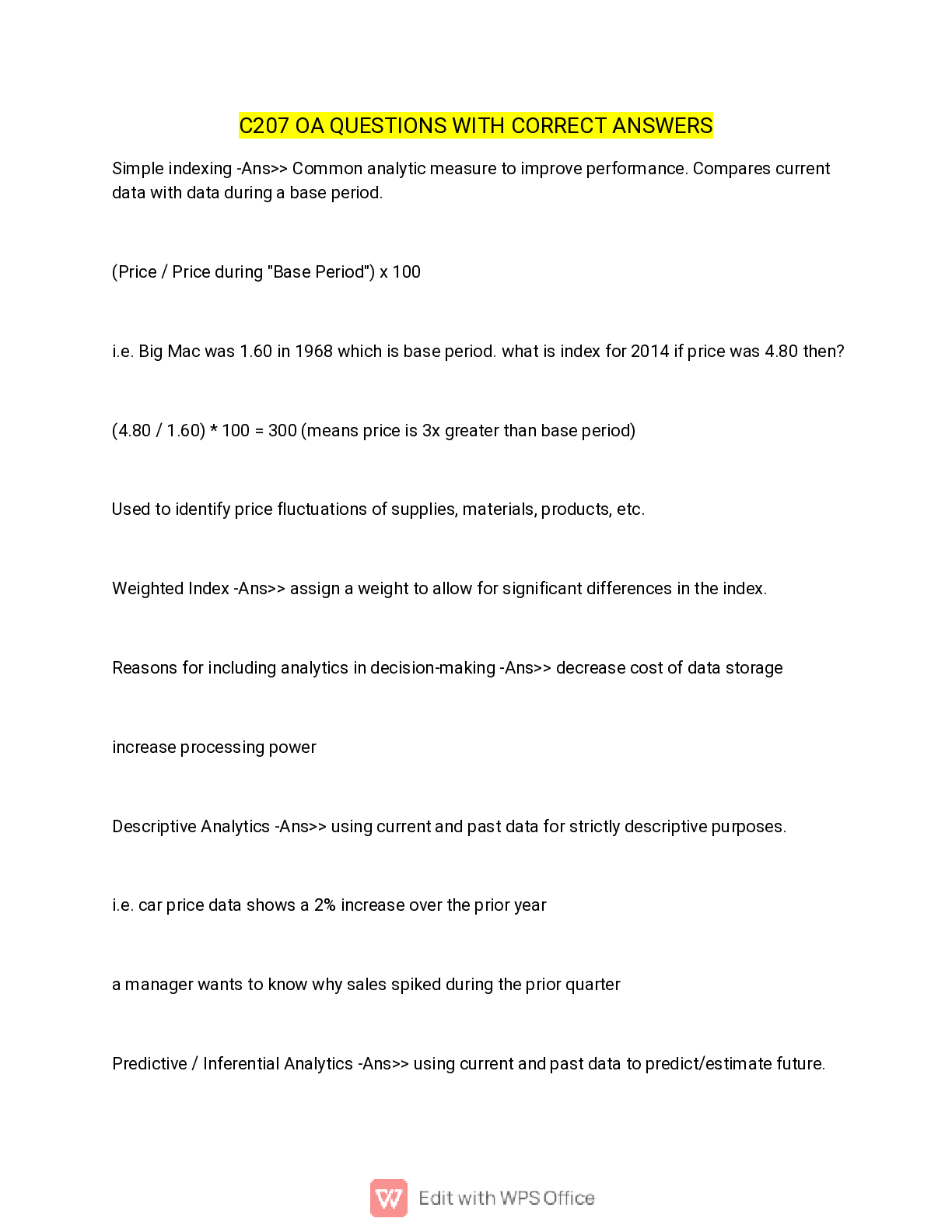
Simple Index Number – ratio of two values representing the same variable; Presents a
Before and After
Simple Composite index – Composes or puts together data from many different sources
with no weighing
Weighted Composite index – Applies a weight to some of the data
clause
BIAS:
Reliable Data: is consistent and repeatable/ measure of the instrument (test)
Valid Data: measures what is intended to be measured/ does your score represent your ability?
Measurement Bias: should be a large enough, representative/random (random sample=lottery)
is a prejudice in data that results when the sample is not representative of the population be tested
Non-representative sample/ Not random
Information Bias: ex: asking irrelevant questions; ex: not recording information we think is relevant and
it ends up being relevant later-should record all data and eliminate later what is irrelevant
is a prejudice in data that results when either the respondent or the interviewer have an agenda that
affects responses
Conscious Bias: untrue data: error in data because the questions pushes a certain response
Response Bias: untrue data: error because a person might make you feel like you should
respond some way
Out of Range: outlier is a piece of data furthest away from the mean
Systematic Error: Error that you need to do something about to correct
Random error: represents errors in data caused by unpredictable statistical fluctuations. Will fix itself
Omission Error - Distorted results: occurs when something (for example data or survey response) is
missing
Three elements of an experimental study: Responses, variables, experimental units
This bias occurs if the sample is not randomized.
Measurement
When an instrument produces a consistent output, it is:
Reliable
This type of error will cancel itself out over a large number of measurements.
Random
The use of a placebo that is known by the treatment allocator or researcher is condered a(n):
Blind Study
Cleaning and storing collected data is:
Data Management
Types of Data
Discrete @ data: only whole values and has clear boundaries. It is not possible to own 3.4 cars; you
either own three cars or four. These are discrete data points.
Categorical data: includes nominal and Ordinal
Nominal data: - categorical; gender, hair color (name/ color of eyes- can not calculate)
o Categories: categorical; Name or Characteristic; cannot calculate
o Examples: gender, hair color, age of each, name, color of eyes
o Key words: Either or,
o Type of data: discrete data/ categorical data
[Show More]