NURS 629 EXAM 4 Question And Answer With Complete Solution Latest Update (100% Satisfied)
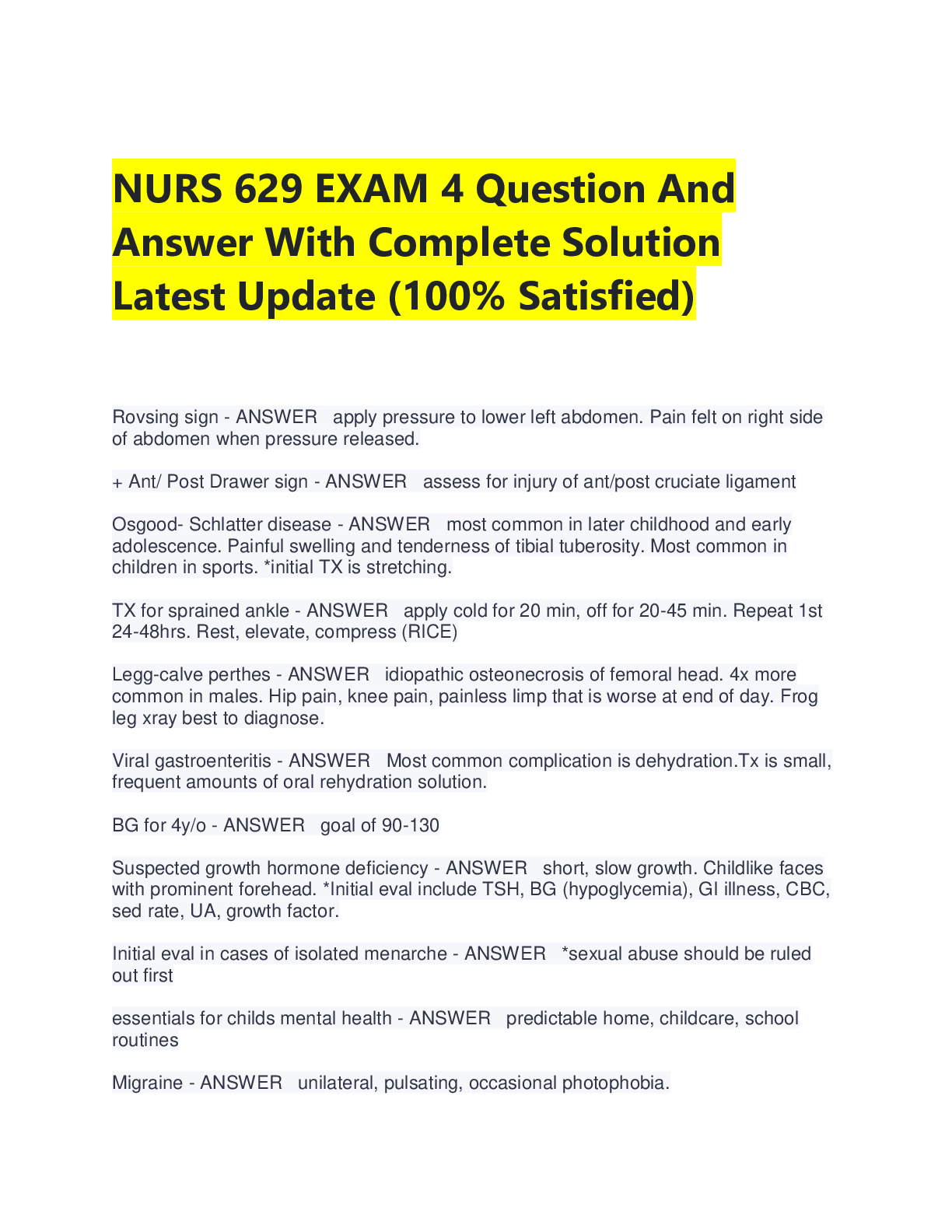
Rovsing sign - ANSWER apply pressure to lower left abdomen. Pain felt on right side of abdomen when pressure released.
...
NURS 629 EXAM 4 Question And Answer With Complete Solution Latest Update (100% Satisfied)
Rovsing sign - ANSWER apply pressure to lower left abdomen. Pain felt on right side of abdomen when pressure released.
+ Ant/ Post Drawer sign - ANSWER assess for injury of ant/post cruciate ligament
Osgood- Schlatter disease - ANSWER most common in later childhood and early adolescence. Painful swelling and tenderness of tibial tuberosity. Most common in children in sports. *initial TX is stretching.
TX for sprained ankle - ANSWER apply cold for 20 min, off for 20-45 min. Repeat 1st 24-48hrs. Rest, elevate, compress (RICE)
Legg-calve perthes - ANSWER idiopathic osteonecrosis of femoral head. 4x more common in males. Hip pain, knee pain, painless limp that is worse at end of day. Frog leg xray best to diagnose.
Viral gastroenteritis - ANSWER Most common complication is dehydration.Tx is small, frequent amounts of oral rehydration solution.
BG for 4y/o - ANSWER goal of 90-130
Suspected growth hormone deficiency - ANSWER short, slow growth. Childlike faces with prominent forehead. *Initial eval include TSH, BG (hypoglycemia), GI illness, CBC, sed rate, UA, growth factor.
Initial eval in cases of isolated menarche - ANSWER *sexual abuse should be ruled out first
essentials for childs mental health - ANSWER predictable home, childcare, school routines
Migraine - ANSWER unilateral, pulsating, occasional photophobia.
Iron deficiency anemia - ANSWER *Microcytic, hypochromic. Most common cause is poor dietary intake/ breastfeeding risk. Prevalence is 25% of children between ages 10-15 mos.
Depression Comorbidities - ANSWER anxiety disorder, mixed anxiety/depression. ADHD, conduct/learning/oppositional defiant disorders. SAD, eating disorders, stress.
Depression risk factors - ANSWER attention, conduct, learning disorders. Chronic illness (diabetes). abuse/neglect. other trauma or natural disasters. *Separation anxiety.
PHQ9 - ANSWER depression screening tool for ages 11 and up
signs of PTSD - ANSWER re-experiencing trauma thru intrusive distressing recollections of event, flashbacks, nightmares. Avoidance of places, people, and activities that are reminders of trauma, and emotional numbness. Increased arousal such as difficulty sleeping and concentrating, feeling jumpy, easily irritated and angered. *Extreme temper tantrums in preschool aged kids.
slipped capital femoral epiphysis risk factors - ANSWER Obesity, males, sports, femoral retroversion, hypothyroidism, avg age presentation is 12y/o for females and 13y/o for males.
slipped capital femoral epiphysis clinical findings: - ANSWER limping, knee/hip pain, pain worse with activity, localized pain to ant thigh or knee. May be unable to bear wt all together, loss of internal rotation of hip with flexion, affected extremity is usually shorter. Loss of abduction and extension
slipped capital femoral epiphysis DX and TX - ANSWER -xray. Always refer to peds ortho. Keep non wt bearing until surgical eval.
Scoliosis - ANSWER most common type is idiopathic. *In order to confirm suspected, get AP and lateral standing Xray view of spine
Bactrim - ANSWER treatment of choice for UTI in children
TX for gastroenteritis - ANSWER small, frequent amounts of oral rehydration solution
Appendicits - ANSWER Constant periumbilical pain shifting to RLQ. Worsens over period of 4hrs. Pain subsides as it migrates to RLQ and then worsens with movement, deep respir, and coughing.Pain/Fever are late sign, leading to perforation. Vomiting. *Elevated WBC.
Neural mediated syncope - ANSWER most common form of fainting/ frequent ED visits. Happens in part of nervous system that regulates BP. Place pt reclining position to restore blood flow/ consciousness. Situational syncope, vasovagal, reflex, neurocardiogenic part of it. Residual findings are pallor, fatigue, diaphoresis
Cardiac syncope - ANSWER causes: bradycardia, tachycardia, hypotension, exercise triggered. Palpitations. Residual findings: incontinence, disorientation, or injury.
Goiter - ANSWER commonly found on exam with hyperthyroidism
DM1 treatment goals - ANSWER achieve normal growth/development. Achieve optimal glycemic control. + psychosocial adjustment to diabetes. Hgb A1C < 7.5
DM managament - ANSWER DM1= start on insulin. Check BG 6-10x/day. Monitor urine/ blood for ketones in prolonged hyperglycemia. Exercise moderate-vigorous & bone strengthening 3x/week. BG goal during exercise 90-250 and have carbs available.
DM eye exams - ANSWER at 10y/o or puberty and on, initial dilated and comprehensive eye exam after having DM for 3-5 yrs. F/u recommended in opthamol Q2 years pending risk level
E coli - ANSWER most common cause of UTI in children
Red flags for sensory processing disorder - ANSWER overly sensitive to touch, noise, smell; poor self-esteem; afraid of failing at new tasks; lethargic and slow; always on go; impulsive; distractible/leaves tasks uncompleted; clumsy, slow, poor motor skills/ handwriting.
signs of normal cognition development in toddlers: - ANSWER emerging empathy, understanding social rules, constructing narratives, reciprocity in play.
executive functions required for self-regulation - ANSWER Inhibition, Flexibility, Emotional control
Education for febrile seizures - ANSWER Not actual seizure; best prevention is tylenol/ ibuprofen alternate Q4hr; hydrate & rest; seek emergency care if seizure lasting longer than 5 minutes
Mgmt & TX reflux - ANSWER Keep breastfeeding; formula fed= 2 week trial of extensively hydrolyzed formula or amino acid based to exclude CMA and thicken formula.
screening with known risk factors for DM2 recommended at 10y/o onset of puberty and repeat= - ANSWER every other year
increased risk of DM - ANSWER impaired fasting BG (>100 but <125); impaired glucose tol (2hr post prandial 140-199)
rates of U
[Show More]














.png)
.png)