Active reading vs. passive reading - ANSWER is nothing more than a mindset. It is the attitude you have as you begin the reading process. Being focused and and attentive to what you are reading
Tips to develop a stron
...
Active reading vs. passive reading - ANSWER is nothing more than a mindset. It is the attitude you have as you begin the reading process. Being focused and and attentive to what you are reading
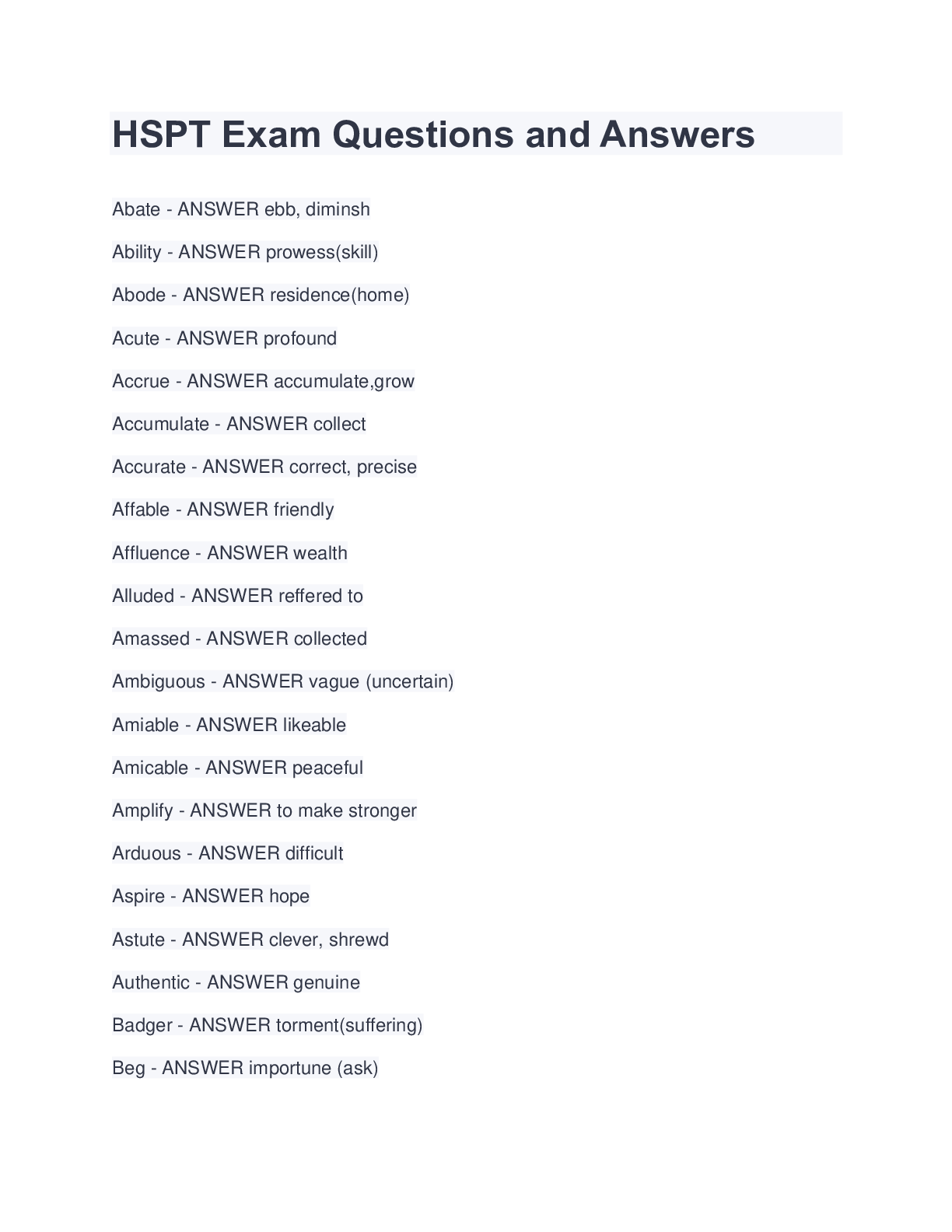
Tips to develop a strong vocabulary - ANSWER -look up words that you do not know
-read often and read a variety of material, including difficult material
-ask for clarifications in class and online
-try to remember the word in its usage
-keep a running list of words you do not know
-make connections through rhyming the new word with familiar words
-draw a picture of the word's definition on a index card
-work crossword puzzles and word games
How to improve speed and comprehension - ANSWER -learn to concentrate
-overcome fixation
SQ3R - ANSWER -scan
-question
-read
-recite
-review
Listening - ANSWER learned, voluntary activity, you must choose to do it
Hearing - ANSWER not learned, it is automatic and involuntary
Listening defined - ANSWER -involves the eyes, ears, undivided attention, and your heart
-purpose, objectively, and constructively
Listening styles - ANSWER -action oriented
-time oriented
-people oriented
-content oriented
Obstacles of listening - ANSWER -prejudging
-talking
-becoming too emotional
Tips for effective notetaking - ANSWER -physically and mentally attend class
-come to class prepared
-bring your textbook
-ask question
L STAR - ANSWER -listening
-setting it down
-translating
-analyzing
-remembering
3 common note taking systems - ANSWER -outline
-Cornell
-mapping
Types of memory - ANSWER -sensory
-short term/working
-long term
VCR3 - ANSWER -visualizing
-concentrating
-relating
-repeating
-reviewing
Mnemonic devices - ANSWER are memory tricks or techniques that assist you in putting information into your long term memory and pulling it out when you need it
Sensory memory - ANSWER stores info gathered from your 5 senses (taste, touch, smell, hearing, and sight); usually temporary, lasting 1-3 seconds, unless you decide that the info is important to you and you make an effort to move to long term memory
Short term/working memory - ANSWER holds info for a short amount of time
Long term memory - ANSWER consists of info that you have heard often, info that you use often, info you see often and info that you have determined necessary and/or important to you
Studying in a crunch - ANSWER -Depressurize
-Ditch the blame game
-Know the score
-Read it quick
-Make connections
-Use your syllabus or study guide
-See it
-Check your notes
-Repeat
-Choose wisely
Strategies to study matching questions - ANSWER -read the directions carefully
-read each column before you answer
-determine whether there are an equal number of items in each column
-match what you know first
-cross off information that is already used
-use the process of elimination for answers you might not know
-look for logical clues
-use the longer statement as a question; use the shorter statement as an answer
Strategies to study for true/false questions - ANSWER -read each statement carefully
-watch for key words in each statement
-read each statement for double negatives
-pay attention to words that may indicate a statement is true
-pay attention to words that may indicate a statement is false
-remember that if any part of a statement is false, the entire statement is false
-answer every question unless there is a penalty for guessing
Strategies to study for multiple choice questions - ANSWER -read the question and try to answer it before you read the answers provided
-look for similar answers
-cross out answers that you know are incorrect
-understand that the most inclusive answer is often correct
Strategies to study for essay questions - ANSWER -more is not always better
-be concise and informative
-pay close attention to the action word used in the question and respond with the appropriate type of answer
Strategies to study for short answer - ANSWER -read each question and be sure that you know what is being asked
-be brief in your response
-remember that your initial response is usually correct
-look for key words in the sentence that may trigger a response
Words - ANSWER are among the most powerful forces in existence when used by a skilled orator or writer. Can inspire, comfort, teach, encourage, persuade, and sell.
Glossophobia - ANSWER the fear of speaking publicly
Analyzing your audience - ANSWER -education level/prior understanding, race, gender, sexual orientation, values, religion, attitudes, politics, marital status/parental status, SES, occupational interests, beliefs
Topic selection - ANSWER best will come from your emotions and experiences and your desire to explain your anger, passion, fears, or other feelings.
Tips for topic selection - ANSWER -know what type of speech you'll be delivering
-think about your talents, interests, and experiences
-determine if your topic is appropriate for you and your audience
-decide of you can adequately cover a speech on this topic in the allowed length of time
-build your speech around an interesting theme
-analyze your audience and their interests
3 parts of a speech - ANSWER -intro
-body
-conclusion
30 seconds to... - ANSWER gain your audience's attention
Major types of formal presentations - ANSWER -demonstrative
-informative
-persuasive
Visual presentations - ANSWER _power point and prezi
- ***STUDY 287
Reducing your anxiety - ANSWER -be prepared
-make eye contact/eye sweep
-use your anxiety as a positive
-don't apologize for your presentation
-rehearse aloud
-don't lean on the lectern
-don't fidget
-watch your timing
-don't concentrate on the evaluation
-enjoy yourself
[Show More]






![Preview of THE TEFL ACADEMY LEVEL 5 - ASSIGNMENT C - AUTHENTIC MATERIAL [2026]](https://browseimages.nyc3.digitaloceanspaces.com/paper-images/2026/04/10/HpVkRcWV2026-04-10-11-5769d96426bd64f.png)