PEDIATRICS - HESI PRACTICE EXAM
LATEST UPDATE 2022
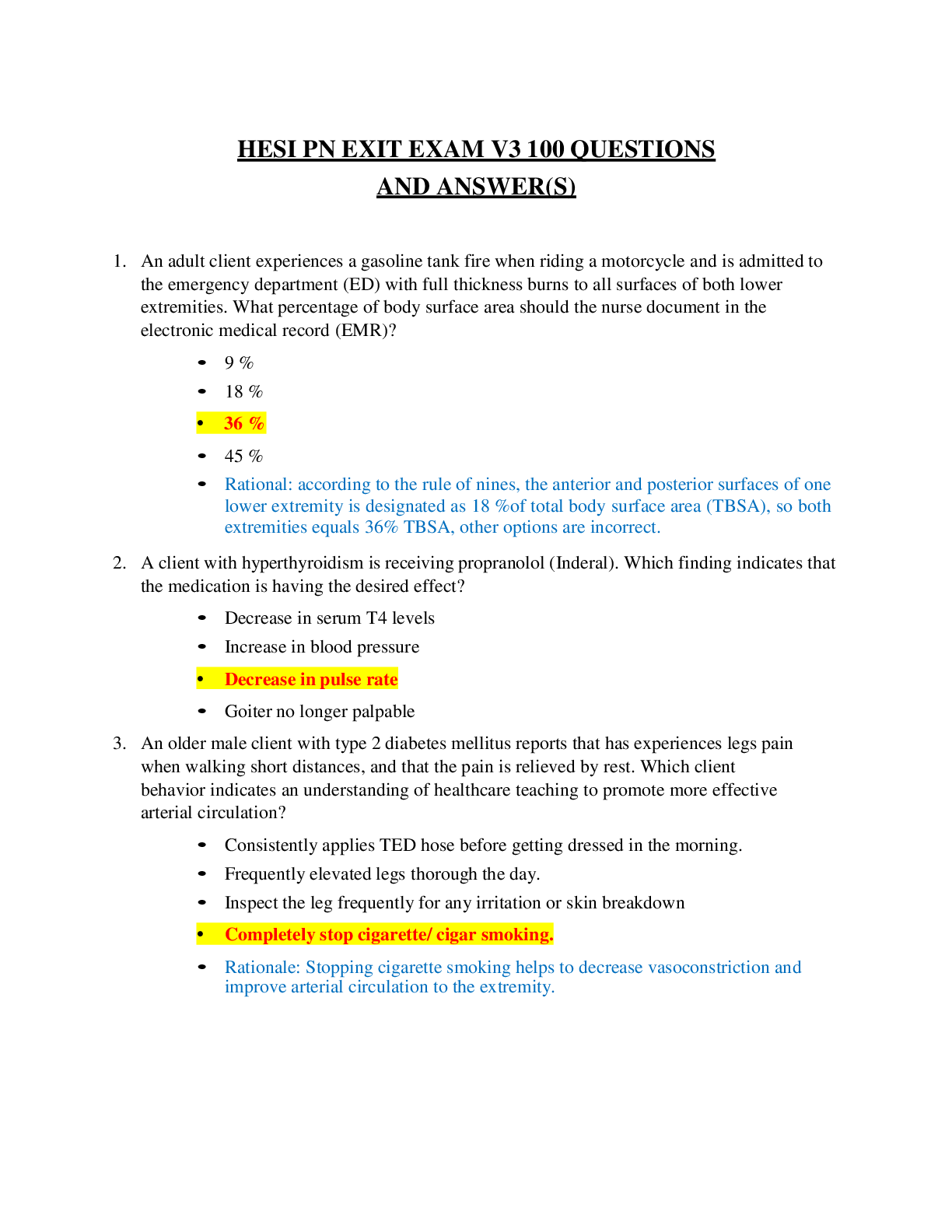
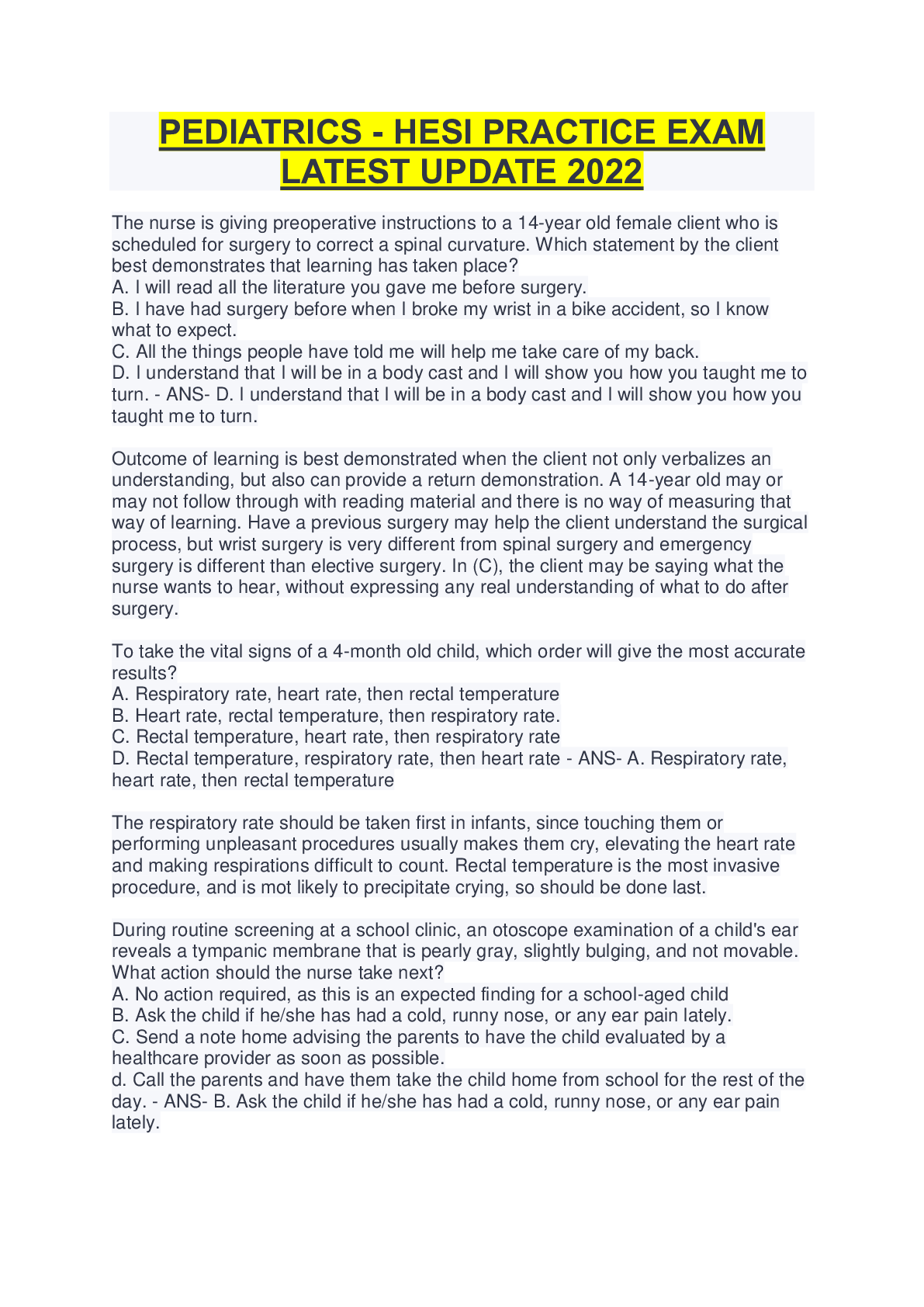
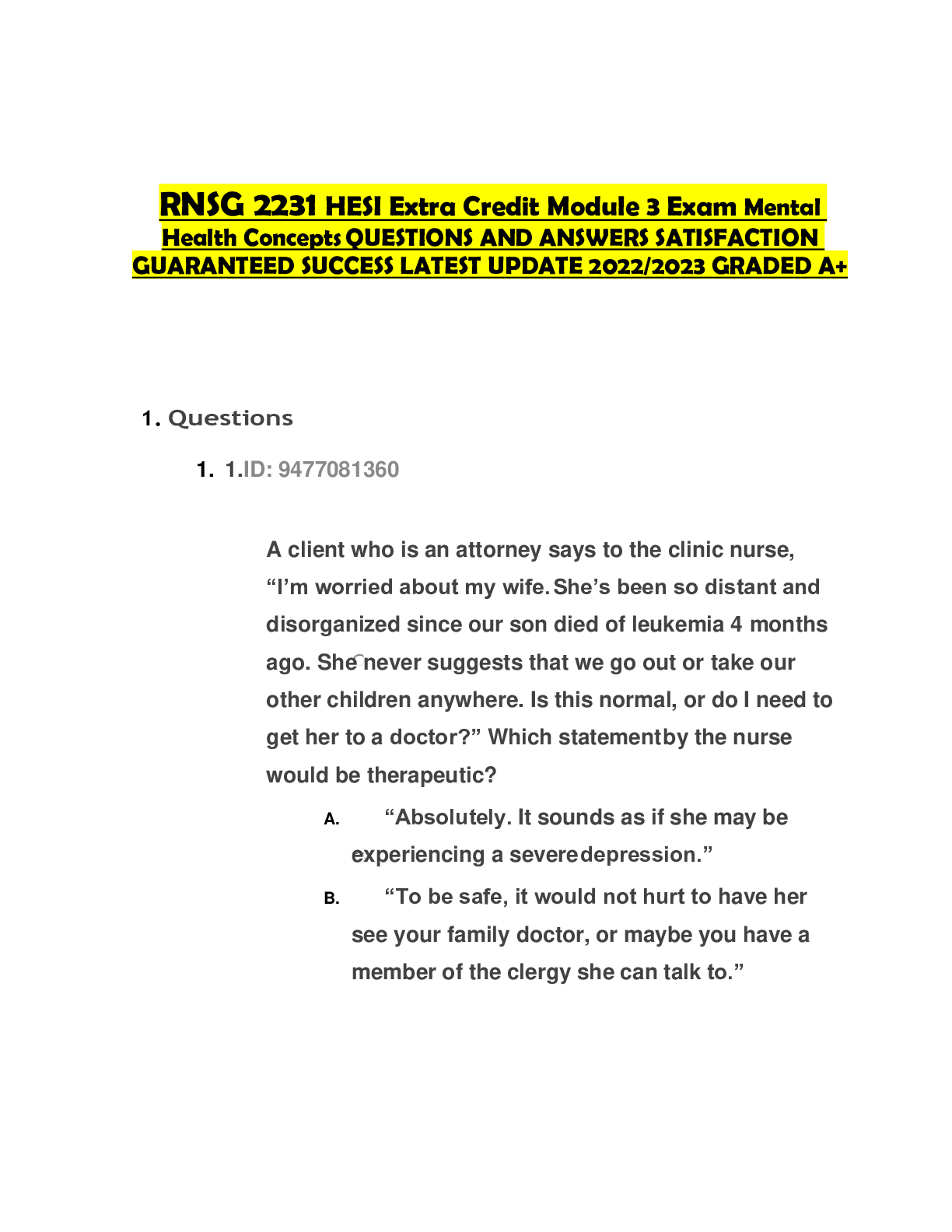
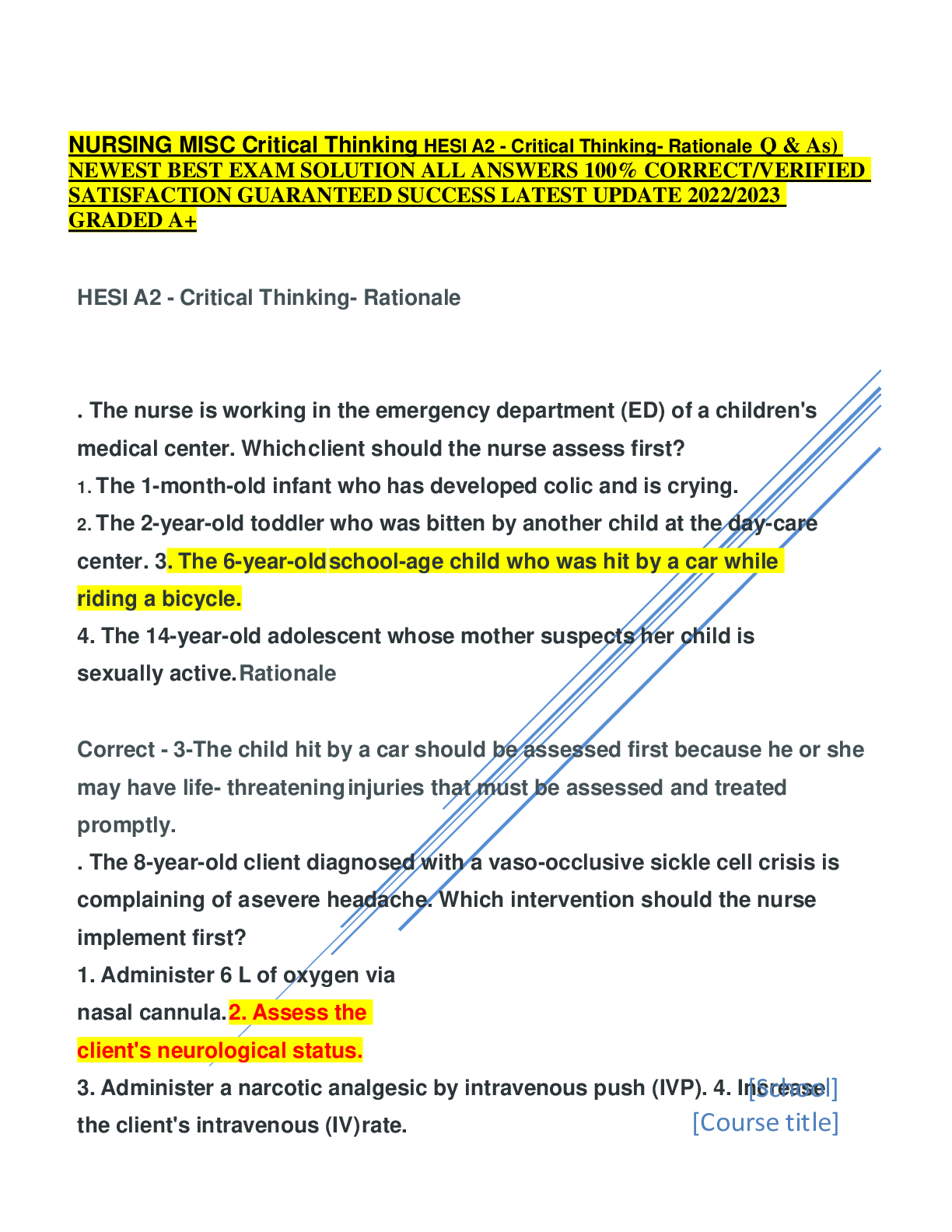
The nurse is giving preoperative instructions to a 14-year old female client who is
scheduled for surgery to correct a spinal curvature. Which statement by the clien
...
PEDIATRICS - HESI PRACTICE EXAM
LATEST UPDATE 2022
The nurse is giving preoperative instructions to a 14-year old female client who is
scheduled for surgery to correct a spinal curvature. Which statement by the client
best demonstrates that learning has taken place?
A. I will read all the literature you gave me before surgery.
B. I have had surgery before when I broke my wrist in a bike accident, so I know
what to expect.
C. All the things people have told me will help me take care of my back.
D. I understand that I will be in a body cast and I will show you how you taught me to
turn. - ANS- D. I understand that I will be in a body cast and I will show you how you
taught me to turn.
Outcome of learning is best demonstrated when the client not only verbalizes an
understanding, but also can provide a return demonstration. A 14-year old may or
may not follow through with reading material and there is no way of measuring that
way of learning. Have a previous surgery may help the client understand the surgical
process, but wrist surgery is very different from spinal surgery and emergency
surgery is different than elective surgery. In (C), the client may be saying what the
nurse wants to hear, without expressing any real understanding of what to do after
surgery.
To take the vital signs of a 4-month old child, which order will give the most accurate
results?
A. Respiratory rate, heart rate, then rectal temperature
B. Heart rate, rectal temperature, then respiratory rate.
C. Rectal temperature, heart rate, then respiratory rate
D. Rectal temperature, respiratory rate, then heart rate - ANS- A. Respiratory rate,
heart rate, then rectal temperature
The respiratory rate should be taken first in infants, since touching them or
performing unpleasant procedures usually makes them cry, elevating the heart rate
and making respirations difficult to count. Rectal temperature is the most invasive
procedure, and is mot likely to precipitate crying, so should be done last.
During routine screening at a school clinic, an otoscope examination of a child's ear
reveals a tympanic membrane that is pearly gray, slightly bulging, and not movable.
What action should the nurse take next?
A. No action required, as this is an expected finding for a school-aged child
B. Ask the child if he/she has had a cold, runny nose, or any ear pain lately.
C. Send a note home advising the parents to have the child evaluated by a
healthcare provider as soon as possible.
d. Call the parents and have them take the child home from school for the rest of the
day. - ANS- B. Ask the child if he/she has had a cold, runny nose, or any ear pain
lately.
More information is needed to interpret these findings. The tympanic membrane is
normally pearly gray, not bulging, and moves when the client blows against
resistance or a small puff of air is blown into the ear canal. Since this child's findings
are not completely normal, further assessment of history and related signs and
symptoms is indicated for accurate interpretation of the findings. (A), (C), and (D) are
inappropriate actions based on the data obtained from the otoscope examination.
Which restraint should be used for a toddler after a cleft palate repair?
A. clove hitch
B. Mummy
C. elbow
D. jacket - ANS- C. elbow
Elbow restraints
Elbow restraints prevent children from bending their arms and bringing their hands to
the oral surgical site. A clove hitch restrains the hands, but the child can bend and
bring their head to their hands. A mummy restraint is used during procedures. A
jacket restraint restrains the body torso and is not appropriate.
What preoperative nursing intervention should be included in the plan of care for an
infant with pyloric stenosis?
A. Monitor for signs of metabolic acidosis.
B. estimate the quantity of diarrhea stools.
C. place in a supine position after feeding
D. observe for projectile vomiting. - ANS- D. observe for projectile vomiting.
Projectile vomiting which contributes to metabolic alkalosis, is the classic sign of
pyloric stenosis. Estimating the quantity of diarrhea stools is not indicated. Placing
the child in a supine position is dangerous due to the potential for aspiration with
frequent vomiting.
A six-month-old returns from surgery with elbow restraints in place. What nursing
care should be included when caring for any restrained child?
A. keep restraints on at all times.
B. remove restraints one at a time and provide range of motion exercises
C. Remove all restraints simultaneously and provide lay activities
D. renew the healthcare provider's prescription for restraints every 72 hours. - ANS�B. remove restraints one at a time and provide range of motion exercises
Removing restraints one at a time is safer than removing all of them at once. The
child needs to exercise and should not be kept in restraints at all times. The renewal
of the healthcare provider's prescription varies with hospitals and it does not really
answer the question.
A 2-year old child with Down syndrome is brought to the clinic for his regular physical
examination. The nurse knows which problem is frequently associated with Down
syndrome?
A. congenital heart disease
B. fragile x-chromosome
C. trisomy 13
D. pyloric stenosis - ANS- A. congenital heart disease
Congenital heart disease is the most common associated defect in children with
Down syndrome. Trisomy 13 my have seemed possible since Down syndrome is a
trisomal chromosomal abnormality o chromosome 21. Fragile x-chromosome is a
sex-linked abnormality also causing mental retardation. Pyloric stenosis is not
associated with Down syndrome.
When assessing a child with asthma, the nurse should expect intercostal retractions
during
A. inspiration
B. coughing
C. apneic episodes
D. expiration - ANS- A. inspiration
Intercostal retractions result from respiratory effort to draw air into restricted airways.
When planning the care for a child who has had a cleft lip repair, the nurse knows
that crying should be minimized because it
A. increases salivation
B. increases the respiratory rate
C. leads to vomiting
D. stresses the suture line - ANS- D. stresses the suture line
Prevention of stress on the lip suture line is essential for optimum healing and the
cosmetic appearance of a cleft lip repair. Although crying also causes increased
salivation, increased respiratory rate and may lead to vomiting, these conditions do
not create a problem for the child with a cleft lip repair.
A full-term infant is admitted to the newborn nursery. After careful assessment, the
nurse suspects that the infant may have an esophageal atresia. Which symptoms is
this newborn likely to have exhibited?
A. choking, coughing, and cyanosis
B. projectile vomiting and cyanosis
C. apneic spells and grunting
D. scaphoid abdomen and anorexia - ANS- A. choking, coughing, and cyanosis
(A) includes the "3 C's" of esophageal atresia caused by the overflow of secretions
into the trachea. (B) is characteristic of pyloric stenosis in the infant. (C) could be due
to prematurity or sepsis, and grunting is a sign of respiratory distress. (D) is
characteristic of a diaphragmatic hernia.
Which behavior would the nurse expect a two-year-old child to exhibit?
A. build a house with blocks
B. ride a tricycle
C. display possessiveness of toys
D. look at a picture book for 15 minutes - ANS- C. display possessiveness of toys
Two-year old children are egocentric and unable to share with other children. (A, B,
and D) are behaviors of a preschooler.
the mother of a preschool-aged client asks the nurse if it is all right to administer
Pepto Bismal to her son when he 'has a tummy ache." After reminding the mother to
check the label of all OTC drugs for the presence of aspirin, which instruction should
the nurse include when replying to this mother's question?
A. if the child's tongue darkness, discontinue the Pepto Bismal immediately
B. do not give if the child has chickenpox, the flu, or any other viral illness.
C. avoid the use of Pepto Bismal until the child is at least 16 years old.
D. Pepto Bismal may cause a rebound hyperactivity, worsening the "tummy-ache." -
ANS- B. do not give if the child has chickenpox, the flu, or any other viral illness.
Pepto Bismal contains aspirin and there is the potential of Reye's syndrome. A dark
tongue is a common effect of Pepto Bismal and does not warrant discontinuation.
Pepto Bismal can be used by children. Pepto Bismal does not cause rebound
hyperactivity, which is a complication of antacids containing calcium.
The nurse observes a 4-year old boy in a daycare setting. Which behavior should the
nurse consider normal for this client?
A. Has a temper tantrum when told he must share his toys.
B. plays by himself most of the day
C. demonstrates aggressiveness by boasting when telling a story
D. Begins to cry and is fearful when separated from his parents. - ANS- C.
demonstrates aggressiveness by boasting when telling a story
Four-year old children are aggressive in their behavior and enjoy "tale telling".
Behaviors in (A and D) are typical of toddlers. The play of a preschooler is
cooperative, so playing alone is not typical.
A burned child is brought to the emergency room. In estimating the percentage of the
body burned, the nurse uses a modified "Rule of Nines." Which part of a child's body
is calculated as a larger percentage of total body surface than an adult?
A. head and neck
B. arms and chest
C. legs and abdomen
D. back and abdomen - ANS- A. head and neck
A child's head and neck are proportionately larger to their body than an adults. The
standard "Rule of Nine's" is inaccurate for determining burned body surface areas
with children and must be modified for use with children. Specially designed charts
for children are commonly used to determine body surface area involvement (B, C
and D) are not proportionately different.
The nurse receives a lab report stating a child with asthma has a theophylline level
of 15 mcg/dl. What action will the nurse take?
A. pass the information on in the report
B. notify the healthcare provider because the value is high
C. repeat the lab study because the value is too high.
D. hold the next dose of theophylline - ANS- A. pass the information on in the report
The therapeutic level of theophylline is 10-20 mcg/dL, so the child's level is within the
therapeutic range. This information evaluates the prescribed therapy and should be
communicated in the nurse's report. (B, C, and D) would be inappropriate actions in
view of the laboratory finding.
A 12-month old boy is admitted with a respiratory infection and possible pneumonia.
He is placed in a mist tent with oxygen. Which nursing intervention has the greatest
priority for this infant?
A. give small, frequent feedings of fluids
B. accurately chart observations regarding breath sounds
C. have a bulb syringe readily available to remove secretions
D. encourage older siblings to visit - ANS- C. have a bulb syringe readily available to
remove secretions
A patient airway has the highest priority. Humidification will liquefy the nasal
secretions thereby increasing the amount of secretions and making (C) the highest
priority. (A) maintains hydration and prevents, but an open airway has the highest
priority. (B) is important for evaluations of therapy. When asked "priority" questions,
remember Maslow. Physical needs usually have a higher priority than psychosocial
needs. An open airway is the highest physiological need
All of the following interventions can be used to evaluate the effectiveness of nursing
and medical interventions used to treat diarrhea. Which intervention is least useful in
the nurse's evaluation of a 20-month-old child.
A. weighing diapers
B. assessing fontanels
C. checking skin turgor
D. observing mucous membranes for moisture - ANS- B. assessing fontanels
All of these interventions evaluate fluid status in infants. But, now old is this child?
Posterior fontanel closes at 2 months and anterior fontanels close by 18 months of
age. Remember normal growth and development
A 5-month-old is admitted to the hospital with vomiting and diarrhea. The pediatrician
prescribed dextrose 5% and 0.25% normal saline with 2 mEq KCI/100 mL to be
infused at 25mL/hr. Prior to initiating the infusion, the nurse should obtain which
assessment finding?
A. frequency of emesis is the last 8 hours
B. serum BUN and creatinine levels
C. current blood sugar level
D. appearance of the stool - ANS- B. serum BUN and creatinine levels
Regardless of a client's age, adequate renal function must be present before adding
potassium to IV fluids. (A) is important in determining the need for fluid replacement.
(C) is not indicated. (D) is useful information, but will not impact administration of the
prescribed IV solution.
The nurse is assigning care for a 4-year old child with otitis media and is concerned
about the child's increasing temperature over the past 24 hours. When planning care
for this child, it is important for the nurse to consider that:
A. only an RN should be assigned to monitor this child's temperature.
B. a tympanic measurement of temperature will provide the most accurate reading
C. the licensed practical nurse should be instructed to obtain rectal temperatures on
this child
D. the healthcare provider should be asked to prescribe the method for
measurement of the child's temperatures. - ANS- B. a tympanic measurement of
temperature will provide the most accurate reading
A tympanic membrane sensor is an excellent site because both the eardrum and
hypothalamus (temperature-regulating center) are perfused by the same circulation.
The sensor is unaffected by cerumen and the presence of suppurative or
unsuppurative otitis media does not affect measurement. Rule of thumb for
management-sterile procedures should be assigned to licensed personnel.
Management skills will be tested on the NCLEX. An RN is not required to do this.
Rectal temperature management is less accurate because of the possibility of stool
in the rectum. It is unnecessary to contacted the healthcare provider.
The nurse is assessing an 8-month old child who has a medical diagnosis of
Tetrology of Fallot. Which symptom is this client most likely to exhibit?
A. bradycardia
B. machinery murmur
C. weak pedal pulses
D. clubbed fingers - ANS- D. clubbed fingers
Tetrology of Fallot, a cyanotic heart defect, causes clubbing of fingers and toes due
to tissue hypoxia. Tachycardia not bradycardia is a manifestation of congenital heart
disease. Machinery murmur is a classic sign of ventricular septal defect. Weak pedal
pulses are characteristic of coarctation of the aorta
As part of the physical assessment of children, the nurse observes and palpates the
fontanels. Which child's fontanel finding should be reported to the healthcare
provider?
A. A 5-month old with failure to thrive that has a closed anterior fontanel
B. a 24-month old with gastroenteritis that has a closed posterior fontanel.
C. A 2-month old with chickenpox that has an open posterior fontanel.
D. A 28-month old with hydrocephalus that has an open anterior fontanel. - ANS- A.
A 5-month old with failure to thrive that has a closed anterior fontanel
At six months of age the anterior fontanel should be open, and it should not be
closed until approximately 18 months of age. (B and C) are normal findings. A child
with hydrocphalus may have a delayed closing of the fontanel.
A preschool-age child who is hospitalized for hypospadias repair is most strongly
influenced by which behavior?
A. ability to communicate verbally
B. response to separation from family
C. concern for body integrity
D. socialization with other children - ANS- C. concern for body integrity
The preschooler's major stressor is concern for his body integrity. He fears that his
"insides will leak out". A child undergoing surgery to his genitalia is even more
concerned about body integrity. the preschooler is quite verbal so comprehension of
the words he uses or hears may be inaccurate, while his imagination and fears may
fantasize the reality. (B) is a concern for all children, but of most concern to the
toddler. (D) is not a prime concern in this situation.
An infant is born with a ventricular septal defect (VSD) and surgery is planned to
correct the defect. The nurse recognizes that surgical correction is designed to
achieve which outcome?
A. stop the flow of unoxygenated blood into systemic circulation
B. increase the flow of unoxygenated blood to the lungs.
C. prevent the return of oxygenated blood to the lungs.
D. reduce peripheral tissue hypoxia and nailbed clubbing. - ANS- C. prevent the
return of oxygenated blood to the lungs.
Closure of VSDs stops oxygenated blood from being shunted from the left ventricle
to the right ventricle. VSDs are acyanotic defects, which means that no
unoxygenated blood enters the systemic circulation. (D) is common with Tetrology of
Fallot, which is a cyanotic defect.
A three-month old boy weighing 10 lbs, 15 oz has an axillary temperature of 98.9
degrees F. The nurse determines the daily caloric need for this child is
approximately:
A. 400 cal/day
B. 500 cal/day
C. 600 cal/day
D. 700 cal/day - ANS- C. 600 cal/day
10 lbs, 15 oz = 10.9 lbs. Convert lbs to kg by dividing pounds by 2.2 (10.9/2.2) =
4.954 kg rounded to 5 kg. an infant requires 108 cal/kg/day (108 x 5 = 540 cal/day).
However this infant requires 10% more calories because he has one degree
temperature elevation. 10% of 540 is 54 and 54 + 540 = 594. This infant will require
approximately 600 calories/day. Remember that a temperature elevation
necessitates consumption of more calories.
The nurse is preparing a health teaching program for parents of toddlers and
preschoolers and plans to include information about prevention of accidental
poisonings. It is most important for the nurse to include which instructions?
A. tell children they should not taste anything but food
B. store all toxic agents and medicines in locked cabinets.
C. Provide special play areas in the house and restrict play in other areas.
D. punish children i they open cabinets that contain household chemicals. - ANS- B.
store all toxic agents and medicines in locked cabinets.
A 6-month old infant with congestive heart failure (CHF) is receiving digoxin elixer.
Which observation by the nurse warrants immediate intervention?
A. apical heart rate of 60.
B. sweating across the forehead
C. doesn't suck well
D. respiratory rate of 30 breaths/minute - ANS- A. apical heart rate of 60.
A heart rate of 60 is much lower than normal for a 6-month old and warrants
immediate intervention. the normal heart rate for a 6-month old is 80-150 bpm when
awake, and a rate of 70 while sleeping is considered within normal limits. (B and C)
are expected symptoms of heart failure in an infant. (D) normal limits for an infant.
At 8am, the unlicensed assistive personnel (UAP) informs the charge nurse that a
female adolescent client with acute glomerulonephritis has a blood pressure of
210/110. The 4am BP reading was 170/88. The client reports to the UAP that she is
upset because her boyfriend did not visit last night. What action should the nurse
take?
A. give the client her 9am prescription for an oral diuretic early.
B. administer PRN prescription of nifedipine (Procardia) sublingually.
C. notify the healthcare provider and inform the nursing supervisor of the client's
condition
D. attempt to calm the client and retake the BP in 30 minutes. - ANS- B. administer
PRN prescription of nifedipine (Procardia) sublingually.
Sublingual Procardia lowers BP very quickly, and this should be done first. (A) may
also be done, but oral diuretics do not work as rapidly as the sublingual
antihypertensive. When notifying the healthcare provider, the first thing he/she will
want to know is if the PRN antihypertensive has been administered. (D) does not
consider the seriousness of this finding. The nurse should stay with the client until
the BP is reduced.
A premature newborn girl, born 24 hours ago, is diagnosed with a patent ductus
arteriosus (PDA) and placed under an oxygen hood at 35%. The parents visit the
nursery and ask to hold her. Which response should the nurse provide to the
parents?
A. Studies have shown that handling a sick newborn is not good for the baby and
upsets the parents.
B. the oxygen hood is holding the baby's oxygen level just at the point which is
needed. You may stroke and talk to her.
C. Since your baby has been doing well under oxygen for 24 hours, I can let you
hold the baby without oxygen.
D. You can hold the baby with the oxygen blowing on the baby's face since the level
is very close to room air. - ANS- B. the oxygen hood is holding the baby's oxygen
level just at the point which is needed. You may stroke and talk to her.
The baby is at 35% which is much more than room air (21%) and at this time the
baby should not be moved from under the hood. the nurse should offer the parents
an alternative such as to stroke and reassure the infant. Holding sick babies benefits
the infant and the parents, but the first consideration now has to be the infant's
oxygenation. The nurse should not take the baby out from under the hood without a
prescription from the healthcare provider, as this could severely compromise the
infant. A PO2 of 35% cannot be readily achieved with "blow by" oxygen.
The nurse is developing a plan of care for a 3-year old who is scheduled for a
cardiac catheterization. To assist in decreasing anxiety for the child on the day of the
procedure, which intervention is best for the nurse to implement?
A. Reassure the parents that 3-year olds are cooperative and therefore are less
likely to be anxious.
B. Obtain a video film of a cardiac catheterization to show to the child prior to the
procedure
C. give the child a ride on a gurney to visit the cardiac catheterization lab and meet a
nurse who works there.
D. Obtain a cardiac catheter and demonstrate the procedure by pretending to put the
catheter in a doll or stuffed animal. - ANS- C. give the child a ride on a gurney to visit
the cardiac catheterization lab and meet a nurse who works there.
Familiarizing the child and mother with the department will help decrease anxiety of
the child and mother (who may have more anxiety than the child). Three is a difficult
age to undergo a procedure that requires cooperation. Restraints and possibly
sedation may be required. At three, the child is too young to understand why this
must be done. (B) is not indicated and (D) is not indicated because it is likely to be
interpreted as painful.
When taking the health history of a child, the nurse knows that which finding is an
early indication of hypothyroidism in children?
A. hyperactive behavioral traits
B. delay in the eruption of permanent teeth
C. slow sexual development but within normal range
D. cessation of growth in a child that had been normal. - ANS- D. cessation of growth
in a child that had been normal.
Since the thyroid gland is responsible for metabolism, cessation of growth which was
previously within normal range, is the most common sign for hypothyroidism in
children. The child with hypothyroidism is likely to be HYPOactive, not hyperactive.
Although (B and C) may occur with hypothyroidism, they are late signs (not early
indications) and are signs more often associated with a lack of growth hormone.
The nurse is teaching a 12-year old male adolescent and his family about taking
injections of growth hormone for idiopathic hypopituitarism. Which adverse
symptoms, commonly associated with growth hormone therapy should the nurse
plan to describe to the child and his family?
A. polyuria and polydipsia
B. lethargy and fatigue
C. increased facial hair
D. facial bone structure changes - ANS- A. polyuria and polydipsia
Signs and symptoms of diabetes or hyperglycemia need to be reported. those
receiving growth hormone should be monitored to detect elevated blood sugars and
glucose intolerance. Lethargy and fatigue are associated with any number of health
alterations, but is not associated with the growth hormone therapy. Increased facial
hair and facial bone structure changes are normal changes that occur with 12-year
old males.
The nurse is caring for a 12-year old with Syndrome of Inappropriate Antidiuretic
Hormone (SIADH). This child should be carefully assessed for which complication?
A. poor skin turgor resulting from dehydration
B. changes in LOC
C. premature aging as the disease progresses
D. severe edema from an excess of water and sodium - ANS- B. changes in LOC
The child must be monitored for signs and symptoms of hyponatremia, which creates
secondary CNS alterations, such as changes in LOC, seizure and coma. Fluid
overload occurs with SIADH not dehydration (which occurs with diabetes insipidus).
Premature aging is caused by hypersecretion of growth hormone, not SIADH.
Severe edema is not found in children with SIADH because edema is caused by an
excess of both water and sodium.
A four-year old girl continues to interrupt her mother during a routine clinic visit. the
mother appears irritated with the child and asks the nurse, "Is this normal behavior
for a child this age?" The nurse's response should be based on which information?
A. children need to retain a sense of initiative without impinging on the rights and
privileges of others.
B. negative feelings of doubt and shame are characteristic of 4 year-old children
C. Role conflict is a common problem of children this age. She is just wondering
where she fits into society.
D. At this age children compete and like to produce and carry through with tasks.
She is just competing with her mother. - ANS- A. children need to retain a sense of
initiative without impinging on the rights and privileges of others.
Children ages 3-6 are in Erikson's "Initiative vs. Guilt" stage, which is characterized
by vigorous, intrusive behavior, enterprise, and strong imagination. At this age,
children develop a conscience and must learn to retain a sense of initiative without
impinging on the rights of others. (B) describes the "Autonomy vs. Shame and
Doubt" stage (1-3 years). (C) describes an adolescent (12-18) "Identify vs. Role
Confusion" stage. (D) describes a child 6-12 years of age in the "Industry vs.
Inferiority" stage.
a 14-year old female client tells the nurse that she is concerned about the acne she
has recently developed. Which recommendation should the nurse provide?
A. Remove all blackheads and follow with an alcohol scrub
B. Use medicated cosmetics only to help hide the blemishes.
C. Wash the hair and skin frequently with soap and hot water.
D. Encourage her to see a dermatologist as soon as possible. - ANS- C. Wash the
hair and skin frequently with soap and hot water
Washing the hair and skin with soap and hot water removes oil and debris from the
skin and helps prevent and treat acne. Oily skin is especially bothersome during
adolescence when hormones cause enlargement of sebaceous glands and
increased glandular secretions which predispose the teenager to acne. (A) is
contraindicated. Cosmetics ("medicated" or not) should be used sparingly to avoid
further blocking of sebaceous gland ducts. (D) may be indicated at a later time, if
healthcare recommendations are not successful.
The mother of a 2-year old boy consults the nurse about her son's increased tempter
tantrums. The mother states, "Yesterday he threw a fit in the grocery store, and I did
not know what to do. I was embarrassed. What can I do if this occurs again?" Which
recommendation is best for the nurse to provide this mother?
A. paddle him gently as soon as the behavior is initiated
B. immediately put him in "time-out"
C. quietly remind him that others are watching him
D. walk away from him and ignore the behavior - ANS- D. walk away from him and
ignore the behavior
The best approach for a toddler is to ignore the attention-seeking behavior. The
parent should be somewhat nearby within view of the child but should avoid
reinforcing the behavior in any way. Tantrums can sometimes be avoided by talking
to the child before the situation occurs. (A, B, and C) would all provide attention for
the inappropriate behavior.
During discharge teaching of a child with juvenile rheumatoid arthritis, the nurse
should stress to the parents the importance of obtaining which diagnostic testing?
A. hearing test
B. eye exam
C. chest x-ray
D. fasting blood glucose test - ANS- B. eye exam
Visual changes leading to blindness can occur in children wit JRA. Regular eye
exams can help to prevent this complication. (A, C, and D) are not routinely
necessary for management of JRA.
A hospitalized 16-year old male refuses all visits from his classmates because he is
concerned about his distorted appearance. To increase the client's social interaction,
what intervention is best for the nurse to initiate?
A. encourage the client to use a hand-held video game that is popular with all his
friends
B. assign a 25 year old female nursing student to offer support to the client
C. arrange for an internet connection in the client's room for email communication
D. encourage the client's mother to arrange a surprise get together in the cafeteria. -
ANS- C. arrange for an internet connection in the client's room for email
communication
Body image and peer acceptance are key concerns for the adolescent. (C) allows for
social interaction without face to face contact, thus protecting his self-image while
also promoting social interaction. (A) does not promote social interaction. (B) does
not encourage interaction with his own peer group, which is of greater import1ance.
(D) does not respect the client's concern about his body image.
The nurse is assessing a 2-year old. What behavior indicates that the child's
language development is within normal limits?
A. Is able to name four colors
B. can count five blocks
C. is capable of making a three word sentence
D. half of child's speech is understandable. - ANS- C. is capable of making a three
word sentence
A toddler 1-3 ye.ars old is capable of making two to three word sentences. Other
options listed represent different age levels
When evaluating the effectiveness of interventions to improve the nutritional status of
an infant with gastro-esophageal reflux, which intervention is most important for the
nurse to implement?
A. record weight daily
B. assess for signs of anemia
C. document sleeping patterns
D. teach parenting skills - ANS- A. record weight daily
The most definitive measure of improved nutrition in an infant is obtaining the child's
weight daily. (B, C, and D) may also be useful, but they are not as definitive as a
daily weight measurement.
Which menu selection by a child with celiac disease indicates to the nurse that the
child understands necessary dietary considerations?
A. oven-baked potato chips and cola.
B. peanut butter and banana sandwich
C. oatmeal-raisin cookies and milk
D. graham crackers and fruit juice - ANS- A. oven-baked potato chips and cola.
Celiac disease causes an intolerance to the protein gluten found in oats, rye, wheat
and barley. the child should avoid any products containing these ingredients to avoid
symptoms such as diarrhea. (A) is the selection which avoids all of these ingredients.
(B, C and D) contain gluten in one form or another.
The parents of a 3-week old infant report that the child eats well but vomits after
each feeding. what information is most important for the nurse to obtain?
A. description of vomiting episodes in the past 24 hours
B. number of wet diapers in last 24 hours
C. feeding and sleep schedule
D. amount of formula consumed during the past 24 hours - ANS- A. description of
vomiting episodes in the past 24 hours
A description of the vomiting episodes will assist the nurse in determining the reason
for the symptoms, which may be helpful in developing a plan of care for this infant.
(B and C) provide related information but are not as helpful as (A). (D) may be
related to vomiting but the nurse should first obtain a better description of the
vomiting episodes.
A 3-month old infant develops oral thrush. Which pharmacologic agent should the
nurse plan to administer for treatment of this disorder?
A. Nystantin (Mycostatin)
B. Nitroflurantoin (Macrodantin)
C. Norfloxacin (Noroxin)
D. Neomycin sulfate (Mycifradin) - ANS- A. Nystantin (Mycostatin)
Nystantin is an antifungal drug that is effective in treating thrush, an oral fungal
infection. (C and D) are not? indicated for the treatment of oral thrush.
Which class of antiinfective drugs is contraindicated for use in children under 8 years
of age?
A. aminoglycosides
B. tetracyclines
C. penicillins
D. quinolones - ANS- B. tetracyclines
Tetracyclines cause enamel hypoplasia and tooth discoloration in children under 8
years of age. (A, C and D) are not contraindicated for use in children.
A female teenager is taking oral tetracycline HCL (Achromycin V) for acne vulgaris.
What is the most important instruction for the nurse to include in this client's teaching
plan?
A. Use sunscreen when lying by the pool.
B. cleanse the skin at least 4 times a day.
C. take the medication with a glass of milk
D. menstrual periods may become irregular - ANS- A. Use sunscreen when lying by
the pool.
Photosensitivity is a common side effect of tetracycline HCL (Achromycin V) therapy.
Severe sunburn can occur with minimal sun exposure and clients should be
instructed to avoid sunlight and to use sunscreen. (B and D) are not related to
tetracyline HCL (Achromycin V) therapy. (C) should be avoided because dairy
products interfere with the absorption of tetracyclines.
The mother of a 6-month old asks the nurse when her baby will get the first measles,
mumps, and rubella (MMR) vaccine. Based on the recommended childhood
immunization schedule published by the Centers for Disease Control, which
response is accurate?
A. 3-6 months
B. 12-15 months
C. 18-24 months
D. 4-6 years - ANS- B. 12-15 months
The first measles, mumps, and rubella (MMR) vaccine should be given no sooner
than 12 months of age, and ideally between 12 and 15 months of age. Children 3-6
months should not receive the vaccine due to the presence of maternal antibodies.
MMR is not routinely administered at 18-24 months, but other immunizations, such
as DTaP and Hepatitis B may be given at that time. The second dose of MMR is
routinely administered at 4-6 years, provided that at least 4 weeks have elapsed
since the first dose, and if both doses were administered beginning at or after 12
months.
Preoperative nursing care for a child with Wilm's tumor should include which
intervention?
A. gently percuss the abdomen for evidence of trapped air
B. observe the abdomen for any noticeable discolorations
C. apply cold compresses to the abdomen to reduce edema
D. Put a sign on the bed reading, "DO NOT PALPATE ABDOMEN." - ANS- D. Put a
sign on the bed reading, "DO NOT PALPATE ABDOMEN."
Prevention of abdominal palpation minimizes the risk of rupturing the encapsulated
tumor and subsequent metastasis. (A) is unnecessary and this action could
traumatize the tumor in the same manner as palpation. (B and C) are incorrect since
the abdomen is not discolored and cold compresses are not indicated.
A 4-year old boy was admitted to the emergency room with a fractured right ulna and
a short arm cast was applied. When preparing the parents to take the child home,
which discharge instruction has the highest priority?
A. call the healthcare provider immediately if his nail beds appear blue.
B. check his fingers hourly for the first 48 hours to see that he is able to move them
without pain.
C. Be sure your child's arm remains above his heart for the first 24 hours.
D. Take his temperature every four hours for the next two days and call if an
elevation is noted. - ANS- A. call the healthcare provider immediately if his nail beds
appear blue.
Cyanosis indicates impaired circulation to fingers and should be reported
immediately. Although the actions described in (B, C, and D) may be indicated, they
are implemented rather excessively - and might tend to frighten the parents. It is not
necessary to check the child's ability to move his fingers hourly for two days.
Elevating the arm above the heart helps to decrease swelling but (C) is stated in a
frightening way. It is not necessary to take the child's temperature q4h unless
indicated by other symptoms.
An 18-month old is admitted to the hospital with possible Hirschsprung's disease.
When obtaining a nursing history, the nurse asks about bowel habits. What
describes the disease?
A. foul-smelling and fatty
B. bile-colored and watery
C. semi-solid and yellow
D. ribbon-like and brown - ANS- D. ribbon-like and brown
Hirschsprung's disease is a mechanical obstruction caused by inadequate motility in
a part of the intestines. The condition results from failure of ganglion cells to migrate
craniocaudally along the GI tract during gestation. the lack of peristalsis in the
affected bowel segment causes constipation and small diameter, brown-colored
stools. (A) is associated with cystic fibrosis. (B) is common in gastroenteritis. (C) is
normal for breastfed neonates.
The nurse must prevent a 2-year old with severe eczema on the face, neck and
scalp from scratching the affected areas. Which nursing intervention is most effective
in preventing further excoriation due to the pruritis?...
[Show More]









.png)




.png)
.png)


 (1).png)